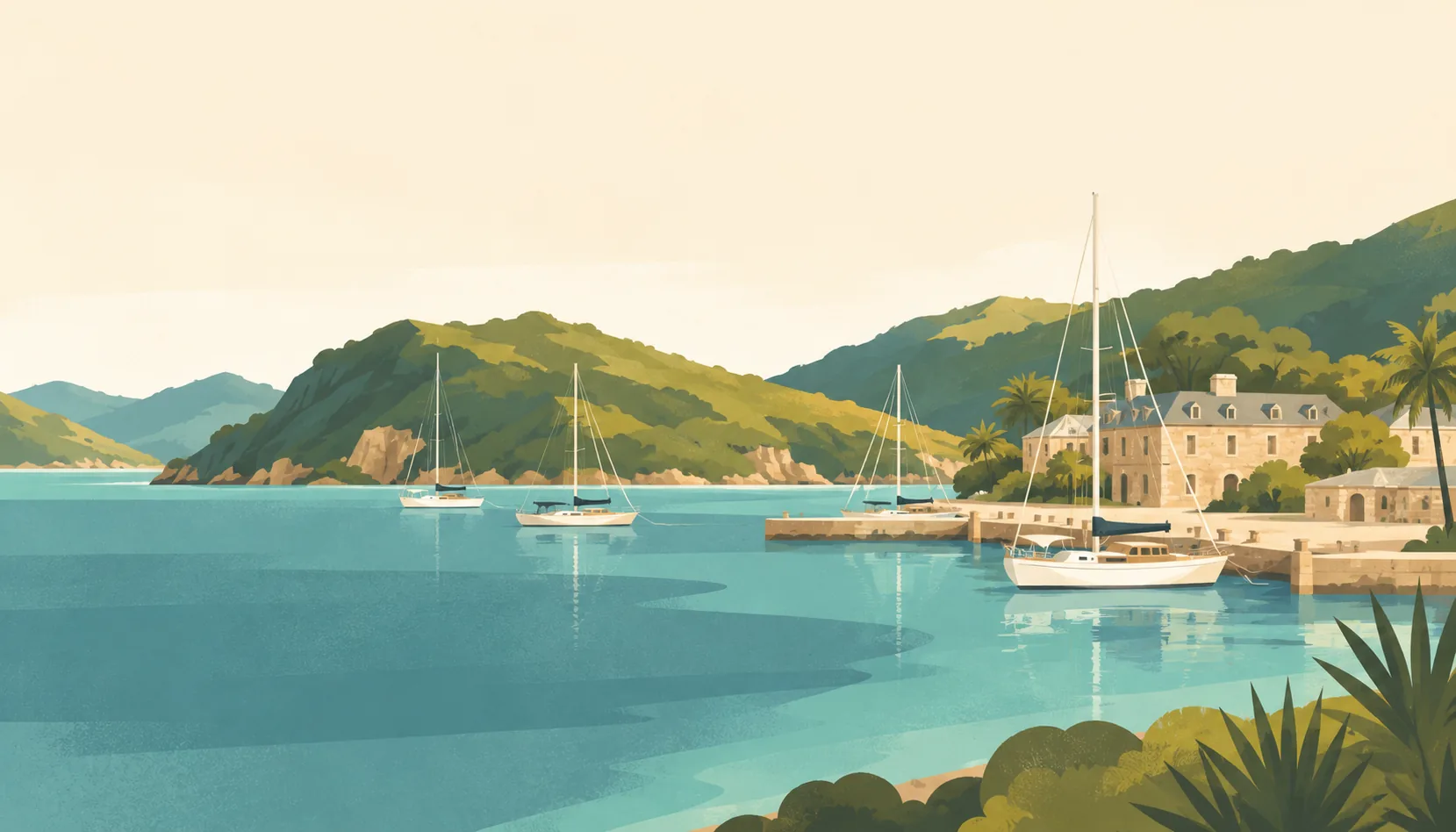

English Harbour: what to expect
The restored dockyard and surrounding hills make a coherent heritage base. Leave room for the harbour in the evening after day visitors depart. This town guide groups the destination into six useful areas so the stay works on the ground, not only on a country map.
Is this your trip?
Who English Harbour is for
Heritage travellers
The restored dockyard and surrounding hills make a coherent heritage base. Leave room for the harbour in the evening after day visitors depart.
Travellers with 2–3 days
That window gives English Harbour enough room for one anchor area and one contrasting cluster per day.
Context
Dockyard museum and Shirley Heights make that interest practical rather than a country-level promise.
Area-led planners
Six fixed clusters make it easier to choose a base and avoid repeated cross-destination transfers.
Maybe not for you: A compressed checklist is the weak version of English Harbour. Race weeks change prices and traffic; exposed hill walks need water and early starts.
Season by season
When to visit English Harbour
December–April. Rounded Caribbean maritime normals: warm trade-wind weather year-round, a drier winter-spring and wetter late summer-autumn. Conditions can still change sharply by elevation, coast and exposure, so use the chart for route timing and the current forecast for the day itself.
- Best
Dry high season
December–April
Lower humidity and rain make movement and water days easiest, with winter price pressure.
- Good
Early wet season
May–June
Warm water and lighter demand come with heavier, usually short showers.
- Mixed
Storm season
July–October
Heat, humidity and Atlantic tropical systems require current checks and flexible bookings.
- Good
Transition
November
Rain and storm risk ease unevenly before the main winter season.
Weather · monthly normals
Rounded Caribbean maritime normals: warm trade-wind weather year-round, a drier winter-spring and wetter late summer-autumn. Values are rounded planning normals rather than a live forecast.
Do fewer things better
Things to do in English Harbour
A short, ordered set of experiences with the timing or planning catch that makes each one work.
- 1
Start with Nelson’s Dockyard
Nelson’s Dockyard
Restored naval buildings frame a working harbour.
- 2
Walk Dockyard museum without stacking it
Dockyard museum
Interpretation adds depth to the waterfront.
- 3
Use Shirley Heights for views
Shirley Heights
The hill overlooks both southern harbours.
- 4
Give Falmouth Harbour a deliberate half-day
Falmouth Harbour
Marina life and restaurants cluster nearby.
- 5
See Pigeon Point outside peak hours
Pigeon Point
A small beach sits near the harbour district.
- 6
Keep Galleon Beach weather-flexible
Galleon Beach
Check currents and current visitor access.
Race weeks change prices and traffic; exposed hill walks need water and early starts.
Area by area
The areas of English Harbour
A real map at local-city scale: enough geography to choose a base, compare areas and group a day. Numbered places match the notes below.
| Area | What it is like | Why go |
|---|---|---|
1 Nelson’s Dockyard heritage | Restored naval buildings frame a working harbour. | Use Nelson’s Dockyard when heritage matters more than crossing the whole destination. |
2 Dockyard museum context | Interpretation adds depth to the waterfront. | Use Dockyard museum when context matters more than crossing the whole destination. |
3 Shirley Heights views | The hill overlooks both southern harbours. | Use Shirley Heights when views matters more than crossing the whole destination. |
4 Falmouth Harbour sailing | Marina life and restaurants cluster nearby. | Use Falmouth Harbour when sailing matters more than crossing the whole destination. |
5 Pigeon Point beach pause | A small beach sits near the harbour district. | Use Pigeon Point when beach pause matters more than crossing the whole destination. |
6 Galleon Beach shore walks | Check currents and current visitor access. | Use Galleon Beach when shore walks matters more than crossing the whole destination. |
Choose the base, then the hotel
Where to stay in English Harbour
For most first visits: Nelson’s Dockyard for heritage.
Nelson’s Dockyard
Restored naval buildings frame a working harbour. Choose it when that trade-off should shape mornings and evenings.
Dockyard museum
Interpretation adds depth to the waterfront. Choose it when that trade-off should shape mornings and evenings.
Shirley Heights
The hill overlooks both southern harbours. Choose it when that trade-off should shape mornings and evenings.
Falmouth Harbour
Marina life and restaurants cluster nearby. Choose it when that trade-off should shape mornings and evenings.
Order with a point of view
What to eat in English Harbour
Local food is more useful as an area decision than as a checklist of famous dishes.
- 01
Fungee and pepperpot
Nelson’s Dockyard
Cornmeal and a rich vegetable-and-meat stew form a national combination.
- 02
Ducana
Dockyard museum
Sweet potato dumplings are often served with saltfish.
- 03
Antiguan black pineapple
Shirley Heights
Buy seasonal fruit from local sellers rather than assuming it is always available.
- 04
Grilled fish
Falmouth Harbour
Ask about the day’s local catch and protected species rules.
- 05
Johnny cakes
Pigeon Point
Fried dough is a familiar breakfast or snack.
Useful on the ground
Local tips for English Harbour
Plan the transfer, not only the distance
Race weeks change prices and traffic; exposed hill walks need water and early starts.
Check entry before buying flights
Confirm passport-specific entry permission, any arrival form and evidence of onward travel with the official immigration service. Recheck requirements for each island when combining countries.
East Caribbean dollar and payments
Use East Caribbean dollars for buses, local food and small businesses. Cards are more common in hotels; confirm cash and ATM access before smaller-island stays.
Coverage and offline planning
Check roaming or a local SIM before leaving the arrival town. Download maps for hill roads and keep accommodation contacts offline.
Type G sockets
230 V, 50 Hz; check your accommodation for any additional socket types.
Common questions
Quick answers about English Harbour
- When is the best time to visit English Harbour?
- December–April. Rounded Caribbean maritime normals: warm trade-wind weather year-round, a drier winter-spring and wetter late summer-autumn. Conditions can still change sharply by elevation, coast and exposure, so use the chart for route timing and the current forecast for the day itself.
- How many days do you need in English Harbour?
- 2–3 days. The restored dockyard and surrounding hills make a coherent heritage base. Leave room for the harbour in the evening after day visitors depart. This town guide groups the destination into six useful areas so the stay works on the ground, not only on a country map.
- Where should you stay in English Harbour?
- Nelson’s Dockyard for heritage. Restored naval buildings frame a working harbour. Choose it when that trade-off should shape mornings and evenings.
Keep building the route
English Harbour is part of Antigua and Barbuda
Use the country guide for visa, money, long-distance transport and the route between cities. Then compare the other worked-out stops below.