

Sydney: what to expect
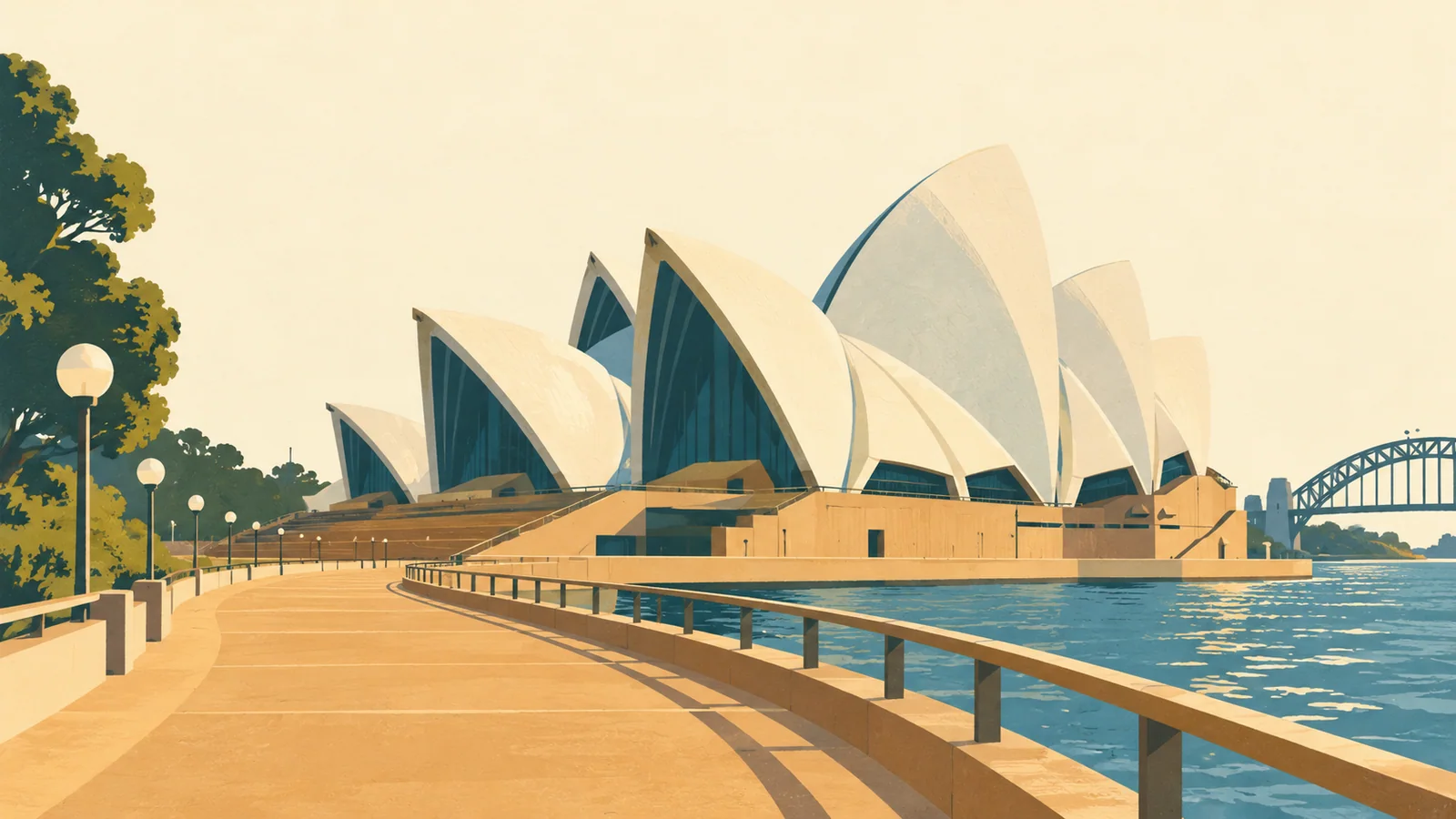
Sydney works when you use the water rather than orbit it. Ferries turn the Opera House, harbour coves, northern beaches and inner-city neighbourhoods into one coherent route; the mistake is commuting back to the same viewpoint by road.
Is this your trip?
Who Sydney is for
First-time Australia trips
The harbour, beaches and airport connections make Sydney the cleanest opening or closing stop.
Walkers and swimmers
Coastal paths, harbour stairs and ocean pools make ordinary city days active.
Food-led city breaks
Migrant neighbourhoods and produce-driven restaurants are more interesting than the postcard dining rooms.
Families
Ferries create low-effort sightseeing and the best museums cluster around the centre.
Maybe not for you: Skip or shorten Sydney if the entire trip is built around tropical reef weather; Cairns and northern Queensland use a different season.
Season by season
When to visit Sydney
September–November and March–May. Spring and autumn bring warm days without the peak-summer crush. Summer is beach weather but humid, busy and exposed to sudden storms; winter is mild and often clear enough for long harbour walks.
- Good
Late summer
January–March
Warm water and long evenings, with humidity, school-holiday demand and stormy afternoons.
- Best
Autumn
April–May
Comfortable walking weather and warm sea temperatures after summer.
- Good
Winter
June–August
Cool mornings, crisp light and good value; bring a layer for ferries and evenings.
- Best
Spring
September–November
Warm, bright and less humid, with jacaranda colour and strong coastal-walk weather.
Weather · monthly normals
Coastal Sydney is mild year-round; rain comes in every season rather than one fixed monsoon.
Do fewer things better
Things to do in Sydney
A short, ordered set of experiences with the timing or planning catch that makes each one work.
- 1
Walk from Circular Quay to Mrs Macquarie's Point
Harbour
The Opera House, Botanic Garden and harbour reveal themselves in sequence; go early before tour groups arrive.
- 2
Take a ferry as public transport
Circular Quay to Manly
The regular ferry is the city's best-value moving viewpoint and ends at a real beach suburb.
- 3
Choose one coastal walk
Bondi–Coogee or Spit–Manly
Both earn half a day; trying to combine them turns a walk into transport logistics.
- 4
Eat through the inner west
Newtown, Enmore and Marrickville
Vietnamese, Greek, Thai, Lebanese and experimental kitchens show the city better than a harbour prix fixe.
- 5
See contemporary and First Nations art
Art Gallery of NSW
The expanded campus makes a good midday counterweight to outdoor Sydney.
- 6
Keep one weather-flex day
Blue Mountains or harbour
Cloud can erase the mountain views while improving waterfalls; decide the day trip close to departure.
Area by area
The neighbourhoods of Sydney
A real map at local-city scale: enough geography to choose a base, compare areas and group a day. Numbered places match the notes below.
| Area | What it is like | Why go |
|---|---|---|
1 Circular Quay & The Rocks first visit | Historic lanes, ferries and the two harbour icons within walking distance. | Best for a short stay and early starts before the waterfront crowds. |
2 Surry Hills food and evenings | Terraces, small restaurants, pubs and fast access to Central Station. | A lived-in base close to the centre without sleeping inside the office district. |
3 Newtown & Enmore music and casual food | Independent shops, live venues and one of the city's broadest food strips. | Come for an unpolished evening and continue into Marrickville if food is the point. |
4 Bondi beach mornings | A famous crescent backed by dense cafés, buses and coastal footpaths. | Stay only if daily ocean time matters more than quick harbour access. |
5 Manly beach base | Harbour on one side, surf on the other, reached by a scenic ferry. | It feels like a separate coast town but keeps central Sydney one boat away. |
6 Barangaroo & Pyrmont waterfront walking | New harbour parkland, dining and former working-wharf edges. | Useful for a west-harbour loop and sunset without repeating Circular Quay. |
Choose the base, then the hotel
Where to stay in Sydney
For most first visits: Circular Quay for a short first visit; Surry Hills for food and evenings.
Circular Quay, The Rocks or Wynyard
You pay for position, but ferries and the main harbour walk start outside.
Surry Hills or Darlinghurst
Walk to restaurants and bars, then use Central or light rail for the rest.
Bondi, Coogee or Manly
Accept a longer ride to museums in exchange for sand before breakfast.
Pyrmont, Barangaroo or North Sydney
Apartment stock and waterfront paths make family logistics calmer.
Order with a point of view
What to eat in Sydney
Local food is more useful as an area decision than as a checklist of famous dishes.
- 01
Modern Australian cooking
Surry Hills and the CBD
Produce, seafood and immigrant technique matter more than any one national dish.
- 02
Vietnamese
Marrickville and Cabramatta
Go beyond the centre for pho, grilled meats and bakeries with local regulars.
- 03
Lebanese
Lakemba and Granville
Breakfast, charcoal chicken, mezze and sweets reward a suburban food detour.
- 04
Seafood
Fish markets or a simple coastal shop
Order what is local and seasonal; a water view is not proof of a good kitchen.
- 05
Flat white and bakery breakfast
Almost any inner-city neighbourhood
Sydney takes both seriously; choose the busy local place rather than a landmark queue.
Useful on the ground
Local tips for Sydney
Tap on and off
Use one contactless card or device consistently across train, bus, light rail and ferry.
Swim between the flags
Ocean conditions change quickly. Patrolled areas are the default, not a suggestion.
Do not rent a car for central Sydney
Parking, tolls and one-way streets erase any advantage. Hire only for a regional leg.
Ferries are weather-exposed
A sunny quay can become windy on deck; carry a light layer outside midsummer.
Build around one side of the harbour per half-day
Bridge crossings look short on a map and consume more time than expected.
Common questions
Quick answers about Sydney
- When is the best time to visit Sydney?
- September–November and March–May. Spring and autumn bring warm days without the peak-summer crush. Summer is beach weather but humid, busy and exposed to sudden storms; winter is mild and often clear enough for long harbour walks.
- How many days do you need in Sydney?
- 4–5 days. Sydney works when you use the water rather than orbit it. Ferries turn the Opera House, harbour coves, northern beaches and inner-city neighbourhoods into one coherent route; the mistake is commuting back to the same viewpoint by road.
- Where should you stay in Sydney?
- Circular Quay for a short first visit; Surry Hills for food and evenings. You pay for position, but ferries and the main harbour walk start outside.
Keep building the route
Sydney is part of Australia
Use the country guide for visa, money, long-distance transport and the route between cities. Then compare the other worked-out stops below.
- MelbourneA city of neighbourhood rituals, not one grand centre.
- BrisbaneRiver loops, subtropical light and a city learning to linger.
- CairnsThe useful city between reef, rainforest and wet tropics.
- Gold CoastA 50-kilometre beach city with several different personalities.
- PerthIndian Ocean light, serious distance and a city worth the stop.
- AdelaideA compact cultural city and regional food base
- HobartHarbour history and contemporary Tasmanian culture
- DarwinA tropical northern city with layered histories
- CanberraNational collections around a planned lake city
- NewcastleOcean baths and a port city's changing streets
- BallaratGold-rush streets and a regional arts stay
- BendigoGoldfields architecture and Chinese Australian history
- LauncestonTamar river streets and an urban gorge
- TownsvilleA tropical coastal city beneath Castle Hill
- Alice SpringsCentral Australian culture and desert context