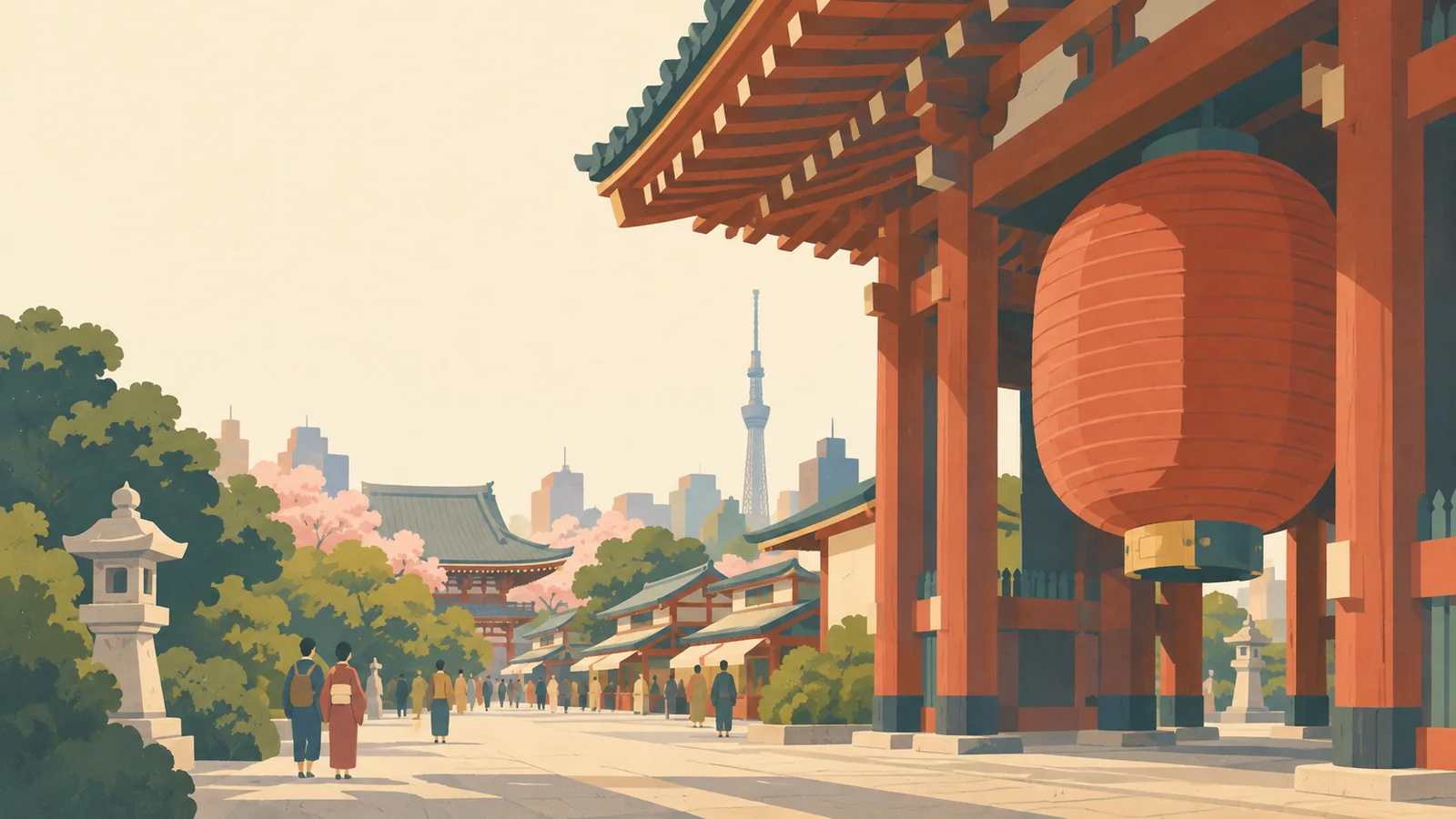


Tokyo: what to expect
Tokyo becomes manageable when you stop treating the rail map as a to-do list. Build each day around one side of the city, let a neighbourhood absorb the gaps, and use the late train rather than crossing town for a restaurant reservation.
Is this your trip?
Who Tokyo is for
First-time Japan trips
Tokyo teaches the rail system while offering almost every version of the country.
Food obsessives
Excellent meals exist at every price and in every neighbourhood.
Design and subculture travellers
Fashion, architecture, craft, music and small specialist shops reward precise interests.
Families
Transport is reliable and attractions can be grouped into low-friction days.
Maybe not for you: Tokyo punishes a rigid attraction checklist. If crowds and constant decisions exhaust you, alternate it with a smaller city rather than scheduling ten central districts.
Season by season
When to visit Tokyo
Late March–May and October–November. Spring and autumn are mild but popular. June is rainy, July and August are hot and humid, and early autumn can bring typhoons. Winter is dry, bright and underrated for city travel.
- Best
Spring
Late March–May
Cherry blossom draws peak crowds; late April after Golden Week or May is calmer.
- Mixed
Rainy season
June–mid July
Warm, humid and frequently wet, though rain rarely stops the city.
- Avoid
Hot season
Late July–September
Heat and humidity make long station transfers punishing; typhoons can disrupt plans.
- Best
Autumn and winter
October–February
Autumn is mild; winter is cold, dry, bright and often excellent value.
Weather · monthly normals
Tokyo has humid summers, a wet early autumn and generally dry bright winters.
Do fewer things better
Things to do in Tokyo
A short, ordered set of experiences with the timing or planning catch that makes each one work.
- 1
Watch the city wake from an old district
Asakusa or Yanaka
Temple gates and local shopping streets are best before day-tour groups arrive.
- 2
Give one museum cluster a half-day
Ueno or Roppongi
Choose depth over crossing the city between famous buildings.
- 3
Eat at counter scale
Across the city
Ramen, sushi, yakitori and set meals are often better understood in small specialist rooms.
- 4
See the skyline without a ticket race
Shinjuku
The Metropolitan Government Building is a practical free overview.
- 5
Walk from fashion to back streets
Harajuku to Shibuya
Leave the main avenue and connect shrines, residential lanes and design shops on foot.
- 6
Take one edge-of-city reset
Kamakura, Mt Takao or Kiyosumi
Choose coast, mountain or quiet canals according to weather and energy.
Area by area
The neighbourhoods of Tokyo
A real map at local-city scale: enough geography to choose a base, compare areas and group a day. Numbered places match the notes below.
| Area | What it is like | Why go |
|---|---|---|
1 Shinjuku connections and nightlife | Major rail hub, department stores, towers and tiny late-night lanes. | The most practical first base if day trips and evening energy both matter. |
2 Shibuya & Harajuku fashion and youth culture | Busy crossings, backstreet retail, Meiji forest and relentless crowds. | Connect the shrine, fashion backstreets and Shibuya on foot rather than by another train. |
3 Asakusa old Tokyo | Senso-ji, craft streets and Sumida River access. | Go early for the temple, then stay for the working streets beyond the gate. |
4 Ueno & Yanaka museums and slower streets | Major museums beside market energy and a preserved residential hill. | Pair one serious museum with a low-rise walk instead of collecting institutions. |
5 Ginza & Nihonbashi design and polished stay | Department stores, architecture, old merchants and strong transport. | A useful study in how old merchant Tokyo sits beneath the polished surface. |
6 Kiyosumi & Monzen-nakacho coffee and contemporary art | Canals, gardens, warehouses and a lower-key east-side rhythm. | Use it as an east-side reset between denser headline districts. |
Choose the base, then the hotel
Where to stay in Tokyo
For most first visits: Shinjuku for connections, Ueno for value, or Ginza for a short polished stay.
Shinjuku west or south
Easy rail access; avoid the loudest Kabukicho blocks if sleep matters.
Ueno or Asakusa
Good airport access and a calmer morning atmosphere.
Ginza or Nihonbashi
Central transport, excellent dining and less sensory overload at night.
Ebisu, Kiyosumi or Shimokitazawa
Choose only when the local area itself matches the trip.
Order with a point of view
What to eat in Tokyo
Local food is more useful as an area decision than as a checklist of famous dishes.
- 01
Sushi
Toyosu-adjacent or neighbourhood counters
Spend for technique if you care; otherwise a busy local counter is enough.
- 02
Ramen
Every district
Pick a style and one respected shop nearby rather than crossing town for a viral bowl.
- 03
Yakitori
Yurakucho, Shinjuku and local station streets
Small counters turn grilled chicken into a full evening.
- 04
Soba and tempura
Nihonbashi and older eastern districts
Specialist lunches are often the cleanest way into Edo food.
- 05
Depachika
Major department-store basements
The best low-friction survey of sweets, bento and seasonal ingredients.
Useful on the ground
Local tips for Tokyo
Group by rail corridor
Two adjacent neighbourhoods beat four famous stops on opposite sides of the loop.
Rush hour is functional, not scenic
Avoid large luggage on commuter trains around 7:30–9:30 and 17:00–19:00.
Last trains matter
The network shuts around midnight; taxis across Tokyo are expensive.
Use an IC card
A digital or physical Suica/PASMO-style card handles most local transport and small purchases.
Quiet queues are real
Stand where marked and let passengers leave before boarding.
Common questions
Quick answers about Tokyo
- When is the best time to visit Tokyo?
- Late March–May and October–November. Spring and autumn are mild but popular. June is rainy, July and August are hot and humid, and early autumn can bring typhoons. Winter is dry, bright and underrated for city travel.
- How many days do you need in Tokyo?
- 5 days. Tokyo becomes manageable when you stop treating the rail map as a to-do list. Build each day around one side of the city, let a neighbourhood absorb the gaps, and use the late train rather than crossing town for a restaurant reservation.
- Where should you stay in Tokyo?
- Shinjuku for connections, Ueno for value, or Ginza for a short polished stay. Easy rail access; avoid the loudest Kabukicho blocks if sleep matters.
Keep building the route
Tokyo is part of Japan
Use the country guide for visa, money, long-distance transport and the route between cities. Then compare the other worked-out stops below.
- KyotoThe old capital is best before breakfast and after dark.
- OsakaJapan's most convincing argument for eating after midnight.
- HiroshimaA peace city opening onto the islands of the Inland Sea.
- KanazawaGarden, craft and seafood at a scale you can actually hold.
- FukuokaA compact food city facing Korea across the water.