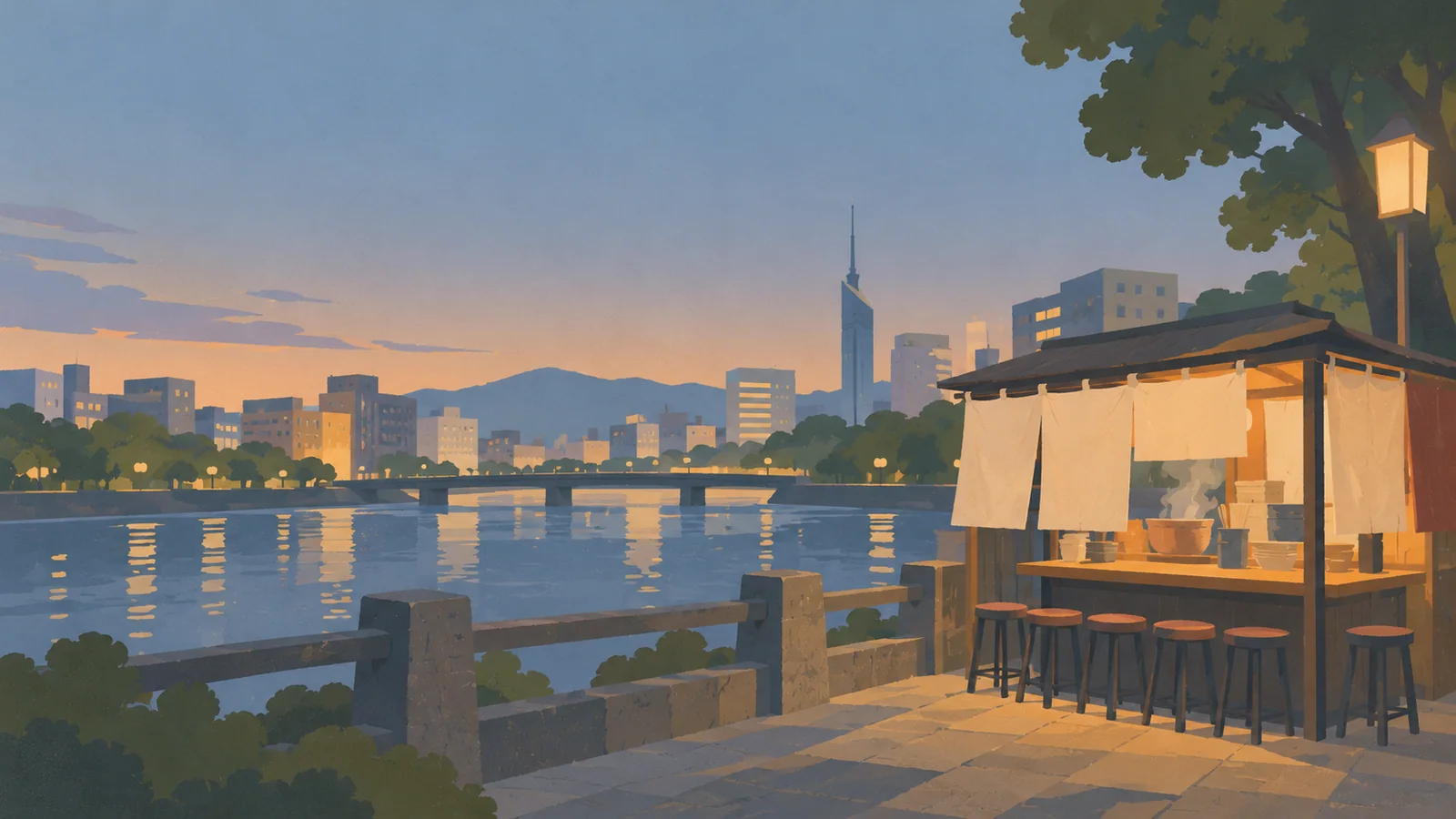


Fukuoka: what to expect
Fukuoka is one of Japan's easiest big cities: airport to centre in minutes, beaches and parks inside the urban plan, and a food culture that remains casual after dark. It is also the logical hinge into Kyushu rather than an isolated weekend stop.
Is this your trip?
Who Fukuoka is for
Food-led short breaks
Hakata ramen, seafood and yatai fit a compact evening geography.
Kyushu routes
Shinkansen, regional trains and flights all converge here.
Low-friction city travellers
The airport is exceptionally close and the centre manageable.
Repeat Japan visitors
Fukuoka feels urban without repeating Tokyo or Osaka.
Maybe not for you: It is not a substitute for rural Kyushu. Add hot springs, ceramics, coast or mountains rather than spending a full week only in the centre.
Season by season
When to visit Fukuoka
March–May and October–November. Spring and autumn are mild. Early summer is rainy, midsummer hot and humid, and typhoons can affect late summer. Winter is cool, with occasional wind and snow flurries.
- Best
Spring
March–May
Mild, bright and comfortable for parks and day trips.
- Mixed
Rainy season
June–mid July
Warm, humid and wet; indoor food plans remain easy.
- Avoid
Summer
Late July–September
Hot and humid with typhoon risk.
- Good
Autumn and winter
October–February
Autumn is excellent; winter suits hotpot, ramen and quieter travel.
Weather · monthly normals
Fukuoka is mild but humid, with a pronounced early-summer rainy season and late-summer storm risk.
Do fewer things better
Things to do in Fukuoka
A short, ordered set of experiences with the timing or planning catch that makes each one work.
- 1
Eat at one yatai, not five
Nakasu or Tenjin
Street stalls are social and compact; queues and quality vary, so choose by atmosphere and turnover.
- 2
Compare two ramen styles
Hakata and Nagahama
Thin noodles and pork broth shift by shop; a small bowl leaves room for more.
- 3
Walk Ohori Park into the art museum
Ohori
Water, garden and culture make the city's best slow half-day.
- 4
See Dazaifu early
Dazaifu
The shrine, approach street and museum work before tour buses peak.
- 5
Use the waterfront deliberately
Momochi or ferry routes
The bay gives Fukuoka space, though the urban beach is more promenade than escape.
- 6
Start the Kyushu chapter
Hakata Station
Nagasaki, Kumamoto and onsen regions need their own nights; Fukuoka makes the handoff easy.
Area by area
The neighbourhoods of Fukuoka
A real map at local-city scale: enough geography to choose a base, compare areas and group a day. Numbered places match the notes below.
| Area | What it is like | Why go |
|---|---|---|
1 Hakata rail and first visit | Main station, old temples and direct airport access. | The rational base for regional movement and early food starts. |
2 Tenjin shopping and evenings | Department stores, offices, food halls and yatai access. | The balanced central base when nightlife matters. |
3 Daimyo design and bars | Small fashion shops, cafés and compact late-night streets. | Best for contemporary local energy beside Tenjin. |
4 Nakasu nightlife and river | Entertainment island, bright signs and yatai lines. | Visit after dark; stay only if noise is part of the brief. |
5 Ohori & Ropponmatsu parks and calm | Large pond, art museum and thoughtful cafés. | A restorative half-day or quieter longer-stay base. |
6 Momochi waterfront and families | Beach promenade, tower and large attractions. | Useful with children or for open space, less rewarding as a nightlife base. |
Choose the base, then the hotel
Where to stay in Fukuoka
For most first visits: Hakata for connections; Tenjin or Daimyo for evenings.
Hakata
Best for trains, airport and one-night stops.
Tenjin or Daimyo
Walk to bars, restaurants and shopping.
Ohori or Ropponmatsu
Park access and local cafés, with a short metro ride inward.
Momochi
Larger rooms and open space, farther from the strongest evening food.
Order with a point of view
What to eat in Fukuoka
Local food is more useful as an area decision than as a checklist of famous dishes.
- 01
Hakata ramen
Hakata, Nagahama and citywide
Order firmness quickly, add a noodle refill only if you still have broth.
- 02
Motsunabe
Central restaurants
Offal hotpot is communal, rich and especially good in cooler weather.
- 03
Mizutaki
Traditional specialists
Chicken hotpot builds from clear broth to a final rice or noodle course.
- 04
Mentaiko
Markets, breakfast and izakaya
Spiced cod roe appears in rice, omelettes and countless modern variations.
- 05
Seafood
Nagahama and local sushi counters
Kyushu waters support a broad catch beyond the famous ramen.
Useful on the ground
Local tips for Fukuoka
The airport is genuinely close
Do not book a costly airport hotel for a normal morning departure.
Yatai are small
Groups may split and rain can close stalls; have a nearby backup.
Hakata and Tenjin are different centres
Choose the one matching rail versus nightlife, then use the metro.
IC cards work normally
Use one across metro, bus and most regional rail.
Kyushu needs nights
Fast trains make distances look trivial, but the best onsen and rural places slow the route down.
Common questions
Quick answers about Fukuoka
- When is the best time to visit Fukuoka?
- March–May and October–November. Spring and autumn are mild. Early summer is rainy, midsummer hot and humid, and typhoons can affect late summer. Winter is cool, with occasional wind and snow flurries.
- How many days do you need in Fukuoka?
- 2–3 days. Fukuoka is one of Japan's easiest big cities: airport to centre in minutes, beaches and parks inside the urban plan, and a food culture that remains casual after dark. It is also the logical hinge into Kyushu rather than an isolated weekend stop.
- Where should you stay in Fukuoka?
- Hakata for connections; Tenjin or Daimyo for evenings. Best for trains, airport and one-night stops.
Keep building the route
Fukuoka is part of Japan
Use the country guide for visa, money, long-distance transport and the route between cities. Then compare the other worked-out stops below.
- TokyoA hundred neighbourhoods pretending to be one city.
- KyotoThe old capital is best before breakfast and after dark.
- OsakaJapan's most convincing argument for eating after midnight.
- HiroshimaA peace city opening onto the islands of the Inland Sea.
- KanazawaGarden, craft and seafood at a scale you can actually hold.