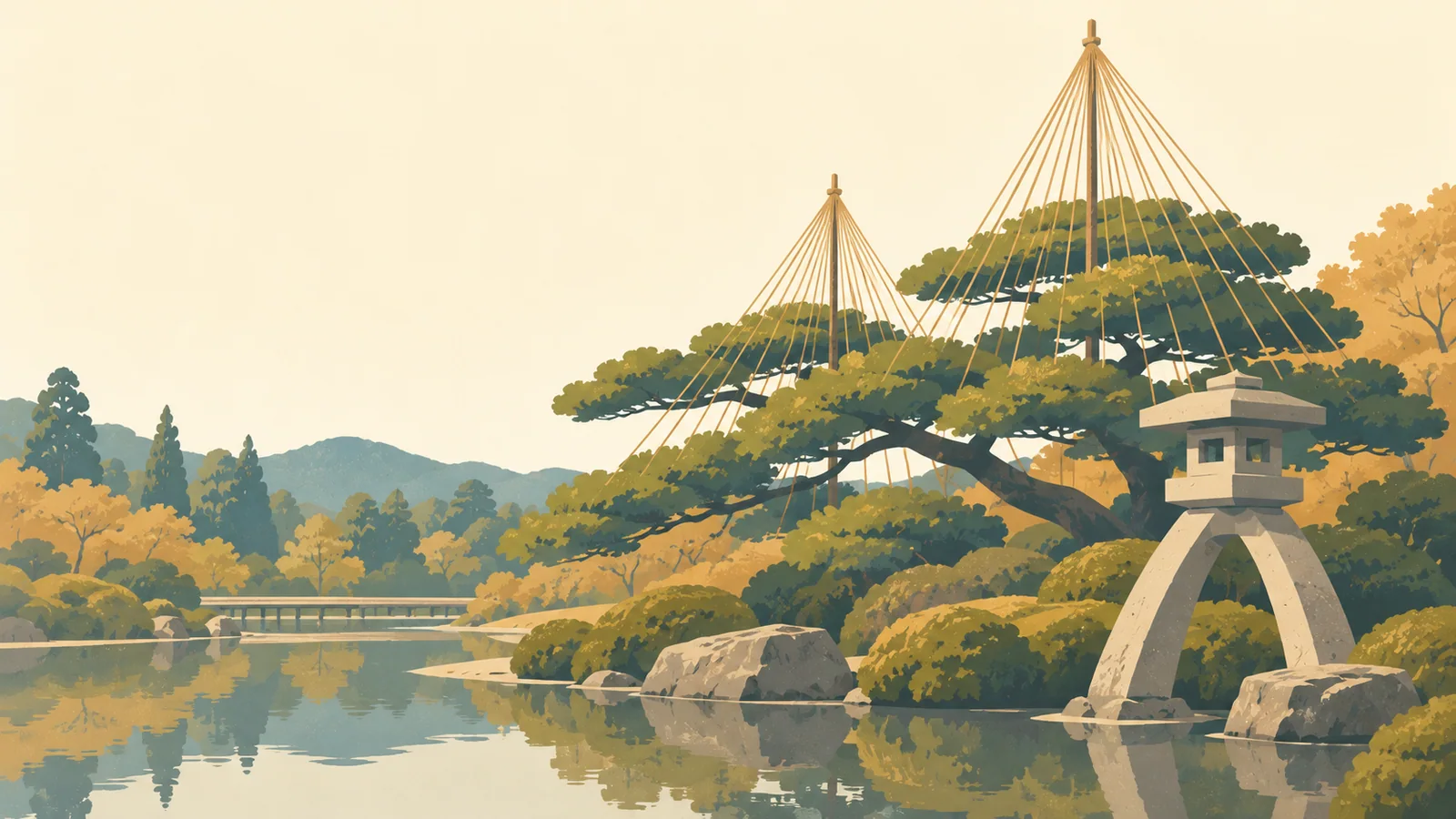


Kanazawa: what to expect
Kanazawa offers much of what people hope to find in Kyoto—historic districts, disciplined gardens, craft and seasonal food—without a metropolis around it. Two nights are enough to understand the shape; a third opens the Noto coast or mountain villages.
Is this your trip?
Who Kanazawa is for
Garden travellers
Kenroku-en anchors a broader landscape-and-craft city.
Craft and design people
Gold leaf, lacquer, ceramics and textiles remain active disciplines.
Seafood trips
The Sea of Japan supplies a strong seasonal market culture.
Smaller-city seekers
Most major areas fit inside a calm, walkable loop.
Maybe not for you: Do not call it crowd-free Kyoto; Kenroku-en and Higashi Chaya still fill at peak hours, and winter weather is genuinely wet and snowy.
Season by season
When to visit Kanazawa
April–May and October–November. Spring and autumn are comfortable and colourful. Winter brings snow, rain and excellent seafood; summer is hot, humid and wetter than the Pacific side.
- Best
Spring
March–May
Blossom, fresh green and comfortable walking after a wet winter.
- Mixed
Summer
June–September
Humid and rainy, though festivals and evening streets remain lively.
- Best
Autumn
October–November
Clearer days, garden colour and strong seasonal food.
- Good
Winter
December–February
Snow and rain require waterproof shoes; crab and quiet districts compensate.
Weather · monthly normals
Kanazawa faces the Sea of Japan and is wet year-round, with heavy winter precipitation including snow.
Do fewer things better
Things to do in Kanazawa
A short, ordered set of experiences with the timing or planning catch that makes each one work.
- 1
Enter Kenroku-en at opening
Castle district
The garden needs quiet and changing light; combine it with the castle grounds.
- 2
See craft being made
City studios and museums
A demonstration or workshop gives gold leaf and lacquer more depth than shopping.
- 3
Eat a market breakfast or lunch
Omicho Market
Go for seasonal fish and produce before tour groups compress the aisles.
- 4
Walk Higashi Chaya after day trips leave
East side
Tea houses and narrow streets regain proportion in late afternoon.
- 5
Pair samurai streets with contemporary art
Nagamachi to 21st Century Museum
The short walk makes old urban form and radical architecture speak to each other.
- 6
Use a third day beyond town
Shirakawa-go, Kaga or Noto direction
Pick one extension by season and transport, not a multi-region bus marathon.
Area by area
The neighbourhoods of Kanazawa
A real map at local-city scale: enough geography to choose a base, compare areas and group a day. Numbered places match the notes below.
| Area | What it is like | Why go |
|---|---|---|
1 Castle & Kenroku-en first visit | Garden, castle grounds and major cultural institutions. | The essential central cluster, best early. |
2 Higashi Chaya historic streets | Tea-house district beside the Asano River. | Atmospheric late in the day, fragile under group-tour pressure. |
3 Omicho Market food and convenience | Market counters between station and castle. | A practical base for breakfast and transport. |
4 Nagamachi samurai history | Earthen walls, canals and preserved residences. | Small enough to walk slowly and pair with the centre. |
5 Katamachi nightlife and dining | Restaurants, bars and shopping south of the castle. | Best evening base, less useful for an early station departure. |
6 Teramachi quiet and temples | Temple clusters and residential streets beyond the main river. | A calm contrast for repeat visitors and walkers. |
Choose the base, then the hotel
Where to stay in Kanazawa
For most first visits: Between Omicho Market and the castle for the easiest first stay.
Omicho to castle corridor
Walk to food and major sights while keeping station buses easy.
Katamachi or Korinbo
More energy after museums close.
Higashi Chaya edge
Limited rooms and quiet nights; avoid accommodation that disturbs residential lanes.
Kanazawa Station
Architecturally impressive and frictionless, though outside the prettiest streets.
Order with a point of view
What to eat in Kanazawa
Local food is more useful as an area decision than as a checklist of famous dishes.
- 01
Kaisendon and sushi
Omicho and specialist counters
Cold-water fish is the reason to eat seasonally.
- 02
Jibuni
Traditional restaurants
Duck or chicken simmered with wheat gluten is a distinctive Kaga dish.
- 03
Nodoguro
Seafood restaurants
Blackthroat seaperch is rich and prized; confirm market price before ordering.
- 04
Kaga vegetables
Seasonal menus
Local cultivars give vegetable dishes real specificity.
- 05
Wagashi with tea
Historic districts
Confectionery craft belongs with the city's tea culture, not only souvenir boxes.
Useful on the ground
Local tips for Kanazawa
Rain is normal
Carry a compact umbrella and waterproof footwear in every season.
The bus loop is useful but crowded
Walk between adjacent sights and use taxis strategically when sharing.
Markets are workplaces
Do not block counters for photos and eat where the stall permits.
Reserve small craft workshops
Studios have limited places and may not run daily.
Winter rail can change
Build margin during heavy snow and check same-day service.
Common questions
Quick answers about Kanazawa
- When is the best time to visit Kanazawa?
- April–May and October–November. Spring and autumn are comfortable and colourful. Winter brings snow, rain and excellent seafood; summer is hot, humid and wetter than the Pacific side.
- How many days do you need in Kanazawa?
- 2–3 days. Kanazawa offers much of what people hope to find in Kyoto—historic districts, disciplined gardens, craft and seasonal food—without a metropolis around it. Two nights are enough to understand the shape; a third opens the Noto coast or mountain villages.
- Where should you stay in Kanazawa?
- Between Omicho Market and the castle for the easiest first stay. Walk to food and major sights while keeping station buses easy.
Keep building the route
Kanazawa is part of Japan
Use the country guide for visa, money, long-distance transport and the route between cities. Then compare the other worked-out stops below.
- TokyoA hundred neighbourhoods pretending to be one city.
- KyotoThe old capital is best before breakfast and after dark.
- OsakaJapan's most convincing argument for eating after midnight.
- HiroshimaA peace city opening onto the islands of the Inland Sea.
- FukuokaA compact food city facing Korea across the water.