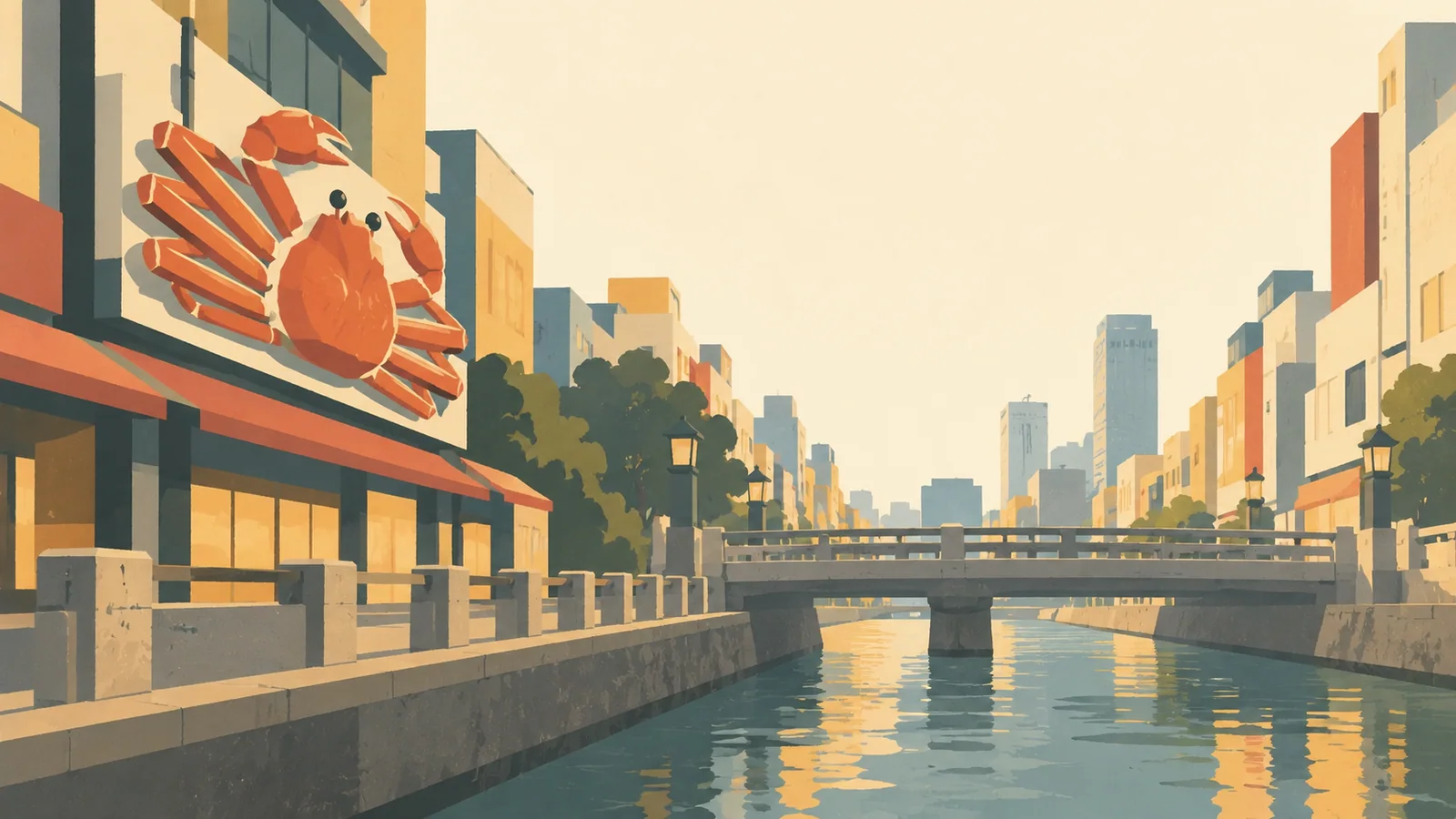


Osaka: what to expect
Osaka is direct, practical and hungry. Use Namba for the theatre, Tenma for an ordinary night out, Umeda for transport and the city as a cheaper, livelier base for the wider Kansai region.
Is this your trip?
Who Osaka is for
Food-first travellers
Casual counters and specialist dishes are the city's main language.
Night owls
Osaka stays social later and with less ceremony than Kyoto.
Kansai explorers
Nara, Kobe, Himeji and Kyoto sit within easy rail reach.
Value seekers
Rooms and meals often undercut Kyoto without sacrificing transport.
Maybe not for you: If temples and early quiet are the whole point, sleep in Kyoto. Osaka works best when its evenings are part of the plan.
Season by season
When to visit Osaka
April–May and October–November. Spring and autumn are mild. Summer is hot, humid and animated by festivals; winter is dry enough for city travel and excellent for warming food.
- Best
Spring
March–May
Mild days and blossom, with Golden Week pressure in early May.
- Mixed
Rainy season
June–mid July
Humid and wet, but covered arcades keep the city functional.
- Mixed
Summer
Late July–September
Very hot; Tenjin Matsuri adds energy while typhoons add risk.
- Best
Autumn and winter
October–February
Comfortable autumn gives way to cool, dry food-focused city weather.
Weather · monthly normals
Osaka is humid in summer and relatively mild in winter, with a wetter June and September.
Do fewer things better
Things to do in Osaka
A short, ordered set of experiences with the timing or planning catch that makes each one work.
- 1
Eat one dish per stop
Namba and Ura-Namba
Takoyaki, okonomiyaki and kushikatsu are better as a moving evening than one giant meal.
- 2
See Dotonbori, then leave the main canal
Minami
The signscape is worth twenty minutes; nearby back lanes hold the better night.
- 3
Explore Osaka Castle grounds
Chuo
The park and history matter more than expecting an untouched original keep.
- 4
Join Tenma after work
Tenma
Market streets and tiny bars show ordinary Osaka social life.
- 5
See the city from Umeda
Kita
Architecture, department stores and rail infrastructure form a striking modern centre.
- 6
Use one rail day well
Himeji, Nara or Kobe
Pick by interest and return for dinner rather than trying to combine cities.
Area by area
The neighbourhoods of Osaka
A real map at local-city scale: enough geography to choose a base, compare areas and group a day. Numbered places match the notes below.
| Area | What it is like | Why go |
|---|---|---|
1 Namba & Dotonbori first visit | Neon, food, shopping and dense late-night streets. | Stay for energy and direct airport trains; sleep away from the canal. |
2 Umeda transport and shopping | Major rail terminals, towers and underground malls. | The efficient base for day trips and modern Osaka. |
3 Tenma local nightlife | Market lanes, standing bars and casual restaurants. | The city's best compact evening for travellers who dislike spectacle. |
4 Shinsekai & Tennoji retro streets and museums | Old entertainment district beside parks and major institutions. | Come for contrast and kushikatsu, with realistic expectations after dark. |
5 Nakazakicho cafés and small shops | Low-rise lanes tucked beside Umeda's towers. | A gentle morning counterpoint to the transport centre. |
6 Osaka Bay families and attractions | Aquarium, large venues and reclaimed-island scale. | Treat it as a dedicated half-day rather than another central district. |
Choose the base, then the hotel
Where to stay in Osaka
For most first visits: Namba for first-time energy; Umeda for day trips and onward rail.
Namba or Shinsaibashi edge
Walk home; choose side streets for less noise.
Umeda
Multiple operators and quick Shin-Osaka access simplify Kansai travel.
Tennoji
Parks, larger hotels and direct airport rail make logistics easier.
Tenma
Limited hotel stock, strong atmosphere and easy northern connections.
Order with a point of view
What to eat in Osaka
Local food is more useful as an area decision than as a checklist of famous dishes.
- 01
Okonomiyaki
Namba or neighbourhood grills
Cooked on a hot plate, filling and best without an hour-long social-media queue.
- 02
Takoyaki
Street counters
Eat carefully; the centre stays much hotter than the outside.
- 03
Kushikatsu
Shinsekai
Fried skewers are the district ritual; order in rounds.
- 04
Kitsune udon
Old noodle shops
A sweet-savory bowl associated with Osaka and ideal at lunch.
- 05
Standing-bar plates
Tenma and Ura-Namba
Small dishes make an inexpensive route through several specialists.
Useful on the ground
Local tips for Osaka
Osaka has several centres
Umeda and Namba are a real train ride apart; group north and south.
Different rail companies share the map
The station name may be similar while the entrance is not.
Queues are optional
A comparable specialist is usually one block away.
Escalator etiquette varies
Locals have traditionally stood on the right, but follow signs and current flow.
Kyoto is close, not identical
A short train does not make daily commuting painless at peak hours.
Common questions
Quick answers about Osaka
- When is the best time to visit Osaka?
- April–May and October–November. Spring and autumn are mild. Summer is hot, humid and animated by festivals; winter is dry enough for city travel and excellent for warming food.
- How many days do you need in Osaka?
- 2–3 days. Osaka is direct, practical and hungry. Use Namba for the theatre, Tenma for an ordinary night out, Umeda for transport and the city as a cheaper, livelier base for the wider Kansai region.
- Where should you stay in Osaka?
- Namba for first-time energy; Umeda for day trips and onward rail. Walk home; choose side streets for less noise.
Keep building the route
Osaka is part of Japan
Use the country guide for visa, money, long-distance transport and the route between cities. Then compare the other worked-out stops below.
- TokyoA hundred neighbourhoods pretending to be one city.
- KyotoThe old capital is best before breakfast and after dark.
- HiroshimaA peace city opening onto the islands of the Inland Sea.
- KanazawaGarden, craft and seafood at a scale you can actually hold.
- FukuokaA compact food city facing Korea across the water.