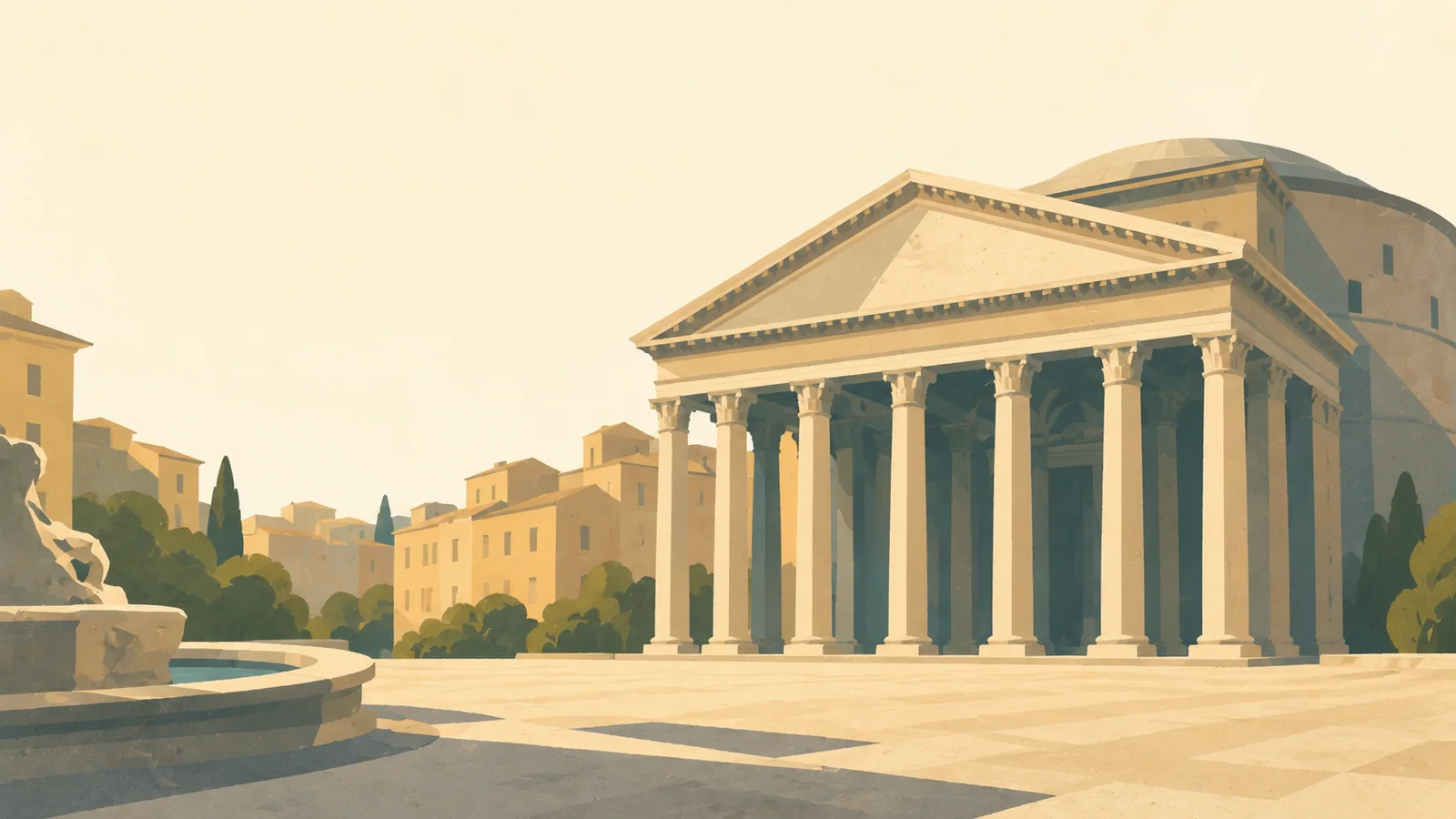


Rome: what to expect
The Forum, the Vatican, Caravaggio in churches that charge nothing, and a working capital of nearly three million people, not a museum. Stay in Monti, Trastevere or the centro storico, not near Termini. Book the Vatican Museums and the Colosseum weeks out and go at opening; the Trevi Fountain is a ninety-second stop and fine at midnight. This city guide groups the destination into six useful areas so the stay works on the ground, not only on a country map.
Is this your trip?
Who Rome is for
First-timers travellers
The Forum, the Vatican, Caravaggio in churches that charge nothing, and a working capital of nearly three million people, not a museum. Stay in Monti, Trastevere or the centro storico, not near Termini. Book the Vatican Museums and the Colosseum weeks out and go at opening; the Trevi Fountain is a ninety-second stop and fine at midnight.
Travellers with 3–4 days
That window gives Rome enough room for one anchor area and one contrasting cluster per day.
Ancient Rome
Monti & Celio and Trastevere make that interest practical rather than a country-level promise.
Area-led planners
Six fixed clusters make it easier to choose a base and avoid repeated cross-destination transfers.
Maybe not for you: A compressed checklist is the weak version of Rome. Timed Vatican, Colosseum and Borghese entries punish improvisation; group each day by district
Season by season
When to visit Rome
April–June and September–October. Rounded Mediterranean planning normals: hot dry summers and mild, wetter winters. Conditions can still change sharply by elevation, coast and exposure, so use the chart for route timing and the current forecast for the day itself.
- Best
Spring
March–May
Mild days, green landscapes and rising demand around holidays.
- Mixed
Summer
June–August
Hot, bright and busy; shade and early starts materially improve city days.
- Best
Autumn
September–November
Warm early weeks, softer light and rain returning later in the season.
- Good
Winter
December–February
Cooler and wetter, with shorter hours but much lighter visitor pressure.
Weather · monthly normals
Rounded Mediterranean planning normals: hot dry summers and mild, wetter winters. Values are rounded planning normals rather than a live forecast.
Do fewer things better
Things to do in Rome
A short, ordered set of experiences with the timing or planning catch that makes each one work.
- 1
Start with Centro Storico
Centro Storico
Pantheon, piazzas and dense walking routes around the historic core
- 2
Walk Monti & Celio without stacking it
Monti & Celio
Forum edges, local streets and early access to the Colosseum
- 3
Use Trastevere for evenings and lanes
Trastevere
River-side lanes, churches and a dining scene that is busiest after dark
- 4
Give Prati & Vatican a deliberate half-day
Prati & Vatican
Vatican access beside ordered residential blocks and broad avenues
- 5
See Testaccio outside peak hours
Testaccio
Market cooking, Roman trattorias and the city food history around the old slaughterhouse
- 6
Keep Ostiense & Appian Way weather-flexible
Ostiense & Appian Way
Industrial architecture south of the centre and the ancient road beyond it
Timed Vatican, Colosseum and Borghese entries punish improvisation; group each day by district
Area by area
The neighbourhoods of Rome
A real map at local-city scale: enough geography to choose a base, compare areas and group a day. Numbered places match the notes below.
| Area | What it is like | Why go |
|---|---|---|
1 Centro Storico first landmarks | Pantheon, piazzas and dense walking routes around the historic core | Use Centro Storico when first landmarks matters more than crossing the whole destination. |
2 Monti & Celio ancient Rome | Forum edges, local streets and early access to the Colosseum | Use Monti & Celio when ancient Rome matters more than crossing the whole destination. |
3 Trastevere evenings and lanes | River-side lanes, churches and a dining scene that is busiest after dark | Use Trastevere when evenings and lanes matters more than crossing the whole destination. |
4 Prati & Vatican museums and calm streets | Vatican access beside ordered residential blocks and broad avenues | Use Prati & Vatican when museums and calm streets matters more than crossing the whole destination. |
5 Testaccio food and local life | Market cooking, Roman trattorias and the city food history around the old slaughterhouse | Use Testaccio when food and local life matters more than crossing the whole destination. |
6 Ostiense & Appian Way modern culture and open space | Industrial architecture south of the centre and the ancient road beyond it | Use Ostiense & Appian Way when modern culture and open space matters more than crossing the whole destination. |
Choose the base, then the hotel
Where to stay in Rome
For most first visits: Centro Storico for first landmarks.
Centro Storico
Pantheon, piazzas and dense walking routes around the historic core Choose it when that trade-off should shape mornings and evenings.
Monti & Celio
Forum edges, local streets and early access to the Colosseum Choose it when that trade-off should shape mornings and evenings.
Trastevere
River-side lanes, churches and a dining scene that is busiest after dark Choose it when that trade-off should shape mornings and evenings.
Prati & Vatican
Vatican access beside ordered residential blocks and broad avenues Choose it when that trade-off should shape mornings and evenings.
Order with a point of view
What to eat in Rome
Local food is more useful as an area decision than as a checklist of famous dishes.
- 01
Carbonara
Centro Storico
Egg, pecorino and guanciale demand a kitchen that treats the emulsion seriously
- 02
Cacio e pepe
Monti & Celio
The simplest Roman pasta exposes weak technique immediately
- 03
Supplì
Trastevere
Eat the fried rice croquette hot at a bakery or dedicated counter
- 04
Amatriciana
Prati & Vatican
Tomato, guanciale and pecorino make a richer Roman pasta anchor
- 05
Maritozzo
Testaccio
A cream-filled breakfast bun worth ordering before the display case empties
Useful on the ground
Local tips for Rome
Plan the transfer, not only the distance
Timed Vatican, Colosseum and Borghese entries punish improvisation; group each day by district
Visa and the border
Italy is in Schengen. EU/EEA and Swiss citizens need only an ID card. UK, US, Canadian, Australian and most Latin American citizens get 90 days in any 180 across the whole Schengen area, visa-free. Non-EU visitors are fingerprinted and photographed under the Entry/Exit System on first arrival; the ETIAS pre-travel authorisation (about €20, valid three years) is scheduled to start in late 2026 — check before you fly.
Money
Euro. Cards and contactless are accepted almost everywhere, including on trains and city transit. Withdraw from bank ATMs (Bancomat) and decline the Euronet machines in tourist streets and their 'conversion' offer — always pay in euros. Keep €50–100 in cash south of Rome; north of it a card and phone are enough.
SIM and data
EU SIMs roam free. UK travellers should check — most UK networks now charge for EU roaming. Everyone else: an eSIM (Airalo, Holafly, or Iliad's own) before you fly, or a physical Iliad, WindTre or TIM SIM for about €10 a month with passport ID at a shop. Coverage is good in cities and thin in the Dolomites and the Sicilian interior. Trenitalia, Italo and Moovit are the apps that matter; Google Maps is unreliable for Italian bus times.
Plugs and power
230 V, 50 Hz. Sockets are Type L (three round pins in a line) and Type C; many modern sockets also take the German Schuko (Type F). Standard European two-pin chargers fit everywhere; UK and US travellers need an adapter, not a converter.
Common questions
Quick answers about Rome
- When is the best time to visit Rome?
- April–June and September–October. Rounded Mediterranean planning normals: hot dry summers and mild, wetter winters. Conditions can still change sharply by elevation, coast and exposure, so use the chart for route timing and the current forecast for the day itself.
- How many days do you need in Rome?
- 3–4 days. The Forum, the Vatican, Caravaggio in churches that charge nothing, and a working capital of nearly three million people, not a museum. Stay in Monti, Trastevere or the centro storico, not near Termini. Book the Vatican Museums and the Colosseum weeks out and go at opening; the Trevi Fountain is a ninety-second stop and fine at midnight. This city guide groups the destination into six useful areas so the stay works on the ground, not only on a country map.
- Where should you stay in Rome?
- Centro Storico for first landmarks. Pantheon, piazzas and dense walking routes around the historic core Choose it when that trade-off should shape mornings and evenings.
Keep building the route
Rome is part of Italy
Use the country guide for visa, money, long-distance transport and the route between cities. Then compare the other worked-out stops below.