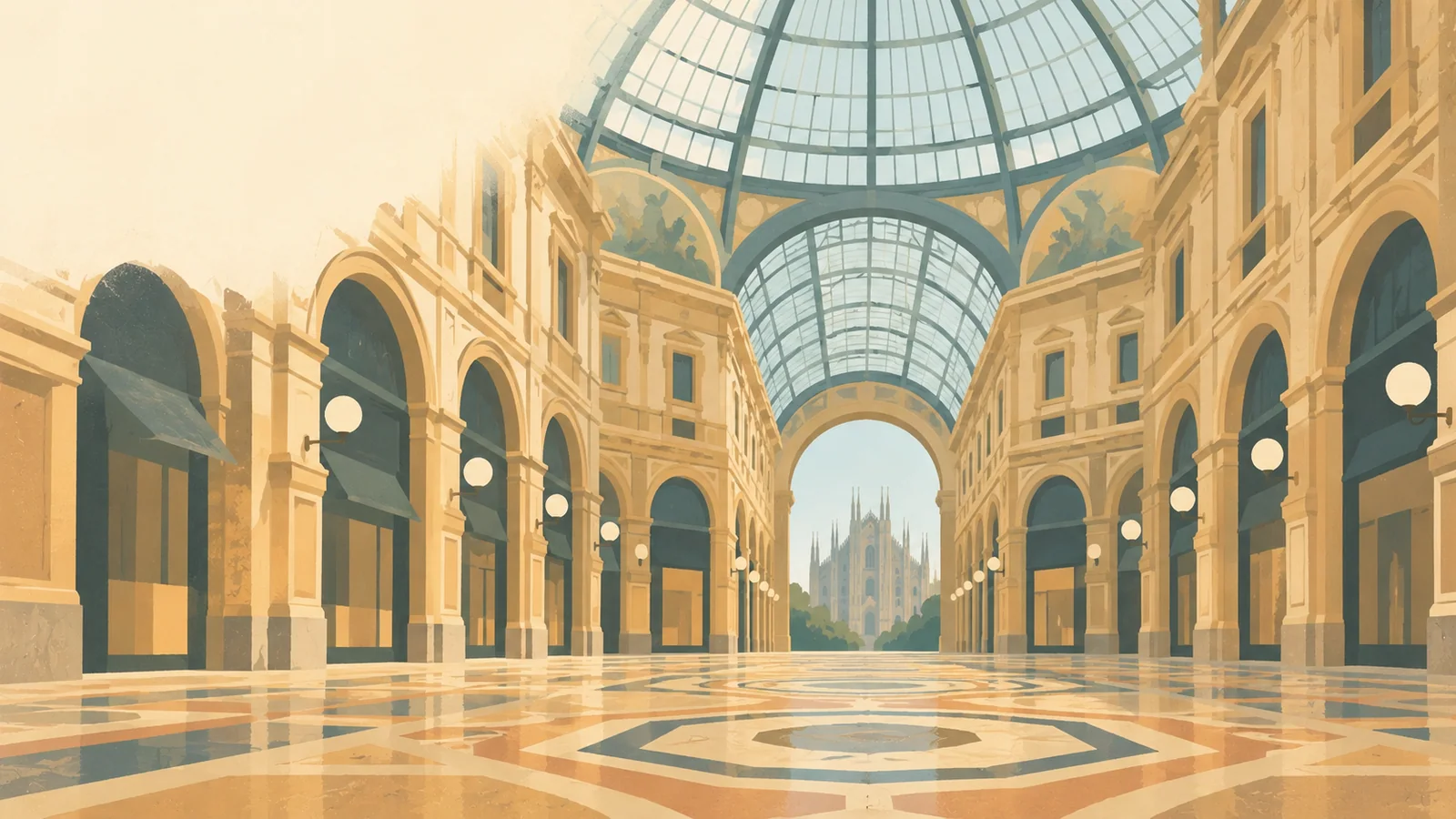


Milan: what to expect
Italy's business, fashion and design capital, and its most efficient city. The Last Supper (book months ahead), the Duomo rooftop, Brera and the Navigli at aperitivo hour are enough. Its real value is logistical: Malpensa's long-haul flights, and Lake Como forty minutes away by train. This city guide groups the destination into six useful areas so the stay works on the ground, not only on a country map.
Is this your trip?
Who Milan is for
Design travellers
Italy's business, fashion and design capital, and its most efficient city. The Last Supper (book months ahead), the Duomo rooftop, Brera and the Navigli at aperitivo hour are enough. Its real value is logistical: Malpensa's long-haul flights, and Lake Como forty minutes away by train.
Travellers with 1–2 days
That window gives Milan enough room for one anchor area and one contrasting cluster per day.
Art and polished evenings
Brera and Navigli make that interest practical rather than a country-level promise.
Area-led planners
Six fixed clusters make it easier to choose a base and avoid repeated cross-destination transfers.
Maybe not for you: A compressed checklist is the weak version of Milan. The Last Supper and design-week stays sell far ahead; a fashion-shopping itinerary misses much of the city
Season by season
When to visit Milan
May–June and September. Rounded continental planning normals: cold winters, warm summers and a fast-changing shoulder season. Conditions can still change sharply by elevation, coast and exposure, so use the chart for route timing and the current forecast for the day itself.
- Good
Spring
March–May
Rapid warming, blossom and occasional cold reversals; layer for long days.
- Best
Summer
June–August
Warm to hot with long daylight and thunderstorms rather than constant rain.
- Best
Autumn
September–November
September is excellent; temperatures and daylight fall quickly after it.
- Mixed
Winter
December–February
Cold, sometimes snowy and atmospheric, with museums carrying shorter days.
Weather · monthly normals
Rounded continental planning normals: cold winters, warm summers and a fast-changing shoulder season. Values are rounded planning normals rather than a live forecast.
Do fewer things better
Things to do in Milan
A short, ordered set of experiences with the timing or planning catch that makes each one work.
- 1
Start with Duomo & centre
Duomo & centre
Cathedral terraces, Galleria and dense historic streets
- 2
Walk Brera without stacking it
Brera
The Pinacoteca, courtyards and walkable restaurants north of the centre
- 3
Use Navigli for canals and nightlife
Navigli
Towpaths, studios and a loud aperitivo scene in the south-west
- 4
Give Porta Venezia a deliberate half-day
Porta Venezia
Liberty architecture, museums and diverse dining east of centre
- 5
See Isola & Porta Nuova outside peak hours
Isola & Porta Nuova
Rail-yard regeneration, towers and neighbourhood bars
- 6
Keep Porta Romana weather-flexible
Porta Romana
Residential streets, baths history and easier local evenings
The Last Supper and design-week stays sell far ahead; a fashion-shopping itinerary misses much of the city
Area by area
The neighbourhoods of Milan
A real map at local-city scale: enough geography to choose a base, compare areas and group a day. Numbered places match the notes below.
| Area | What it is like | Why go |
|---|---|---|
1 Duomo & centre first landmarks | Cathedral terraces, Galleria and dense historic streets | Use Duomo & centre when first landmarks matters more than crossing the whole destination. |
2 Brera art and polished evenings | The Pinacoteca, courtyards and walkable restaurants north of the centre | Use Brera when art and polished evenings matters more than crossing the whole destination. |
3 Navigli canals and nightlife | Towpaths, studios and a loud aperitivo scene in the south-west | Use Navigli when canals and nightlife matters more than crossing the whole destination. |
4 Porta Venezia design and queer nightlife | Liberty architecture, museums and diverse dining east of centre | Use Porta Venezia when design and queer nightlife matters more than crossing the whole destination. |
5 Isola & Porta Nuova contemporary city | Rail-yard regeneration, towers and neighbourhood bars | Use Isola & Porta Nuova when contemporary city matters more than crossing the whole destination. |
6 Porta Romana food and longer stays | Residential streets, baths history and easier local evenings | Use Porta Romana when food and longer stays matters more than crossing the whole destination. |
Choose the base, then the hotel
Where to stay in Milan
For most first visits: Duomo & centre for first landmarks.
Duomo & centre
Cathedral terraces, Galleria and dense historic streets Choose it when that trade-off should shape mornings and evenings.
Brera
The Pinacoteca, courtyards and walkable restaurants north of the centre Choose it when that trade-off should shape mornings and evenings.
Navigli
Towpaths, studios and a loud aperitivo scene in the south-west Choose it when that trade-off should shape mornings and evenings.
Porta Venezia
Liberty architecture, museums and diverse dining east of centre Choose it when that trade-off should shape mornings and evenings.
Order with a point of view
What to eat in Milan
Local food is more useful as an area decision than as a checklist of famous dishes.
- 01
Risotto alla milanese
Duomo & centre
Saffron rice should be loose and often arrives beside ossobuco
- 02
Cotoletta
Brera
Compare the bone-in Milanese version with thinner interpretations
- 03
Ossobuco
Navigli
Slow-braised veal is a cold-weather classic, not a rushed lunch
- 04
Panzerotto
Porta Venezia
A hot filled pastry makes a practical central snack
- 05
Aperitivo
Isola & Porta Nuova
Judge it by the drink and setting, not an enormous low-quality buffet
Useful on the ground
Local tips for Milan
Plan the transfer, not only the distance
The Last Supper and design-week stays sell far ahead; a fashion-shopping itinerary misses much of the city
Visa and the border
Italy is in Schengen. EU/EEA and Swiss citizens need only an ID card. UK, US, Canadian, Australian and most Latin American citizens get 90 days in any 180 across the whole Schengen area, visa-free. Non-EU visitors are fingerprinted and photographed under the Entry/Exit System on first arrival; the ETIAS pre-travel authorisation (about €20, valid three years) is scheduled to start in late 2026 — check before you fly.
Money
Euro. Cards and contactless are accepted almost everywhere, including on trains and city transit. Withdraw from bank ATMs (Bancomat) and decline the Euronet machines in tourist streets and their 'conversion' offer — always pay in euros. Keep €50–100 in cash south of Rome; north of it a card and phone are enough.
SIM and data
EU SIMs roam free. UK travellers should check — most UK networks now charge for EU roaming. Everyone else: an eSIM (Airalo, Holafly, or Iliad's own) before you fly, or a physical Iliad, WindTre or TIM SIM for about €10 a month with passport ID at a shop. Coverage is good in cities and thin in the Dolomites and the Sicilian interior. Trenitalia, Italo and Moovit are the apps that matter; Google Maps is unreliable for Italian bus times.
Plugs and power
230 V, 50 Hz. Sockets are Type L (three round pins in a line) and Type C; many modern sockets also take the German Schuko (Type F). Standard European two-pin chargers fit everywhere; UK and US travellers need an adapter, not a converter.
Common questions
Quick answers about Milan
- When is the best time to visit Milan?
- May–June and September. Rounded continental planning normals: cold winters, warm summers and a fast-changing shoulder season. Conditions can still change sharply by elevation, coast and exposure, so use the chart for route timing and the current forecast for the day itself.
- How many days do you need in Milan?
- 1–2 days. Italy's business, fashion and design capital, and its most efficient city. The Last Supper (book months ahead), the Duomo rooftop, Brera and the Navigli at aperitivo hour are enough. Its real value is logistical: Malpensa's long-haul flights, and Lake Como forty minutes away by train. This city guide groups the destination into six useful areas so the stay works on the ground, not only on a country map.
- Where should you stay in Milan?
- Duomo & centre for first landmarks. Cathedral terraces, Galleria and dense historic streets Choose it when that trade-off should shape mornings and evenings.
Keep building the route
Milan is part of Italy
Use the country guide for visa, money, long-distance transport and the route between cities. Then compare the other worked-out stops below.