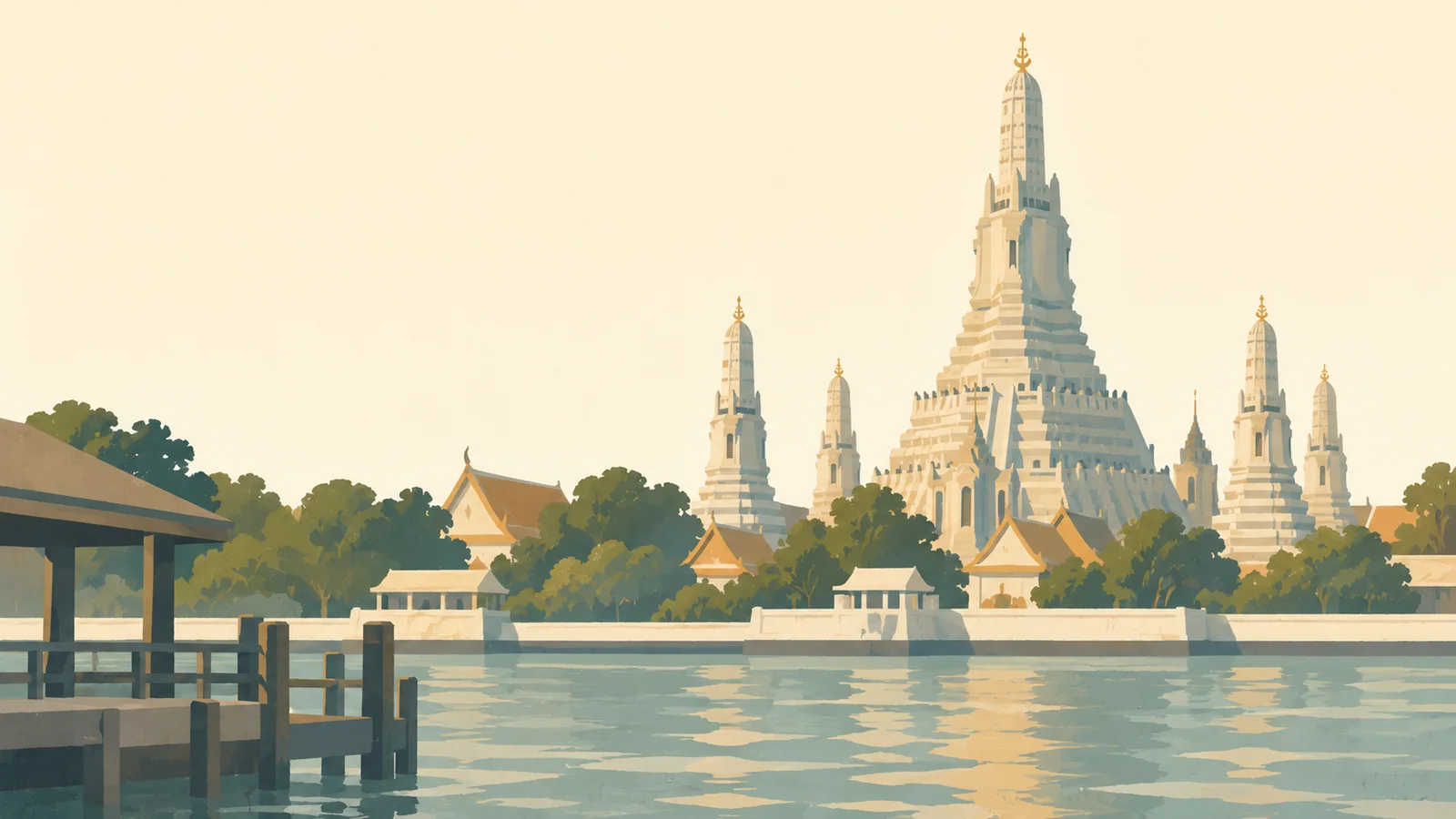


Bangkok: what to expect
Loud, hot, gridlocked and the best food city in Southeast Asia. Stay near the BTS or the river, not on Khao San Road. The Grand Palace and Wat Pho at opening time, Chinatown at night, a canal boat through Thonburi, and a long-tail down the Chao Phraya cover the essentials; the malls and rooftop bars are where the second day goes when it rains. This city guide groups the destination into six useful areas so the stay works on the ground, not only on a country map.
Is this your trip?
Who Bangkok is for
First-timers travellers
Loud, hot, gridlocked and the best food city in Southeast Asia. Stay near the BTS or the river, not on Khao San Road. The Grand Palace and Wat Pho at opening time, Chinatown at night, a canal boat through Thonburi, and a long-tail down the Chao Phraya cover the essentials; the malls and rooftop bars are where the second day goes when it rains.
Travellers with 3–4 days
That window gives Bangkok enough room for one anchor area and one contrasting cluster per day.
Food and trade
Chinatown & Talat Noi and Siam & Pathum Wan make that interest practical rather than a country-level promise.
Area-led planners
Six fixed clusters make it easier to choose a base and avoid repeated cross-destination transfers.
Maybe not for you: A compressed checklist is the weak version of Bangkok. Treat the suggested stay as time on the ground: weather, timed entry, ferries or mountain roads can remove half a day.
Season by season
When to visit Bangkok
November–February. Rounded tropical-monsoon planning normals: hot year-round, with a pronounced wet season. Conditions can still change sharply by elevation, coast and exposure, so use the chart for route timing and the current forecast for the day itself.
- Best
Cooler dry
November–February
Lower humidity and rain make this the easiest period, also the busiest.
- Mixed
Hot season
March–May
Very hot afternoons reward early starts, shade and a slower pace.
- Good
Wet season
June–October
Short intense rain and occasional disruption come with greener landscapes and value.
- Mixed
Peak rain
August–September
Build weather margin into road, boat and outdoor days.
Weather · monthly normals
Rounded tropical-monsoon planning normals: hot year-round, with a pronounced wet season. Values are rounded planning normals rather than a live forecast.
Do fewer things better
Things to do in Bangkok
A short, ordered set of experiences with the timing or planning catch that makes each one work.
- 1
Start with Rattanakosin
Rattanakosin
Grand Palace, Wat Pho and old civic Bangkok
- 2
Walk Chinatown & Talat Noi without stacking it
Chinatown & Talat Noi
Markets, shrines and river-side warehouses
- 3
Use Siam & Pathum Wan for malls and contemporary culture
Siam & Pathum Wan
BTS-linked art, shopping and climate refuge
- 4
Give Ari & Chatuchak a deliberate half-day
Ari & Chatuchak
Northern neighbourhood food beside the weekend market
- 5
See Thonglor & Ekkamai outside peak hours
Thonglor & Ekkamai
Eastern Sukhumvit dining on the rail line
- 6
Keep Thonburi canals weather-flexible
Thonburi canals
Long-tail routes reveal the city beyond roads
Treat the suggested stay as time on the ground: weather, timed entry, ferries or mountain roads can remove half a day.
Area by area
The neighbourhoods of Bangkok
A real map at local-city scale: enough geography to choose a base, compare areas and group a day. Numbered places match the notes below.
| Area | What it is like | Why go |
|---|---|---|
1 Rattanakosin first temples and history | Grand Palace, Wat Pho and old civic Bangkok | Use Rattanakosin when first temples and history matters more than crossing the whole destination. |
2 Chinatown & Talat Noi food and trade | Markets, shrines and river-side warehouses | Use Chinatown & Talat Noi when food and trade matters more than crossing the whole destination. |
3 Siam & Pathum Wan malls and contemporary culture | BTS-linked art, shopping and climate refuge | Use Siam & Pathum Wan when malls and contemporary culture matters more than crossing the whole destination. |
4 Ari & Chatuchak cafés and local stays | Northern neighbourhood food beside the weekend market | Use Ari & Chatuchak when cafés and local stays matters more than crossing the whole destination. |
5 Thonglor & Ekkamai nightlife and design | Eastern Sukhumvit dining on the rail line | Use Thonglor & Ekkamai when nightlife and design matters more than crossing the whole destination. |
6 Thonburi canals water and older communities | Long-tail routes reveal the city beyond roads | Use Thonburi canals when water and older communities matters more than crossing the whole destination. |
Choose the base, then the hotel
Where to stay in Bangkok
For most first visits: Rattanakosin for first temples and history.
Rattanakosin
Grand Palace, Wat Pho and old civic Bangkok Choose it when that trade-off should shape mornings and evenings.
Chinatown & Talat Noi
Markets, shrines and river-side warehouses Choose it when that trade-off should shape mornings and evenings.
Siam & Pathum Wan
BTS-linked art, shopping and climate refuge Choose it when that trade-off should shape mornings and evenings.
Ari & Chatuchak
Northern neighbourhood food beside the weekend market Choose it when that trade-off should shape mornings and evenings.
Order with a point of view
What to eat in Bangkok
Local food is more useful as an area decision than as a checklist of famous dishes.
- 01
Noodle breakfast or lunch
Rattanakosin
Boat noodles, khao soi and regional rice noodles belong to different places; follow the local bowl
- 02
Made-to-order stir-fry
Chinatown & Talat Noi
A specialist wok stall with visible turnover usually beats a translated hundred-item menu
- 03
Regional curry
Siam & Pathum Wan
Northern, central and southern curries differ in herbs, coconut and heat
- 04
Fruit and market sweets
Ari & Chatuchak
Buy cut fruit from clean busy vendors and learn which varieties are actually in season
- 05
Night-market dinner
Thonglor & Ekkamai
Graze deliberately, choose hot freshly cooked food and avoid collecting every viral stall
Useful on the ground
Local tips for Bangkok
Plan the transfer, not only the distance
Treat the suggested stay as time on the ground: weather, timed entry, ferries or mountain roads can remove half a day.
Visa and the arrival card
EU, UK, US, Canadian and Australian citizens get 60 days visa-free (raised from 30 in July 2024; the government has repeatedly floated cutting it back to 30 — check before booking a stay longer than a month). Extendable once by 30 days at an immigration office for about €50. Everyone must complete the Thailand Digital Arrival Card (TDAC) online within 72 hours before landing; airlines may also ask for proof of onward travel.
Money
Baht, roughly ฿38 to the euro. Cash still runs street food, markets, songthaews and small guesthouses; cards work in hotels, malls, chains and most restaurants with a printed menu. Every foreign-card ATM withdrawal costs ฿220 (about €6) on top of your bank's fee, so withdraw the daily maximum (usually ฿20,000–30,000) rather than little and often. Thai QR payments (PromptPay) need a Thai bank account, so ignore the stickers. Change money at SuperRich or a bank branch, never at the airport counters.
SIM and data
AIS and True (which absorbed dtac) sell tourist eSIMs online for €8–15 covering 8–15 days with generous data; buy before you fly so Grab works from the airport kerb. Airalo works but costs more for less. Coverage is excellent everywhere except deep in national parks. Thais live on LINE, not WhatsApp; hotels and tour operators will ask for it.
Plugs and power
220 V, 50 Hz. Sockets are hybrid and take flat US-style pins (types A and B), European two-pin (type C) and the Thai type O — so a European charger fits without an adapter and a British one needs one. Power cuts on islands are routine and short.
Common questions
Quick answers about Bangkok
- When is the best time to visit Bangkok?
- November–February. Rounded tropical-monsoon planning normals: hot year-round, with a pronounced wet season. Conditions can still change sharply by elevation, coast and exposure, so use the chart for route timing and the current forecast for the day itself.
- How many days do you need in Bangkok?
- 3–4 days. Loud, hot, gridlocked and the best food city in Southeast Asia. Stay near the BTS or the river, not on Khao San Road. The Grand Palace and Wat Pho at opening time, Chinatown at night, a canal boat through Thonburi, and a long-tail down the Chao Phraya cover the essentials; the malls and rooftop bars are where the second day goes when it rains. This city guide groups the destination into six useful areas so the stay works on the ground, not only on a country map.
- Where should you stay in Bangkok?
- Rattanakosin for first temples and history. Grand Palace, Wat Pho and old civic Bangkok Choose it when that trade-off should shape mornings and evenings.
Keep building the route
Bangkok is part of Thailand
Use the country guide for visa, money, long-distance transport and the route between cities. Then compare the other worked-out stops below.
- Chiang MaiThe north's capital: temples, cooking classes, elephants
- Krabi & the Andaman coastKarst, Railay, Lanta and the Phi Phi problem
- PhuketThailand's biggest island, for better and worse
- Koh Samui, Phangan & TaoResorts, hippies and dive schools, in that order
- Ayutthaya & SukhothaiThe two former capitals, in brick and laterite