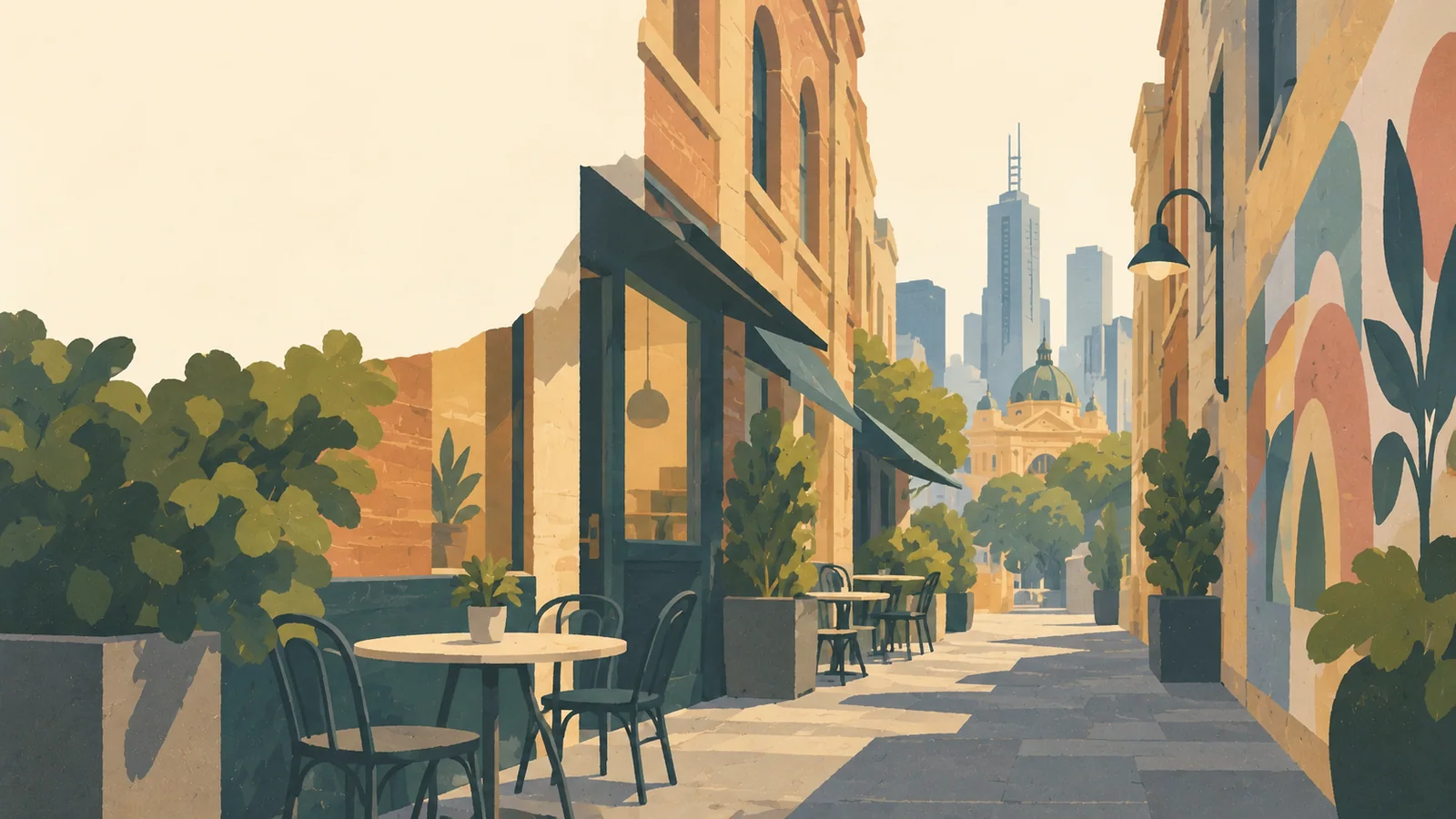


Melbourne: what to expect
Melbourne earns its time through repetition: a second coffee place, another tram line, a live room you found rather than booked. The centre has the institutions, but the city's personality sits along Brunswick Street, Smith Street, Sydney Road and the bay.
Is this your trip?
Who Melbourne is for
Coffee and food people
The city's daily rituals are as strong as its headline restaurants.
Art and design travellers
Major free collections sit beside independent galleries, architecture and street work.
Sport pilgrims
The MCG, tennis precinct and Australian-rules calendar can anchor a whole weekend.
Slow city breaks
Melbourne improves when you stop crossing town for a checklist and let one neighbourhood fill an afternoon.
Maybe not for you: It is not Australia's easy beach answer and the weather is famously changeable; choose Sydney or the Gold Coast if reliable sand time is the whole brief.
Season by season
When to visit Melbourne
March–May and September–November. Autumn is the most dependable combination of warm days and full cultural calendars. Spring is lively but variable; winter is good for food, galleries and sport; summer can swing from cool to extreme heat.
- Mixed
Summer
December–February
Long evenings and major events, punctuated by heat spikes and abrupt cool changes.
- Best
Autumn
March–May
Stable days, cooler nights and the strongest all-round city weather.
- Good
Winter
June–August
Grey and damp rather than severe; ideal for galleries, restaurants and football.
- Good
Spring
September–November
Gardens and events return, but four seasons in one day remains useful packing advice.
Weather · monthly normals
Melbourne is cooler and more changeable than Sydney; monthly rain totals hide fast weather shifts.
Do fewer things better
Things to do in Melbourne
A short, ordered set of experiences with the timing or planning catch that makes each one work.
- 1
Walk the laneways before lunch
CBD
Hosier Lane is only the obvious entrance; arcades, small galleries and coffee counters make the network worthwhile.
- 2
Choose one major collection
NGV International or The Ian Potter Centre
Both are strong and largely free; doing one properly beats museum hopping.
- 3
Spend an evening north of the centre
Fitzroy, Collingwood or Brunswick
Live music, small bars and restaurants are the city's real night-time advantage.
- 4
See a match in the sporting precinct
MCG or Melbourne Park
The crowd ritual explains Melbourne more efficiently than another city tour.
- 5
Use the market as a meal
Queen Victoria Market
Go for produce, deli counters and lunch rather than souvenir aisles.
- 6
Add a regional overnight, not a marathon day
Great Ocean Road or wine country
The coast deserves dawn or dusk; a same-day return turns it into windscreen tourism.
Area by area
The neighbourhoods of Melbourne
A real map at local-city scale: enough geography to choose a base, compare areas and group a day. Numbered places match the notes below.
| Area | What it is like | Why go |
|---|---|---|
1 CBD & laneways first visit | Arcades, institutions, restaurants and the densest tram network. | The efficient base when the stay is short; the Free Tram Zone covers the central grid and Docklands. |
2 Fitzroy cafés and nightlife | Victorian terraces, Brunswick Street, pubs and independent retail. | Its side streets and weekday rhythm feel more local than the central lanes. |
3 Collingwood food and live music | Smith Street's restaurants, bars, galleries and converted warehouses. | A sharper, less polished evening strip directly beside Fitzroy. |
4 Carlton museums and long lunches | University streets, Lygon Street, gardens and Melbourne Museum. | Good for families and travellers who want calm nights within a tram ride of the centre. |
5 St Kilda bay and sunsets | A beach promenade, old amusement architecture and busy bar strips. | Come for the bay and an evening; stay only if central travel is secondary. |
6 South Melbourne market and village feel | Terraces, a strong market and easy access to the arts precinct. | A quieter base that still reaches the CBD and bay by tram. |
Choose the base, then the hotel
Where to stay in Melbourne
For most first visits: CBD for two nights; Fitzroy or Carlton when the evenings matter.
CBD east, Flinders Lane or Parliament
Walk to institutions and take one tram north or south at night.
Fitzroy or Collingwood
The best night is already outside; trains and trams handle the daytime.
Carlton or East Melbourne
Leafier streets and quick walks to both centre and gardens.
St Kilda or South Melbourne
Choose St Kilda for the promenade, South Melbourne for easier city access.
Order with a point of view
What to eat in Melbourne
Local food is more useful as an area decision than as a checklist of famous dishes.
- 01
Coffee
Fitzroy, Collingwood and the CBD
Order what you like, but expect a serious discussion if you ask for a generic coffee.
- 02
Modern Australian
Inner north and CBD
The useful definition is seasonal produce filtered through the city's many migrant cuisines.
- 03
Vietnamese
Richmond or Footscray
Pho, bánh mì and regional dishes justify leaving the polished restaurant strip.
- 04
Italian
Carlton and Brunswick East
Lygon Street has history, but the best meal may be one street away from the loudest tables.
- 05
Market lunch
Queen Victoria or South Melbourne Market
Arrive hungry, choose one counter and buy fruit or cheese for later.
Useful on the ground
Local tips for Melbourne
The free tram area is limited
It covers the CBD and Docklands. Touch on once you travel beyond the signed boundary.
Trams are quiet and close
Look both ways before stepping across tracks; the largest vehicle is often the one you did not hear.
Carry a layer
A warm morning says little about the wind and temperature after sunset.
The bay is not the ocean
St Kilda is sheltered; surf beaches sit well outside the centre and carry different conditions.
Book the headline restaurant, improvise the rest
Melbourne has enough excellent walk-ins that a fully scheduled food plan is unnecessary.
Common questions
Quick answers about Melbourne
- When is the best time to visit Melbourne?
- March–May and September–November. Autumn is the most dependable combination of warm days and full cultural calendars. Spring is lively but variable; winter is good for food, galleries and sport; summer can swing from cool to extreme heat.
- How many days do you need in Melbourne?
- 4 days; 5–6 with a regional day trip. Melbourne earns its time through repetition: a second coffee place, another tram line, a live room you found rather than booked. The centre has the institutions, but the city's personality sits along Brunswick Street, Smith Street, Sydney Road and the bay.
- Where should you stay in Melbourne?
- CBD for two nights; Fitzroy or Carlton when the evenings matter. Walk to institutions and take one tram north or south at night.
Keep building the route
Melbourne is part of Australia
Use the country guide for visa, money, long-distance transport and the route between cities. Then compare the other worked-out stops below.
- SydneyThe harbour is not a landmark; it is the city plan.
- BrisbaneRiver loops, subtropical light and a city learning to linger.
- CairnsThe useful city between reef, rainforest and wet tropics.
- Gold CoastA 50-kilometre beach city with several different personalities.
- PerthIndian Ocean light, serious distance and a city worth the stop.
- AdelaideA compact cultural city and regional food base
- HobartHarbour history and contemporary Tasmanian culture
- DarwinA tropical northern city with layered histories
- CanberraNational collections around a planned lake city
- NewcastleOcean baths and a port city's changing streets
- BallaratGold-rush streets and a regional arts stay
- BendigoGoldfields architecture and Chinese Australian history
- LauncestonTamar river streets and an urban gorge
- TownsvilleA tropical coastal city beneath Castle Hill
- Alice SpringsCentral Australian culture and desert context