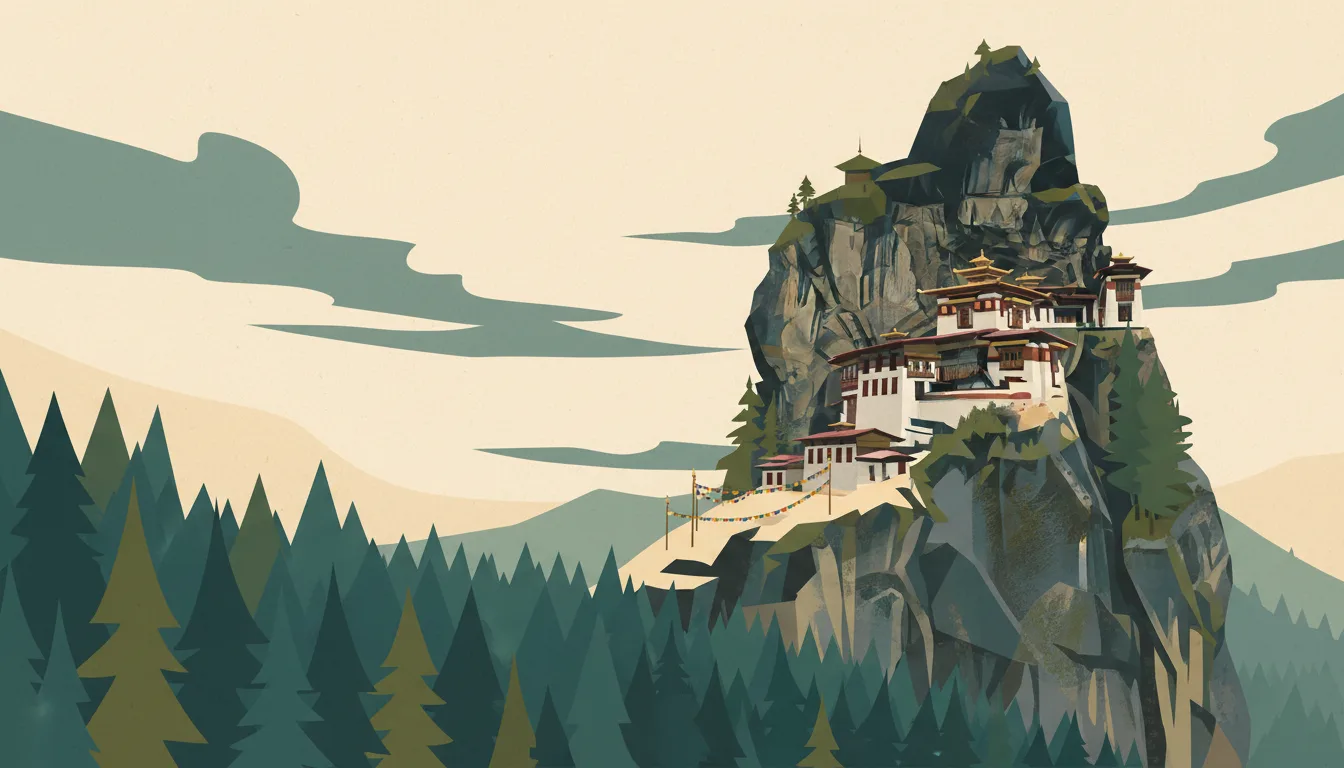


Phobjikha valley: what to expect
A wide, marshy valley at 3,000 metres where black-necked cranes winter from late October to February and Gangtey Goemba sits above a gentle nature trail. Cold at night, quiet always. This travel base guide groups the destination into six useful areas so the stay works on the ground, not only on a country map.
Is this your trip?
Who Phobjikha valley is for
Wildlife travellers
A wide, marshy valley at 3,000 metres where black-necked cranes winter from late October to February and Gangtey Goemba sits above a gentle nature trail. Cold at night, quiet always.
Travellers with 1–2 days
That window gives Phobjikha valley enough room for one anchor area and one contrasting cluster per day.
Easy valley walk
Gangtey nature trail and Crane information centre make that interest practical rather than a country-level promise.
Area-led planners
Six fixed clusters make it easier to choose a base and avoid repeated cross-destination transfers.
Maybe not for you: A compressed checklist is the weak version of Phobjikha valley. Treat the suggested stay as time on the ground: weather, timed entry, ferries or mountain roads can remove half a day.
Season by season
When to visit Phobjikha valley
June–September or December–March. Rounded Alpine valley normals; height changes temperature, snow cover and access much faster than distance does. Conditions can still change sharply by elevation, coast and exposure, so use the chart for route timing and the current forecast for the day itself.
- Best
Winter
December–March
Snow sports and winter transport define the trip; valley rain can still replace snow.
- Mixed
Spring
April–May
A beautiful but awkward in-between season with closures and muddy high paths.
- Best
Summer
June–August
The widest trail and lift access, with afternoon storms and peak demand.
- Good
Autumn
September–November
Clear early weeks and colour, followed by lift closures and early snow.
Weather · monthly normals
Rounded Alpine valley normals; height changes temperature, snow cover and access much faster than distance does. Values are rounded planning normals rather than a live forecast.
Do fewer things better
Things to do in Phobjikha valley
A short, ordered set of experiences with the timing or planning catch that makes each one work.
- 1
Start with Gangtey Goemba
Gangtey Goemba
Seventeenth-century Nyingma monastery overlooking the whole valley
- 2
Walk Gangtey nature trail without stacking it
Gangtey nature trail
Two-hour path through pine forest and marsh to the village of Khewang
- 3
Use Crane information centre for winter birdwatching
Crane information centre
Scopes, a small exhibition and the best view of roosting cranes from late October
- 4
Give Phobjikha village a deliberate half-day
Phobjikha village
Potato-farming hamlets with homestays and wood-stove rooms
- 5
See Kumbu & Khewang lhakhangs outside peak hours
Kumbu & Khewang lhakhangs
Village temples on the eastern side of the marsh
- 6
Keep Lawa La & Pele La weather-flexible
Lawa La & Pele La
The passes into and out of the valley with spring blooms and yak pastures
Treat the suggested stay as time on the ground: weather, timed entry, ferries or mountain roads can remove half a day.
Area by area
The areas of Phobjikha valley
A real map at local-city scale: enough geography to choose a base, compare areas and group a day. Numbered places match the notes below.
| Area | What it is like | Why go |
|---|---|---|
1 Gangtey Goemba monastery on the ridge | Seventeenth-century Nyingma monastery overlooking the whole valley | Use Gangtey Goemba when monastery on the ridge matters more than crossing the whole destination. |
2 Gangtey nature trail easy valley walk | Two-hour path through pine forest and marsh to the village of Khewang | Use Gangtey nature trail when easy valley walk matters more than crossing the whole destination. |
3 Crane information centre winter birdwatching | Scopes, a small exhibition and the best view of roosting cranes from late October | Use Crane information centre when winter birdwatching matters more than crossing the whole destination. |
4 Phobjikha village farmhouse stays | Potato-farming hamlets with homestays and wood-stove rooms | Use Phobjikha village when farmhouse stays matters more than crossing the whole destination. |
5 Kumbu & Khewang lhakhangs small temples | Village temples on the eastern side of the marsh | Use Kumbu & Khewang lhakhangs when small temples matters more than crossing the whole destination. |
6 Lawa La & Pele La passes and rhododendrons | The passes into and out of the valley with spring blooms and yak pastures | Use Lawa La & Pele La when passes and rhododendrons matters more than crossing the whole destination. |
Choose the base, then the hotel
Where to stay in Phobjikha valley
For most first visits: Gangtey Goemba for monastery on the ridge.
Gangtey Goemba
Seventeenth-century Nyingma monastery overlooking the whole valley Choose it when that trade-off should shape mornings and evenings.
Gangtey nature trail
Two-hour path through pine forest and marsh to the village of Khewang Choose it when that trade-off should shape mornings and evenings.
Crane information centre
Scopes, a small exhibition and the best view of roosting cranes from late October Choose it when that trade-off should shape mornings and evenings.
Phobjikha village
Potato-farming hamlets with homestays and wood-stove rooms Choose it when that trade-off should shape mornings and evenings.
Order with a point of view
What to eat in Phobjikha valley
Local food is more useful as an area decision than as a checklist of famous dishes.
- 01
Ema datshi
Gangtey Goemba
Chillies stewed with cheese is the national dish and appears at every meal; ask for it mild if needed
- 02
Red rice with a farmhouse spread
Gangtey nature trail
Nutty local rice with kewa datshi, dried beef or pork and mushrooms cooked by a host family
- 03
Momos and thukpa
Crane information centre
Tibetan-style dumplings and noodle soup are the everyday café meal in Thimphu and Paro
- 04
Suja and ara
Phobjikha village
Salted butter tea and home-distilled rice spirit are offered as hospitality; accept at least a sip
- 05
Bumthang buckwheat and cheese
Kumbu & Khewang lhakhangs
Puta noodles, khuli pancakes and the Swiss-style cheese made in Jakar belong to the central valleys
Useful on the ground
Local tips for Phobjikha valley
Plan the transfer, not only the distance
Treat the suggested stay as time on the ground: weather, timed entry, ferries or mountain roads can remove half a day.
Apply online with the fee
Apply at least a week ahead through the immigration portal or your operator with a passport scan, insurance and the Sustainable Development Fee; the USD 100 per night rate has been extended to at least 2027 but confirm the current figure and any concessions for long stays or children.
Ngultrum and rupees, little card use
The ngultrum is pegged to the Indian rupee and rupees are accepted; cards work in larger hotels and Thimphu shops but ATMs are few and often empty. Bring US dollars or euros to change, and cash for handicrafts and tips.
SIM at the airport, patchy in valleys
B-Mobile and TashiCell sell tourist SIMs at Paro airport with cheap data that works in towns and fades on the passes; hotel Wi-Fi is usually adequate.
Type C, D and G sockets
Bhutan uses 230 V with a mix of Indian round-pin, European two-pin and British three-pin sockets, often in the same room; a universal adapter is essential.
Common questions
Quick answers about Phobjikha valley
- When is the best time to visit Phobjikha valley?
- June–September or December–March. Rounded Alpine valley normals; height changes temperature, snow cover and access much faster than distance does. Conditions can still change sharply by elevation, coast and exposure, so use the chart for route timing and the current forecast for the day itself.
- How many days do you need in Phobjikha valley?
- 1–2 days. A wide, marshy valley at 3,000 metres where black-necked cranes winter from late October to February and Gangtey Goemba sits above a gentle nature trail. Cold at night, quiet always. This travel base guide groups the destination into six useful areas so the stay works on the ground, not only on a country map.
- Where should you stay in Phobjikha valley?
- Gangtey Goemba for monastery on the ridge. Seventeenth-century Nyingma monastery overlooking the whole valley Choose it when that trade-off should shape mornings and evenings.
Keep building the route
Phobjikha valley is part of Bhutan
Use the country guide for visa, money, long-distance transport and the route between cities. Then compare the other worked-out stops below.