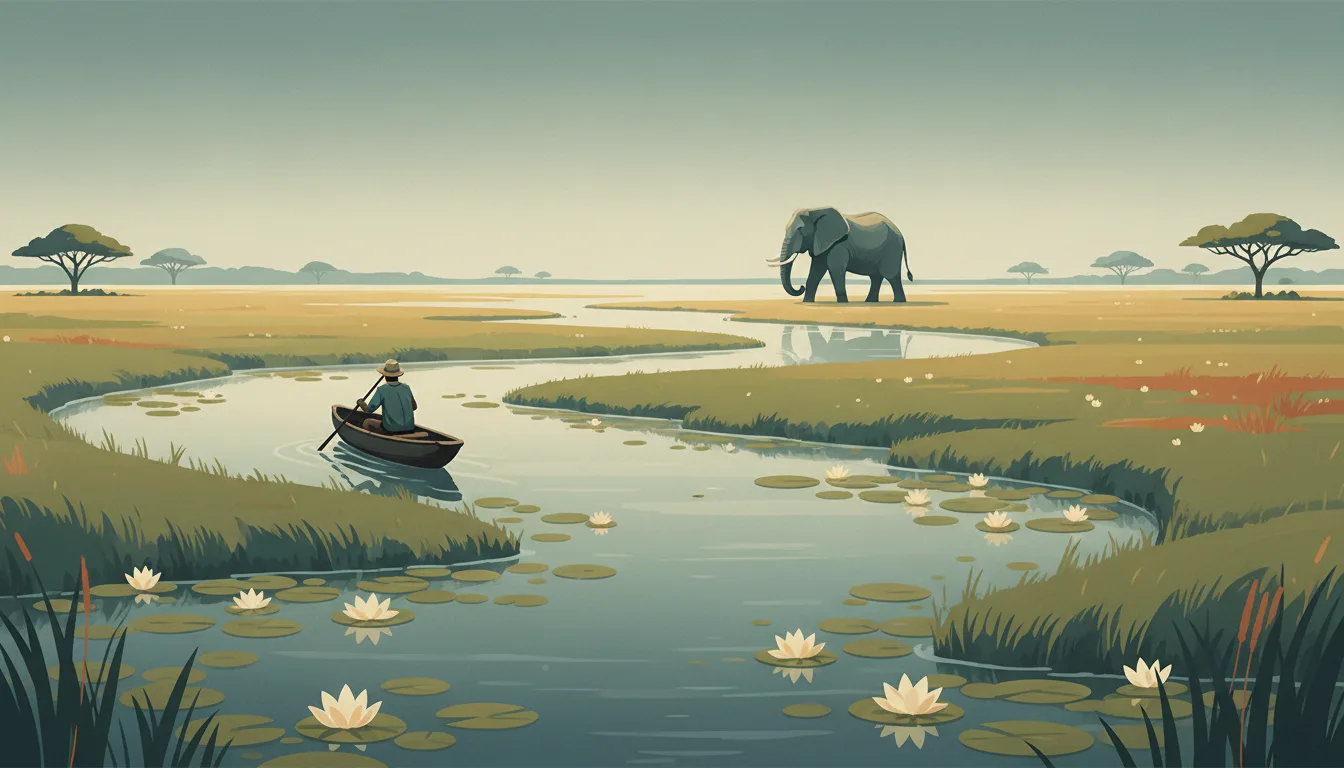


Gaborone & Tuli Block: what to expect
Gaborone is a low-key administrative capital with Mokolodi reserve and Kgale Hill; the real reason to come east is the Tuli Block, where Mashatu and neighbouring reserves give leopard, elephant and sandstone landscapes on private land. This travel base guide groups the destination into six useful areas so the stay works on the ground, not only on a country map.
Is this your trip?
Who Gaborone & Tuli Block is for
Wildlife travellers
Gaborone is a low-key administrative capital with Mokolodi reserve and Kgale Hill; the real reason to come east is the Tuli Block, where Mashatu and neighbouring reserves give leopard, elephant and sandstone landscapes on private land.
Travellers with 2–4 days
That window gives Gaborone & Tuli Block enough room for one anchor area and one contrasting cluster per day.
Nature reserve
Mokolodi and Kgale Hill make that interest practical rather than a country-level promise.
Area-led planners
Six fixed clusters make it easier to choose a base and avoid repeated cross-destination transfers.
Maybe not for you: A compressed checklist is the weak version of Gaborone & Tuli Block. Treat the suggested stay as time on the ground: weather, timed entry, ferries or mountain roads can remove half a day.
Season by season
When to visit Gaborone & Tuli Block
March–May and September–November. Rounded Southern Hemisphere high-desert normals: dry throughout the year, warm sun, cold nights and strong altitude effects. Conditions can still change sharply by elevation, coast and exposure, so use the chart for route timing and the current forecast for the day itself.
- Good
Summer
December–February
Warm low-desert days coincide with altiplano storms and very strong sun.
- Best
Autumn
March–May
Clearer skies and moderate temperatures suit broad desert and astronomy days.
- Good
Winter
June–August
Dry days continue, but high-altitude dawns and nights can be severely cold.
- Best
Spring
September–November
Warming, dry conditions return before summer demand and highland storms.
Weather · monthly normals
Rounded Southern Hemisphere high-desert normals: dry throughout the year, warm sun, cold nights and strong altitude effects. Values are rounded planning normals rather than a live forecast.
Do fewer things better
Things to do in Gaborone & Tuli Block
A short, ordered set of experiences with the timing or planning catch that makes each one work.
- 1
Start with Gaborone CBD
Gaborone CBD
Compact modern core with the Main Mall and museum
- 2
Walk Mokolodi without stacking it
Mokolodi
Rhino tracking and game drives thirty minutes from town
- 3
Use Kgale Hill for city hike
Kgale Hill
Short climb for views over the capital and dam
- 4
Give Mochudi a deliberate half-day
Mochudi
Kgatla village history on a hill above the kgotla
- 5
See Tuli Block outside peak hours
Tuli Block
Elephant, leopard and sandstone in the far east
- 6
Keep Pont Drift weather-flexible
Pont Drift
Cable-car and river crossing to South Africa in the wet season
Treat the suggested stay as time on the ground: weather, timed entry, ferries or mountain roads can remove half a day.
Area by area
The areas of Gaborone & Tuli Block
A real map at local-city scale: enough geography to choose a base, compare areas and group a day. Numbered places match the notes below.
| Area | What it is like | Why go |
|---|---|---|
1 Gaborone CBD hotels and government | Compact modern core with the Main Mall and museum | Use Gaborone CBD when hotels and government matters more than crossing the whole destination. |
2 Mokolodi nature reserve | Rhino tracking and game drives thirty minutes from town | Use Mokolodi when nature reserve matters more than crossing the whole destination. |
3 Kgale Hill city hike | Short climb for views over the capital and dam | Use Kgale Hill when city hike matters more than crossing the whole destination. |
4 Mochudi Phuthadikobo museum | Kgatla village history on a hill above the kgotla | Use Mochudi when Phuthadikobo museum matters more than crossing the whole destination. |
5 Tuli Block Mashatu and private reserves | Elephant, leopard and sandstone in the far east | Use Tuli Block when Mashatu and private reserves matters more than crossing the whole destination. |
6 Pont Drift Limpopo border | Cable-car and river crossing to South Africa in the wet season | Use Pont Drift when Limpopo border matters more than crossing the whole destination. |
Choose the base, then the hotel
Where to stay in Gaborone & Tuli Block
For most first visits: Gaborone CBD for hotels and government.
Gaborone CBD
Compact modern core with the Main Mall and museum Choose it when that trade-off should shape mornings and evenings.
Mokolodi
Rhino tracking and game drives thirty minutes from town Choose it when that trade-off should shape mornings and evenings.
Kgale Hill
Short climb for views over the capital and dam Choose it when that trade-off should shape mornings and evenings.
Mochudi
Kgatla village history on a hill above the kgotla Choose it when that trade-off should shape mornings and evenings.
Order with a point of view
What to eat in Gaborone & Tuli Block
Local food is more useful as an area decision than as a checklist of famous dishes.
- 01
Seswaa
Gaborone CBD
Slow-boiled pounded beef with pap or samp is the national dish at any celebration
- 02
Morogo and pap
Mokolodi
Wild greens with maize porridge is the everyday village plate
- 03
Bream from the delta
Kgale Hill
Grilled or fried river fish at Maun and Kasane riverside restaurants
- 04
Mopane worms
Mochudi
Dried or stewed phane are a seasonal protein in the north-east; try them at a market
- 05
Braai and game meat
Tuli Block
Camp braais of beef, boerewors and occasionally game define the evening in the bush
Useful on the ground
Local tips for Gaborone & Tuli Block
Plan the transfer, not only the distance
Treat the suggested stay as time on the ground: weather, timed entry, ferries or mountain roads can remove half a day.
Visa-free for many passports
Most European, North American and Commonwealth nationals get 90 days on arrival; check Botswana's current list and carry onward tickets. Children need unabridged birth certificates.
Pula, cards and camp accounts
ATMs in Maun, Kasane and Gaborone; cards work in lodges and supermarkets. Camps bill extras and tips in pula or dollars; rand is often accepted near the South African border.
Mascom or Orange SIM
Signal covers towns and the main tarmac; expect nothing in Moremi, the Kalahari or the pans, and download everything before leaving Maun.
Type D, G and M sockets
230 V with British three-pin and older South African round-pin sockets; camps run on solar and charge only at set hours.
Common questions
Quick answers about Gaborone & Tuli Block
- When is the best time to visit Gaborone & Tuli Block?
- March–May and September–November. Rounded Southern Hemisphere high-desert normals: dry throughout the year, warm sun, cold nights and strong altitude effects. Conditions can still change sharply by elevation, coast and exposure, so use the chart for route timing and the current forecast for the day itself.
- How many days do you need in Gaborone & Tuli Block?
- 2–4 days. Gaborone is a low-key administrative capital with Mokolodi reserve and Kgale Hill; the real reason to come east is the Tuli Block, where Mashatu and neighbouring reserves give leopard, elephant and sandstone landscapes on private land. This travel base guide groups the destination into six useful areas so the stay works on the ground, not only on a country map.
- Where should you stay in Gaborone & Tuli Block?
- Gaborone CBD for hotels and government. Compact modern core with the Main Mall and museum Choose it when that trade-off should shape mornings and evenings.
Keep building the route
Gaborone & Tuli Block is part of Botswana
Use the country guide for visa, money, long-distance transport and the route between cities. Then compare the other worked-out stops below.
- Maun & Okavango DeltaSafari capital and the flooded fan of channels
- Moremi Game ReserveThe delta's eastern land-and-water heart
- Chobe & KasaneElephant riverfront and the Savuti marsh
- Makgadikgadi & Nxai PansSalt horizons, baobabs and a zebra migration
- Central Kalahari Game ReserveBlack-maned lions in a fenceless desert