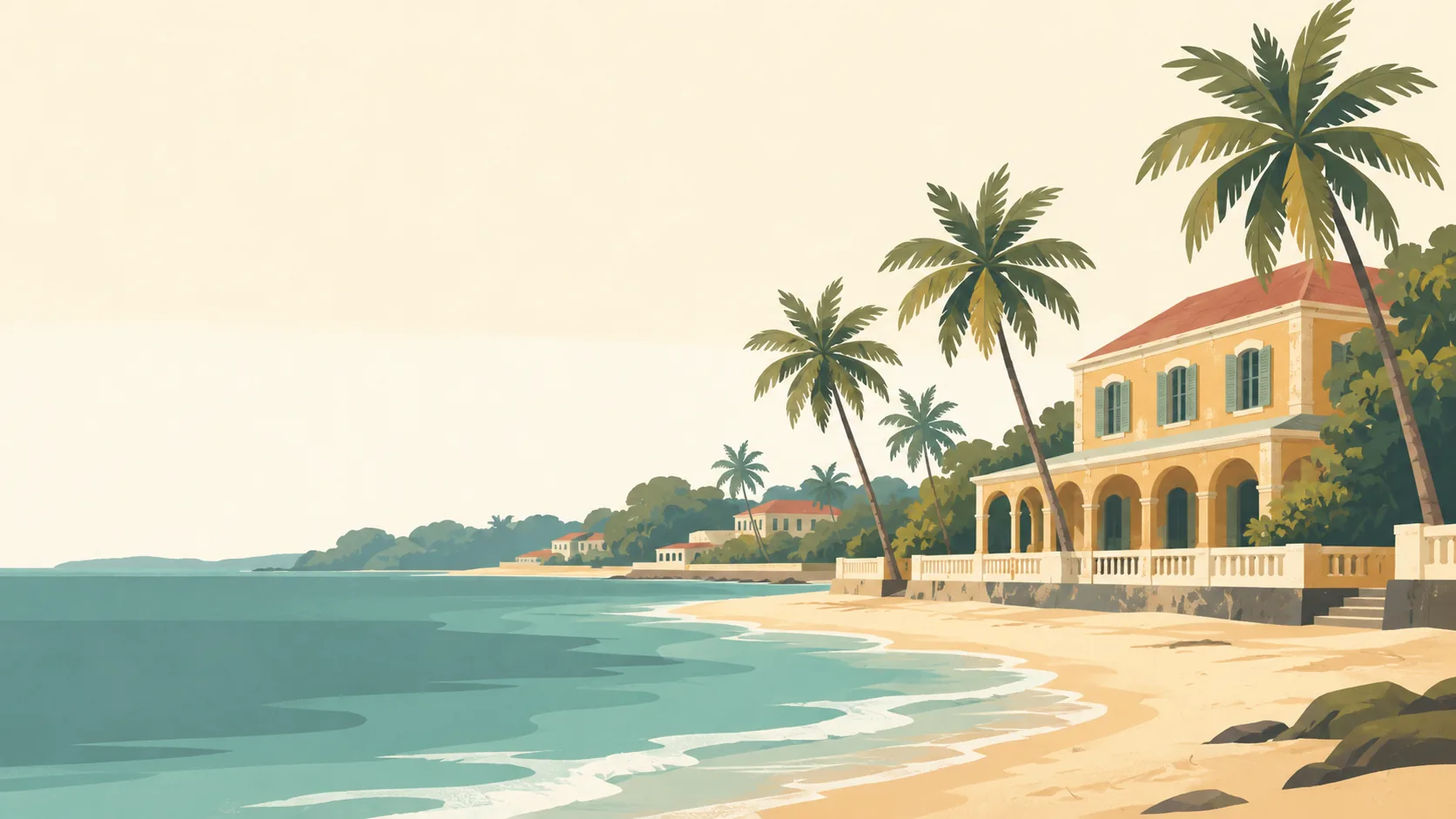


Abidjan: what to expect
Abidjan deserves district-led days rather than repeated cross-city drives. Give contemporary food and art the same space as formal landmarks. This city guide groups the destination into six useful areas so the stay works on the ground, not only on a country map.
Is this your trip?
Who Abidjan is for
Civic skyline travellers
Abidjan deserves district-led days rather than repeated cross-city drives. Give contemporary food and art the same space as formal landmarks.
Travellers with 3–4 days
That window gives Abidjan enough room for one anchor area and one contrasting cluster per day.
Culture and stays
Cocody and Treichville make that interest practical rather than a country-level promise.
Area-led planners
Six fixed clusters make it easier to choose a base and avoid repeated cross-destination transfers.
Maybe not for you: A compressed checklist is the weak version of Abidjan. Traffic, road crossings and after-dark movement need practical local advice.
Season by season
When to visit Abidjan
November–February. Rounded tropical-monsoon planning normals: hot year-round, with a pronounced wet season. Conditions can still change sharply by elevation, coast and exposure, so use the chart for route timing and the current forecast for the day itself.
- Best
Cooler dry
November–February
Lower humidity and rain make this the easiest period, also the busiest.
- Mixed
Hot season
March–May
Very hot afternoons reward early starts, shade and a slower pace.
- Good
Wet season
June–October
Short intense rain and occasional disruption come with greener landscapes and value.
- Mixed
Peak rain
August–September
Build weather margin into road, boat and outdoor days.
Weather · monthly normals
Rounded tropical-monsoon planning normals: hot year-round, with a pronounced wet season. Values are rounded planning normals rather than a live forecast.
Do fewer things better
Things to do in Abidjan
A short, ordered set of experiences with the timing or planning catch that makes each one work.
- 1
Start with Plateau
Plateau
The business district holds major civic buildings.
- 2
Walk Cocody without stacking it
Cocody
Galleries and hotels offer a practical base.
- 3
Use Treichville for working city
Treichville
Markets and transport reveal everyday trade.
- 4
Give Marcory a deliberate half-day
Marcory
Restaurants form useful evening clusters.
- 5
See Banco National Park outside peak hours
Banco National Park
Use current authorised access and guiding.
- 6
Keep Lagoon crossings weather-flexible
Lagoon crossings
Choose safe established services and check schedules.
Traffic, road crossings and after-dark movement need practical local advice.
Area by area
The neighbourhoods of Abidjan
A real map at local-city scale: enough geography to choose a base, compare areas and group a day. Numbered places match the notes below.
| Area | What it is like | Why go |
|---|---|---|
1 Plateau civic skyline | The business district holds major civic buildings. | Use Plateau when civic skyline matters more than crossing the whole destination. |
2 Cocody culture and stays | Galleries and hotels offer a practical base. | Use Cocody when culture and stays matters more than crossing the whole destination. |
3 Treichville working city | Markets and transport reveal everyday trade. | Use Treichville when working city matters more than crossing the whole destination. |
4 Marcory dining | Restaurants form useful evening clusters. | Use Marcory when dining matters more than crossing the whole destination. |
5 Banco National Park urban forest | Use current authorised access and guiding. | Use Banco National Park when urban forest matters more than crossing the whole destination. |
6 Lagoon crossings city geography | Choose safe established services and check schedules. | Use Lagoon crossings when city geography matters more than crossing the whole destination. |
Choose the base, then the hotel
Where to stay in Abidjan
For most first visits: Plateau for civic skyline.
Plateau
The business district holds major civic buildings. Choose it when that trade-off should shape mornings and evenings.
Cocody
Galleries and hotels offer a practical base. Choose it when that trade-off should shape mornings and evenings.
Treichville
Markets and transport reveal everyday trade. Choose it when that trade-off should shape mornings and evenings.
Marcory
Restaurants form useful evening clusters. Choose it when that trade-off should shape mornings and evenings.
Order with a point of view
What to eat in Abidjan
Local food is more useful as an area decision than as a checklist of famous dishes.
- 01
Attiéké
Plateau
Fermented cassava couscous is a central accompaniment.
- 02
Alloco
Cocody
Fried plantain is a familiar snack and side.
- 03
Kedjenou
Treichville
Slow-cooked chicken and vegetables form a classic dish.
- 04
Garba
Marcory
Attiéké with fried tuna is everyday street food.
- 05
Sauce graine
Banco National Park
Palm-based sauce pairs with local staples and regional proteins.
Useful on the ground
Local tips for Abidjan
Plan the transfer, not only the distance
Traffic, road crossings and after-dark movement need practical local advice.
Check entry before buying flights
Check the official visa or e-visa process for your passport before booking. Confirm required vaccination documentation and any land-border permissions for the complete route.
West African CFA franc and payments
Carry CFA cash for markets, smaller stays and road transport. Cards and reliable ATMs are concentrated in larger cities; confirm payment arrangements before rural transfers.
Coverage and offline planning
Download maps, booking details and essential contacts before leaving Wi-Fi. Check roaming charges and local SIM registration requirements; remote routes may have no signal.
Type C/E sockets
220–230 V, 50 Hz; bring an appropriate adapter.
Common questions
Quick answers about Abidjan
- When is the best time to visit Abidjan?
- November–February. Rounded tropical-monsoon planning normals: hot year-round, with a pronounced wet season. Conditions can still change sharply by elevation, coast and exposure, so use the chart for route timing and the current forecast for the day itself.
- How many days do you need in Abidjan?
- 3–4 days. Abidjan deserves district-led days rather than repeated cross-city drives. Give contemporary food and art the same space as formal landmarks. This city guide groups the destination into six useful areas so the stay works on the ground, not only on a country map.
- Where should you stay in Abidjan?
- Plateau for civic skyline. The business district holds major civic buildings. Choose it when that trade-off should shape mornings and evenings.
Keep building the route
Abidjan is part of Côte d’Ivoire
Use the country guide for visa, money, long-distance transport and the route between cities. Then compare the other worked-out stops below.