
Dubrovnik: what to expect
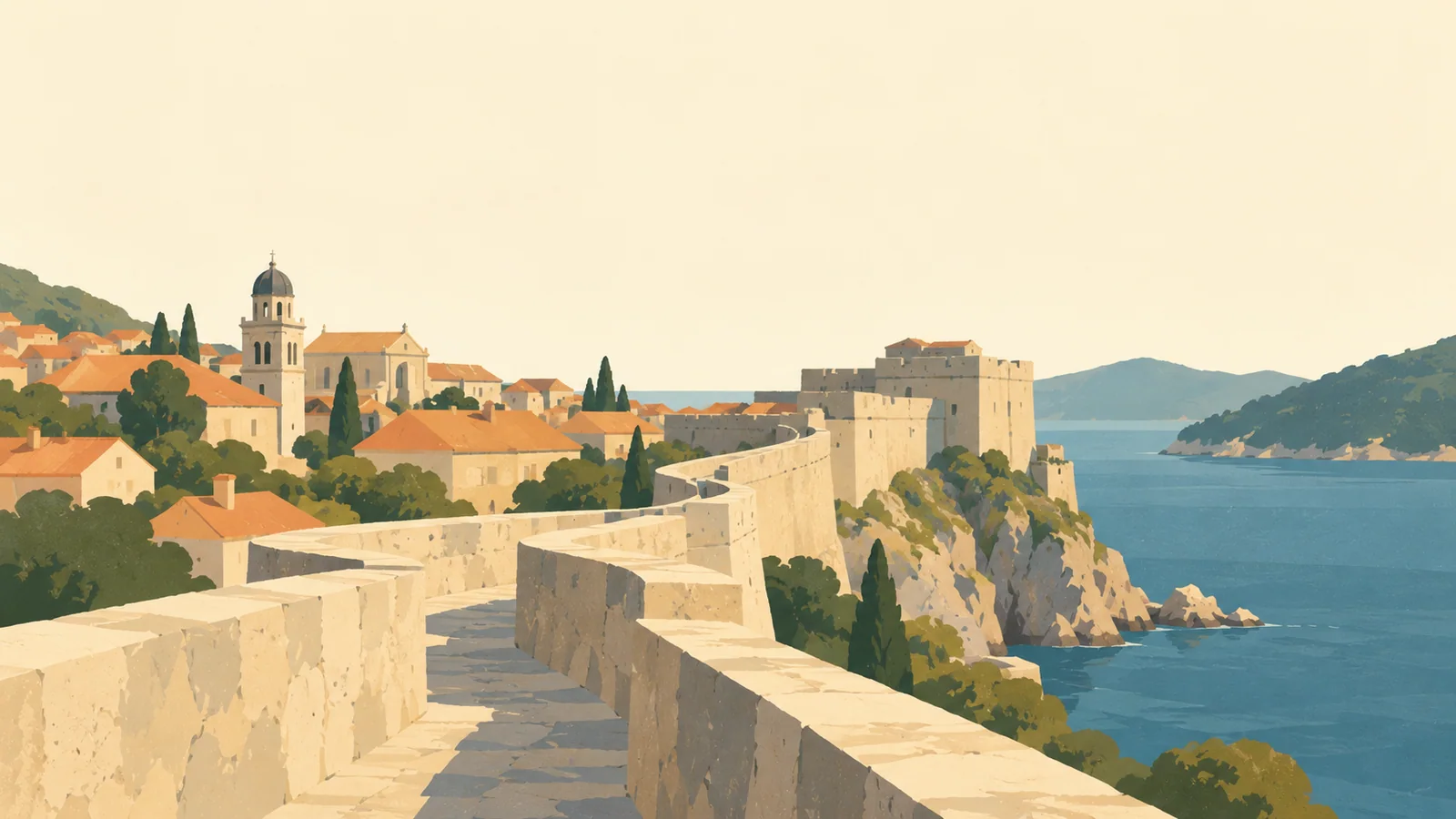
Beautiful, expensive and easily overwhelmed by cruise arrivals. Use it as a base for the south, not only a one-hour wall walk. This city guide groups the destination into six useful areas so the stay works on the ground, not only on a country map.
Is this your trip?
Who Dubrovnik is for
History travellers
Beautiful, expensive and easily overwhelmed by cruise arrivals. Use it as a base for the south, not only a one-hour wall walk.
Travellers with 2–3 days
That window gives Dubrovnik enough room for one anchor area and one contrasting cluster per day.
Views and quiet access
Ploče and Pile make that interest practical rather than a country-level promise.
Area-led planners
Six fixed clusters make it easier to choose a base and avoid repeated cross-destination transfers.
Maybe not for you: A compressed checklist is the weak version of Dubrovnik. City walls and Stradun are transformed by cruise arrivals and heat; stay overnight and go early or late
Season by season
When to visit Dubrovnik
April–June and September–October. Rounded Mediterranean planning normals: hot dry summers and mild, wetter winters. Conditions can still change sharply by elevation, coast and exposure, so use the chart for route timing and the current forecast for the day itself.
- Best
Spring
March–May
Mild days, green landscapes and rising demand around holidays.
- Mixed
Summer
June–August
Hot, bright and busy; shade and early starts materially improve city days.
- Best
Autumn
September–November
Warm early weeks, softer light and rain returning later in the season.
- Good
Winter
December–February
Cooler and wetter, with shorter hours but much lighter visitor pressure.
Weather · monthly normals
Rounded Mediterranean planning normals: hot dry summers and mild, wetter winters. Values are rounded planning normals rather than a live forecast.
Do fewer things better
Things to do in Dubrovnik
A short, ordered set of experiences with the timing or planning catch that makes each one work.
- 1
Start with Old City
Old City
Walls, palaces and dense stone streets within a compact circuit
- 2
Walk Ploče without stacking it
Ploče
Hillside stays east of the walls and Banje beach
- 3
Use Pile for transport and western gate
Pile
Main bus arrival with quick access to walls and Lovrijenac
- 4
Give Gruž a deliberate half-day
Gruž
Market, ferry terminal and residential streets away from day crowds
- 5
See Lapad outside peak hours
Lapad
Hotels, promenade and swimming west of the centre
- 6
Keep Lokrum & Srđ weather-flexible
Lokrum & Srđ
Island reserve and cable-car ridge framing the fortified city
City walls and Stradun are transformed by cruise arrivals and heat; stay overnight and go early or late
Area by area
The neighbourhoods of Dubrovnik
A real map at local-city scale: enough geography to choose a base, compare areas and group a day. Numbered places match the notes below.
| Area | What it is like | Why go |
|---|---|---|
1 Old City first monuments | Walls, palaces and dense stone streets within a compact circuit | Use Old City when first monuments matters more than crossing the whole destination. |
2 Ploče views and quiet access | Hillside stays east of the walls and Banje beach | Use Ploče when views and quiet access matters more than crossing the whole destination. |
3 Pile transport and western gate | Main bus arrival with quick access to walls and Lovrijenac | Use Pile when transport and western gate matters more than crossing the whole destination. |
4 Gruž local port and value | Market, ferry terminal and residential streets away from day crowds | Use Gruž when local port and value matters more than crossing the whole destination. |
5 Lapad beaches and longer stays | Hotels, promenade and swimming west of the centre | Use Lapad when beaches and longer stays matters more than crossing the whole destination. |
6 Lokrum & Srđ nature and perspective | Island reserve and cable-car ridge framing the fortified city | Use Lokrum & Srđ when nature and perspective matters more than crossing the whole destination. |
Choose the base, then the hotel
Where to stay in Dubrovnik
For most first visits: Old City for first monuments.
Old City
Walls, palaces and dense stone streets within a compact circuit Choose it when that trade-off should shape mornings and evenings.
Ploče
Hillside stays east of the walls and Banje beach Choose it when that trade-off should shape mornings and evenings.
Pile
Main bus arrival with quick access to walls and Lovrijenac Choose it when that trade-off should shape mornings and evenings.
Gruž
Market, ferry terminal and residential streets away from day crowds Choose it when that trade-off should shape mornings and evenings.
Order with a point of view
What to eat in Dubrovnik
Local food is more useful as an area decision than as a checklist of famous dishes.
- 01
Black risotto
Old City
Cuttlefish ink and rice make a coastal standard
- 02
Šporki makaruli
Ploče
Rich meat sauce with pasta is a Dubrovnik feast dish
- 03
Green menestra
Pile
Cabbage and cured meats form an older winter stew
- 04
Ston oysters
Gruž
Source them from the nearby bay and eat simply
- 05
Rozata
Lapad
Dubrovnik caramel custard carries citrus and rose notes
Useful on the ground
Local tips for Dubrovnik
Plan the transfer, not only the distance
City walls and Stradun are transformed by cruise arrivals and heat; stay overnight and go early or late
Visa and entry
Croatia follows Schengen entry rules and uses the euro. Many visa-exempt visitors can stay 90 days in 180 days; verify your passport rules before travel.
Money and cards
Cards work in hotels, restaurants and supermarkets. Keep cash for small konobas, beach kiosks, buses and market produce.
SIM and data
EU roaming usually works at home rates. Coverage is strong on the mainland and main islands, with gaps on remote roads and coves.
Plugs and power
Croatia uses 230 V and type C or F sockets. Most European chargers fit; other visitors need an adapter.
Common questions
Quick answers about Dubrovnik
- When is the best time to visit Dubrovnik?
- April–June and September–October. Rounded Mediterranean planning normals: hot dry summers and mild, wetter winters. Conditions can still change sharply by elevation, coast and exposure, so use the chart for route timing and the current forecast for the day itself.
- How many days do you need in Dubrovnik?
- 2–3 days. Beautiful, expensive and easily overwhelmed by cruise arrivals. Use it as a base for the south, not only a one-hour wall walk. This city guide groups the destination into six useful areas so the stay works on the ground, not only on a country map.
- Where should you stay in Dubrovnik?
- Old City for first monuments. Walls, palaces and dense stone streets within a compact circuit Choose it when that trade-off should shape mornings and evenings.
Keep building the route
Dubrovnik is part of Croatia
Use the country guide for visa, money, long-distance transport and the route between cities. Then compare the other worked-out stops below.