

Vatnajökull and Jökulsárlón: what to expect
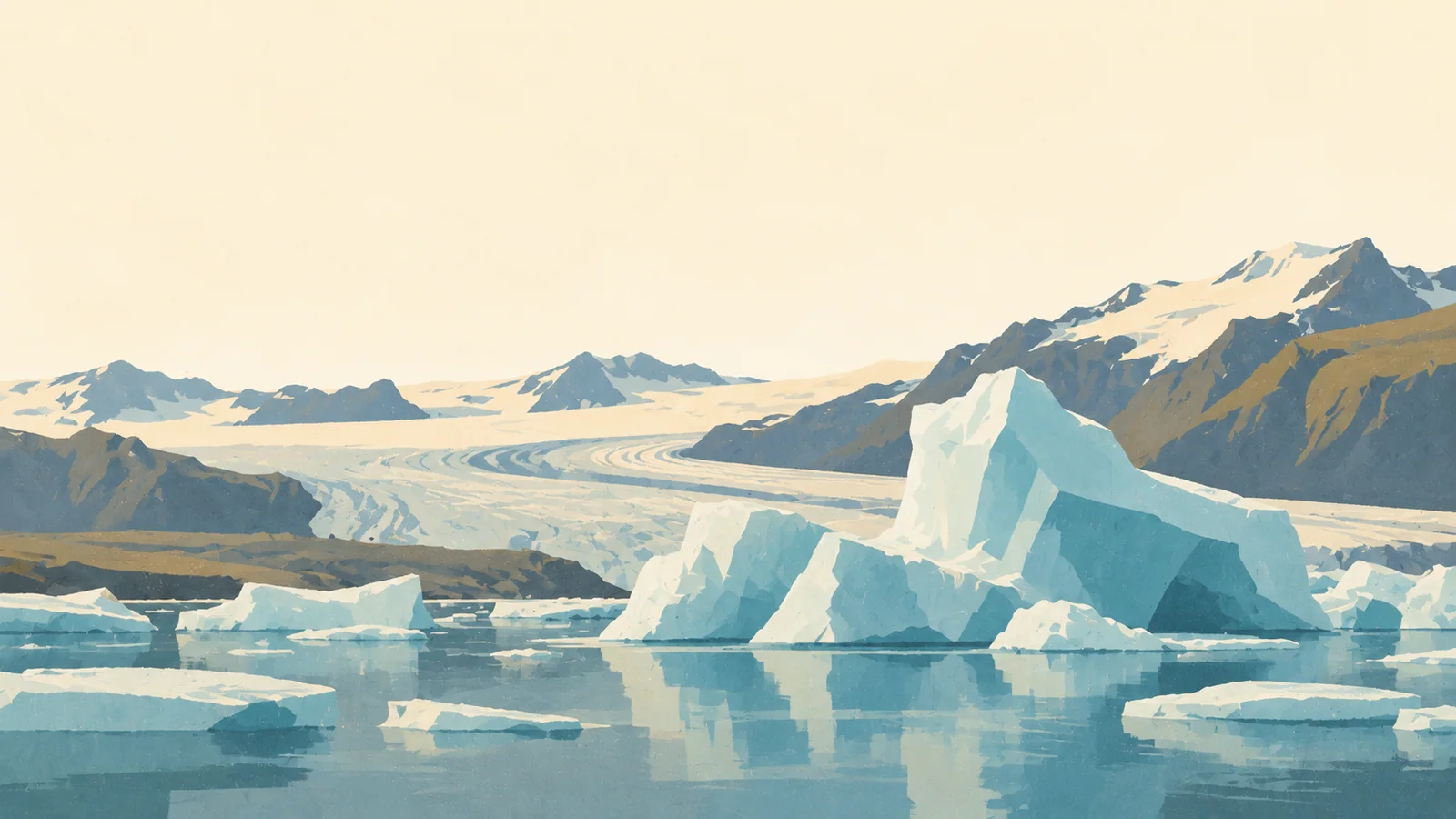
The glacier lagoon with icebergs drifting under the road bridge, Diamond Beach across it, and Skaftafell's trails to Svartifoss and the glacier snouts. Base in the Höfn area for langoustine. In winter this is where the ice-cave tours run from. This travel base guide groups the destination into six useful areas so the stay works on the ground, not only on a country map.
Is this your trip?
Who Vatnajökull and Jökulsárlón is for
Photography travellers
The glacier lagoon with icebergs drifting under the road bridge, Diamond Beach across it, and Skaftafell's trails to Svartifoss and the glacier snouts. Base in the Höfn area for langoustine. In winter this is where the ice-cave tours run from.
Travellers with 1–2 days
That window gives Vatnajökull and Jökulsárlón enough room for one anchor area and one contrasting cluster per day.
Glacier views
Svínafellsjökull and Jökulsárlón make that interest practical rather than a country-level promise.
Area-led planners
Six fixed clusters make it easier to choose a base and avoid repeated cross-destination transfers.
Maybe not for you: A compressed checklist is the weak version of Vatnajökull and Jökulsárlón. Treat the suggested stay as time on the ground: weather, timed entry, ferries or mountain roads can remove half a day.
Season by season
When to visit Vatnajökull and Jökulsárlón
June–August for daylight; February–March for winter. Rounded Arctic planning normals: polar-season daylight, persistent cold and weather-led access. Conditions can still change sharply by elevation, coast and exposure, so use the chart for route timing and the current forecast for the day itself.
- Best
Late winter
February–March
Snow, usable daylight and stronger odds for planned winter activities.
- Mixed
Spring
April–May
A transitional access season: bright, thawing and inconsistent by road or trail.
- Best
Summer
June–August
Midnight light, open routes and cool walking weather, with high demand.
- Good
Dark season
September–January
Aurora and winter atmosphere reward one base, flexibility and serious clothing.
Weather · monthly normals
Rounded Arctic planning normals: polar-season daylight, persistent cold and weather-led access. Values are rounded planning normals rather than a live forecast.
Do fewer things better
Things to do in Vatnajökull and Jökulsárlón
A short, ordered set of experiences with the timing or planning catch that makes each one work.
- 1
Start with Skaftafell
Skaftafell
Marked routes below the ice cap
- 2
Walk Svínafellsjökull without stacking it
Svínafellsjökull
Accessible outlet glacier requiring barrier respect
- 3
Use Jökulsárlón for lagoon and ice
Jökulsárlón
Changing glacial water best seen with time
- 4
Give Diamond Beach a deliberate half-day
Diamond Beach
Ice fragments on black sand across the road
- 5
See Höfn outside peak hours
Höfn
Fishing town east of the main ice sights
- 6
Keep East glacial plain weather-flexible
East glacial plain
Long exposed road sections with few services
Treat the suggested stay as time on the ground: weather, timed entry, ferries or mountain roads can remove half a day.
Area by area
The areas of Vatnajökull and Jökulsárlón
A real map at local-city scale: enough geography to choose a base, compare areas and group a day. Numbered places match the notes below.
| Area | What it is like | Why go |
|---|---|---|
1 Skaftafell walking and glacier context | Marked routes below the ice cap | Use Skaftafell when walking and glacier context matters more than crossing the whole destination. |
2 Svínafellsjökull glacier views | Accessible outlet glacier requiring barrier respect | Use Svínafellsjökull when glacier views matters more than crossing the whole destination. |
3 Jökulsárlón lagoon and ice | Changing glacial water best seen with time | Use Jökulsárlón when lagoon and ice matters more than crossing the whole destination. |
4 Diamond Beach tides and photography | Ice fragments on black sand across the road | Use Diamond Beach when tides and photography matters more than crossing the whole destination. |
5 Höfn food and overnight | Fishing town east of the main ice sights | Use Höfn when food and overnight matters more than crossing the whole destination. |
6 East glacial plain weather and scale | Long exposed road sections with few services | Use East glacial plain when weather and scale matters more than crossing the whole destination. |
Choose the base, then the hotel
Where to stay in Vatnajökull and Jökulsárlón
For most first visits: Skaftafell for walking and glacier context.
Skaftafell
Marked routes below the ice cap Choose it when that trade-off should shape mornings and evenings.
Svínafellsjökull
Accessible outlet glacier requiring barrier respect Choose it when that trade-off should shape mornings and evenings.
Jökulsárlón
Changing glacial water best seen with time Choose it when that trade-off should shape mornings and evenings.
Diamond Beach
Ice fragments on black sand across the road Choose it when that trade-off should shape mornings and evenings.
Order with a point of view
What to eat in Vatnajökull and Jökulsárlón
Local food is more useful as an area decision than as a checklist of famous dishes.
- 01
Lamb soup
Skaftafell
A straightforward bowl is useful after a cold day and better than turning historic hardship food into theatre
- 02
Fresh fish
Svínafellsjökull
Cod, haddock and Arctic char need little embellishment when sourcing is clear
- 03
Skyr
Jökulsárlón
The cultured dairy staple works at breakfast without pretending to be dessert
- 04
Rye bread
Diamond Beach
Geothermal or slow-baked rúgbrauð belongs with butter, fish or smoked lamb
- 05
Good bakery stop
Höfn
Icelandic cinnamon and cardamom buns make an expensive road lunch more sensible
Useful on the ground
Local tips for Vatnajökull and Jökulsárlón
Plan the transfer, not only the distance
Treat the suggested stay as time on the ground: weather, timed entry, ferries or mountain roads can remove half a day.
Visa and entry
Iceland is in Schengen but not the EU. EU/EEA citizens need only an ID card. UK, US, Canadian, Australian and most Latin American passports get 90 days in any 180 across Schengen, visa-free. The EU's ETIAS pre-travel authorisation is due to start applying to visa-exempt visitors in late 2026 — check the current date before you fly. Border formalities at Keflavík are fast. The Norröna ferry calls at the Faroe Islands, which are outside Schengen, so arrivals at Seyðisfjörður are passport-checked too.
Money
Icelandic króna, about 145–150 to the euro in 2026. Pay by card for everything — Visa and Mastercard universally, Amex less so; choose to be charged in ISK, never in euros, when the terminal offers. No need for cash at all. VAT refund on goods over ISK 6,000 at the airport for non-EU residents, but almost nothing bought here is worth the paperwork.
SIM and data
EU/EEA SIMs roam at home rates — Iceland is inside the EU roaming zone. UK and US travellers should install an eSIM before departure (Airalo, Ubigi, or Síminn/Nova local plans); 4G/5G covers the whole Ring Road with gaps in the fjords and none at all in the Highlands. Download offline maps. Wi-Fi is free and fast in every guesthouse and petrol station.
Plugs and power
Type F (Schuko) and Type C, 230 V, 50 Hz — the European standard. UK and US visitors need an adapter; laptop and phone chargers handle the voltage.
Common questions
Quick answers about Vatnajökull and Jökulsárlón
- When is the best time to visit Vatnajökull and Jökulsárlón?
- June–August for daylight; February–March for winter. Rounded Arctic planning normals: polar-season daylight, persistent cold and weather-led access. Conditions can still change sharply by elevation, coast and exposure, so use the chart for route timing and the current forecast for the day itself.
- How many days do you need in Vatnajökull and Jökulsárlón?
- 1–2 days. The glacier lagoon with icebergs drifting under the road bridge, Diamond Beach across it, and Skaftafell's trails to Svartifoss and the glacier snouts. Base in the Höfn area for langoustine. In winter this is where the ice-cave tours run from. This travel base guide groups the destination into six useful areas so the stay works on the ground, not only on a country map.
- Where should you stay in Vatnajökull and Jökulsárlón?
- Skaftafell for walking and glacier context. Marked routes below the ice cap Choose it when that trade-off should shape mornings and evenings.
Keep building the route
Vatnajökull and Jökulsárlón is part of Iceland
Use the country guide for visa, money, long-distance transport and the route between cities. Then compare the other worked-out stops below.