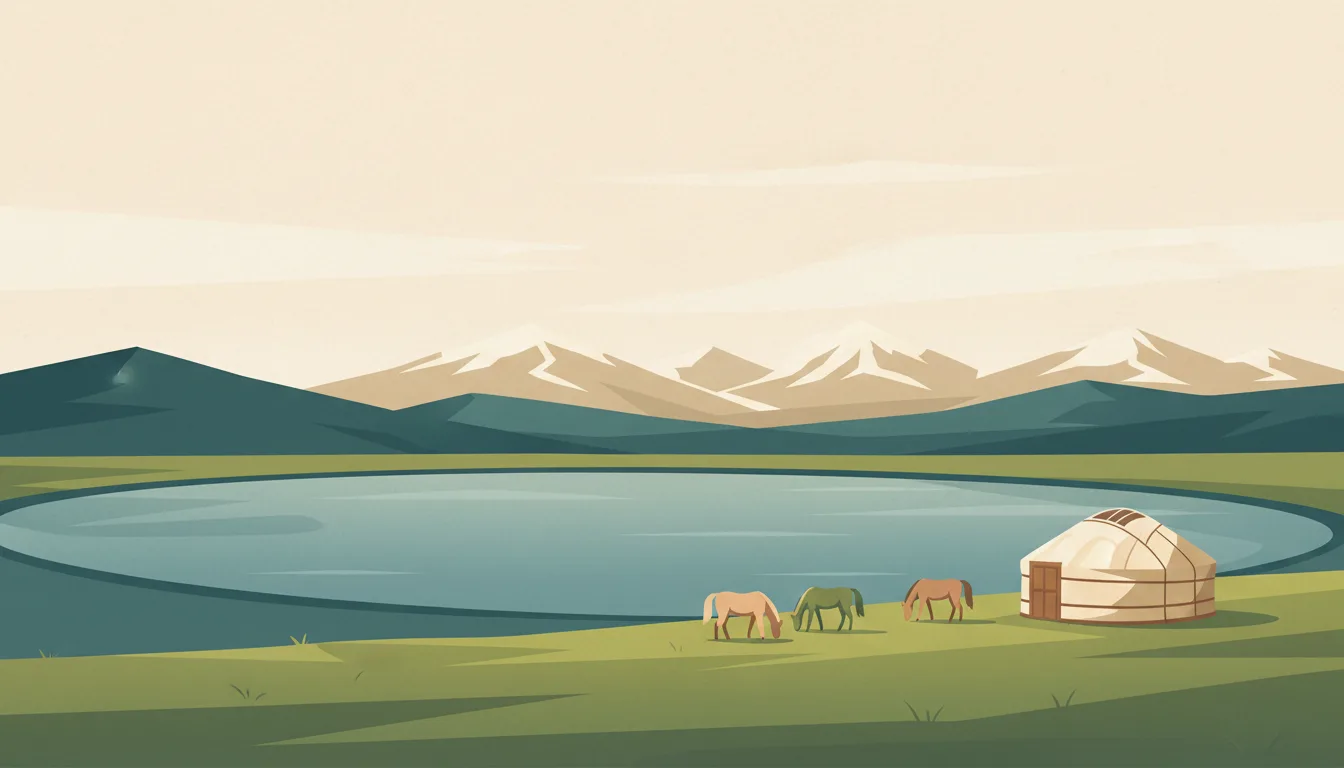


Naryn & Tash Rabat: what to expect
Naryn is a working town on the road to China; Tash Rabat, a 15th-century stone caravanserai in a side valley near the Torugart pass, is the reason to come. Kol-Suu lake beyond it needs a border-zone permit. This travel base guide groups the destination into six useful areas so the stay works on the ground, not only on a country map.
Is this your trip?
Who Naryn & Tash Rabat is for
History travellers
Naryn is a working town on the road to China; Tash Rabat, a 15th-century stone caravanserai in a side valley near the Torugart pass, is the reason to come. Kol-Suu lake beyond it needs a border-zone permit.
Travellers with 2–3 days
That window gives Naryn & Tash Rabat enough room for one anchor area and one contrasting cluster per day.
Valley base
At-Bashy and Tash Rabat make that interest practical rather than a country-level promise.
Area-led planners
Six fixed clusters make it easier to choose a base and avoid repeated cross-destination transfers.
Maybe not for you: A compressed checklist is the weak version of Naryn & Tash Rabat. Treat the suggested stay as time on the ground: weather, timed entry, ferries or mountain roads can remove half a day.
Season by season
When to visit Naryn & Tash Rabat
June–September. Rounded cold-continental planning normals: a short mild summer and a long, reliably cold winter. Conditions can still change sharply by elevation, coast and exposure, so use the chart for route timing and the current forecast for the day itself.
- Mixed
Spring
April–May
Snowmelt and fast-changing conditions make routes muddy before landscapes turn green.
- Best
Summer
June–August
Long daylight and the easiest access, with mosquitoes around forest and lake country.
- Good
Autumn
September–October
Clear air and colour arrive early; services begin reducing soon afterwards.
- Good
Winter
November–March
Deep cold and snow suit deliberate winter trips, not casual road itineraries.
Weather · monthly normals
Rounded cold-continental planning normals: a short mild summer and a long, reliably cold winter. Values are rounded planning normals rather than a live forecast.
Do fewer things better
Things to do in Naryn & Tash Rabat
A short, ordered set of experiences with the timing or planning catch that makes each one work.
- 1
Start with Naryn town
Naryn town
Long river town at 2,000 metres with the regional CBT and Chinese-border transport
- 2
Walk At-Bashy without stacking it
At-Bashy
Village on the road to Tash Rabat with homestays and the At-Bashy range
- 3
Use Tash Rabat for caravanserai and yurt camp
Tash Rabat
Fifteenth-century stone caravanserai in a side valley at 3,200 metres
- 4
Give Kol-Suu a deliberate half-day
Kol-Suu
Turquoise lake near the Chinese border requiring a border-zone permit and 4×4
- 5
See Torugart road outside peak hours
Torugart road
The highway toward Kashgar past Chatyr-Kul lake, for views rather than crossing
- 6
Keep Eki-Naryn weather-flexible
Eki-Naryn
Confluence valley north-east of Naryn with horse treks and quiet homestays
Treat the suggested stay as time on the ground: weather, timed entry, ferries or mountain roads can remove half a day.
Area by area
The areas of Naryn & Tash Rabat
A real map at local-city scale: enough geography to choose a base, compare areas and group a day. Numbered places match the notes below.
| Area | What it is like | Why go |
|---|---|---|
1 Naryn town guesthouses and CBT office | Long river town at 2,000 metres with the regional CBT and Chinese-border transport | Use Naryn town when guesthouses and CBT office matters more than crossing the whole destination. |
2 At-Bashy valley base | Village on the road to Tash Rabat with homestays and the At-Bashy range | Use At-Bashy when valley base matters more than crossing the whole destination. |
3 Tash Rabat caravanserai and yurt camp | Fifteenth-century stone caravanserai in a side valley at 3,200 metres | Use Tash Rabat when caravanserai and yurt camp matters more than crossing the whole destination. |
4 Kol-Suu remote lake with permit | Turquoise lake near the Chinese border requiring a border-zone permit and 4×4 | Use Kol-Suu when remote lake with permit matters more than crossing the whole destination. |
5 Torugart road pass to China | The highway toward Kashgar past Chatyr-Kul lake, for views rather than crossing | Use Torugart road when pass to China matters more than crossing the whole destination. |
6 Eki-Naryn river gorge and horses | Confluence valley north-east of Naryn with horse treks and quiet homestays | Use Eki-Naryn when river gorge and horses matters more than crossing the whole destination. |
Choose the base, then the hotel
Where to stay in Naryn & Tash Rabat
For most first visits: Naryn town for guesthouses and CBT office.
Naryn town
Long river town at 2,000 metres with the regional CBT and Chinese-border transport Choose it when that trade-off should shape mornings and evenings.
At-Bashy
Village on the road to Tash Rabat with homestays and the At-Bashy range Choose it when that trade-off should shape mornings and evenings.
Tash Rabat
Fifteenth-century stone caravanserai in a side valley at 3,200 metres Choose it when that trade-off should shape mornings and evenings.
Kol-Suu
Turquoise lake near the Chinese border requiring a border-zone permit and 4×4 Choose it when that trade-off should shape mornings and evenings.
Order with a point of view
What to eat in Naryn & Tash Rabat
Local food is more useful as an area decision than as a checklist of famous dishes.
- 01
Beshbarmak
Naryn town
Meat on hand-cut noodles with broth is the feast dish; a host who serves it is honouring you
- 02
Laghman and ashlan-fu
At-Bashy
Uyghur and Dungan noodle dishes are everyday food in Bishkek and Karakol, cold ashlan-fu especially in summer
- 03
Kymyz on the jailoo
Tash Rabat
Fermented mare's milk is made in summer yurts; a small bowl is expected and the taste is sour and light
- 04
Plov and samsa
Kol-Suu
Uzbek-style rice and oven-baked meat pastries are the food of Osh and the south
- 05
Boorsok and jam with tea
Torugart road
Fried dough pieces, homemade apricot jam and endless tea open every homestay meal
Useful on the ground
Local tips for Naryn & Tash Rabat
Plan the transfer, not only the distance
Treat the suggested stay as time on the ground: weather, timed entry, ferries or mountain roads can remove half a day.
Sixty days visa-free for most
EU, UK, US, Canadian, Australian and many other passports enter visa-free for 60 days; others apply on the e-visa portal. Border-zone permits are separate and needed for Kol-Suu, Khan Tengri and areas near China.
Som in cash outside Bishkek
ATMs are reliable in Bishkek, Karakol and Osh; take enough cash for yurt camps, horses and villages. Cards are accepted in city hotels and some restaurants.
Cheap SIMs, dead valleys
O!, Beeline and MegaCom SIMs cost a few euros; coverage is good in towns and along Issyk-Kul, absent at Song-Kul, Tash Rabat and on treks.
Type C and F, 220 V
European two-pin sockets; yurt camps may have solar charging only, so carry a power bank.
Common questions
Quick answers about Naryn & Tash Rabat
- When is the best time to visit Naryn & Tash Rabat?
- June–September. Rounded cold-continental planning normals: a short mild summer and a long, reliably cold winter. Conditions can still change sharply by elevation, coast and exposure, so use the chart for route timing and the current forecast for the day itself.
- How many days do you need in Naryn & Tash Rabat?
- 2–3 days. Naryn is a working town on the road to China; Tash Rabat, a 15th-century stone caravanserai in a side valley near the Torugart pass, is the reason to come. Kol-Suu lake beyond it needs a border-zone permit. This travel base guide groups the destination into six useful areas so the stay works on the ground, not only on a country map.
- Where should you stay in Naryn & Tash Rabat?
- Naryn town for guesthouses and CBT office. Long river town at 2,000 metres with the regional CBT and Chinese-border transport Choose it when that trade-off should shape mornings and evenings.
Keep building the route
Naryn & Tash Rabat is part of Kyrgyzstan
Use the country guide for visa, money, long-distance transport and the route between cities. Then compare the other worked-out stops below.