
Morondava & Avenue of the Baobabs: what to expect
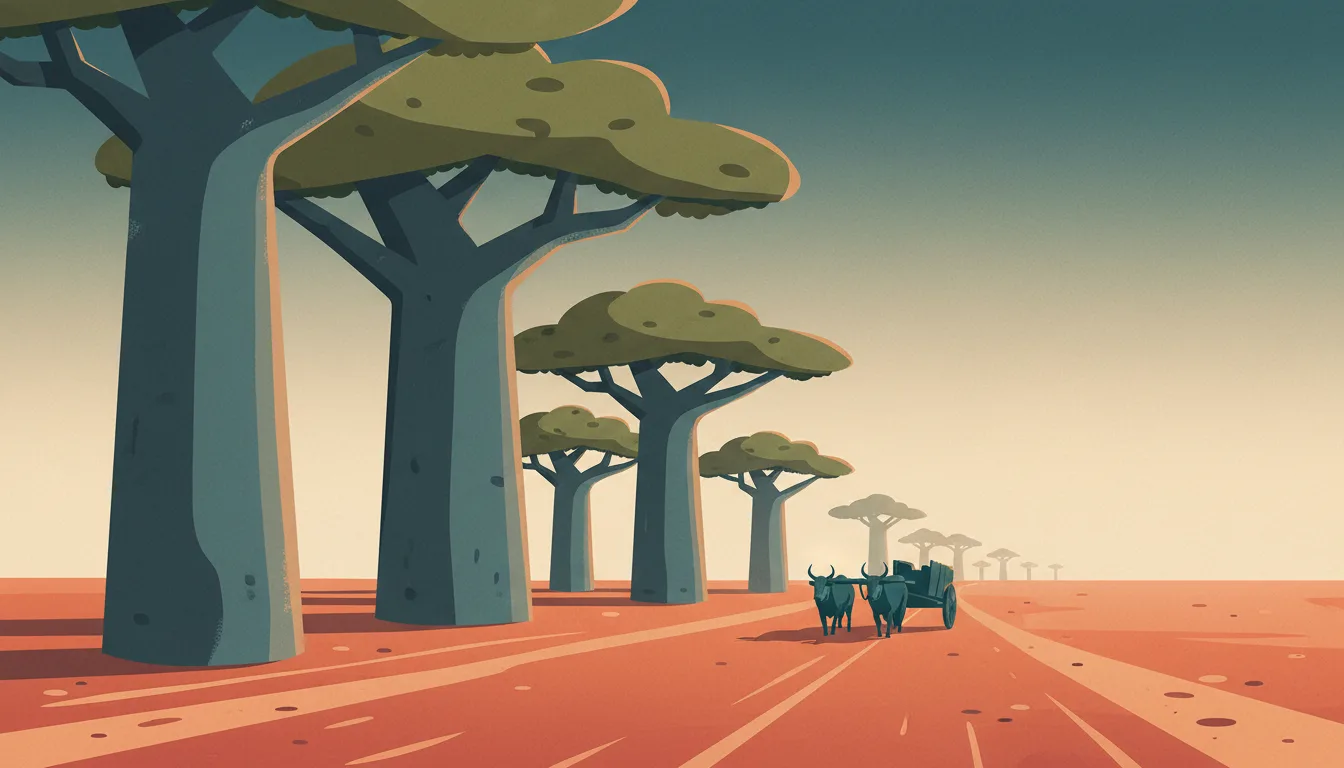
The west's dry forest, the baobab avenue at dusk and the limestone Tsingy de Bemaraha are reached from this quiet coastal town. Tracks open only in the dry season and the Tsingy is a full day each way. This travel base guide groups the destination into six useful areas so the stay works on the ground, not only on a country map.
Is this your trip?
Who Morondava & Avenue of the Baobabs is for
Landscape travellers
The west's dry forest, the baobab avenue at dusk and the limestone Tsingy de Bemaraha are reached from this quiet coastal town. Tracks open only in the dry season and the Tsingy is a full day each way.
Travellers with 3–5 days
That window gives Morondava & Avenue of the Baobabs enough room for one anchor area and one contrasting cluster per day.
Sunset and sunrise
Avenue of the Baobabs and Kirindy forest make that interest practical rather than a country-level promise.
Area-led planners
Six fixed clusters make it easier to choose a base and avoid repeated cross-destination transfers.
Maybe not for you: A compressed checklist is the weak version of Morondava & Avenue of the Baobabs. Treat the suggested stay as time on the ground: weather, timed entry, ferries or mountain roads can remove half a day.
Season by season
When to visit Morondava & Avenue of the Baobabs
April–June and September–November. Rounded Southern Hemisphere humid-subtropical normals: hot wet summers, mild winters and comfortable shoulder months. Conditions can still change sharply by elevation, coast and exposure, so use the chart for route timing and the current forecast for the day itself.
- Mixed
Summer
December–February
Heat, humidity and thunderstorms reward early outdoor starts and flexible afternoons.
- Best
Autumn
March–May
Temperatures and humidity ease while warm water and green landscapes remain.
- Good
Winter
June–August
Mild, drier days suit cities and falls, with cooler nights in the south or at height.
- Best
Spring
September–November
Warmth returns before peak summer humidity, with increasing showers later.
Weather · monthly normals
Rounded Southern Hemisphere humid-subtropical normals: hot wet summers, mild winters and comfortable shoulder months. Values are rounded planning normals rather than a live forecast.
Do fewer things better
Things to do in Morondava & Avenue of the Baobabs
A short, ordered set of experiences with the timing or planning catch that makes each one work.
- 1
Start with Morondava town
Morondava town
Quiet seafront town at the end of the RN35
- 2
Walk Avenue of the Baobabs without stacking it
Avenue of the Baobabs
Grandidier baobabs 20 km north on the Belo road
- 3
Use Kirindy forest for fossa and night walks
Kirindy forest
Dry forest reserve 60 km north with basic camps
- 4
Give Belo sur Tsiribihina a deliberate half-day
Belo sur Tsiribihina
Ferry point on the road to the Tsingy
- 5
See Tsingy de Bemaraha outside peak hours
Tsingy de Bemaraha
Full-day 4x4 drive north for via ferrata walks
- 6
Keep Betania and Nosy Kely weather-flexible
Betania and Nosy Kely
Vezo pirogues across the estuary
Treat the suggested stay as time on the ground: weather, timed entry, ferries or mountain roads can remove half a day.
Area by area
The areas of Morondava & Avenue of the Baobabs
A real map at local-city scale: enough geography to choose a base, compare areas and group a day. Numbered places match the notes below.
| Area | What it is like | Why go |
|---|---|---|
1 Morondava town first base and beach | Quiet seafront town at the end of the RN35 | Use Morondava town when first base and beach matters more than crossing the whole destination. |
2 Avenue of the Baobabs sunset and sunrise | Grandidier baobabs 20 km north on the Belo road | Use Avenue of the Baobabs when sunset and sunrise matters more than crossing the whole destination. |
3 Kirindy forest fossa and night walks | Dry forest reserve 60 km north with basic camps | Use Kirindy forest when fossa and night walks matters more than crossing the whole destination. |
4 Belo sur Tsiribihina river crossing town | Ferry point on the road to the Tsingy | Use Belo sur Tsiribihina when river crossing town matters more than crossing the whole destination. |
5 Tsingy de Bemaraha limestone pinnacles | Full-day 4x4 drive north for via ferrata walks | Use Tsingy de Bemaraha when limestone pinnacles matters more than crossing the whole destination. |
6 Betania and Nosy Kely fishing village and lagoon | Vezo pirogues across the estuary | Use Betania and Nosy Kely when fishing village and lagoon matters more than crossing the whole destination. |
Choose the base, then the hotel
Where to stay in Morondava & Avenue of the Baobabs
For most first visits: Morondava town for first base and beach.
Morondava town
Quiet seafront town at the end of the RN35 Choose it when that trade-off should shape mornings and evenings.
Avenue of the Baobabs
Grandidier baobabs 20 km north on the Belo road Choose it when that trade-off should shape mornings and evenings.
Kirindy forest
Dry forest reserve 60 km north with basic camps Choose it when that trade-off should shape mornings and evenings.
Belo sur Tsiribihina
Ferry point on the road to the Tsingy Choose it when that trade-off should shape mornings and evenings.
Order with a point of view
What to eat in Morondava & Avenue of the Baobabs
Local food is more useful as an area decision than as a checklist of famous dishes.
- 01
Romazava and ravitoto
Morondava town
Beef and greens broth or pork with pounded cassava leaves are the national plates over rice
- 02
Zebu from a hotely
Avenue of the Baobabs
Grilled or stewed zebu at a roadside hotely is the everyday RN7 lunch
- 03
Coastal fish and coconut
Kirindy forest
Vezo and Sakalava kitchens cook the catch in coconut on Nosy Be and the west
- 04
Koba and mofo gasy
Belo sur Tsiribihina
Peanut-and-banana koba in banana leaf and morning rice cakes sold at every market
- 05
Vanilla, chocolate and rum arrangé
Tsingy de Bemaraha
Madagascar grows most of the world's vanilla; taste it in Robert chocolate and infused rums
Useful on the ground
Local tips for Morondava & Avenue of the Baobabs
Plan the transfer, not only the distance
Treat the suggested stay as time on the ground: weather, timed entry, ferries or mountain roads can remove half a day.
Pay on arrival or apply online
Fees are set by stay length and have changed several times; carry the exact amount in euros or dollars, a return ticket and a passport valid for six months.
Ariary is cash-heavy
ATMs in cities dispense small notes, cards work only in larger hotels, and euros exchange easily. Carry cash in the south, the west and on Sainte-Marie.
Telma or Orange SIM at Ivato
Coverage follows the main roads and towns; parks and the west have little. Download offline maps and share the driver's number with the lodges.
Type C and E sockets
220 V with two-pin European plugs; power cuts are routine, so a power bank and a head torch are standard kit.
Common questions
Quick answers about Morondava & Avenue of the Baobabs
- When is the best time to visit Morondava & Avenue of the Baobabs?
- April–June and September–November. Rounded Southern Hemisphere humid-subtropical normals: hot wet summers, mild winters and comfortable shoulder months. Conditions can still change sharply by elevation, coast and exposure, so use the chart for route timing and the current forecast for the day itself.
- How many days do you need in Morondava & Avenue of the Baobabs?
- 3–5 days. The west's dry forest, the baobab avenue at dusk and the limestone Tsingy de Bemaraha are reached from this quiet coastal town. Tracks open only in the dry season and the Tsingy is a full day each way. This travel base guide groups the destination into six useful areas so the stay works on the ground, not only on a country map.
- Where should you stay in Morondava & Avenue of the Baobabs?
- Morondava town for first base and beach. Quiet seafront town at the end of the RN35 Choose it when that trade-off should shape mornings and evenings.
Keep building the route
Morondava & Avenue of the Baobabs is part of Madagascar
Use the country guide for visa, money, long-distance transport and the route between cities. Then compare the other worked-out stops below.
- AntananarivoHill capital of red brick, rice paddies and the Rova
- Andasibe & the eastern rainforestIndri calls at dawn and the easiest lemur forests
- Nosy BeYlang-ylang, black lemurs and the only real resort coast
- Isalo & the RN7 southSandstone canyons, ring-tailed lemurs and the highland road
- Île Sainte-MarieHumpback whales, pirate graves and an unhurried east-coast island