
Valletta: what to expect
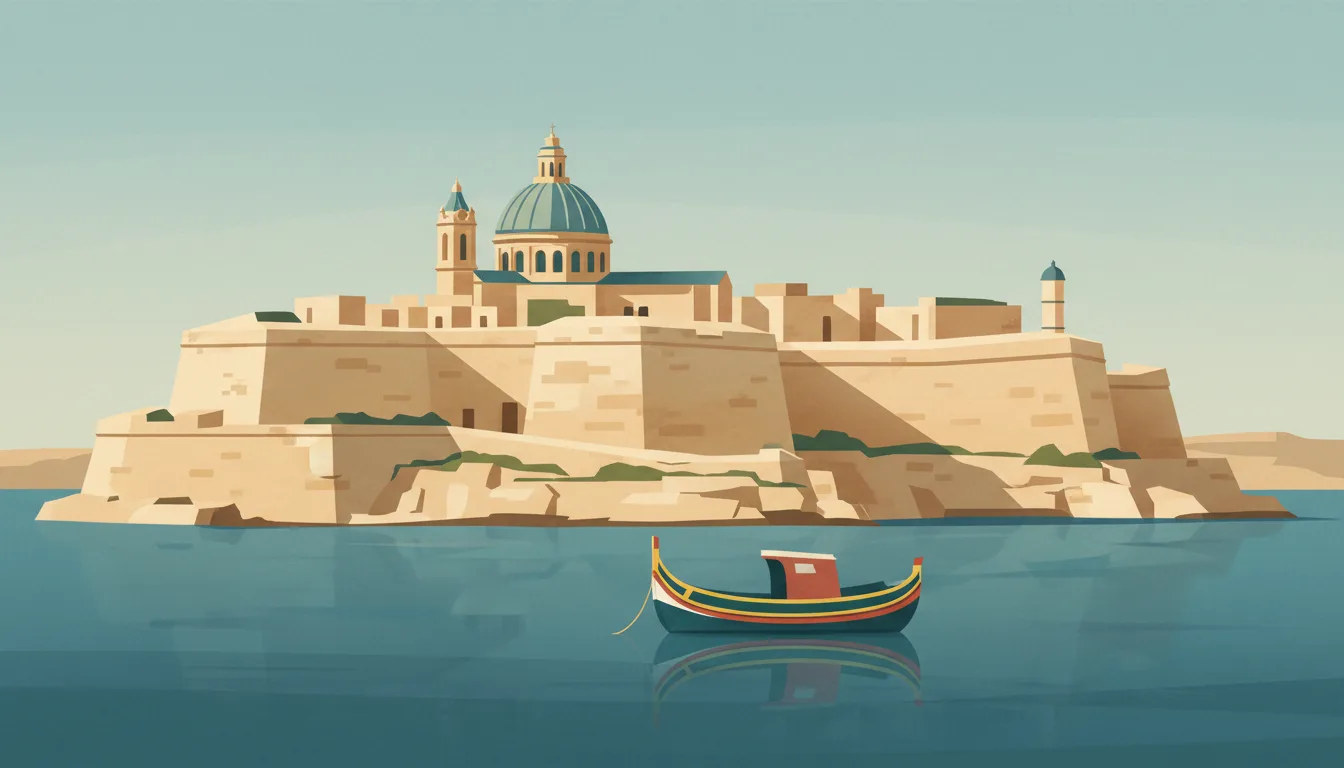
Valletta is a fortified grid of palaces, churches and cafés between two harbours. St John's Co-Cathedral, the Upper Barrakka gardens, the war rooms and evenings on Strait Street reward a base in the city rather than day trips in. This city guide groups the destination into six useful areas so the stay works on the ground, not only on a country map.
Is this your trip?
Who Valletta is for
History travellers
Valletta is a fortified grid of palaces, churches and cafés between two harbours. St John's Co-Cathedral, the Upper Barrakka gardens, the war rooms and evenings on Strait Street reward a base in the city rather than day trips in.
Travellers with 2 days
That window gives Valletta enough room for one anchor area and one contrasting cluster per day.
Views and the harbour lift
Upper Barrakka & the bastions and Strait Street & lower Valletta make that interest practical rather than a country-level promise.
Area-led planners
Six fixed clusters make it easier to choose a base and avoid repeated cross-destination transfers.
Maybe not for you: A compressed checklist is the weak version of Valletta. Treat the suggested stay as time on the ground: weather, timed entry, ferries or mountain roads can remove half a day.
Season by season
When to visit Valletta
April–June and September–October. Rounded Mediterranean planning normals: hot dry summers and mild, wetter winters. Conditions can still change sharply by elevation, coast and exposure, so use the chart for route timing and the current forecast for the day itself.
- Best
Spring
March–May
Mild days, green landscapes and rising demand around holidays.
- Mixed
Summer
June–August
Hot, bright and busy; shade and early starts materially improve city days.
- Best
Autumn
September–November
Warm early weeks, softer light and rain returning later in the season.
- Good
Winter
December–February
Cooler and wetter, with shorter hours but much lighter visitor pressure.
Weather · monthly normals
Rounded Mediterranean planning normals: hot dry summers and mild, wetter winters. Values are rounded planning normals rather than a live forecast.
Do fewer things better
Things to do in Valletta
A short, ordered set of experiences with the timing or planning catch that makes each one work.
- 1
Start with Republic Street & St John's
Republic Street & St John's
The main spine with the Co-Cathedral, Grandmaster's Palace and museums
- 2
Walk Upper Barrakka & the bastions without stacking it
Upper Barrakka & the bastions
Gardens above the Grand Harbour with the noon gun and a lift to the ferry
- 3
Use Strait Street & lower Valletta for evenings and wine bars
Strait Street & lower Valletta
Former red-light lane now the capital's bar district on the harbour side
- 4
Give Fort St Elmo & war rooms a deliberate half-day
Fort St Elmo & war rooms
Peninsula tip fort with the war museum and the Lascaris tunnels nearby
- 5
See Floriana outside peak hours
Floriana
Suburb outside the gate with the Granaries, gardens and the main bus station
- 6
Keep Sliema & Gżira weather-flexible
Sliema & Gżira
Waterfront promenade suburbs with the widest hotel choice, a ferry ride from Valletta
Treat the suggested stay as time on the ground: weather, timed entry, ferries or mountain roads can remove half a day.
Area by area
The neighbourhoods of Valletta
A real map at local-city scale: enough geography to choose a base, compare areas and group a day. Numbered places match the notes below.
| Area | What it is like | Why go |
|---|---|---|
1 Republic Street & St John's first history and cathedral | The main spine with the Co-Cathedral, Grandmaster's Palace and museums | Use Republic Street & St John's when first history and cathedral matters more than crossing the whole destination. |
2 Upper Barrakka & the bastions views and the harbour lift | Gardens above the Grand Harbour with the noon gun and a lift to the ferry | Use Upper Barrakka & the bastions when views and the harbour lift matters more than crossing the whole destination. |
3 Strait Street & lower Valletta evenings and wine bars | Former red-light lane now the capital's bar district on the harbour side | Use Strait Street & lower Valletta when evenings and wine bars matters more than crossing the whole destination. |
4 Fort St Elmo & war rooms war history | Peninsula tip fort with the war museum and the Lascaris tunnels nearby | Use Fort St Elmo & war rooms when war history matters more than crossing the whole destination. |
5 Floriana gardens and bus terminus | Suburb outside the gate with the Granaries, gardens and the main bus station | Use Floriana when gardens and bus terminus matters more than crossing the whole destination. |
6 Sliema & Gżira hotels and ferry across the harbour | Waterfront promenade suburbs with the widest hotel choice, a ferry ride from Valletta | Use Sliema & Gżira when hotels and ferry across the harbour matters more than crossing the whole destination. |
Choose the base, then the hotel
Where to stay in Valletta
For most first visits: Republic Street & St John's for first history and cathedral.
Republic Street & St John's
The main spine with the Co-Cathedral, Grandmaster's Palace and museums Choose it when that trade-off should shape mornings and evenings.
Upper Barrakka & the bastions
Gardens above the Grand Harbour with the noon gun and a lift to the ferry Choose it when that trade-off should shape mornings and evenings.
Strait Street & lower Valletta
Former red-light lane now the capital's bar district on the harbour side Choose it when that trade-off should shape mornings and evenings.
Fort St Elmo & war rooms
Peninsula tip fort with the war museum and the Lascaris tunnels nearby Choose it when that trade-off should shape mornings and evenings.
Order with a point of view
What to eat in Valletta
Local food is more useful as an area decision than as a checklist of famous dishes.
- 01
Pastizzi
Republic Street & St John's
Flaky ricotta or pea pastries from a bakery hatch are the cheapest, most Maltese meal; eat them hot and early
- 02
Rabbit stew
Upper Barrakka & the bastions
Fenek is the national dish, slow-cooked with wine and served on Sundays in village restaurants
- 03
Ftira and Gozitan cheeselets
Strait Street & lower Valletta
Sourdough ring bread filled with tuna, capers and tomato, and peppered ġbejniet from Gozo goat milk
- 04
Lampuki and octopus
Fort St Elmo & war rooms
Dorado in autumn and octopus stew year-round show up in Marsaxlokk; ask what came in that morning
- 05
Kinnie and local wine
Floriana
The bitter-orange soft drink and Meridiana or Gozitan wines suit the heat better than imported lager
Useful on the ground
Local tips for Valletta
Plan the transfer, not only the distance
Treat the suggested stay as time on the ground: weather, timed entry, ferries or mountain roads can remove half a day.
Schengen rules apply
Malta is in Schengen; short stays count against the 90-in-180-day allowance. Check whether the EU entry-exit system now applies to your passport.
Euro, cards common
Cards work in most places; carry cash for bakery hatches, village bars, water taxis and some Gozo farms.
Good coverage on both islands
4G and 5G are strong; EU SIMs roam free and local prepaid SIMs are cheap for others. Ferries and most cafés have wifi.
Type G sockets
Malta uses British three-pin sockets at 230 V, not continental two-pin; European visitors need an adapter as much as North Americans.
Common questions
Quick answers about Valletta
- When is the best time to visit Valletta?
- April–June and September–October. Rounded Mediterranean planning normals: hot dry summers and mild, wetter winters. Conditions can still change sharply by elevation, coast and exposure, so use the chart for route timing and the current forecast for the day itself.
- How many days do you need in Valletta?
- 2 days. Valletta is a fortified grid of palaces, churches and cafés between two harbours. St John's Co-Cathedral, the Upper Barrakka gardens, the war rooms and evenings on Strait Street reward a base in the city rather than day trips in. This city guide groups the destination into six useful areas so the stay works on the ground, not only on a country map.
- Where should you stay in Valletta?
- Republic Street & St John's for first history and cathedral. The main spine with the Co-Cathedral, Grandmaster's Palace and museums Choose it when that trade-off should shape mornings and evenings.
Keep building the route
Valletta is part of Malta
Use the country guide for visa, money, long-distance transport and the route between cities. Then compare the other worked-out stops below.
- Three Cities & the Grand HarbourBirgu, Senglea and Cospicua across the water
- Mdina & RabatThe Silent City and the catacombs beneath it
- GozoCliffs, salt pans, a citadel and a slower island
- Northern Malta: Mellieħa & CominoSandy bays, the Blue Lagoon and the Gozo ferry
- Southern Malta: Marsaxlokk & the templesFishing harbour, Neolithic temples and the Blue Grotto coast