
Wellington: what to expect
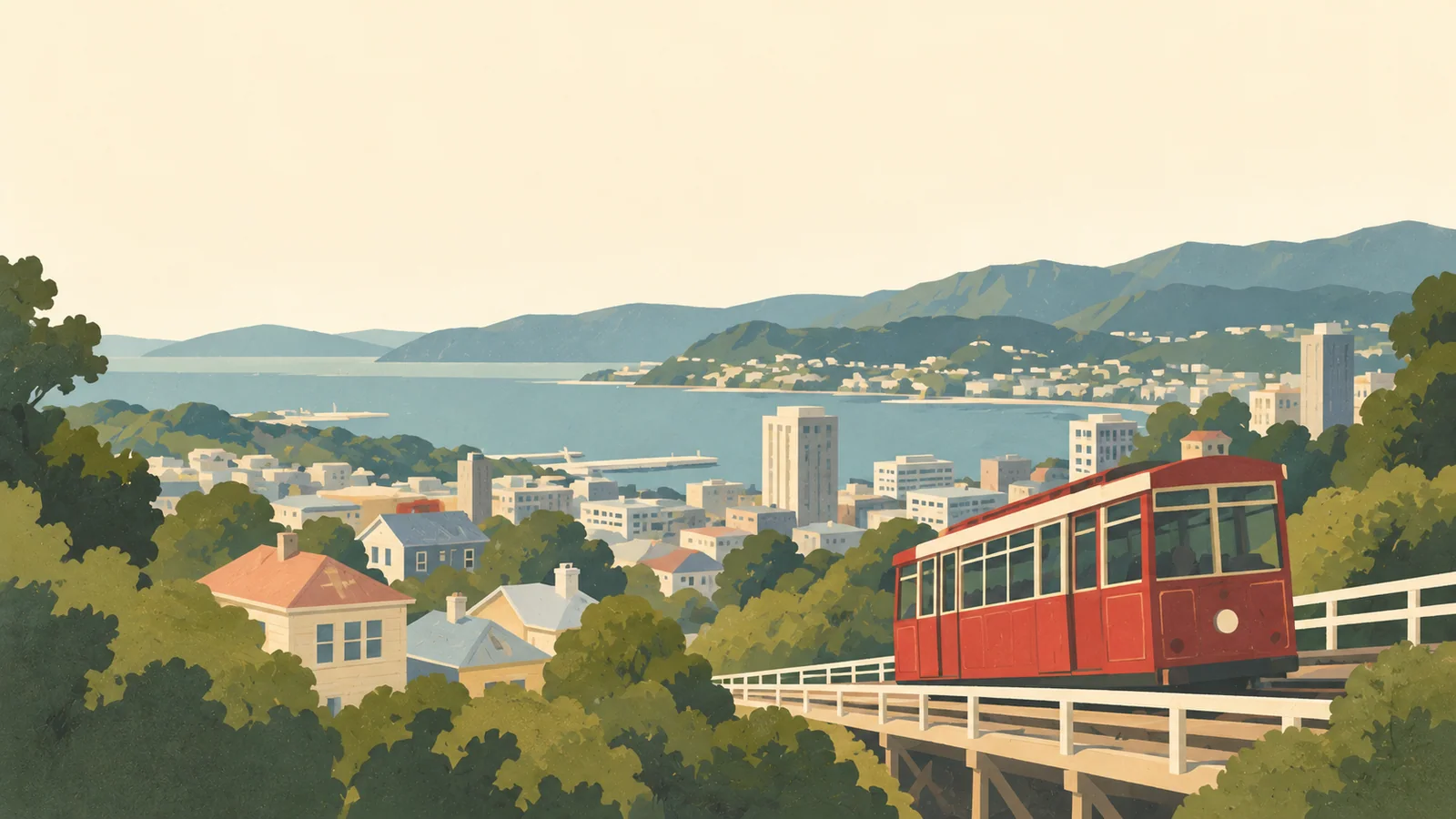
A compact capital with Te Papa, food, harbour walks and strong creative life. Weather can shut the cable car view, not the city. This city guide groups the destination into six useful areas so the stay works on the ground, not only on a country map.
Is this your trip?
Who Wellington is for
Museums travellers
A compact capital with Te Papa, food, harbour walks and strong creative life. Weather can shut the cable car view, not the city.
Travellers with 2–3 days
That window gives Wellington enough room for one anchor area and one contrasting cluster per day.
First museum and harbour
Waterfront & Te Papa and Thorndon make that interest practical rather than a country-level promise.
Area-led planners
Six fixed clusters make it easier to choose a base and avoid repeated cross-destination transfers.
Maybe not for you: A compressed checklist is the weak version of Wellington. Treat the suggested stay as time on the ground: weather, timed entry, ferries or mountain roads can remove half a day.
Season by season
When to visit Wellington
December–March. Rounded southern-oceanic planning normals: mild summers, cool winters and changeable weather year-round. Conditions can still change sharply by elevation, coast and exposure, so use the chart for route timing and the current forecast for the day itself.
- Best
Summer
December–February
Longer, milder days give the widest outdoor and transport window.
- Good
Autumn
March–May
Stable early weeks and colour, followed by cooler nights and reduced schedules.
- Mixed
Winter
June–August
Cool, wet and short-day conditions favour cities or a deliberate snow plan.
- Good
Spring
September–November
Fast-changing weather, blossom and fewer visitors before summer.
Weather · monthly normals
Rounded southern-oceanic planning normals: mild summers, cool winters and changeable weather year-round. Values are rounded planning normals rather than a live forecast.
Do fewer things better
Things to do in Wellington
A short, ordered set of experiences with the timing or planning catch that makes each one work.
- 1
Start with Te Aro & Cuba Street
Te Aro & Cuba Street
Compact central streets below Mount Victoria
- 2
Walk Waterfront & Te Papa without stacking it
Waterfront & Te Papa
National collections on a walkable shore
- 3
Use Thorndon for politics and history
Thorndon
Parliament, old houses and Botanic Garden access
- 4
Give Mount Victoria a deliberate half-day
Mount Victoria
Hillside neighbourhood above Oriental Bay
- 5
See Miramar outside peak hours
Miramar
Studios, beaches and exposed peninsula roads
- 6
Keep Zealandia & western hills weather-flexible
Zealandia & western hills
Urban sanctuary linked to green-belt trails
Treat the suggested stay as time on the ground: weather, timed entry, ferries or mountain roads can remove half a day.
Area by area
The neighbourhoods of Wellington
A real map at local-city scale: enough geography to choose a base, compare areas and group a day. Numbered places match the notes below.
| Area | What it is like | Why go |
|---|---|---|
1 Te Aro & Cuba Street food and local city | Compact central streets below Mount Victoria | Use Te Aro & Cuba Street when food and local city matters more than crossing the whole destination. |
2 Waterfront & Te Papa first museum and harbour | National collections on a walkable shore | Use Waterfront & Te Papa when first museum and harbour matters more than crossing the whole destination. |
3 Thorndon politics and history | Parliament, old houses and Botanic Garden access | Use Thorndon when politics and history matters more than crossing the whole destination. |
4 Mount Victoria views and longer stays | Hillside neighbourhood above Oriental Bay | Use Mount Victoria when views and longer stays matters more than crossing the whole destination. |
5 Miramar film and coast | Studios, beaches and exposed peninsula roads | Use Miramar when film and coast matters more than crossing the whole destination. |
6 Zealandia & western hills wildlife and walking | Urban sanctuary linked to green-belt trails | Use Zealandia & western hills when wildlife and walking matters more than crossing the whole destination. |
Choose the base, then the hotel
Where to stay in Wellington
For most first visits: Te Aro & Cuba Street for food and local city.
Te Aro & Cuba Street
Compact central streets below Mount Victoria Choose it when that trade-off should shape mornings and evenings.
Waterfront & Te Papa
National collections on a walkable shore Choose it when that trade-off should shape mornings and evenings.
Thorndon
Parliament, old houses and Botanic Garden access Choose it when that trade-off should shape mornings and evenings.
Mount Victoria
Hillside neighbourhood above Oriental Bay Choose it when that trade-off should shape mornings and evenings.
Order with a point of view
What to eat in Wellington
Local food is more useful as an area decision than as a checklist of famous dishes.
- 01
Seasonal café breakfast
Te Aro & Cuba Street
Good coffee, eggs and local produce are a serious part of New Zealand city culture
- 02
Seafood by coast
Waterfront & Te Papa
Green-lipped mussels, pāua, crayfish and market fish should follow region and legal season
- 03
Māori food with context
Thorndon
Choose iwi- or Māori-led experiences that explain ingredients and tikanga
- 04
Bakery pie
Mount Victoria
A fresh hand pie is the practical road lunch; compare local fillings rather than brand fame
- 05
Local cheese, fruit or wine
Miramar
Tie the tasting to a named producer and arrange a sober driver
Useful on the ground
Local tips for Wellington
Plan the transfer, not only the distance
Treat the suggested stay as time on the ground: weather, timed entry, ferries or mountain roads can remove half a day.
Visa and entry
Many visitors need an NZeTA or visa before arrival. Rules depend on passport and purpose; check New Zealand immigration guidance before flying.
Money and cards
Cards are widely accepted, but carry a backup card and some cash for campsites, honesty boxes and rural stops. Prices are in New Zealand dollars.
SIM and data
Coverage is strong in cities and on main roads, with gaps in national parks and remote coast. Download maps and leave a route with someone.
Plugs and power
New Zealand uses 230 V and type I sockets. Visitors from Europe, North America and the UK need an adapter.
Common questions
Quick answers about Wellington
- When is the best time to visit Wellington?
- December–March. Rounded southern-oceanic planning normals: mild summers, cool winters and changeable weather year-round. Conditions can still change sharply by elevation, coast and exposure, so use the chart for route timing and the current forecast for the day itself.
- How many days do you need in Wellington?
- 2–3 days. A compact capital with Te Papa, food, harbour walks and strong creative life. Weather can shut the cable car view, not the city. This city guide groups the destination into six useful areas so the stay works on the ground, not only on a country map.
- Where should you stay in Wellington?
- Te Aro & Cuba Street for food and local city. Compact central streets below Mount Victoria Choose it when that trade-off should shape mornings and evenings.
Keep building the route
Wellington is part of New Zealand
Use the country guide for visa, money, long-distance transport and the route between cities. Then compare the other worked-out stops below.