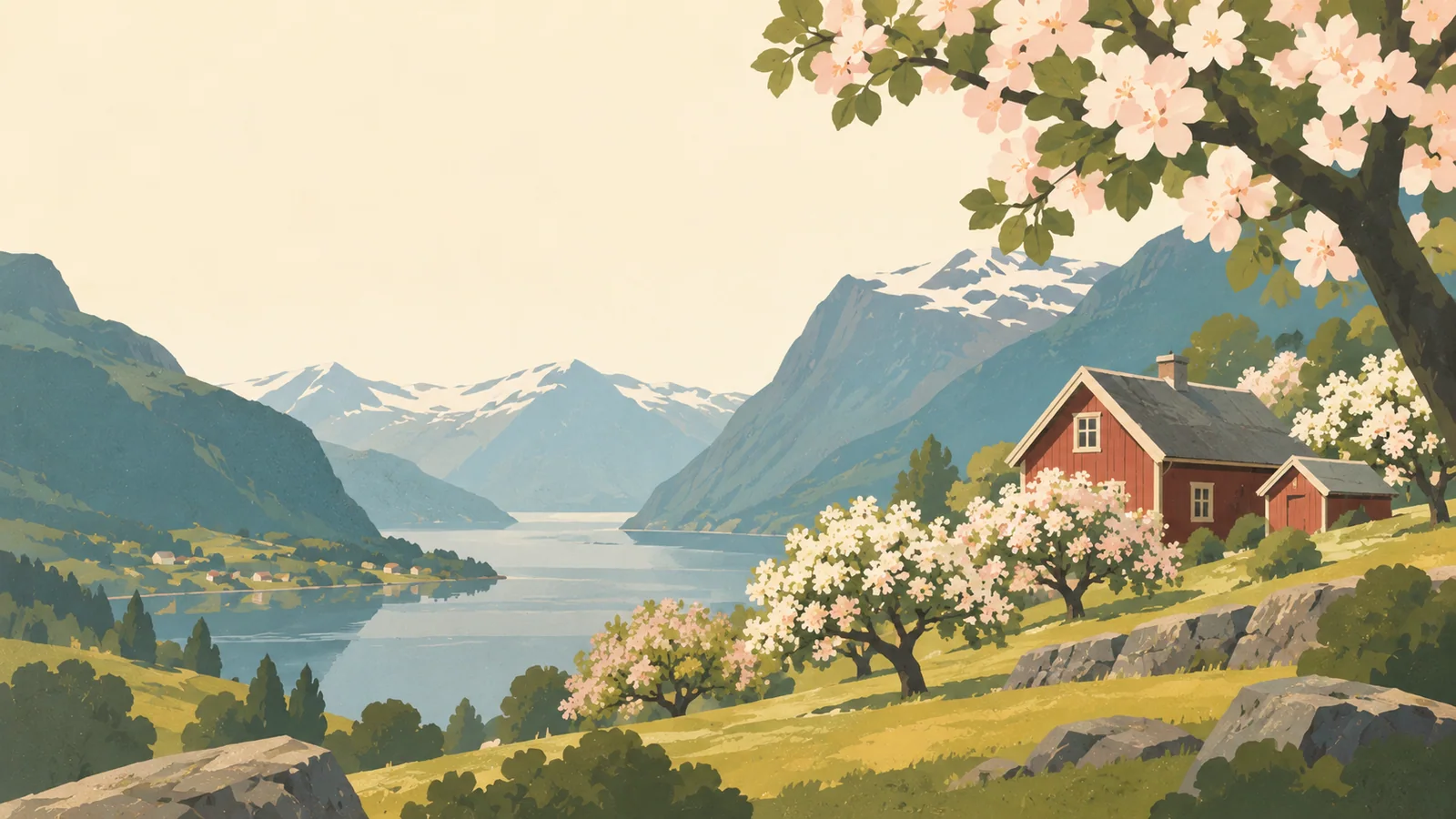


Hardangerfjord: what to expect
A quieter alternative or extension to the most famous fjords, with hiking, cider farms and villages reached by ferry and bus. This travel base guide groups the destination into six useful areas so the stay works on the ground, not only on a country map.
Is this your trip?
Who Hardangerfjord is for
Hiking travellers
A quieter alternative or extension to the most famous fjords, with hiking, cider farms and villages reached by ferry and bus.
Travellers with 2–4 days
That window gives Hardangerfjord enough room for one anchor area and one contrasting cluster per day.
Water and transport
Norheimsund and Eidfjord make that interest practical rather than a country-level promise.
Area-led planners
Six fixed clusters make it easier to choose a base and avoid repeated cross-destination transfers.
Maybe not for you: A compressed checklist is the weak version of Hardangerfjord. Treat the suggested stay as time on the ground: weather, timed entry, ferries or mountain roads can remove half a day.
Season by season
When to visit Hardangerfjord
May–September. Rounded oceanic planning normals: modest temperature swings and rain possible in every month. Conditions can still change sharply by elevation, coast and exposure, so use the chart for route timing and the current forecast for the day itself.
- Good
Spring
March–May
Longer days and fresh landscapes, with changeable rain and cool evenings.
- Best
Summer
June–August
The warmest and longest days; book popular weekends and outdoor bases early.
- Good
Autumn
September–November
Good early colour and fewer visitors before wetter, shorter days settle in.
- Mixed
Winter
December–February
Cool, damp and dark, although cities retain strong indoor culture.
Weather · monthly normals
Rounded oceanic planning normals: modest temperature swings and rain possible in every month. Values are rounded planning normals rather than a live forecast.
Do fewer things better
Things to do in Hardangerfjord
A short, ordered set of experiences with the timing or planning catch that makes each one work.
- 1
Start with Voss
Voss
Bergen-Oslo line hub with valley access
- 2
Walk Norheimsund without stacking it
Norheimsund
Ferries, waterfall and a practical western base
- 3
Use Eidfjord for deep-fjord landscape
Eidfjord
Cruise pressure beside serious nearby nature
- 4
Give Ulvik a deliberate half-day
Ulvik
Cider farms and gentler village rhythm
- 5
See Odda outside peak hours
Odda
Industrial town for Trolltunga and southern routes
- 6
Keep Rosendal weather-flexible
Rosendal
Barony, fjord and glacier-side access
Treat the suggested stay as time on the ground: weather, timed entry, ferries or mountain roads can remove half a day.
Area by area
The areas of Hardangerfjord
A real map at local-city scale: enough geography to choose a base, compare areas and group a day. Numbered places match the notes below.
| Area | What it is like | Why go |
|---|---|---|
1 Voss rail and activity base | Bergen-Oslo line hub with valley access | Use Voss when rail and activity base matters more than crossing the whole destination. |
2 Norheimsund water and transport | Ferries, waterfall and a practical western base | Use Norheimsund when water and transport matters more than crossing the whole destination. |
3 Eidfjord deep-fjord landscape | Cruise pressure beside serious nearby nature | Use Eidfjord when deep-fjord landscape matters more than crossing the whole destination. |
4 Ulvik orchards and quiet stays | Cider farms and gentler village rhythm | Use Ulvik when orchards and quiet stays matters more than crossing the whole destination. |
5 Odda hiking base | Industrial town for Trolltunga and southern routes | Use Odda when hiking base matters more than crossing the whole destination. |
6 Rosendal culture and Folgefonna | Barony, fjord and glacier-side access | Use Rosendal when culture and Folgefonna matters more than crossing the whole destination. |
Choose the base, then the hotel
Where to stay in Hardangerfjord
For most first visits: Voss for rail and activity base.
Voss
Bergen-Oslo line hub with valley access Choose it when that trade-off should shape mornings and evenings.
Norheimsund
Ferries, waterfall and a practical western base Choose it when that trade-off should shape mornings and evenings.
Eidfjord
Cruise pressure beside serious nearby nature Choose it when that trade-off should shape mornings and evenings.
Ulvik
Cider farms and gentler village rhythm Choose it when that trade-off should shape mornings and evenings.
Order with a point of view
What to eat in Hardangerfjord
Local food is more useful as an area decision than as a checklist of famous dishes.
- 01
Seasonal fish
Voss
Cod, skrei, mackerel and shellfish follow coast and calendar; ask what is actually local
- 02
Open sandwich
Norheimsund
A carefully made smørbrød is a useful lunch, not a lesser dinner
- 03
Brown cheese
Eidfjord
Try brunost thinly sliced with bread or waffle before buying a whole block
- 04
Mountain or farm plate
Ulvik
Cured meat, local cheese and flatbread make sense close to a named producer
- 05
Cinnamon bun
Odda
A bakery skillingsbolle or kanelbolle is the practical reward for a wet travel day
Useful on the ground
Local tips for Hardangerfjord
Plan the transfer, not only the distance
Treat the suggested stay as time on the ground: weather, timed entry, ferries or mountain roads can remove half a day.
Visa and entry
Norway follows Schengen entry rules. Many visa-exempt visitors can stay 90 days in 180 days; check your passport requirements before travel.
Money and cards
Cards and contactless payments work almost everywhere. Cash is less important than a card that works offline in remote areas.
SIM and data
EU roaming is not automatically free in every plan; check before departure. Coverage is good in towns and patchy in deep valleys and on trails.
Plugs and power
Norway uses 230 V and type C or F sockets. Most European chargers fit; other visitors need an adapter.
Common questions
Quick answers about Hardangerfjord
- When is the best time to visit Hardangerfjord?
- May–September. Rounded oceanic planning normals: modest temperature swings and rain possible in every month. Conditions can still change sharply by elevation, coast and exposure, so use the chart for route timing and the current forecast for the day itself.
- How many days do you need in Hardangerfjord?
- 2–4 days. A quieter alternative or extension to the most famous fjords, with hiking, cider farms and villages reached by ferry and bus. This travel base guide groups the destination into six useful areas so the stay works on the ground, not only on a country map.
- Where should you stay in Hardangerfjord?
- Voss for rail and activity base. Bergen-Oslo line hub with valley access Choose it when that trade-off should shape mornings and evenings.
Keep building the route
Hardangerfjord is part of Norway
Use the country guide for visa, money, long-distance transport and the route between cities. Then compare the other worked-out stops below.