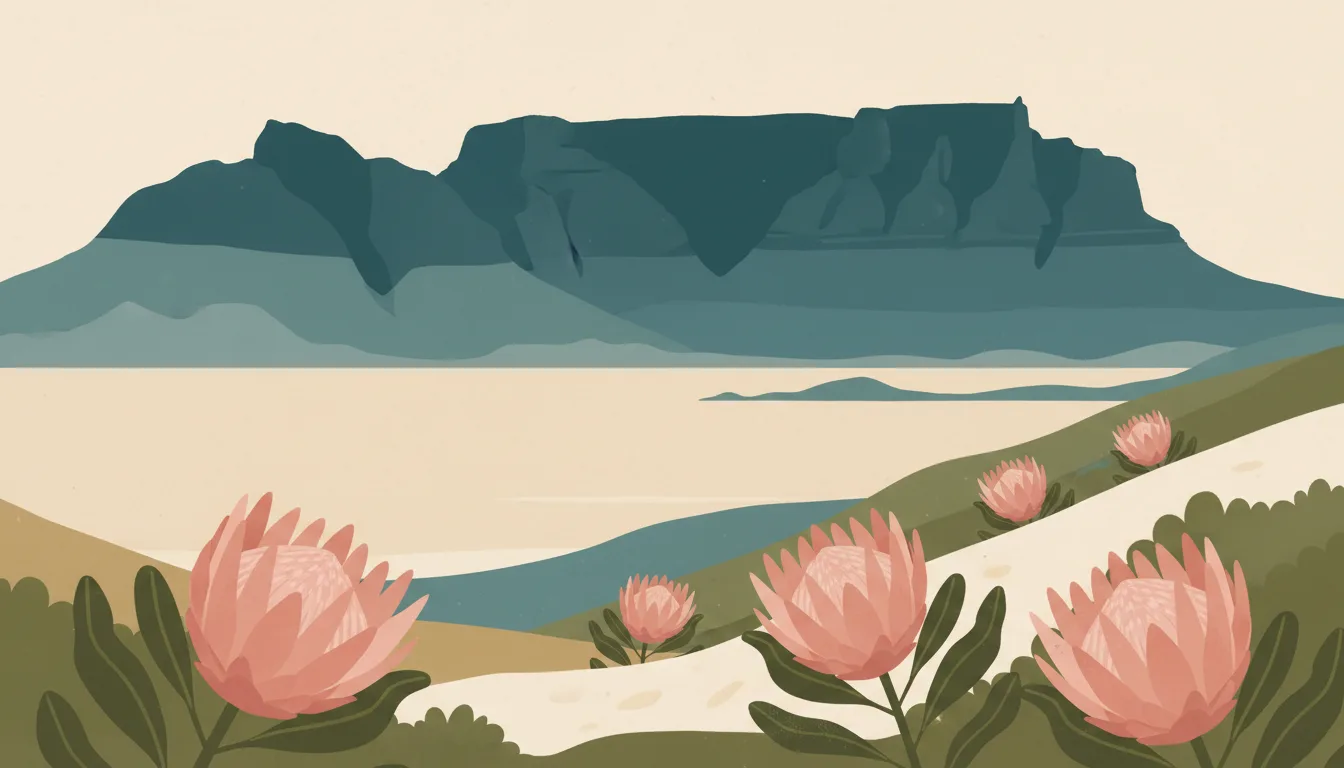


Cape Town: what to expect
Cape Town needs time for the mountain, the peninsula drive to Cape Point, the Bo-Kaap and District Six histories, and the beaches, all of which depend on wind and weather more than most visitors expect. This city guide groups the destination into six useful areas so the stay works on the ground, not only on a country map.
Is this your trip?
Who Cape Town is for
Landscape travellers
Cape Town needs time for the mountain, the peninsula drive to Cape Point, the Bo-Kaap and District Six histories, and the beaches, all of which depend on wind and weather more than most visitors expect.
Travellers with 4–5 days
That window gives Cape Town enough room for one anchor area and one contrasting cluster per day.
Cape Malay history and colour
Bo-Kaap & De Waterkant and V&A Waterfront make that interest practical rather than a country-level promise.
Area-led planners
Six fixed clusters make it easier to choose a base and avoid repeated cross-destination transfers.
Maybe not for you: A compressed checklist is the weak version of Cape Town. Treat the suggested stay as time on the ground: weather, timed entry, ferries or mountain roads can remove half a day.
Season by season
When to visit Cape Town
March–May and September–November. Rounded Southern Hemisphere Mediterranean normals: hot dry summers, mild wetter winters and useful shoulder seasons. Conditions can still change sharply by elevation, coast and exposure, so use the chart for route timing and the current forecast for the day itself.
- Good
Summer
December–February
Long, hot and dry days suit coast and wine country, with peak domestic demand.
- Best
Autumn
March–May
Harvest, softer temperatures and settled early weather make the strongest all-round window.
- Mixed
Winter
June–August
Cool rain reaches the lowlands while snow and closures affect mountain routes.
- Best
Spring
September–November
Warming days, fresh landscapes and lower pressure arrive before summer heat.
Weather · monthly normals
Rounded Southern Hemisphere Mediterranean normals: hot dry summers, mild wetter winters and useful shoulder seasons. Values are rounded planning normals rather than a live forecast.
Do fewer things better
Things to do in Cape Town
A short, ordered set of experiences with the timing or planning catch that makes each one work.
- 1
Start with City Bowl & Gardens
City Bowl & Gardens
Company's Garden, Long Street and the cableway road under Table Mountain
- 2
Walk Bo-Kaap & De Waterkant without stacking it
Bo-Kaap & De Waterkant
Cobbled streets, mosques and the food of a community shaped by slavery
- 3
Use V&A Waterfront for families and Robben Island ferry
V&A Waterfront
Working harbour turned retail district with the Zeitz MOCAA museum
- 4
Give Sea Point & Camps Bay a deliberate half-day
Sea Point & Camps Bay
Cold-water beaches and the promenade under the Twelve Apostles
- 5
See Woodstock & Observatory outside peak hours
Woodstock & Observatory
Former industrial streets with markets, galleries and student bars
- 6
Keep Simon's Town & Cape Point weather-flexible
Simon's Town & Cape Point
Boulders colony, naval history and the reserve at the peninsula tip
Treat the suggested stay as time on the ground: weather, timed entry, ferries or mountain roads can remove half a day.
Area by area
The neighbourhoods of Cape Town
A real map at local-city scale: enough geography to choose a base, compare areas and group a day. Numbered places match the notes below.
| Area | What it is like | Why go |
|---|---|---|
1 City Bowl & Gardens first stay and museums | Company's Garden, Long Street and the cableway road under Table Mountain | Use City Bowl & Gardens when first stay and museums matters more than crossing the whole destination. |
2 Bo-Kaap & De Waterkant Cape Malay history and colour | Cobbled streets, mosques and the food of a community shaped by slavery | Use Bo-Kaap & De Waterkant when Cape Malay history and colour matters more than crossing the whole destination. |
3 V&A Waterfront families and Robben Island ferry | Working harbour turned retail district with the Zeitz MOCAA museum | Use V&A Waterfront when families and Robben Island ferry matters more than crossing the whole destination. |
4 Sea Point & Camps Bay Atlantic promenade and sunsets | Cold-water beaches and the promenade under the Twelve Apostles | Use Sea Point & Camps Bay when Atlantic promenade and sunsets matters more than crossing the whole destination. |
5 Woodstock & Observatory food, art and evenings | Former industrial streets with markets, galleries and student bars | Use Woodstock & Observatory when food, art and evenings matters more than crossing the whole destination. |
6 Simon's Town & Cape Point penguins and peninsula drive | Boulders colony, naval history and the reserve at the peninsula tip | Use Simon's Town & Cape Point when penguins and peninsula drive matters more than crossing the whole destination. |
Choose the base, then the hotel
Where to stay in Cape Town
For most first visits: City Bowl & Gardens for first stay and museums.
City Bowl & Gardens
Company's Garden, Long Street and the cableway road under Table Mountain Choose it when that trade-off should shape mornings and evenings.
Bo-Kaap & De Waterkant
Cobbled streets, mosques and the food of a community shaped by slavery Choose it when that trade-off should shape mornings and evenings.
V&A Waterfront
Working harbour turned retail district with the Zeitz MOCAA museum Choose it when that trade-off should shape mornings and evenings.
Sea Point & Camps Bay
Cold-water beaches and the promenade under the Twelve Apostles Choose it when that trade-off should shape mornings and evenings.
Order with a point of view
What to eat in Cape Town
Local food is more useful as an area decision than as a checklist of famous dishes.
- 01
Braai at someone's fire
City Bowl & Gardens
Boerewors, lamb chops and pap over wood is how the country hosts; accept the invitation and bring something
- 02
Cape Malay curry or bobotie
Bo-Kaap & De Waterkant
The Bo-Kaap's spiced, slightly sweet cooking carries the history of enslaved and freed communities at the Cape
- 03
Bunny chow in Durban
V&A Waterfront
A hollowed loaf filled with curry is Indian South African street food, eaten with the hands
- 04
Estate lunch in the Winelands
Sea Point & Camps Bay
Restaurants on Franschhoek and Stellenbosch farms are the region's real strength; book lunch before tastings
- 05
Biltong, rusks and rooibos
Woodstock & Observatory
Road-trip staples from any farm stall explain how people cross the distances
Useful on the ground
Local tips for Cape Town
Plan the transfer, not only the distance
Treat the suggested stay as time on the ground: weather, timed entry, ferries or mountain roads can remove half a day.
Check entry and travelling with children
Many nationalities receive 90 days on arrival; travelling with minors has specific documentation rules, so read the current Department of Home Affairs guidance before flying.
Rand, cards everywhere, cash for tips
Cards and contactless work almost universally, including at fuel stations. Carry small notes for car guards, fuel attendants and rural markets; use ATMs inside banks or shopping centres.
Buy a local eSIM or SIM on arrival
Vodacom and MTN cover roads and parks unevenly; Kruger has signal near camps only. Download offline maps and park routes before leaving Wi-Fi.
Type M, plus type C and N
The large three-round-pin type M is standard at 230 V; newer buildings add type N. Most universal adapters lack type M, so buy one locally or borrow from the hotel.
Common questions
Quick answers about Cape Town
- When is the best time to visit Cape Town?
- March–May and September–November. Rounded Southern Hemisphere Mediterranean normals: hot dry summers, mild wetter winters and useful shoulder seasons. Conditions can still change sharply by elevation, coast and exposure, so use the chart for route timing and the current forecast for the day itself.
- How many days do you need in Cape Town?
- 4–5 days. Cape Town needs time for the mountain, the peninsula drive to Cape Point, the Bo-Kaap and District Six histories, and the beaches, all of which depend on wind and weather more than most visitors expect. This city guide groups the destination into six useful areas so the stay works on the ground, not only on a country map.
- Where should you stay in Cape Town?
- City Bowl & Gardens for first stay and museums. Company's Garden, Long Street and the cableway road under Table Mountain Choose it when that trade-off should shape mornings and evenings.
Keep building the route
Cape Town is part of South Africa
Use the country guide for visa, money, long-distance transport and the route between cities. Then compare the other worked-out stops below.
- Cape WinelandsStellenbosch, Franschhoek and the Cape Dutch valleys
- Garden RouteForest, lagoon and coast between Mossel Bay and Storms River
- Kruger & LowveldSelf-drive national park and private reserve safari
- JohannesburgMining city, apartheid memory and the country's engine
- DrakensbergBasalt escarpment, San rock art and high hiking