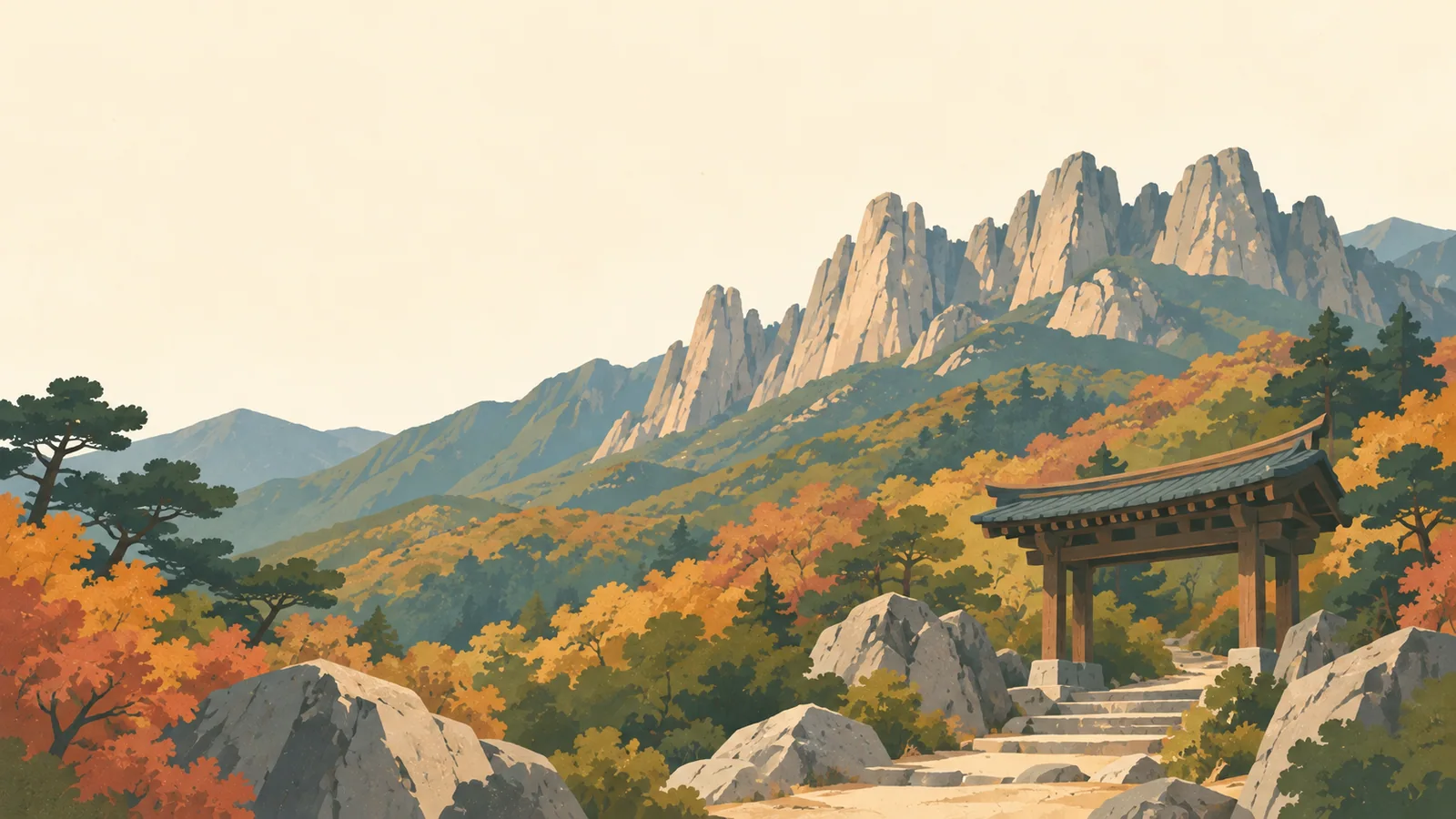


Sokcho and Seoraksan: what to expect
A practical east-coast base for one of Korea's best mountain areas, with a fish market and sea beside the granite peaks. This travel base guide groups the destination into six useful areas so the stay works on the ground, not only on a country map.
Is this your trip?
Who Sokcho and Seoraksan is for
Hiking travellers
A practical east-coast base for one of Korea's best mountain areas, with a fish market and sea beside the granite peaks.
Travellers with 2–3 days
That window gives Sokcho and Seoraksan enough room for one anchor area and one contrasting cluster per day.
Displacement history and food
Abai Village and Jungang Market make that interest practical rather than a country-level promise.
Area-led planners
Six fixed clusters make it easier to choose a base and avoid repeated cross-destination transfers.
Maybe not for you: A compressed checklist is the weak version of Sokcho and Seoraksan. Treat the suggested stay as time on the ground: weather, timed entry, ferries or mountain roads can remove half a day.
Season by season
When to visit Sokcho and Seoraksan
April–May and October–November. Rounded temperate East Asian planning normals: four clear seasons and a humid summer rain peak. Conditions can still change sharply by elevation, coast and exposure, so use the chart for route timing and the current forecast for the day itself.
- Best
Spring
March–May
Fast warming, blossom and holiday crowds; mornings can remain cold.
- Mixed
Summer
June–August
Hot, humid and wet, with storms or typhoon disruption possible.
- Best
Autumn
September–November
Clearer air, comfortable walking and strong foliage later in the season.
- Good
Winter
December–February
Cold and dry to snowy depending on coast and elevation, with lighter crowds.
Weather · monthly normals
Rounded temperate East Asian planning normals: four clear seasons and a humid summer rain peak. Values are rounded planning normals rather than a live forecast.
Do fewer things better
Things to do in Sokcho and Seoraksan
A short, ordered set of experiences with the timing or planning catch that makes each one work.
- 1
Start with Sokcho centre
Sokcho centre
Bus terminals and local food near the coast
- 2
Walk Abai Village without stacking it
Abai Village
Small harbour community reached across the water
- 3
Use Jungang Market for seafood and evening meal
Jungang Market
Busy covered market in the old centre
- 4
Give Seorak-dong a deliberate half-day
Seorak-dong
Lodging at the national-park entrance
- 5
See Ulsanbawi outside peak hours
Ulsanbawi
Steep granite route exposed to weather
- 6
Keep Naksansa & coast weather-flexible
Naksansa & coast
Southern shoreline extension beyond Sokcho
Treat the suggested stay as time on the ground: weather, timed entry, ferries or mountain roads can remove half a day.
Area by area
The areas of Sokcho and Seoraksan
A real map at local-city scale: enough geography to choose a base, compare areas and group a day. Numbered places match the notes below.
| Area | What it is like | Why go |
|---|---|---|
1 Sokcho centre transport and first base | Bus terminals and local food near the coast | Use Sokcho centre when transport and first base matters more than crossing the whole destination. |
2 Abai Village displacement history and food | Small harbour community reached across the water | Use Abai Village when displacement history and food matters more than crossing the whole destination. |
3 Jungang Market seafood and evening meal | Busy covered market in the old centre | Use Jungang Market when seafood and evening meal matters more than crossing the whole destination. |
4 Seorak-dong park access | Lodging at the national-park entrance | Use Seorak-dong when park access matters more than crossing the whole destination. |
5 Ulsanbawi serious day hike | Steep granite route exposed to weather | Use Ulsanbawi when serious day hike matters more than crossing the whole destination. |
6 Naksansa & coast temple and sea | Southern shoreline extension beyond Sokcho | Use Naksansa & coast when temple and sea matters more than crossing the whole destination. |
Choose the base, then the hotel
Where to stay in Sokcho and Seoraksan
For most first visits: Sokcho centre for transport and first base.
Sokcho centre
Bus terminals and local food near the coast Choose it when that trade-off should shape mornings and evenings.
Abai Village
Small harbour community reached across the water Choose it when that trade-off should shape mornings and evenings.
Jungang Market
Busy covered market in the old centre Choose it when that trade-off should shape mornings and evenings.
Seorak-dong
Lodging at the national-park entrance Choose it when that trade-off should shape mornings and evenings.
Order with a point of view
What to eat in Sokcho and Seoraksan
Local food is more useful as an area decision than as a checklist of famous dishes.
- 01
Neighbourhood baekban
Sokcho centre
A set meal of rice, soup and changing side dishes is the best everyday introduction
- 02
Market snack in moderation
Abai Village
Tteokbokki, pancakes and dumplings are better hot from a busy specialist than stacked at once
- 03
Regional barbecue or grilled fish
Jungang Market
Choose the protein and place first; ventilation and charcoal practice matter
- 04
Soup for the season
Seorak-dong
Guk, tang and jjigae vary by city, weather and purpose
- 05
Tea, coffee or rice drink
Ulsanbawi
Modern cafés and traditional teahouses are both real parts of contemporary Korea
Useful on the ground
Local tips for Sokcho and Seoraksan
Plan the transfer, not only the distance
Treat the suggested stay as time on the ground: weather, timed entry, ferries or mountain roads can remove half a day.
Visa and entry
South Korea's visa-free and K-ETA rules vary by passport and can change. Check the official Korean immigration or embassy guidance before travel.
Money and cards
Cards work widely, but some markets and transit cards need cash. Use a bank-linked ATM and keep won for small meals.
SIM and data
Airport eSIMs and local SIMs are easy to find. Fast data helps with maps and translation; save your accommodation address in Korean.
Plugs and power
South Korea uses 220 V and type C or F sockets. Most European chargers fit; other visitors need an adapter.
Common questions
Quick answers about Sokcho and Seoraksan
- When is the best time to visit Sokcho and Seoraksan?
- April–May and October–November. Rounded temperate East Asian planning normals: four clear seasons and a humid summer rain peak. Conditions can still change sharply by elevation, coast and exposure, so use the chart for route timing and the current forecast for the day itself.
- How many days do you need in Sokcho and Seoraksan?
- 2–3 days. A practical east-coast base for one of Korea's best mountain areas, with a fish market and sea beside the granite peaks. This travel base guide groups the destination into six useful areas so the stay works on the ground, not only on a country map.
- Where should you stay in Sokcho and Seoraksan?
- Sokcho centre for transport and first base. Bus terminals and local food near the coast Choose it when that trade-off should shape mornings and evenings.
Keep building the route
Sokcho and Seoraksan is part of South Korea
Use the country guide for visa, money, long-distance transport and the route between cities. Then compare the other worked-out stops below.