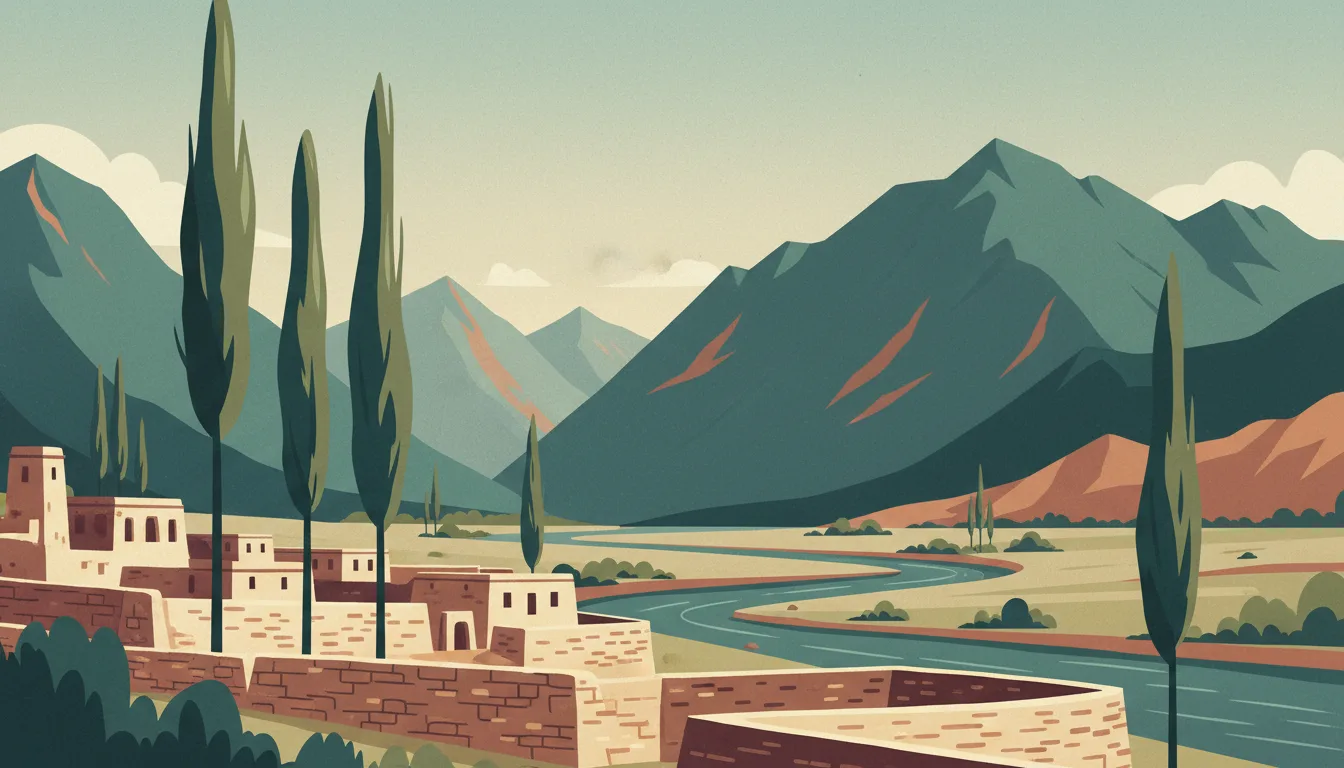


Khujand & the north: what to expect
Khujand's Panjshanbe bazaar, citadel and the Istaravshan old town are the country's most Uzbek-feeling chapter, reached over the Anzob tunnel from Dushanbe or from Tashkent's Oybek border in an hour. This travel base guide groups the destination into six useful areas so the stay works on the ground, not only on a country map.
Is this your trip?
Who Khujand & the north is for
Bazaars travellers
Khujand's Panjshanbe bazaar, citadel and the Istaravshan old town are the country's most Uzbek-feeling chapter, reached over the Anzob tunnel from Dushanbe or from Tashkent's Oybek border in an hour.
Travellers with 2–3 days
That window gives Khujand & the north enough room for one anchor area and one contrasting cluster per day.
History and first visit
Citadel & museum and Syr Darya embankment make that interest practical rather than a country-level promise.
Area-led planners
Six fixed clusters make it easier to choose a base and avoid repeated cross-destination transfers.
Maybe not for you: A compressed checklist is the weak version of Khujand & the north. Treat the suggested stay as time on the ground: weather, timed entry, ferries or mountain roads can remove half a day.
Season by season
When to visit Khujand & the north
May–June and September. Rounded continental planning normals: cold winters, warm summers and a fast-changing shoulder season. Conditions can still change sharply by elevation, coast and exposure, so use the chart for route timing and the current forecast for the day itself.
- Good
Spring
March–May
Rapid warming, blossom and occasional cold reversals; layer for long days.
- Best
Summer
June–August
Warm to hot with long daylight and thunderstorms rather than constant rain.
- Best
Autumn
September–November
September is excellent; temperatures and daylight fall quickly after it.
- Mixed
Winter
December–February
Cold, sometimes snowy and atmospheric, with museums carrying shorter days.
Weather · monthly normals
Rounded continental planning normals: cold winters, warm summers and a fast-changing shoulder season. Values are rounded planning normals rather than a live forecast.
Do fewer things better
Things to do in Khujand & the north
A short, ordered set of experiences with the timing or planning catch that makes each one work.
- 1
Start with Panjshanbe Bazaar
Panjshanbe Bazaar
The grand covered bazaar and the Sheikh Muslihiddin mosque opposite
- 2
Walk Citadel & museum without stacking it
Citadel & museum
Reconstructed fortress walls and the regional history museum
- 3
Use Syr Darya embankment for walks and evenings
Syr Darya embankment
Riverside promenade, cable car and cafés along the great river
- 4
Give Istaravshan a deliberate half-day
Istaravshan
Mud-brick lanes, the Kok Gumbaz mosque and knife makers an hour south
- 5
See Arbob Palace outside peak hours
Arbob Palace
Extravagant kolkhoz headquarters modelled on Peterhof, east of the city
- 6
Keep Oybek border weather-flexible
Oybek border
The road crossing to Tashkent, an hour away, and the northern arrival point
Treat the suggested stay as time on the ground: weather, timed entry, ferries or mountain roads can remove half a day.
Area by area
The areas of Khujand & the north
A real map at local-city scale: enough geography to choose a base, compare areas and group a day. Numbered places match the notes below.
| Area | What it is like | Why go |
|---|---|---|
1 Panjshanbe Bazaar food and market life | The grand covered bazaar and the Sheikh Muslihiddin mosque opposite | Use Panjshanbe Bazaar when food and market life matters more than crossing the whole destination. |
2 Citadel & museum history and first visit | Reconstructed fortress walls and the regional history museum | Use Citadel & museum when history and first visit matters more than crossing the whole destination. |
3 Syr Darya embankment walks and evenings | Riverside promenade, cable car and cafés along the great river | Use Syr Darya embankment when walks and evenings matters more than crossing the whole destination. |
4 Istaravshan old town day trip | Mud-brick lanes, the Kok Gumbaz mosque and knife makers an hour south | Use Istaravshan when old town day trip matters more than crossing the whole destination. |
5 Arbob Palace Soviet collective farm palace | Extravagant kolkhoz headquarters modelled on Peterhof, east of the city | Use Arbob Palace when Soviet collective farm palace matters more than crossing the whole destination. |
6 Oybek border Uzbekistan crossing | The road crossing to Tashkent, an hour away, and the northern arrival point | Use Oybek border when Uzbekistan crossing matters more than crossing the whole destination. |
Choose the base, then the hotel
Where to stay in Khujand & the north
For most first visits: Panjshanbe Bazaar for food and market life.
Panjshanbe Bazaar
The grand covered bazaar and the Sheikh Muslihiddin mosque opposite Choose it when that trade-off should shape mornings and evenings.
Citadel & museum
Reconstructed fortress walls and the regional history museum Choose it when that trade-off should shape mornings and evenings.
Syr Darya embankment
Riverside promenade, cable car and cafés along the great river Choose it when that trade-off should shape mornings and evenings.
Istaravshan
Mud-brick lanes, the Kok Gumbaz mosque and knife makers an hour south Choose it when that trade-off should shape mornings and evenings.
Order with a point of view
What to eat in Khujand & the north
Local food is more useful as an area decision than as a checklist of famous dishes.
- 01
Qurutob
Panjshanbe Bazaar
Bread soaked in yoghurt sauce with onions and oil is the national dish, eaten from a shared platter by hand
- 02
Osh plov
Citadel & museum
Rice cooked with carrots, chickpeas and lamb is the Friday and wedding dish across the lowlands
- 03
Non bread from the tandoor
Syr Darya embankment
Round bread stamped with patterns is never cut with a knife or placed face down
- 04
Shir chai and Pamiri bread
Istaravshan
Salted milk tea with butter and thick flatbread is breakfast in every Badakhshan homestay
- 05
Dried apricots and mulberries
Arbob Palace
The Wakhan and Khujand orchards produce the fruit that sustains the mountains through winter
Useful on the ground
Local tips for Khujand & the north
Plan the transfer, not only the distance
Treat the suggested stay as time on the ground: weather, timed entry, ferries or mountain roads can remove half a day.
Visa-free entry, separate GBAO permit
Most EU, UK, US and many other passports get 30 days visa-free; others apply on the e-visa portal. The GBAO permit is mandatory for the Pamirs and Wakhan: request it on the e-visa portal or at OVIR in Dushanbe, carry copies and expect checkpoints. Issuance has been suspended during unrest; verify it is available before booking.
Somoni in cash almost everywhere
ATMs work in Dushanbe, Khujand and Khorog and are unreliable beyond; carry enough cash for the whole Pamir crossing, and some US dollars for the vehicle.
Tcell or Megafon, then nothing
Local SIMs cover the cities and Khorog; the Wakhan and Murghab have patchy or no signal and homestays may run on solar power, so carry a power bank and offline maps.
Type C and F, 220 V
European two-pin sockets; Pamir electricity is intermittent and often evenings only.
Common questions
Quick answers about Khujand & the north
- When is the best time to visit Khujand & the north?
- May–June and September. Rounded continental planning normals: cold winters, warm summers and a fast-changing shoulder season. Conditions can still change sharply by elevation, coast and exposure, so use the chart for route timing and the current forecast for the day itself.
- How many days do you need in Khujand & the north?
- 2–3 days. Khujand's Panjshanbe bazaar, citadel and the Istaravshan old town are the country's most Uzbek-feeling chapter, reached over the Anzob tunnel from Dushanbe or from Tashkent's Oybek border in an hour. This travel base guide groups the destination into six useful areas so the stay works on the ground, not only on a country map.
- Where should you stay in Khujand & the north?
- Panjshanbe Bazaar for food and market life. The grand covered bazaar and the Sheikh Muslihiddin mosque opposite Choose it when that trade-off should shape mornings and evenings.
Keep building the route
Khujand & the north is part of Tajikistan
Use the country guide for visa, money, long-distance transport and the route between cities. Then compare the other worked-out stops below.
- DushanbePlane-tree avenues and the permit office
- Khorog & Pamir HighwayBadakhshan's capital on the Afghan river
- Wakhan ValleyFortresses, hot springs and Afghan Hindu Kush views
- Fann Mountains & IskanderkulTurquoise lakes and lake-to-lake trekking
- Murghab & the high PamirYak herders and 4,000-metre desert