
Hammamet & Cap Bon: what to expect
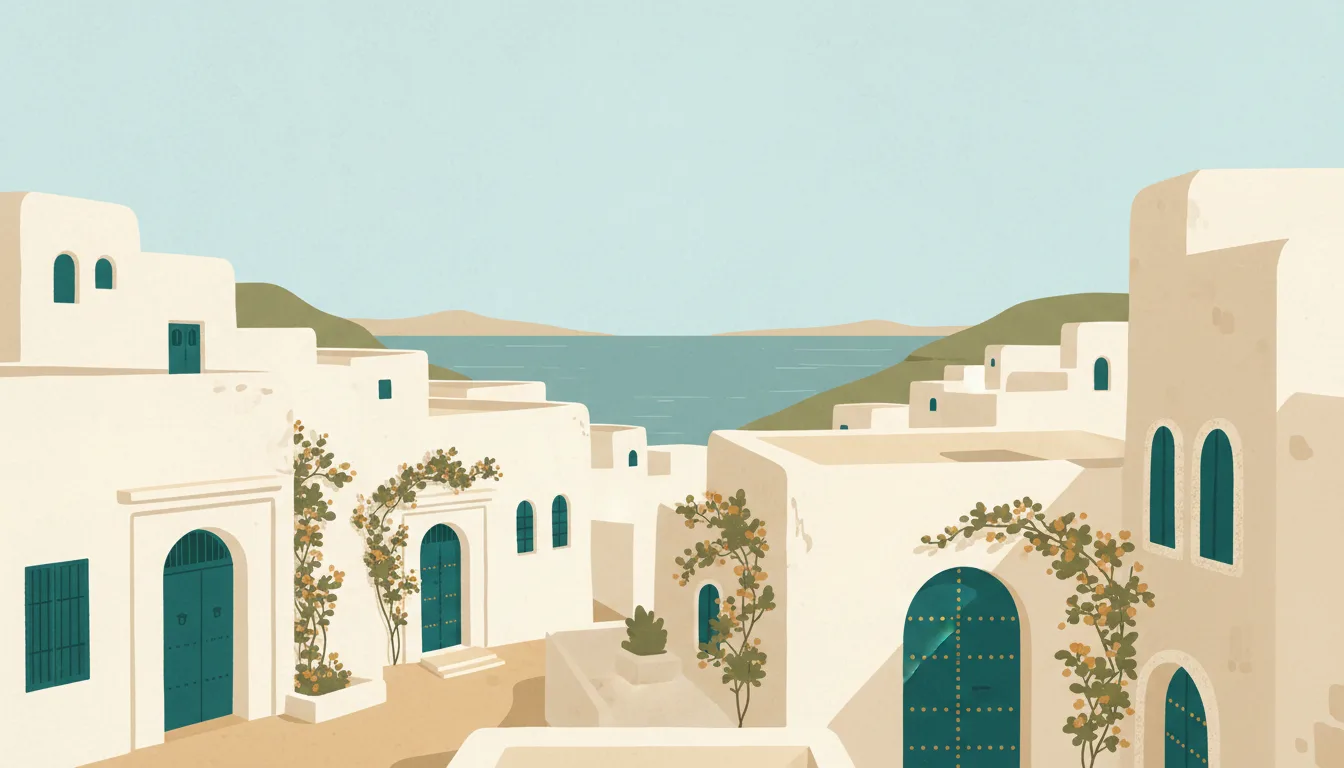
Hammamet's small medina and long beach anchor the Cap Bon peninsula: Nabeul's pottery, Kelibia's fort above Mansoura beach and Kerkouane, the only Punic town never rebuilt by Rome. This travel base guide groups the destination into six useful areas so the stay works on the ground, not only on a country map.
Is this your trip?
Who Hammamet & Cap Bon is for
Beaches travellers
Hammamet's small medina and long beach anchor the Cap Bon peninsula: Nabeul's pottery, Kelibia's fort above Mansoura beach and Kerkouane, the only Punic town never rebuilt by Rome.
Travellers with 2–3 days
That window gives Hammamet & Cap Bon enough room for one anchor area and one contrasting cluster per day.
Resort marina
Yasmine Hammamet and Nabeul make that interest practical rather than a country-level promise.
Area-led planners
Six fixed clusters make it easier to choose a base and avoid repeated cross-destination transfers.
Maybe not for you: A compressed checklist is the weak version of Hammamet & Cap Bon. Treat the suggested stay as time on the ground: weather, timed entry, ferries or mountain roads can remove half a day.
Season by season
When to visit Hammamet & Cap Bon
April–June and September–October. Rounded Mediterranean planning normals: hot dry summers and mild, wetter winters. Conditions can still change sharply by elevation, coast and exposure, so use the chart for route timing and the current forecast for the day itself.
- Best
Spring
March–May
Mild days, green landscapes and rising demand around holidays.
- Mixed
Summer
June–August
Hot, bright and busy; shade and early starts materially improve city days.
- Best
Autumn
September–November
Warm early weeks, softer light and rain returning later in the season.
- Good
Winter
December–February
Cooler and wetter, with shorter hours but much lighter visitor pressure.
Weather · monthly normals
Rounded Mediterranean planning normals: hot dry summers and mild, wetter winters. Values are rounded planning normals rather than a live forecast.
Do fewer things better
Things to do in Hammamet & Cap Bon
A short, ordered set of experiences with the timing or planning catch that makes each one work.
- 1
Start with Hammamet medina
Hammamet medina
Small walled town at the beach's southern end
- 2
Walk Yasmine Hammamet without stacking it
Yasmine Hammamet
Purpose-built zone with large hotels
- 3
Use Nabeul for pottery and Friday market
Nabeul
Cap Bon capital with ceramics workshops
- 4
Give Kelibia a deliberate half-day
Kelibia
Fishing port beneath a Byzantine fortress
- 5
See El Haouaria outside peak hours
El Haouaria
Roman quarries at Cap Bon's northern tip
- 6
Keep Kerkouane weather-flexible
Kerkouane
The only surviving purely Punic settlement, UNESCO listed
Treat the suggested stay as time on the ground: weather, timed entry, ferries or mountain roads can remove half a day.
Area by area
The areas of Hammamet & Cap Bon
A real map at local-city scale: enough geography to choose a base, compare areas and group a day. Numbered places match the notes below.
| Area | What it is like | Why go |
|---|---|---|
1 Hammamet medina old kasbah and beach | Small walled town at the beach's southern end | Use Hammamet medina when old kasbah and beach matters more than crossing the whole destination. |
2 Yasmine Hammamet resort marina | Purpose-built zone with large hotels | Use Yasmine Hammamet when resort marina matters more than crossing the whole destination. |
3 Nabeul pottery and Friday market | Cap Bon capital with ceramics workshops | Use Nabeul when pottery and Friday market matters more than crossing the whole destination. |
4 Kelibia fort and Mansoura beach | Fishing port beneath a Byzantine fortress | Use Kelibia when fort and Mansoura beach matters more than crossing the whole destination. |
5 El Haouaria caves and falconry | Roman quarries at Cap Bon's northern tip | Use El Haouaria when caves and falconry matters more than crossing the whole destination. |
6 Kerkouane Punic town | The only surviving purely Punic settlement, UNESCO listed | Use Kerkouane when Punic town matters more than crossing the whole destination. |
Choose the base, then the hotel
Where to stay in Hammamet & Cap Bon
For most first visits: Hammamet medina for old kasbah and beach.
Hammamet medina
Small walled town at the beach's southern end Choose it when that trade-off should shape mornings and evenings.
Yasmine Hammamet
Purpose-built zone with large hotels Choose it when that trade-off should shape mornings and evenings.
Nabeul
Cap Bon capital with ceramics workshops Choose it when that trade-off should shape mornings and evenings.
Kelibia
Fishing port beneath a Byzantine fortress Choose it when that trade-off should shape mornings and evenings.
Order with a point of view
What to eat in Hammamet & Cap Bon
Local food is more useful as an area decision than as a checklist of famous dishes.
- 01
Couscous with fish or lamb
Hammamet medina
Tunisian couscous is spiced red with harissa and tomato; coastal versions use grouper or bream
- 02
Brik à l'oeuf
Yasmine Hammamet
Fried thin pastry with egg, tuna and parsley, eaten by hand as a starter everywhere
- 03
Lablabi
Nabeul
Chickpea broth over torn bread with harissa, cumin and egg, a workers' breakfast in Tunis and Sousse
- 04
Ojja and grilled merguez
Kelibia
Egg-and-tomato skillet with sausage, and charcoal lamb at roadside grills between towns
- 05
Deglet Nour dates and makroudh
El Haouaria
Tozeur's soft dates and Kairouan's semolina-and-date pastries with sweet mint tea
Useful on the ground
Local tips for Hammamet & Cap Bon
Plan the transfer, not only the distance
Treat the suggested stay as time on the ground: weather, timed entry, ferries or mountain roads can remove half a day.
Visa-free for most Western passports
Ninety days on arrival with a passport valid for the stay; carry your hotel address for the arrival form and check rules for other nationalities.
Dinar is non-convertible
Change money on arrival and keep receipts to change back when leaving; cards work in hotels and larger shops, and ATMs are common in cities. Cash for louages, markets and small restaurants.
Ooredoo or Orange SIM at the airport
Cheap data with good coverage along the coast and main roads; patchy in the mountain oases and on desert tracks.
Type C and E sockets
230 V two-pin European plugs everywhere; no adapter needed from the continent.
Common questions
Quick answers about Hammamet & Cap Bon
- When is the best time to visit Hammamet & Cap Bon?
- April–June and September–October. Rounded Mediterranean planning normals: hot dry summers and mild, wetter winters. Conditions can still change sharply by elevation, coast and exposure, so use the chart for route timing and the current forecast for the day itself.
- How many days do you need in Hammamet & Cap Bon?
- 2–3 days. Hammamet's small medina and long beach anchor the Cap Bon peninsula: Nabeul's pottery, Kelibia's fort above Mansoura beach and Kerkouane, the only Punic town never rebuilt by Rome. This travel base guide groups the destination into six useful areas so the stay works on the ground, not only on a country map.
- Where should you stay in Hammamet & Cap Bon?
- Hammamet medina for old kasbah and beach. Small walled town at the beach's southern end Choose it when that trade-off should shape mornings and evenings.
Keep building the route
Hammamet & Cap Bon is part of Tunisia
Use the country guide for visa, money, long-distance transport and the route between cities. Then compare the other worked-out stops below.
- Tunis & CarthageMedina, the Bardo mosaics and the Punic capital's ruins
- Sousse, Kairouan & El JemSahel coast, Islam's fourth city and the great amphitheatre
- DjerbaPottery villages, Star Wars sets and the El Ghriba synagogue
- Tozeur & the Sahara oasesBrick medina, date palms, mountain oases and the salt lake
- Tabarka, Dougga & the north-westCoral coast, cork oaks and the best-preserved Roman town