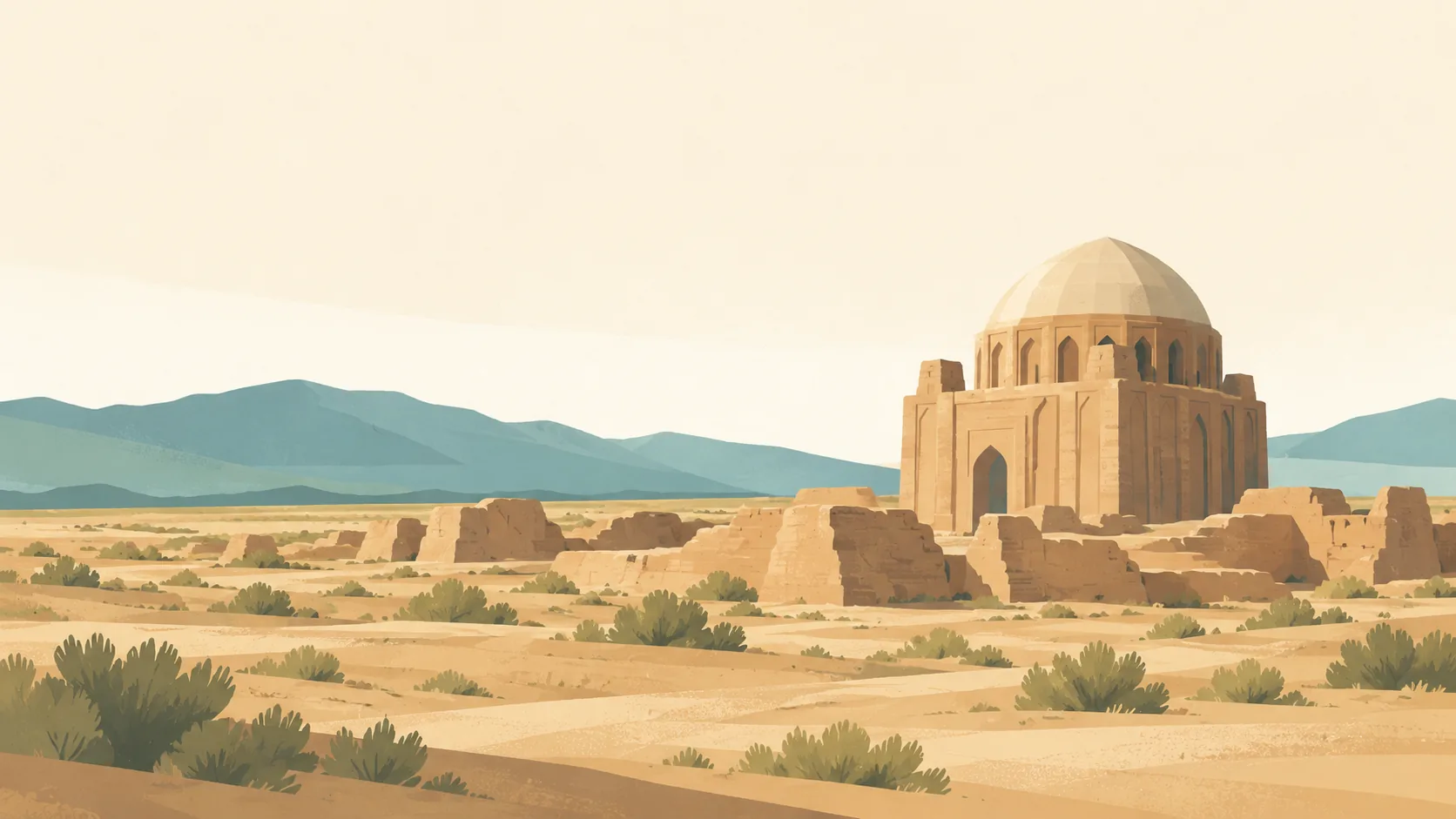


Ashgabat & Nisa: what to expect
Use an authorised guide for current city access and a separate Nisa visit. Photography rules and official events can change the day. This city guide groups the destination into six useful areas so the stay works on the ground, not only on a country map.
Is this your trip?
Who Ashgabat & Nisa is for
History travellers
Use an authorised guide for current city access and a separate Nisa visit. Photography rules and official events can change the day.
Travellers with 2–3 days
That window gives Ashgabat & Nisa enough room for one anchor area and one contrasting cluster per day.
Architecture
Monument districts and Nisa make that interest practical rather than a country-level promise.
Area-led planners
Six fixed clusters make it easier to choose a base and avoid repeated cross-destination transfers.
Maybe not for you: A compressed checklist is the weak version of Ashgabat & Nisa. Check current access, local permissions and the return connection; keep remote or weather-sensitive transport away from the international departure day.
Season by season
When to visit Ashgabat & Nisa
October–April. Rounded hot-desert planning normals: intense summer heat, cool winter nights and little reliable rain. Conditions can still change sharply by elevation, coast and exposure, so use the chart for route timing and the current forecast for the day itself.
- Best
Winter
December–February
Comfortable walking days and cool nights make this the easiest period.
- Best
Spring
March–April
Warm, mostly dry and increasingly hot by afternoon.
- Avoid
Summer
May–September
Extreme heat makes exposed days unsafe and shifts useful time to dawn and evening.
- Good
Autumn
October–November
Heat eases progressively and outdoor routes reopen into the main season.
Weather · monthly normals
Rounded hot-desert planning normals: intense summer heat, cool winter nights and little reliable rain. Values are rounded planning normals rather than a live forecast.
Do fewer things better
Things to do in Ashgabat & Nisa
A short, ordered set of experiences with the timing or planning catch that makes each one work.
- 1
Start with City museums
City museums
Confirm current exhibits and visitor rules.
- 2
Walk Monument districts without stacking it
Monument districts
Use permitted public routes and photo guidance.
- 3
Use Nisa for archaeology
Nisa
Allow a properly interpreted site visit.
- 4
Give Gypjak area a deliberate half-day
Gypjak area
Check current access and dress rules.
- 5
See Market venues outside peak hours
Market venues
Use a guide for the current operating market.
- 6
Keep Kopet Dag views weather-flexible
Kopet Dag views
Do not approach restricted border or mountain areas.
Check current access, local permissions and the return connection; keep remote or weather-sensitive transport away from the international departure day.
Area by area
The neighbourhoods of Ashgabat & Nisa
A real map at local-city scale: enough geography to choose a base, compare areas and group a day. Numbered places match the notes below.
| Area | What it is like | Why go |
|---|---|---|
1 City museums history | Confirm current exhibits and visitor rules. | Use City museums when history matters more than crossing the whole destination. |
2 Monument districts architecture | Use permitted public routes and photo guidance. | Use Monument districts when architecture matters more than crossing the whole destination. |
3 Nisa archaeology | Allow a properly interpreted site visit. | Use Nisa when archaeology matters more than crossing the whole destination. |
4 Gypjak area religious architecture | Check current access and dress rules. | Use Gypjak area when religious architecture matters more than crossing the whole destination. |
5 Market venues local food | Use a guide for the current operating market. | Use Market venues when local food matters more than crossing the whole destination. |
6 Kopet Dag views landscape | Do not approach restricted border or mountain areas. | Use Kopet Dag views when landscape matters more than crossing the whole destination. |
Choose the base, then the hotel
Where to stay in Ashgabat & Nisa
For most first visits: City museums for history.
City museums
Confirm current exhibits and visitor rules. Choose it when that trade-off should shape mornings and evenings.
Monument districts
Use permitted public routes and photo guidance. Choose it when that trade-off should shape mornings and evenings.
Nisa
Allow a properly interpreted site visit. Choose it when that trade-off should shape mornings and evenings.
Gypjak area
Check current access and dress rules. Choose it when that trade-off should shape mornings and evenings.
Order with a point of view
What to eat in Ashgabat & Nisa
Local food is more useful as an area decision than as a checklist of famous dishes.
- 01
Palaw
City museums
Rice with meat and vegetables is a central meal.
- 02
Dograma
Monument districts
Bread, meat and broth form a distinctive dish.
- 03
Chorba
Nisa
Soup is a familiar part of local kitchens.
- 04
Manty
Gypjak area
Steamed dumplings are common in the wider region.
- 05
Melons and local bread
Market venues
Seasonal produce and fresh bread add everyday food context.
Useful on the ground
Local tips for Ashgabat & Nisa
Plan the transfer, not only the distance
Check current access, local permissions and the return connection; keep remote or weather-sensitive transport away from the international departure day.
Check entry before buying flights
The October 2026 source check describes a sponsored tourist e-visa process. Confirm the current official authorisation, sponsor, registration and arrival requirements before booking; do not rely on an older invitation-letter description.
Turkmenistani manat and payments
Turkmenistani manat is used. Confirm card and ATM access, the currency of quoted prices and suitable cash before remote or smaller-island stays.
Coverage and offline planning
Download maps, booking details and essential contacts before leaving Wi-Fi. Check roaming charges and local SIM registration requirements; remote routes may have no signal.
Check socket type and voltage
Confirm the accommodation’s electricity supply and bring an appropriate adapter; remote stays may have limited charging.
Common questions
Quick answers about Ashgabat & Nisa
- When is the best time to visit Ashgabat & Nisa?
- October–April. Rounded hot-desert planning normals: intense summer heat, cool winter nights and little reliable rain. Conditions can still change sharply by elevation, coast and exposure, so use the chart for route timing and the current forecast for the day itself.
- How many days do you need in Ashgabat & Nisa?
- 2–3 days. Use an authorised guide for current city access and a separate Nisa visit. Photography rules and official events can change the day. This city guide groups the destination into six useful areas so the stay works on the ground, not only on a country map.
- Where should you stay in Ashgabat & Nisa?
- City museums for history. Confirm current exhibits and visitor rules. Choose it when that trade-off should shape mornings and evenings.
Keep building the route
Ashgabat & Nisa is part of Turkmenistan
Use the country guide for visa, money, long-distance transport and the route between cities. Then compare the other worked-out stops below.