

Harare: what to expect
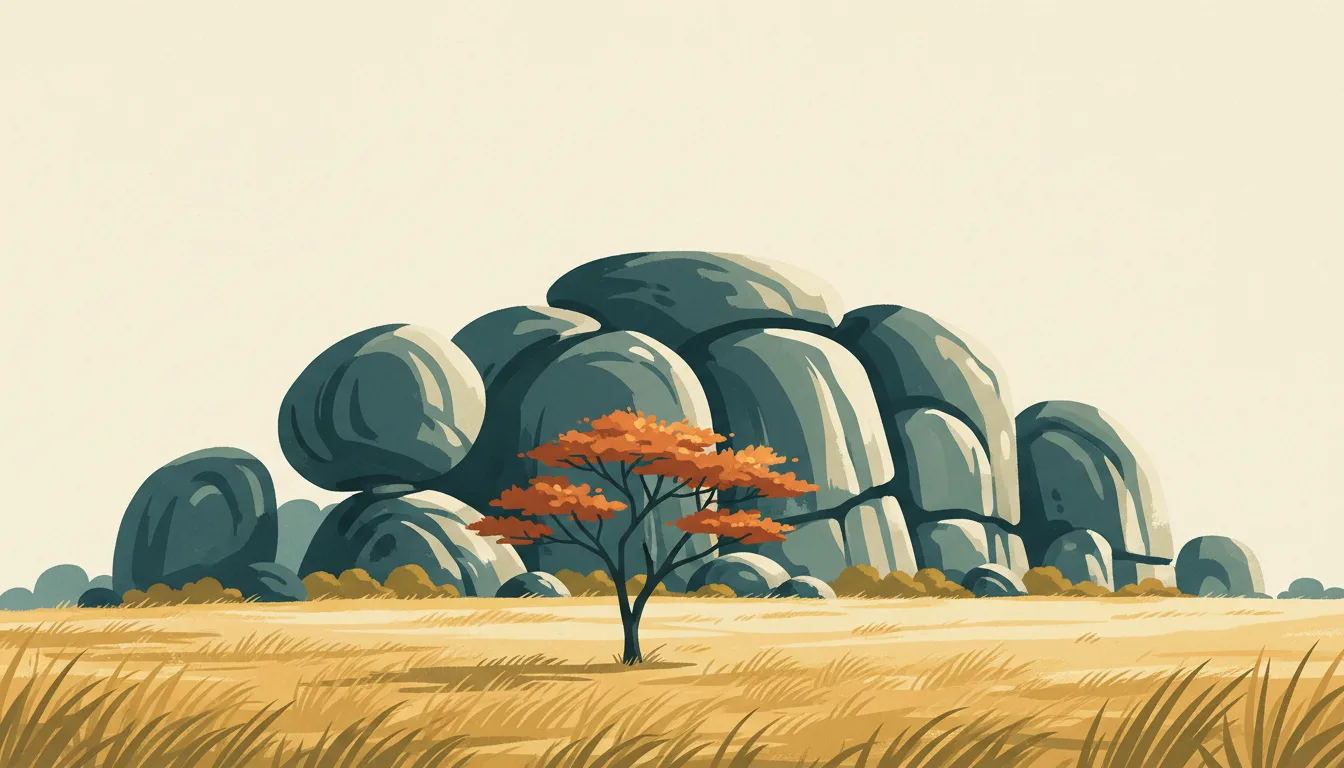
The capital is the gateway to the east and worth a day for the National Gallery's Shona sculpture, the Mbare market with a guide, and the balancing rocks and rock art beyond the suburbs. This city guide groups the destination into six useful areas so the stay works on the ground, not only on a country map.
Is this your trip?
Who Harare is for
Art travellers
The capital is the gateway to the east and worth a day for the National Gallery's Shona sculpture, the Mbare market with a guide, and the balancing rocks and rock art beyond the suburbs.
Travellers with 1–2 days
That window gives Harare enough room for one anchor area and one contrasting cluster per day.
Dining and longer stays
Borrowdale & Sam Levy's and Mbare make that interest practical rather than a country-level promise.
Area-led planners
Six fixed clusters make it easier to choose a base and avoid repeated cross-destination transfers.
Maybe not for you: A compressed checklist is the weak version of Harare. Treat the suggested stay as time on the ground: weather, timed entry, ferries or mountain roads can remove half a day.
Season by season
When to visit Harare
April–June and September–November. Rounded Southern Hemisphere humid-subtropical normals: hot wet summers, mild winters and comfortable shoulder months. Conditions can still change sharply by elevation, coast and exposure, so use the chart for route timing and the current forecast for the day itself.
- Mixed
Summer
December–February
Heat, humidity and thunderstorms reward early outdoor starts and flexible afternoons.
- Best
Autumn
March–May
Temperatures and humidity ease while warm water and green landscapes remain.
- Good
Winter
June–August
Mild, drier days suit cities and falls, with cooler nights in the south or at height.
- Best
Spring
September–November
Warmth returns before peak summer humidity, with increasing showers later.
Weather · monthly normals
Rounded Southern Hemisphere humid-subtropical normals: hot wet summers, mild winters and comfortable shoulder months. Values are rounded planning normals rather than a live forecast.
Do fewer things better
Things to do in Harare
A short, ordered set of experiences with the timing or planning catch that makes each one work.
- 1
Start with Avenues & CBD
Avenues & CBD
National Gallery, Africa Unity Square and the old civic core
- 2
Walk Borrowdale & Sam Levy's without stacking it
Borrowdale & Sam Levy's
Northern suburb with restaurants, shopping and lodges
- 3
Use Mbare for market and music with a guide
Mbare
The city's largest market and the historic musical township
- 4
Give Newlands & Highlands a deliberate half-day
Newlands & Highlands
Jacaranda streets and quiet stays near the eastern suburbs
- 5
See Domboshava & Ngomakurira outside peak hours
Domboshava & Ngomakurira
Granite domes with San paintings an hour north-east
- 6
Keep Chinhoyi caves weather-flexible
Chinhoyi caves
Cobalt-blue sinkhole pool two hours north-west on the Kariba road
Treat the suggested stay as time on the ground: weather, timed entry, ferries or mountain roads can remove half a day.
Area by area
The neighbourhoods of Harare
A real map at local-city scale: enough geography to choose a base, compare areas and group a day. Numbered places match the notes below.
| Area | What it is like | Why go |
|---|---|---|
1 Avenues & CBD first history and galleries | National Gallery, Africa Unity Square and the old civic core | Use Avenues & CBD when first history and galleries matters more than crossing the whole destination. |
2 Borrowdale & Sam Levy's dining and longer stays | Northern suburb with restaurants, shopping and lodges | Use Borrowdale & Sam Levy's when dining and longer stays matters more than crossing the whole destination. |
3 Mbare market and music with a guide | The city's largest market and the historic musical township | Use Mbare when market and music with a guide matters more than crossing the whole destination. |
4 Newlands & Highlands leafy guesthouses | Jacaranda streets and quiet stays near the eastern suburbs | Use Newlands & Highlands when leafy guesthouses matters more than crossing the whole destination. |
5 Domboshava & Ngomakurira rock art and hills | Granite domes with San paintings an hour north-east | Use Domboshava & Ngomakurira when rock art and hills matters more than crossing the whole destination. |
6 Chinhoyi caves day trip | Cobalt-blue sinkhole pool two hours north-west on the Kariba road | Use Chinhoyi caves when day trip matters more than crossing the whole destination. |
Choose the base, then the hotel
Where to stay in Harare
For most first visits: Avenues & CBD for first history and galleries.
Avenues & CBD
National Gallery, Africa Unity Square and the old civic core Choose it when that trade-off should shape mornings and evenings.
Borrowdale & Sam Levy's
Northern suburb with restaurants, shopping and lodges Choose it when that trade-off should shape mornings and evenings.
Mbare
The city's largest market and the historic musical township Choose it when that trade-off should shape mornings and evenings.
Newlands & Highlands
Jacaranda streets and quiet stays near the eastern suburbs Choose it when that trade-off should shape mornings and evenings.
Order with a point of view
What to eat in Harare
Local food is more useful as an area decision than as a checklist of famous dishes.
- 01
Sadza ne nyama
Avenues & CBD
Thick maize porridge with a beef or goat stew is the national plate; eat it by hand at a busy local kitchen
- 02
Muriwo une dovi
Borrowdale & Sam Levy's
Greens cooked in peanut butter are the everyday relish and often the best thing on the table
- 03
Zambezi bream
Mbare
Grilled or fried river fish served whole at the falls and along Kariba is the regional speciality
- 04
Madora
Newlands & Highlands
Dried mopane worms, fried with onion and tomato, are a protein staple in Matabeleland worth trying with a local host
- 05
Maputi and Mazoe
Domboshava & Ngomakurira
Popped maize and the orange cordial every Zimbabwean grew up on are the road-trip snacks
Useful on the ground
Local tips for Harare
Plan the transfer, not only the distance
Treat the suggested stay as time on the ground: weather, timed entry, ferries or mountain roads can remove half a day.
Visa on arrival or KAZA UniVisa
Most nationalities buy a visa at the border in US dollars; the KAZA UniVisa allows repeated Zimbabwe-Zambia crossings at the falls for eligible passports. Confirm current fees and eligibility.
Bring clean US dollar notes
Small denominations of US dollars are the working currency; ZiG exists for local change, cards work in larger hotels and ATMs are unreliable. Never rely on withdrawing cash.
Econet SIM and offline maps
Coverage is good in towns and at the falls, poor in Mana Pools and Hwange; buy an Econet SIM on arrival and download everything.
Type D and G sockets
220 V with British three-pin as the norm and older round-pin outlets in some lodges; a UK adapter covers most cases.
Common questions
Quick answers about Harare
- When is the best time to visit Harare?
- April–June and September–November. Rounded Southern Hemisphere humid-subtropical normals: hot wet summers, mild winters and comfortable shoulder months. Conditions can still change sharply by elevation, coast and exposure, so use the chart for route timing and the current forecast for the day itself.
- How many days do you need in Harare?
- 1–2 days. The capital is the gateway to the east and worth a day for the National Gallery's Shona sculpture, the Mbare market with a guide, and the balancing rocks and rock art beyond the suburbs. This city guide groups the destination into six useful areas so the stay works on the ground, not only on a country map.
- Where should you stay in Harare?
- Avenues & CBD for first history and galleries. National Gallery, Africa Unity Square and the old civic core Choose it when that trade-off should shape mornings and evenings.
Keep building the route
Harare is part of Zimbabwe
Use the country guide for visa, money, long-distance transport and the route between cities. Then compare the other worked-out stops below.