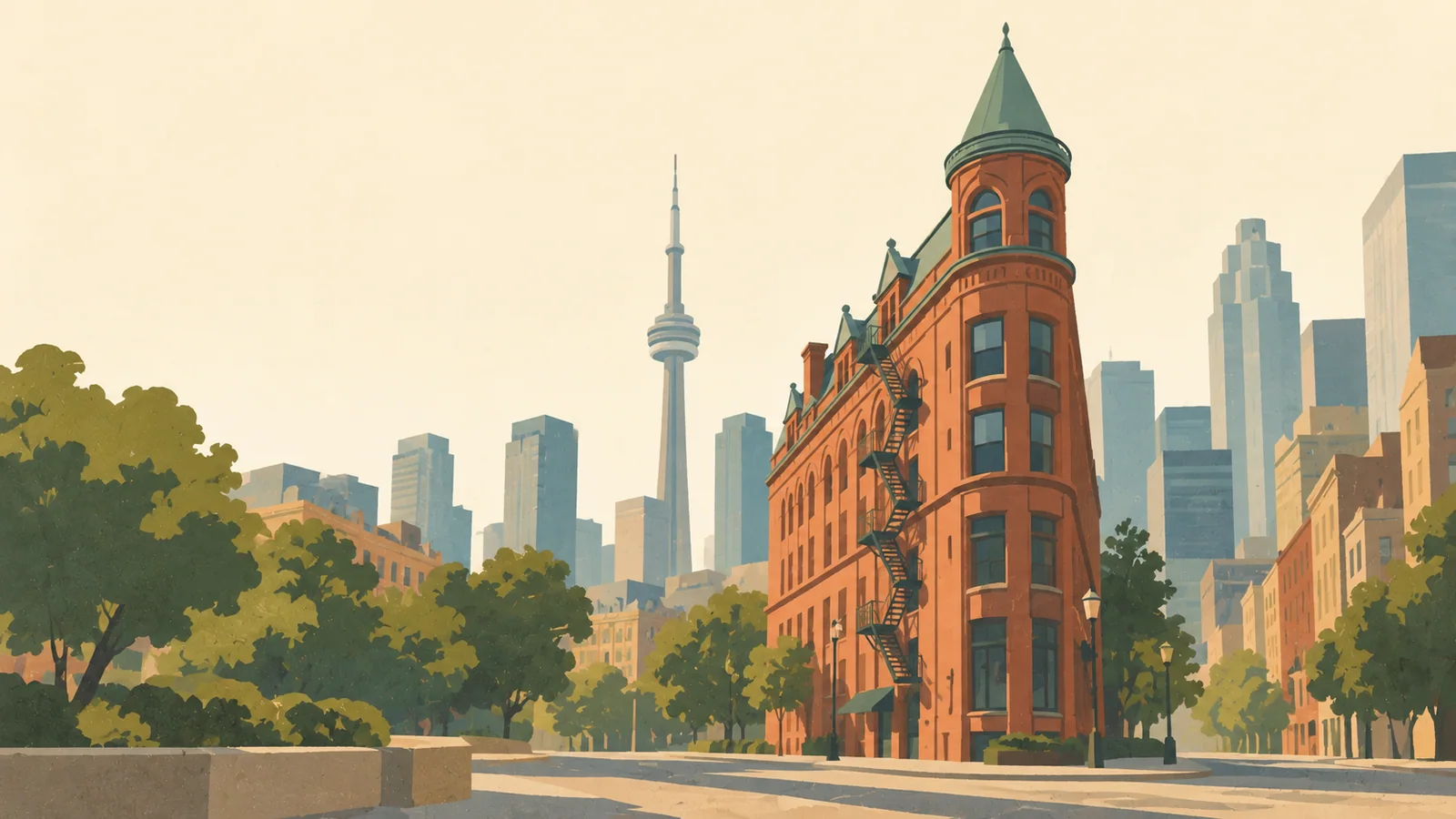

Toronto: what to expect
Dense neighbourhood food, art, music and a waterfront that feels more local than postcard-perfect. This city guide groups the destination into six useful areas so the stay works on the ground, not only on a country map.
Is this your trip?
Who Toronto is for
Food travellers
Dense neighbourhood food, art, music and a waterfront that feels more local than postcard-perfect.
Travellers with 2–3 days
That window gives Toronto enough room for one anchor area and one contrasting cluster per day.
Food and nightlife
West Queen West & Ossington and Kensington & Chinatown make that interest practical rather than a country-level promise.
Area-led planners
Six fixed clusters make it easier to choose a base and avoid repeated cross-destination transfers.
Maybe not for you: A compressed checklist is the weak version of Toronto. Treat the suggested stay as time on the ground: weather, timed entry, ferries or mountain roads can remove half a day.
Season by season
When to visit Toronto
May–June and September. Rounded continental planning normals: cold winters, warm summers and a fast-changing shoulder season. Conditions can still change sharply by elevation, coast and exposure, so use the chart for route timing and the current forecast for the day itself.
- Good
Spring
March–May
Rapid warming, blossom and occasional cold reversals; layer for long days.
- Best
Summer
June–August
Warm to hot with long daylight and thunderstorms rather than constant rain.
- Best
Autumn
September–November
September is excellent; temperatures and daylight fall quickly after it.
- Mixed
Winter
December–February
Cold, sometimes snowy and atmospheric, with museums carrying shorter days.
Weather · monthly normals
Rounded continental planning normals: cold winters, warm summers and a fast-changing shoulder season. Values are rounded planning normals rather than a live forecast.
Do fewer things better
Things to do in Toronto
A short, ordered set of experiences with the timing or planning catch that makes each one work.
- 1
Start with Old Town & St Lawrence
Old Town & St Lawrence
Early city streets near the waterfront
- 2
Walk West Queen West & Ossington without stacking it
West Queen West & Ossington
Dense western corridor of small venues
- 3
Use Kensington & Chinatown for migration and markets
Kensington & Chinatown
Layered central neighbourhoods best explored on foot
- 4
Give Yorkville & Annex a deliberate half-day
Yorkville & Annex
University, major collections and residential streets
- 5
See Leslieville & Beaches outside peak hours
Leslieville & Beaches
East-side high streets leading to sand
- 6
Keep Toronto Islands weather-flexible
Toronto Islands
Ferry-linked car-free landscape in the harbour
Treat the suggested stay as time on the ground: weather, timed entry, ferries or mountain roads can remove half a day.
Area by area
The neighbourhoods of Toronto
A real map at local-city scale: enough geography to choose a base, compare areas and group a day. Numbered places match the notes below.
| Area | What it is like | Why go |
|---|---|---|
1 Old Town & St Lawrence first history and market | Early city streets near the waterfront | Use Old Town & St Lawrence when first history and market matters more than crossing the whole destination. |
2 West Queen West & Ossington food and nightlife | Dense western corridor of small venues | Use West Queen West & Ossington when food and nightlife matters more than crossing the whole destination. |
3 Kensington & Chinatown migration and markets | Layered central neighbourhoods best explored on foot | Use Kensington & Chinatown when migration and markets matters more than crossing the whole destination. |
4 Yorkville & Annex museums and architecture | University, major collections and residential streets | Use Yorkville & Annex when museums and architecture matters more than crossing the whole destination. |
5 Leslieville & Beaches longer stays and lake | East-side high streets leading to sand | Use Leslieville & Beaches when longer stays and lake matters more than crossing the whole destination. |
6 Toronto Islands skyline and cycling | Ferry-linked car-free landscape in the harbour | Use Toronto Islands when skyline and cycling matters more than crossing the whole destination. |
Choose the base, then the hotel
Where to stay in Toronto
For most first visits: Old Town & St Lawrence for first history and market.
Old Town & St Lawrence
Early city streets near the waterfront Choose it when that trade-off should shape mornings and evenings.
West Queen West & Ossington
Dense western corridor of small venues Choose it when that trade-off should shape mornings and evenings.
Kensington & Chinatown
Layered central neighbourhoods best explored on foot Choose it when that trade-off should shape mornings and evenings.
Yorkville & Annex
University, major collections and residential streets Choose it when that trade-off should shape mornings and evenings.
Order with a point of view
What to eat in Toronto
Local food is more useful as an area decision than as a checklist of famous dishes.
- 01
Market or neighbourhood lunch
Old Town & St Lawrence
Canada's strongest city food follows migration and region, not one national menu
- 02
Local fish or shellfish
West Queen West & Ossington
Salmon, Arctic char, lobster and freshwater catch belong to different coasts and waters
- 03
Indigenous-led food experience
Kensington & Chinatown
Choose First Nations, Inuit or Métis businesses that control their own story and ingredients
- 04
Bakery or casse-croûte stop
Yorkville & Annex
Bread, meat pies, butter tarts and fry-bread traditions vary widely by province
- 05
Regional drink
Leslieville & Beaches
Cider, wine, beer, coffee and spruce or berry drinks can all locate the trip without forcing alcohol
Useful on the ground
Local tips for Toronto
Plan the transfer, not only the distance
Treat the suggested stay as time on the ground: weather, timed entry, ferries or mountain roads can remove half a day.
Visa and entry
Many visitors need an eTA or visa before flying to Canada. Requirements depend on passport and arrival method; check official Canadian guidance.
Money and cards
Cards are widely accepted, but taxes, tips, fuel deposits and park fees add to the displayed price. Carry a backup card and some cash for remote stops.
SIM and data
Coverage is good in cities and along populated corridors, with large gaps in parks and the north. Download maps and park notices offline.
Plugs and power
Canada uses 120 V and type A or B sockets. European, UK and Australian travellers need an adapter and voltage-compatible devices.
Common questions
Quick answers about Toronto
- When is the best time to visit Toronto?
- May–June and September. Rounded continental planning normals: cold winters, warm summers and a fast-changing shoulder season. Conditions can still change sharply by elevation, coast and exposure, so use the chart for route timing and the current forecast for the day itself.
- How many days do you need in Toronto?
- 2–3 days. Dense neighbourhood food, art, music and a waterfront that feels more local than postcard-perfect. This city guide groups the destination into six useful areas so the stay works on the ground, not only on a country map.
- Where should you stay in Toronto?
- Old Town & St Lawrence for first history and market. Early city streets near the waterfront Choose it when that trade-off should shape mornings and evenings.
Keep building the route
Toronto is part of Canada
Use the country guide for visa, money, long-distance transport and the route between cities. Then compare the other worked-out stops below.
- VancouverMountains, ocean and food
- Canadian RockiesLakes, peaks and wildlife
- Montréal and Québec CityFrench North America
- Vancouver IslandRainforest, coast and small towns
- Atlantic CanadaLighthouses, seafood and open coast
- OttawaNational museums and two riverbanks
- WinnipegPrairie history, river junctions and contemporary culture
- SaskatoonPrairie river paths and Indigenous cultural context
- WhitehorseA Yukon base with river history and open space
- KelownaOkanagan lakeside days and orchard country
- CalgaryPrairie city culture before the Rockies
- EdmontonA long river valley and independent cultural districts
- ReginaPrairie civic history and a generous urban park
- KingstonLimestone streets at the meeting of lake and river
- YellowknifeNorthern city life beside Great Slave Lake