
Eysturoy: Gjógv & Eiði: what to expect
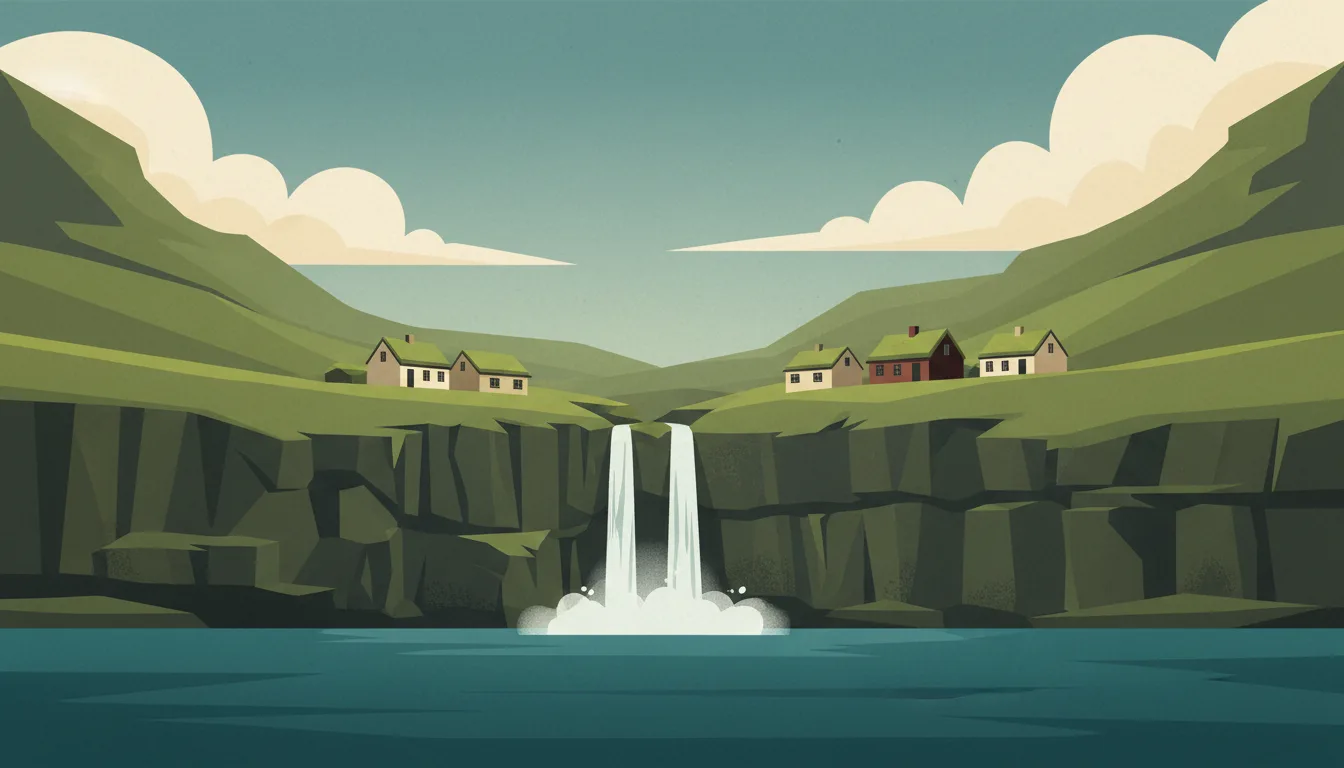
Gjógv's natural harbour gorge, the Risin og Kellingin sea stacks off Eiði and Slættaratindur, the highest mountain, sit in the north of the second-largest island, now linked to Tórshavn by the sub-sea Eysturoy tunnel. This travel base guide groups the destination into six useful areas so the stay works on the ground, not only on a country map.
Is this your trip?
Who Eysturoy: Gjógv & Eiði is for
Hiking travellers
Gjógv's natural harbour gorge, the Risin og Kellingin sea stacks off Eiði and Slættaratindur, the highest mountain, sit in the north of the second-largest island, now linked to Tórshavn by the sub-sea Eysturoy tunnel.
Travellers with 1–2 days
That window gives Eysturoy: Gjógv & Eiði enough room for one anchor area and one contrasting cluster per day.
Risin og Kellingin sea stacks
Eiði and Slættaratindur make that interest practical rather than a country-level promise.
Area-led planners
Six fixed clusters make it easier to choose a base and avoid repeated cross-destination transfers.
Maybe not for you: A compressed checklist is the weak version of Eysturoy: Gjógv & Eiði. Treat the suggested stay as time on the ground: weather, timed entry, ferries or mountain roads can remove half a day.
Season by season
When to visit Eysturoy: Gjógv & Eiði
May–September. Rounded oceanic planning normals: modest temperature swings and rain possible in every month. Conditions can still change sharply by elevation, coast and exposure, so use the chart for route timing and the current forecast for the day itself.
- Good
Spring
March–May
Longer days and fresh landscapes, with changeable rain and cool evenings.
- Best
Summer
June–August
The warmest and longest days; book popular weekends and outdoor bases early.
- Good
Autumn
September–November
Good early colour and fewer visitors before wetter, shorter days settle in.
- Mixed
Winter
December–February
Cool, damp and dark, although cities retain strong indoor culture.
Weather · monthly normals
Rounded oceanic planning normals: modest temperature swings and rain possible in every month. Values are rounded planning normals rather than a live forecast.
Do fewer things better
Things to do in Eysturoy: Gjógv & Eiði
A short, ordered set of experiences with the timing or planning catch that makes each one work.
- 1
Start with Gjógv
Gjógv
Natural harbour cleft with a well-known guesthouse and cliff walks
- 2
Walk Eiði without stacking it
Eiði
North-west village facing the giant and the witch off the headland
- 3
Use Slættaratindur for highest summit walk
Slættaratindur
Short, steep ascent to 880 m from the Eiði road pass
- 4
Give Funningur a deliberate half-day
Funningur
Wooden church beneath the hairpin road down from the pass
- 5
See Saksun (Streymoy) outside peak hours
Saksun (Streymoy)
Tidal lagoon village across the strait, often paired with Gjógv on a driving day
- 6
Keep Runavík & Gøta weather-flexible
Runavík & Gøta
Southern Eysturoy towns beside the sub-sea roundabout
Treat the suggested stay as time on the ground: weather, timed entry, ferries or mountain roads can remove half a day.
Area by area
The areas of Eysturoy: Gjógv & Eiði
A real map at local-city scale: enough geography to choose a base, compare areas and group a day. Numbered places match the notes below.
| Area | What it is like | Why go |
|---|---|---|
1 Gjógv sea-gorge village and guesthouse | Natural harbour cleft with a well-known guesthouse and cliff walks | Use Gjógv when sea-gorge village and guesthouse matters more than crossing the whole destination. |
2 Eiði Risin og Kellingin sea stacks | North-west village facing the giant and the witch off the headland | Use Eiði when Risin og Kellingin sea stacks matters more than crossing the whole destination. |
3 Slættaratindur highest summit walk | Short, steep ascent to 880 m from the Eiði road pass | Use Slættaratindur when highest summit walk matters more than crossing the whole destination. |
4 Funningur oldest village and fjord church | Wooden church beneath the hairpin road down from the pass | Use Funningur when oldest village and fjord church matters more than crossing the whole destination. |
5 Saksun (Streymoy) tidal lagoon and turf farm | Tidal lagoon village across the strait, often paired with Gjógv on a driving day | Use Saksun (Streymoy) when tidal lagoon and turf farm matters more than crossing the whole destination. |
6 Runavík & Gøta tunnel gateway and G! Festival beach | Southern Eysturoy towns beside the sub-sea roundabout | Use Runavík & Gøta when tunnel gateway and G! Festival beach matters more than crossing the whole destination. |
Choose the base, then the hotel
Where to stay in Eysturoy: Gjógv & Eiði
For most first visits: Gjógv for sea-gorge village and guesthouse.
Gjógv
Natural harbour cleft with a well-known guesthouse and cliff walks Choose it when that trade-off should shape mornings and evenings.
Eiði
North-west village facing the giant and the witch off the headland Choose it when that trade-off should shape mornings and evenings.
Slættaratindur
Short, steep ascent to 880 m from the Eiði road pass Choose it when that trade-off should shape mornings and evenings.
Funningur
Wooden church beneath the hairpin road down from the pass Choose it when that trade-off should shape mornings and evenings.
Order with a point of view
What to eat in Eysturoy: Gjógv & Eiði
Local food is more useful as an area decision than as a checklist of famous dishes.
- 01
Ræst kjøt
Gjógv
Wind-fermented lamb hung in a hjallur is the defining Faroese taste, best tried in a heimablídni home dinner
- 02
Skerpikjøt
Eiði
Dried mutton sliced thin onto rye bread is the everyday cured meat sold in every supermarket
- 03
Fresh fish and langoustine
Slættaratindur
Cod, halibut and Nordic lobster from the fjords anchor Tórshavn restaurant menus
- 04
Rhubarb and Faroese lamb
Funningur
Two of the few things that grow here appear in pies, jams and Sunday roasts
- 05
Rye bread, dried fish and butter
Saksun (Streymoy)
The fisherman lunch of turrur fiskur with a cup of coffee remains the harbour standard
Useful on the ground
Local tips for Eysturoy: Gjógv & Eiði
Plan the transfer, not only the distance
Treat the suggested stay as time on the ground: weather, timed entry, ferries or mountain roads can remove half a day.
Danish realm, outside Schengen
The Faroes are part of the Kingdom of Denmark but not the EU or the Schengen Area. Nordic, EU and EEA citizens and most visa-waiver nationals enter with a passport; anyone who needs a Schengen visa must have it issued with explicit validity for the Faroe Islands via a Danish mission.
Danish krone at par
The currency is the Danish krone; the Faroes print their own króna banknotes at one-to-one with Danish notes and use Danish coins. Cards work everywhere, and Faroese notes are best spent before leaving as Danish banks exchange them reluctantly.
Strong signal, no EU roaming
Føroya Tele covers almost every village and tunnel, but the islands sit outside EU roaming rules; buy a local tourist SIM or eSIM at the airport or use accommodation Wi-Fi.
Type C and K sockets
Danish-style 230 V sockets; standard European two-pin plugs fit, UK and North American visitors need an adapter.
Common questions
Quick answers about Eysturoy: Gjógv & Eiði
- When is the best time to visit Eysturoy: Gjógv & Eiði?
- May–September. Rounded oceanic planning normals: modest temperature swings and rain possible in every month. Conditions can still change sharply by elevation, coast and exposure, so use the chart for route timing and the current forecast for the day itself.
- How many days do you need in Eysturoy: Gjógv & Eiði?
- 1–2 days. Gjógv's natural harbour gorge, the Risin og Kellingin sea stacks off Eiði and Slættaratindur, the highest mountain, sit in the north of the second-largest island, now linked to Tórshavn by the sub-sea Eysturoy tunnel. This travel base guide groups the destination into six useful areas so the stay works on the ground, not only on a country map.
- Where should you stay in Eysturoy: Gjógv & Eiði?
- Gjógv for sea-gorge village and guesthouse. Natural harbour cleft with a well-known guesthouse and cliff walks Choose it when that trade-off should shape mornings and evenings.
Keep building the route
Eysturoy: Gjógv & Eiði is part of Faroe Islands
Use the country guide for visa, money, long-distance transport and the route between cities. Then compare the other worked-out stops below.