
Kerala: what to expect
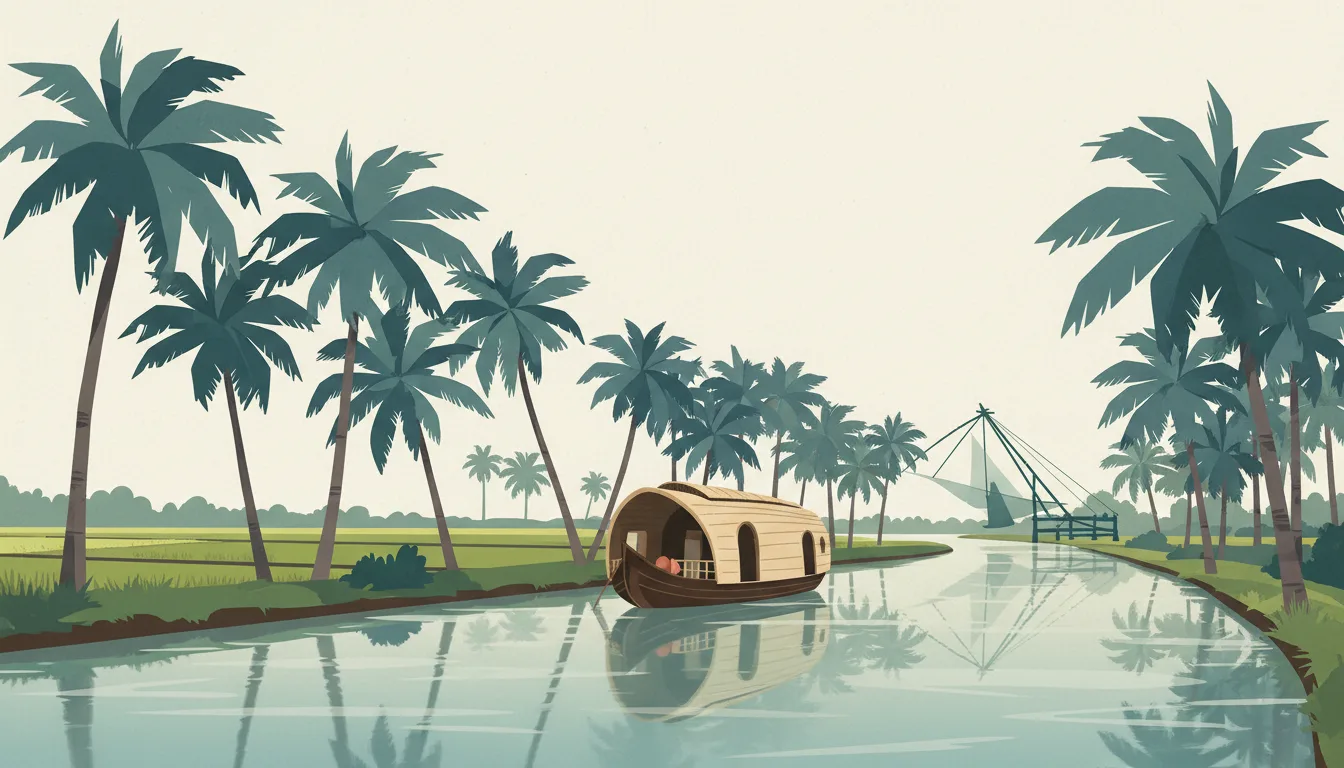
Fort Kochi, the Alappuzha backwaters, Munnar tea country and the northern Malabar coast form a slow southern chapter with a different pace, language and kitchen from the north. This travel base guide groups the destination into six useful areas so the stay works on the ground, not only on a country map.
Is this your trip?
Who Kerala is for
Nature travellers
Fort Kochi, the Alappuzha backwaters, Munnar tea country and the northern Malabar coast form a slow southern chapter with a different pace, language and kitchen from the north.
Travellers with 5–7 days
That window gives Kerala enough room for one anchor area and one contrasting cluster per day.
Transport and city Kerala
Ernakulam and Alappuzha backwaters make that interest practical rather than a country-level promise.
Area-led planners
Six fixed clusters make it easier to choose a base and avoid repeated cross-destination transfers.
Maybe not for you: A compressed checklist is the weak version of Kerala. Treat the suggested stay as time on the ground: weather, timed entry, ferries or mountain roads can remove half a day.
Season by season
When to visit Kerala
November–February. Rounded tropical-monsoon planning normals: hot year-round, with a pronounced wet season. Conditions can still change sharply by elevation, coast and exposure, so use the chart for route timing and the current forecast for the day itself.
- Best
Cooler dry
November–February
Lower humidity and rain make this the easiest period, also the busiest.
- Mixed
Hot season
March–May
Very hot afternoons reward early starts, shade and a slower pace.
- Good
Wet season
June–October
Short intense rain and occasional disruption come with greener landscapes and value.
- Mixed
Peak rain
August–September
Build weather margin into road, boat and outdoor days.
Weather · monthly normals
Rounded tropical-monsoon planning normals: hot year-round, with a pronounced wet season. Values are rounded planning normals rather than a live forecast.
Do fewer things better
Things to do in Kerala
A short, ordered set of experiences with the timing or planning catch that makes each one work.
- 1
Start with Fort Kochi & Mattancherry
Fort Kochi & Mattancherry
Chinese fishing nets, the Dutch Palace, Jew Town and spice warehouses
- 2
Walk Ernakulam without stacking it
Ernakulam
Mainland hub for trains, the metro and everyday Malayali eating
- 3
Use Alappuzha backwaters for houseboats and canoes
Alappuzha backwaters
Canals, paddy villages and one night afloat on Vembanad lake
- 4
Give Munnar a deliberate half-day
Munnar
High estates and Eravikulam park at 1,600 m, four hours from Kochi
- 5
See Thekkady & Periyar outside peak hours
Thekkady & Periyar
Boat and walking safaris in Periyar Tiger Reserve beside cardamom farms
- 6
Keep Varkala & Kovalam weather-flexible
Varkala & Kovalam
Southern beach bases with Ayurveda centres and strong surf
Treat the suggested stay as time on the ground: weather, timed entry, ferries or mountain roads can remove half a day.
Area by area
The areas of Kerala
A real map at local-city scale: enough geography to choose a base, compare areas and group a day. Numbered places match the notes below.
| Area | What it is like | Why go |
|---|---|---|
1 Fort Kochi & Mattancherry first history and cafés | Chinese fishing nets, the Dutch Palace, Jew Town and spice warehouses | Use Fort Kochi & Mattancherry when first history and cafés matters more than crossing the whole destination. |
2 Ernakulam transport and city Kerala | Mainland hub for trains, the metro and everyday Malayali eating | Use Ernakulam when transport and city Kerala matters more than crossing the whole destination. |
3 Alappuzha backwaters houseboats and canoes | Canals, paddy villages and one night afloat on Vembanad lake | Use Alappuzha backwaters when houseboats and canoes matters more than crossing the whole destination. |
4 Munnar tea hills and cool air | High estates and Eravikulam park at 1,600 m, four hours from Kochi | Use Munnar when tea hills and cool air matters more than crossing the whole destination. |
5 Thekkady & Periyar spice gardens and wildlife | Boat and walking safaris in Periyar Tiger Reserve beside cardamom farms | Use Thekkady & Periyar when spice gardens and wildlife matters more than crossing the whole destination. |
6 Varkala & Kovalam cliffs and beaches | Southern beach bases with Ayurveda centres and strong surf | Use Varkala & Kovalam when cliffs and beaches matters more than crossing the whole destination. |
Choose the base, then the hotel
Where to stay in Kerala
For most first visits: Fort Kochi & Mattancherry for first history and cafés.
Fort Kochi & Mattancherry
Chinese fishing nets, the Dutch Palace, Jew Town and spice warehouses Choose it when that trade-off should shape mornings and evenings.
Ernakulam
Mainland hub for trains, the metro and everyday Malayali eating Choose it when that trade-off should shape mornings and evenings.
Alappuzha backwaters
Canals, paddy villages and one night afloat on Vembanad lake Choose it when that trade-off should shape mornings and evenings.
Munnar
High estates and Eravikulam park at 1,600 m, four hours from Kochi Choose it when that trade-off should shape mornings and evenings.
Order with a point of view
What to eat in Kerala
Local food is more useful as an area decision than as a checklist of famous dishes.
- 01
Regional thali at lunch
Fort Kochi & Mattancherry
A steel tray of dals, vegetables, breads and pickles shows the local kitchen in one sitting and is the safest full meal
- 02
Chaat and street snacks
Ernakulam
Pani puri, chole bhature and vada pav are eaten at busy stalls with fast turnover, not from quiet ones
- 03
Breakfast from the south
Alappuzha backwaters
Dosa, idli and appam with stew belong to Kerala, Mumbai's Udupi cafés and railway canteens alike
- 04
Coastal fish curry
Munnar
Goan, Malvani and Kerala fish curries use coconut, kokum and tamarind differently; ask what came in that morning
- 05
Chai, lassi and fresh juice
Thekkady & Periyar
A stall cup of chai punctuates the day; drink lassi and sugarcane juice only where the ice is trustworthy
Useful on the ground
Local tips for Kerala
Plan the transfer, not only the distance
Treat the suggested stay as time on the ground: weather, timed entry, ferries or mountain roads can remove half a day.
Apply for the e-Visa early
Most passports qualify for an online e-Visa with a fixed validity and entry count; apply at least a week ahead and print the approval.
Cash plus UPI-aware cards
ATMs are widespread in cities but often empty or fee-heavy; carry small notes for autos, tips and rural stops. Foreign cards do not run India's UPI payment system.
Buy a local SIM on arrival
Airport SIM counters need passport and visa copies; eSIM alternatives work but local numbers help with app bookings and drivers.
Type C, D and M sockets
India uses 230 V; round-pin sockets vary by building and power cuts are routine outside big cities.
Common questions
Quick answers about Kerala
- When is the best time to visit Kerala?
- November–February. Rounded tropical-monsoon planning normals: hot year-round, with a pronounced wet season. Conditions can still change sharply by elevation, coast and exposure, so use the chart for route timing and the current forecast for the day itself.
- How many days do you need in Kerala?
- 5–7 days. Fort Kochi, the Alappuzha backwaters, Munnar tea country and the northern Malabar coast form a slow southern chapter with a different pace, language and kitchen from the north. This travel base guide groups the destination into six useful areas so the stay works on the ground, not only on a country map.
- Where should you stay in Kerala?
- Fort Kochi & Mattancherry for first history and cafés. Chinese fishing nets, the Dutch Palace, Jew Town and spice warehouses Choose it when that trade-off should shape mornings and evenings.
Keep building the route
Kerala is part of India
Use the country guide for visa, money, long-distance transport and the route between cities. Then compare the other worked-out stops below.