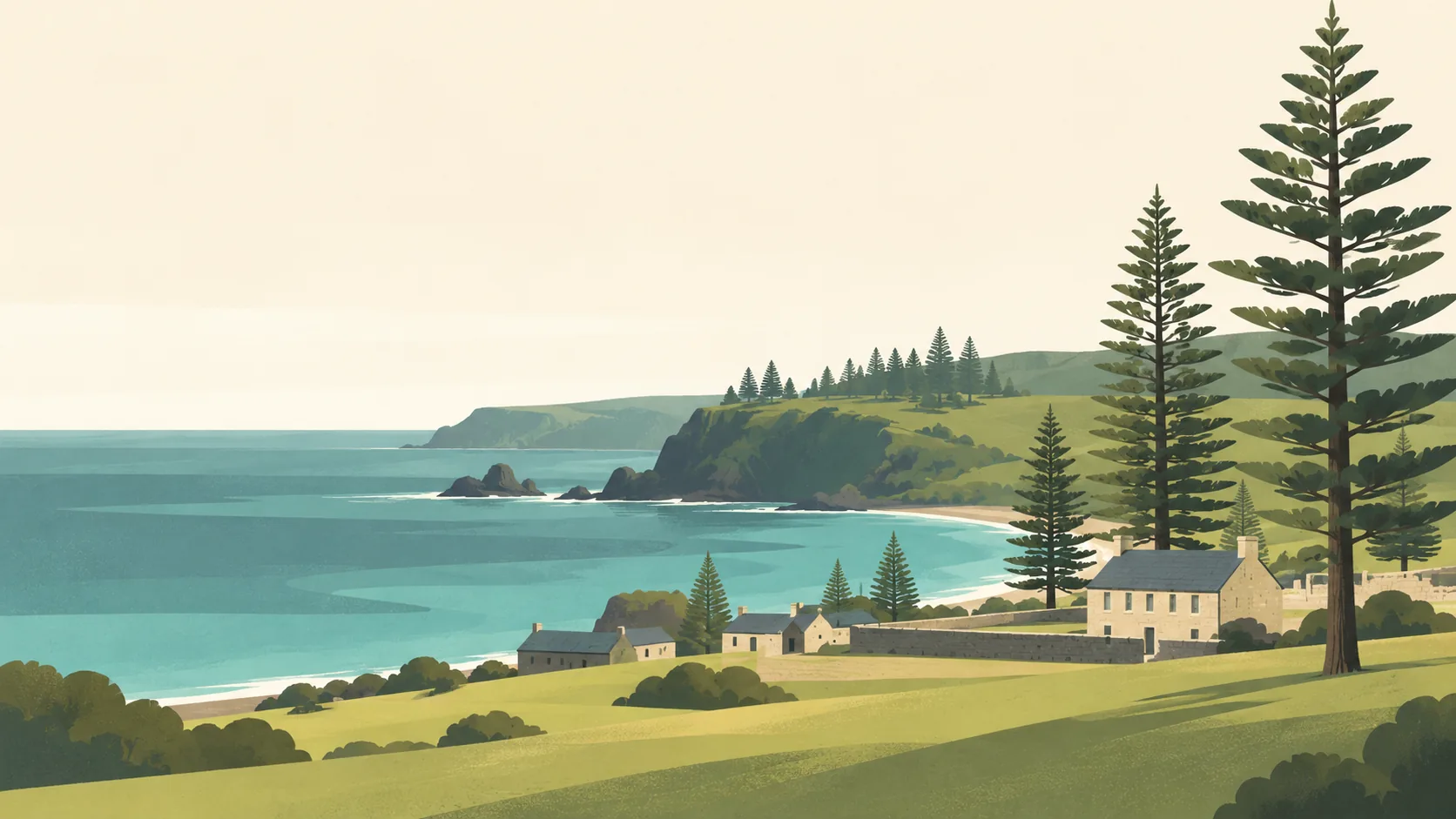


Eastern Norfolk: what to expect
Arrange current opening with local venues and choose coastal viewpoints from safe authorised paths. This travel base guide groups the destination into six useful areas so the stay works on the ground, not only on a country map.
Is this your trip?
Who Eastern Norfolk is for
Coastal landscape travellers
Arrange current opening with local venues and choose coastal viewpoints from safe authorised paths.
Travellers with 2–3 days
That window gives Eastern Norfolk enough room for one anchor area and one contrasting cluster per day.
Working harbour context
Cascade area and Two Chimneys Reserve make that interest practical rather than a country-level promise.
Area-led planners
Six fixed clusters make it easier to choose a base and avoid repeated cross-destination transfers.
Maybe not for you: A compressed checklist is the weak version of Eastern Norfolk. Check current access, local permissions and the return connection; keep remote or weather-sensitive transport away from the international departure day.
Season by season
When to visit Eastern Norfolk
October–April for warmer days; walking is possible with suitable conditions year-round. Regional proxy near Kingston for this compact destination. Rounded NASA POWER 2001–2020 daily model averages near Kingston. Temperatures are mean daily highs/lows; rainfall is the mean monthly total. A coarse grid can smooth coastal and mountain differences; this is not a forecast. Conditions can still change sharply by elevation, coast and exposure, so use the chart for route timing and the current forecast for the day itself.
- Best
Summer
December–February
Warmer days suit a mix of heritage, walking and current-condition coast visits.
- Good
Autumn
March–May
Mild walking weather with rain possible.
- Mixed
Winter
June–August
Cooler, often wetter days and wind need flexible outdoor plans.
- Good
Spring
September–November
Warming conditions and gardens suit unhurried island days.
Weather · monthly normals
Regional proxy near Kingston for this compact destination. Rounded NASA POWER 2001–2020 daily model averages near Kingston. Temperatures are mean daily highs/lows; rainfall is the mean monthly total. A coarse grid can smooth coastal and mountain differences; this is not a forecast. Values are rounded planning normals rather than a live forecast.
Do fewer things better
Things to do in Eastern Norfolk
A short, ordered set of experiences with the timing or planning catch that makes each one work.
- 1
Start with Ball Bay
Ball Bay
Ball Bay is a useful cluster for coastal landscape, with enough substance for an unhurried half-day.
- 2
Walk Cascade area without stacking it
Cascade area
Cascade area is a useful cluster for working harbour context, with enough substance for an unhurried half-day.
- 3
Use Two Chimneys Reserve for coastal vegetation
Two Chimneys Reserve
Two Chimneys Reserve is a useful cluster for coastal vegetation, with enough substance for an unhurried half-day.
- 4
Give Fletcher’s Mutiny Cyclorama a deliberate half-day
Fletcher’s Mutiny Cyclorama
Fletcher’s Mutiny Cyclorama is a useful cluster for historical interpretation, with enough substance for an unhurried half-day.
- 5
See Rural gardens outside peak hours
Rural gardens
Rural gardens is a useful cluster for booked visits, with enough substance for an unhurried half-day.
- 6
Keep Eastern roads weather-flexible
Eastern roads
Eastern roads is a useful cluster for landscape, with enough substance for an unhurried half-day.
Check current access, local permissions and the return connection; keep remote or weather-sensitive transport away from the international departure day.
Area by area
The areas of Eastern Norfolk
A real map at local-city scale: enough geography to choose a base, compare areas and group a day. Numbered places match the notes below.
| Area | What it is like | Why go |
|---|---|---|
1 Ball Bay coastal landscape | Ball Bay is a useful cluster for coastal landscape, with enough substance for an unhurried half-day. | Use Ball Bay when coastal landscape matters more than crossing the whole destination. |
2 Cascade area working harbour context | Cascade area is a useful cluster for working harbour context, with enough substance for an unhurried half-day. | Use Cascade area when working harbour context matters more than crossing the whole destination. |
3 Two Chimneys Reserve coastal vegetation | Two Chimneys Reserve is a useful cluster for coastal vegetation, with enough substance for an unhurried half-day. | Use Two Chimneys Reserve when coastal vegetation matters more than crossing the whole destination. |
4 Fletcher’s Mutiny Cyclorama historical interpretation | Fletcher’s Mutiny Cyclorama is a useful cluster for historical interpretation, with enough substance for an unhurried half-day. | Use Fletcher’s Mutiny Cyclorama when historical interpretation matters more than crossing the whole destination. |
5 Rural gardens booked visits | Rural gardens is a useful cluster for booked visits, with enough substance for an unhurried half-day. | Use Rural gardens when booked visits matters more than crossing the whole destination. |
6 Eastern roads landscape | Eastern roads is a useful cluster for landscape, with enough substance for an unhurried half-day. | Use Eastern roads when landscape matters more than crossing the whole destination. |
Choose the base, then the hotel
Where to stay in Eastern Norfolk
For most first visits: Ball Bay for coastal landscape.
Ball Bay
Ball Bay is a useful cluster for coastal landscape, with enough substance for an unhurried half-day. Choose it when that trade-off should shape mornings and evenings.
Cascade area
Cascade area is a useful cluster for working harbour context, with enough substance for an unhurried half-day. Choose it when that trade-off should shape mornings and evenings.
Two Chimneys Reserve
Two Chimneys Reserve is a useful cluster for coastal vegetation, with enough substance for an unhurried half-day. Choose it when that trade-off should shape mornings and evenings.
Fletcher’s Mutiny Cyclorama
Fletcher’s Mutiny Cyclorama is a useful cluster for historical interpretation, with enough substance for an unhurried half-day. Choose it when that trade-off should shape mornings and evenings.
Order with a point of view
What to eat in Eastern Norfolk
Local food is more useful as an area decision than as a checklist of famous dishes.
- 01
Island fish
Ball Bay
Choose legal seasonal catch from trusted kitchens.
- 02
Local beef
Cascade area
Farm produce contributes to island menus.
- 03
Pilhi
Two Chimneys Reserve
A traditional baked dish with island variations.
- 04
Seasonal garden produce
Fletcher’s Mutiny Cyclorama
Local growing and supply shape what is available.
- 05
Community baking
Rural gardens
Ask hosts about local recipes and food history.
Useful on the ground
Local tips for Eastern Norfolk
Plan the transfer, not only the distance
Check current access, local permissions and the return connection; keep remote or weather-sensitive transport away from the international departure day.
Check entry before buying flights
Check Australian and territory-specific arrival documentation, passport or identity requirements and every transit country for your actual route. Confirm biosecurity restrictions before packing; do not assume the same process as a mainland domestic flight.
Australian dollar and payments
Australian dollar is used. Confirm card and ATM access, the currency of quoted prices and suitable cash before remote or smaller-island stays.
Coverage and offline planning
Download maps, booking details and essential contacts before leaving Wi-Fi. Check roaming charges and local SIM registration requirements; remote routes may have no signal.
Check socket type and voltage
Confirm the accommodation’s electricity supply and bring an appropriate adapter; remote stays may have limited charging.
Common questions
Quick answers about Eastern Norfolk
- When is the best time to visit Eastern Norfolk?
- October–April for warmer days; walking is possible with suitable conditions year-round. Regional proxy near Kingston for this compact destination. Rounded NASA POWER 2001–2020 daily model averages near Kingston. Temperatures are mean daily highs/lows; rainfall is the mean monthly total. A coarse grid can smooth coastal and mountain differences; this is not a forecast. Conditions can still change sharply by elevation, coast and exposure, so use the chart for route timing and the current forecast for the day itself.
- How many days do you need in Eastern Norfolk?
- 2–3 days. Arrange current opening with local venues and choose coastal viewpoints from safe authorised paths. This travel base guide groups the destination into six useful areas so the stay works on the ground, not only on a country map.
- Where should you stay in Eastern Norfolk?
- Ball Bay for coastal landscape. Ball Bay is a useful cluster for coastal landscape, with enough substance for an unhurried half-day. Choose it when that trade-off should shape mornings and evenings.
Keep building the route
Eastern Norfolk is part of Norfolk Island
Use the country guide for visa, money, long-distance transport and the route between cities. Then compare the other worked-out stops below.
- KingstonA World Heritage landscape with several layers of history
- Burnt PineThe practical centre for food, shops and island arrangements
- Emily Bay & Slaughter BayA sheltered-looking coast that still needs water checks
- Norfolk Island National ParkNative forest, high viewpoints and marked walking tracks
- Anson Bay & northwest coastGreen cliffs and a separate northwestern coast day