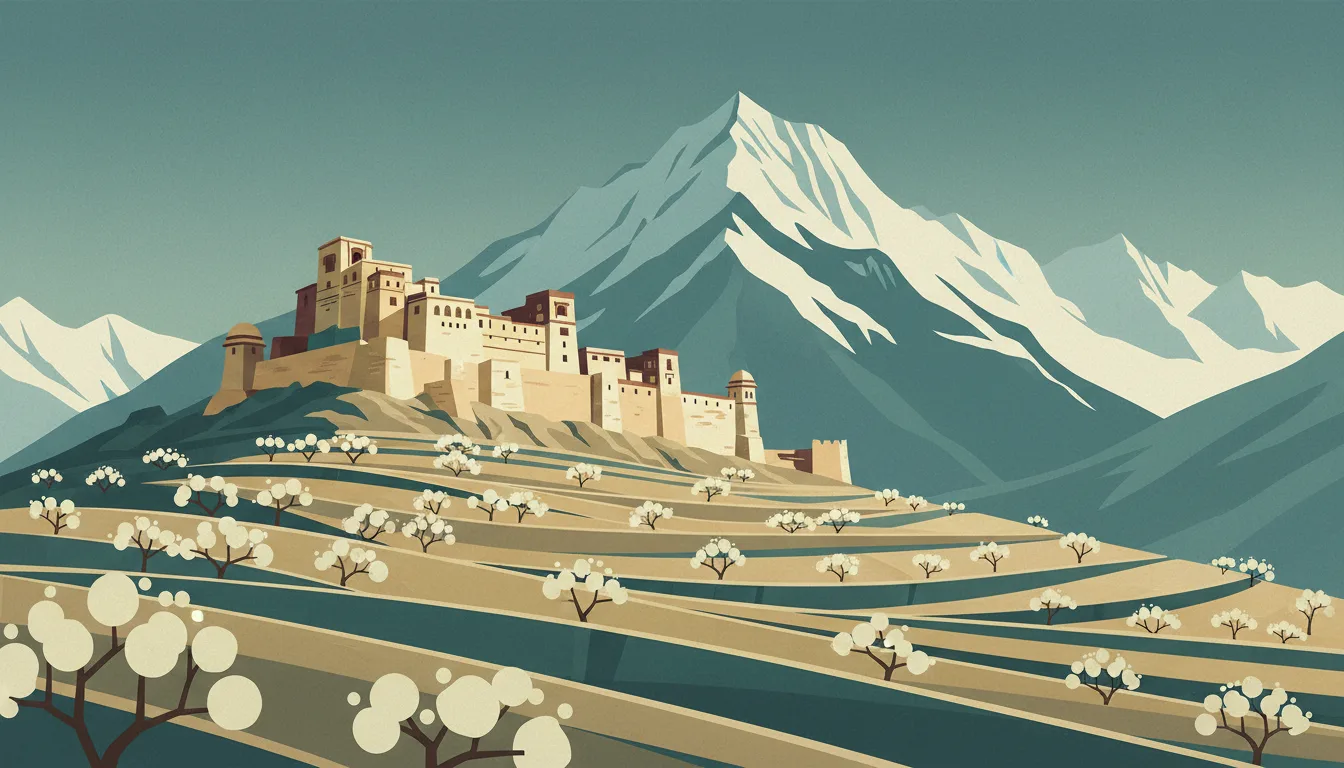


Hunza & Gilgit: what to expect
Karimabad, Altit and Baltit forts, Eagle's Nest at dawn and Attabad Lake are the classic Hunza days; Passu's cathedral ridge and the Khunjerab pass to China extend it. Gilgit is the transport hub and the Karakoram Highway the way in. This travel base guide groups the destination into six useful areas so the stay works on the ground, not only on a country map.
Is this your trip?
Who Hunza & Gilgit is for
Mountains travellers
Karimabad, Altit and Baltit forts, Eagle's Nest at dawn and Attabad Lake are the classic Hunza days; Passu's cathedral ridge and the Khunjerab pass to China extend it. Gilgit is the transport hub and the Karakoram Highway the way in.
Travellers with 4–6 days
That window gives Hunza & Gilgit enough room for one anchor area and one contrasting cluster per day.
Old fort and orchards
Altit and Eagle's Nest & Duikar make that interest practical rather than a country-level promise.
Area-led planners
Six fixed clusters make it easier to choose a base and avoid repeated cross-destination transfers.
Maybe not for you: A compressed checklist is the weak version of Hunza & Gilgit. Treat the suggested stay as time on the ground: weather, timed entry, ferries or mountain roads can remove half a day.
Season by season
When to visit Hunza & Gilgit
June–September or December–March. Rounded Alpine valley normals; height changes temperature, snow cover and access much faster than distance does. Conditions can still change sharply by elevation, coast and exposure, so use the chart for route timing and the current forecast for the day itself.
- Best
Winter
December–March
Snow sports and winter transport define the trip; valley rain can still replace snow.
- Mixed
Spring
April–May
A beautiful but awkward in-between season with closures and muddy high paths.
- Best
Summer
June–August
The widest trail and lift access, with afternoon storms and peak demand.
- Good
Autumn
September–November
Clear early weeks and colour, followed by lift closures and early snow.
Weather · monthly normals
Rounded Alpine valley normals; height changes temperature, snow cover and access much faster than distance does. Values are rounded planning normals rather than a live forecast.
Do fewer things better
Things to do in Hunza & Gilgit
A short, ordered set of experiences with the timing or planning catch that makes each one work.
- 1
Start with Karimabad
Karimabad
Terraced village with guesthouses, the restored fort and Rakaposhi views
- 2
Walk Altit without stacking it
Altit
Older fort above the river with a garden café and craft workshops
- 3
Use Eagle's Nest & Duikar for sunrise viewpoint
Eagle's Nest & Duikar
Hillside hotels above the valley for dawn light on Rakaposhi and Ultar
- 4
Give Attabad Lake & Gulmit a deliberate half-day
Attabad Lake & Gulmit
Turquoise landslide lake, tunnels and the Gojal valley villages
- 5
See Passu & Khunjerab outside peak hours
Passu & Khunjerab
Cathedral ridge, the Passu glacier walks and the 4,700-metre border road
- 6
Keep Gilgit weather-flexible
Gilgit
Regional capital for flights, NATCO buses, SCOM SIMs and the road to Skardu
Treat the suggested stay as time on the ground: weather, timed entry, ferries or mountain roads can remove half a day.
Area by area
The areas of Hunza & Gilgit
A real map at local-city scale: enough geography to choose a base, compare areas and group a day. Numbered places match the notes below.
| Area | What it is like | Why go |
|---|---|---|
1 Karimabad first stay and Baltit fort | Terraced village with guesthouses, the restored fort and Rakaposhi views | Use Karimabad when first stay and Baltit fort matters more than crossing the whole destination. |
2 Altit old fort and orchards | Older fort above the river with a garden café and craft workshops | Use Altit when old fort and orchards matters more than crossing the whole destination. |
3 Eagle's Nest & Duikar sunrise viewpoint | Hillside hotels above the valley for dawn light on Rakaposhi and Ultar | Use Eagle's Nest & Duikar when sunrise viewpoint matters more than crossing the whole destination. |
4 Attabad Lake & Gulmit lake and Gojal | Turquoise landslide lake, tunnels and the Gojal valley villages | Use Attabad Lake & Gulmit when lake and Gojal matters more than crossing the whole destination. |
5 Passu & Khunjerab glaciers and the pass to China | Cathedral ridge, the Passu glacier walks and the 4,700-metre border road | Use Passu & Khunjerab when glaciers and the pass to China matters more than crossing the whole destination. |
6 Gilgit transport hub and bazaar | Regional capital for flights, NATCO buses, SCOM SIMs and the road to Skardu | Use Gilgit when transport hub and bazaar matters more than crossing the whole destination. |
Choose the base, then the hotel
Where to stay in Hunza & Gilgit
For most first visits: Karimabad for first stay and Baltit fort.
Karimabad
Terraced village with guesthouses, the restored fort and Rakaposhi views Choose it when that trade-off should shape mornings and evenings.
Altit
Older fort above the river with a garden café and craft workshops Choose it when that trade-off should shape mornings and evenings.
Eagle's Nest & Duikar
Hillside hotels above the valley for dawn light on Rakaposhi and Ultar Choose it when that trade-off should shape mornings and evenings.
Attabad Lake & Gulmit
Turquoise landslide lake, tunnels and the Gojal valley villages Choose it when that trade-off should shape mornings and evenings.
Order with a point of view
What to eat in Hunza & Gilgit
Local food is more useful as an area decision than as a checklist of famous dishes.
- 01
Lahori nihari and paya
Karimabad
Slow-cooked beef and trotter stews eaten at dawn or after midnight are the city's signature
- 02
Karahi at a Peshawari-style grill
Altit
Tomato-based chicken or mutton cooked in a wok to order, served with naan across the north
- 03
Hunza chapshuro and apricot oil
Eagle's Nest & Duikar
Meat-filled bread and apricot products are the Karakoram's own food, not Punjabi cooking at altitude
- 04
Karachi biryani and seafood
Attabad Lake & Gulmit
Sindhi biryani, Bohri kitchens and Arabian Sea fish define the port city's table
- 05
Chai and samosa at a dhaba
Passu & Khunjerab
Milky tea and fried pastries at a roadside stall are the everyday rhythm of any journey
Useful on the ground
Local tips for Hunza & Gilgit
Plan the transfer, not only the distance
Treat the suggested stay as time on the ground: weather, timed entry, ferries or mountain roads can remove half a day.
Apply online before travel
The Pakistan Online Visa System issues an electronic travel authorisation to most tourist passports, currently without a fee; apply at least two weeks ahead and carry the printout. Some districts need a separate No Objection Certificate; Gilgit-Baltistan, Hunza and the Kalash valleys currently do not.
Rupees in cash, cards in cities
ATMs are common in cities and in Gilgit and Skardu but not reliably in the valleys; carry enough cash for a week in the mountains and use cards only at reputable hotels.
Register a SIM with your passport
Jazz and Zong SIMs are sold at airports; SCOM is the operator that works in Gilgit-Baltistan, so buy one in Gilgit or Skardu. Mobile internet is switched off during security events.
Type C and D, 230 V
Round two- and three-pin sockets; a universal adapter covers both. Power cuts are routine, especially in the mountains.
Common questions
Quick answers about Hunza & Gilgit
- When is the best time to visit Hunza & Gilgit?
- June–September or December–March. Rounded Alpine valley normals; height changes temperature, snow cover and access much faster than distance does. Conditions can still change sharply by elevation, coast and exposure, so use the chart for route timing and the current forecast for the day itself.
- How many days do you need in Hunza & Gilgit?
- 4–6 days. Karimabad, Altit and Baltit forts, Eagle's Nest at dawn and Attabad Lake are the classic Hunza days; Passu's cathedral ridge and the Khunjerab pass to China extend it. Gilgit is the transport hub and the Karakoram Highway the way in. This travel base guide groups the destination into six useful areas so the stay works on the ground, not only on a country map.
- Where should you stay in Hunza & Gilgit?
- Karimabad for first stay and Baltit fort. Terraced village with guesthouses, the restored fort and Rakaposhi views Choose it when that trade-off should shape mornings and evenings.
Keep building the route
Hunza & Gilgit is part of Pakistan
Use the country guide for visa, money, long-distance transport and the route between cities. Then compare the other worked-out stops below.