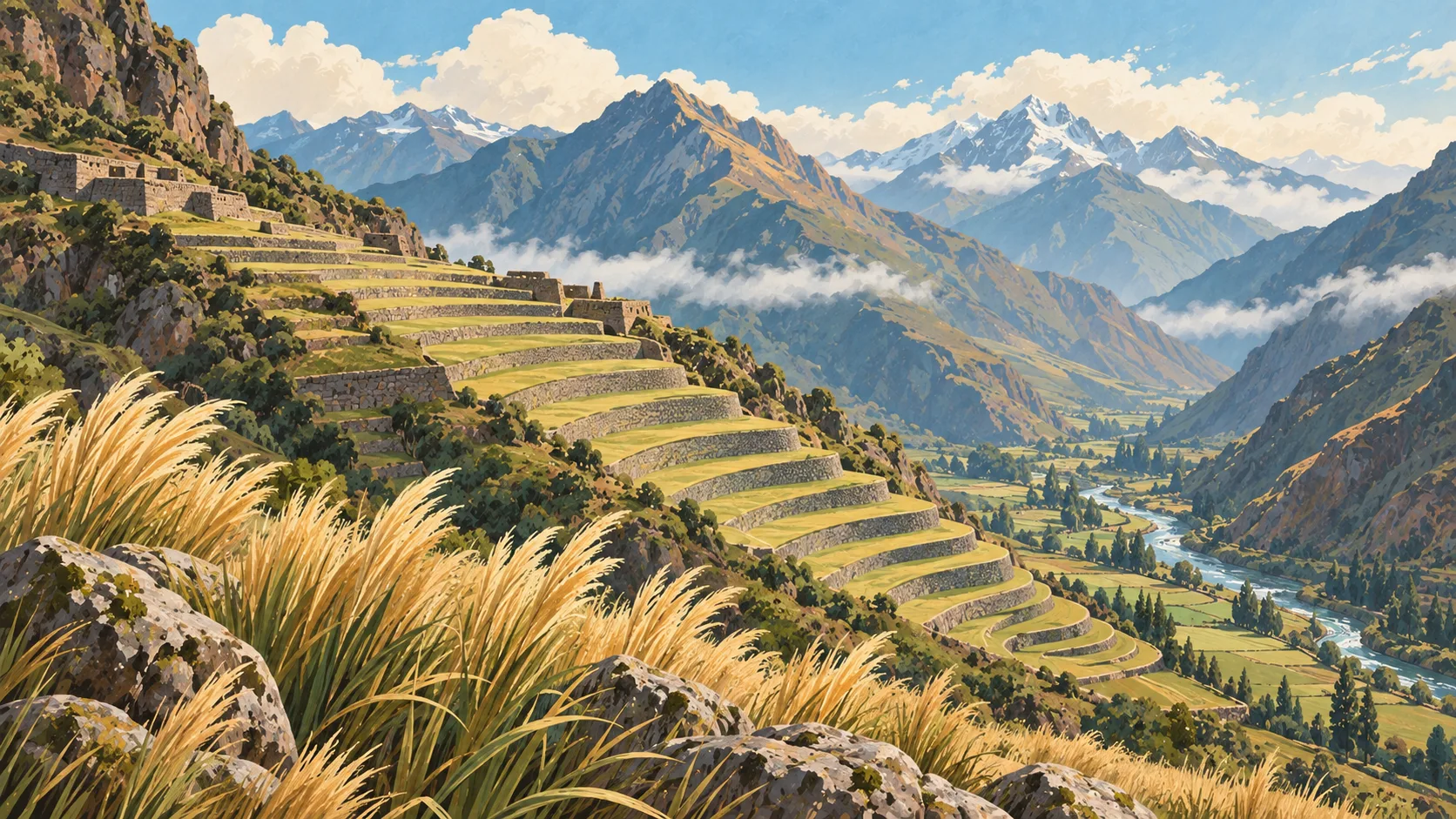

Arequipa & Colca: what to expect
Arequipa's architecture and food deserve time before a high-road Colca journey, where distance and altitude make a rushed overnight unsatisfying. This travel base guide groups the destination into six useful areas so the stay works on the ground, not only on a country map.
Is this your trip?
Who Arequipa & Colca is for
Food travellers
Arequipa's architecture and food deserve time before a high-road Colca journey, where distance and altitude make a rushed overnight unsatisfying.
Travellers with 3–5 days
That window gives Arequipa & Colca enough room for one anchor area and one contrasting cluster per day.
Views and longer stays
Yanahuara and Picantería districts make that interest practical rather than a country-level promise.
Area-led planners
Six fixed clusters make it easier to choose a base and avoid repeated cross-destination transfers.
Maybe not for you: A compressed checklist is the weak version of Arequipa & Colca. Treat the suggested stay as time on the ground: weather, timed entry, ferries or mountain roads can remove half a day.
Season by season
When to visit Arequipa & Colca
May–September. Rounded tropical-Andean normals: cool highland nights, clear dry winters and a pronounced austral-summer rain season. Conditions can still change sharply by elevation, coast and exposure, so use the chart for route timing and the current forecast for the day itself.
- Mixed
Wet season
December–March
Green landscapes come with regular rain, cloud and mountain-road or trail disruption.
- Good
Shoulder
April and October
A useful balance of lighter demand and increasingly stable mornings.
- Best
Dry season
May–September
Clearer trails and roads coincide with cold nights and the busiest heritage period.
- Good
Rain build-up
November
Warmth and cloud return before the wet season fully settles in.
Weather · monthly normals
Rounded tropical-Andean normals: cool highland nights, clear dry winters and a pronounced austral-summer rain season. Values are rounded planning normals rather than a live forecast.
Do fewer things better
Things to do in Arequipa & Colca
A short, ordered set of experiences with the timing or planning catch that makes each one work.
- 1
Start with Arequipa centre
Arequipa centre
White volcanic stone core beneath active peaks
- 2
Walk Yanahuara without stacking it
Yanahuara
Northern neighbourhood across the river from centre
- 3
Use Picantería districts for regional lunch culture
Picantería districts
Traditional kitchens are strongest around a deliberate midday meal
- 4
Give Chivay a deliberate half-day
Chivay
High-road town for both sides of the canyon
- 5
See Cabanaconde outside peak hours
Cabanaconde
Trail base beyond the busiest viewpoint circuit
- 6
Keep Salinas y Aguada Blanca weather-flexible
Salinas y Aguada Blanca
Vicuña landscape on the road between city and Colca
Treat the suggested stay as time on the ground: weather, timed entry, ferries or mountain roads can remove half a day.
Area by area
The areas of Arequipa & Colca
A real map at local-city scale: enough geography to choose a base, compare areas and group a day. Numbered places match the notes below.
| Area | What it is like | Why go |
|---|---|---|
1 Arequipa centre first architecture and museums | White volcanic stone core beneath active peaks | Use Arequipa centre when first architecture and museums matters more than crossing the whole destination. |
2 Yanahuara views and longer stays | Northern neighbourhood across the river from centre | Use Yanahuara when views and longer stays matters more than crossing the whole destination. |
3 Picantería districts regional lunch culture | Traditional kitchens are strongest around a deliberate midday meal | Use Picantería districts when regional lunch culture matters more than crossing the whole destination. |
4 Chivay Colca transport base | High-road town for both sides of the canyon | Use Chivay when Colca transport base matters more than crossing the whole destination. |
5 Cabanaconde walking and deeper canyon | Trail base beyond the busiest viewpoint circuit | Use Cabanaconde when walking and deeper canyon matters more than crossing the whole destination. |
6 Salinas y Aguada Blanca high-altitude wildlife | Vicuña landscape on the road between city and Colca | Use Salinas y Aguada Blanca when high-altitude wildlife matters more than crossing the whole destination. |
Choose the base, then the hotel
Where to stay in Arequipa & Colca
For most first visits: Arequipa centre for first architecture and museums.
Arequipa centre
White volcanic stone core beneath active peaks Choose it when that trade-off should shape mornings and evenings.
Yanahuara
Northern neighbourhood across the river from centre Choose it when that trade-off should shape mornings and evenings.
Picantería districts
Traditional kitchens are strongest around a deliberate midday meal Choose it when that trade-off should shape mornings and evenings.
Chivay
High-road town for both sides of the canyon Choose it when that trade-off should shape mornings and evenings.
Order with a point of view
What to eat in Arequipa & Colca
Local food is more useful as an area decision than as a checklist of famous dishes.
- 01
Regional market breakfast
Arequipa centre
Broths, tamales, breads and fruit reveal the local altitude and agricultural landscape
- 02
Ceviche or tiradito at lunch
Yanahuara
Freshness, catch and timing matter; this is a midday dish, not an all-day symbol
- 03
Criollo or Andean set meal
Picantería districts
Stews, grains, potatoes and ají show more of Peru than a tasting-menu sequence
- 04
Chinese-Peruvian or Japanese-Peruvian cooking
Chivay
Chifa and Nikkei are deep migration traditions, not fusion decoration
- 05
Cacao, coffee or chicha
Cabanaconde
Choose the drink by region and producer, and ask before assuming chicha is alcoholic
Useful on the ground
Local tips for Arequipa & Colca
Plan the transfer, not only the distance
Treat the suggested stay as time on the ground: weather, timed entry, ferries or mountain roads can remove half a day.
Check entry by nationality
Use Peru's current official migration or consular guidance for stay length and passport requirements.
Soles and working backup cards
Cards are common in cities; small cash is useful for markets, rural transport and tips. Inspect ATMs and decline poor conversion.
Save every reservation offline
Signal fades on mountain roads, treks and river routes. Carry screenshots of entries and provider contacts.
Type A and C sockets
Peru uses 220 V with a mix of flat and round two-pin sockets; a universal adapter is the least surprising option.
Common questions
Quick answers about Arequipa & Colca
- When is the best time to visit Arequipa & Colca?
- May–September. Rounded tropical-Andean normals: cool highland nights, clear dry winters and a pronounced austral-summer rain season. Conditions can still change sharply by elevation, coast and exposure, so use the chart for route timing and the current forecast for the day itself.
- How many days do you need in Arequipa & Colca?
- 3–5 days. Arequipa's architecture and food deserve time before a high-road Colca journey, where distance and altitude make a rushed overnight unsatisfying. This travel base guide groups the destination into six useful areas so the stay works on the ground, not only on a country map.
- Where should you stay in Arequipa & Colca?
- Arequipa centre for first architecture and museums. White volcanic stone core beneath active peaks Choose it when that trade-off should shape mornings and evenings.
Keep building the route
Arequipa & Colca is part of Peru
Use the country guide for visa, money, long-distance transport and the route between cities. Then compare the other worked-out stops below.