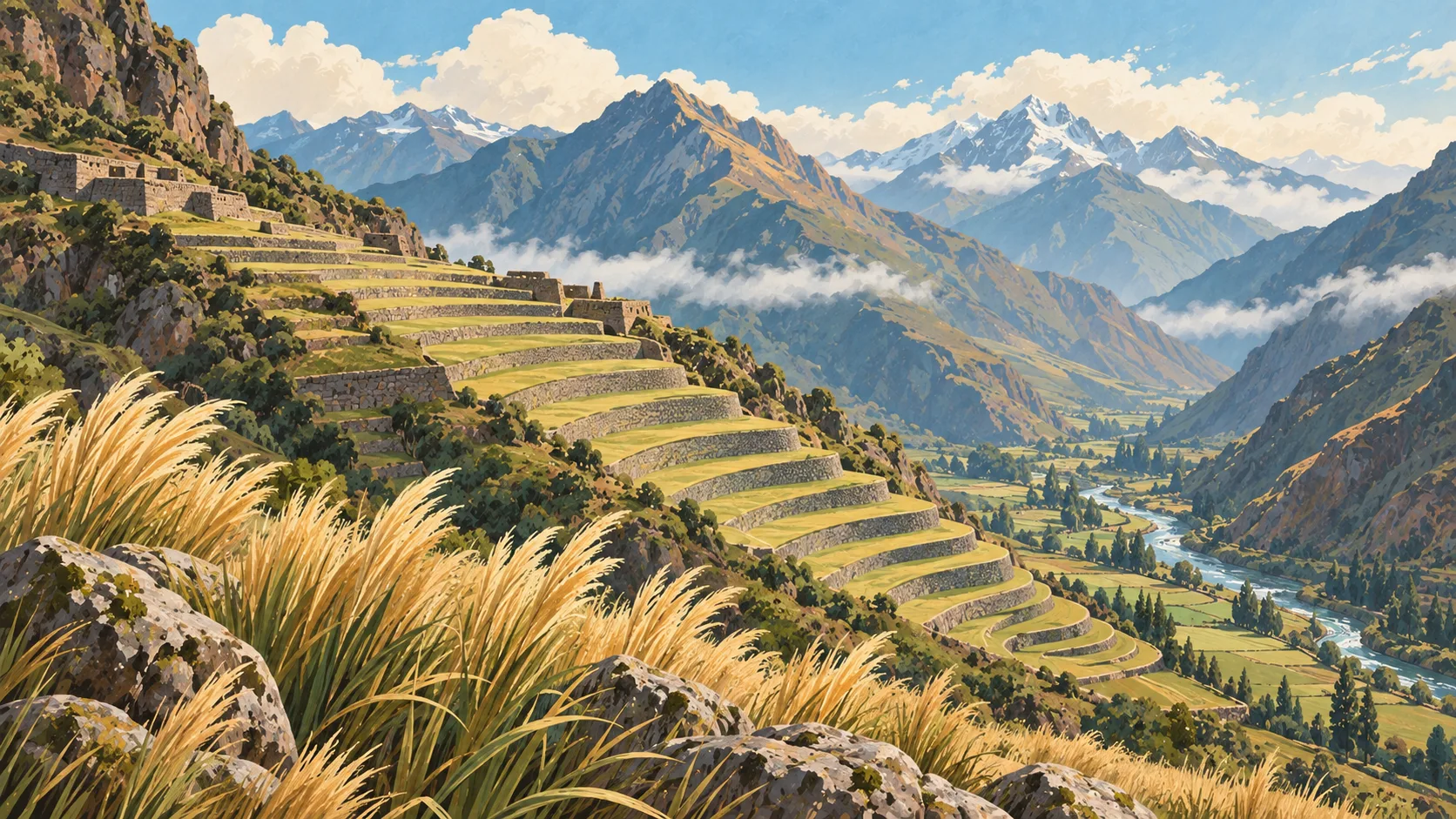

Who it's for
Is Peru right for your trip?
Every country is somebody's favourite. The honest question is whether it is yours, and for this trip.
This is your trip if…
- Archaeology matters more when connected to present-day communities and landscapes.
- You will build rest and acclimatisation into a mountain itinerary.
- Food can justify real time in Lima, Arequipa and regional markets.
- You prefer one well-run trek or lodge to collecting every famous photograph.
Think twice if…
- You want Lima, Cusco, Lake Titicaca and the Amazon in one week.
- You expect Machu Picchu access to be spontaneous or infinitely flexible.
- You struggle at altitude and do not want slower first days.
- You want every road, flight or rail connection to run without weather or protest disruption.
Best time to visit
When is the best time to visit Peru?
May–September for the Andes; December–March for the warm coast. The Andean dry season from May into September offers clearer trails and cold nights, while the wet season brings green valleys, cloud and transport disruption. Lima's coast is warmest and brightest in austral summer but grey with garúa for much of winter. Amazon rain is year-round, with river level shaping access as much as rainfall totals.
- Best
Andean dry season
May–September
Clearer mountain days, cold nights and peak demand on trails and heritage routes.
- Good
Shoulder
April and October
Fewer visitors and greener landscapes come with less predictable rain and trail conditions.
- Mixed
Andean wet season
November–March
Daily rain, cloud and landslip risk affect highland routes; February often brings the strongest trekking disruption.
- Best
Coastal summer
December–March
Lima and the coast turn warmer and sunnier while the Andes are in their wet season.
Climate · monthly normals
Mild desert coast: almost no measurable rain, warm summer and persistent winter cloud or garúa.
For contrast
High-Andean city with cool nights, a pronounced summer rain season and dry winter days.
Festivals and events
What is worth planning around?
Dates a plan should either aim for or steer clear of. Both are useful; the second saves more money.
24 June
Inti Raymi
Cusco
A large modern staging of the Inca sun festival links central Cusco with Sacsayhuamán.
Ticketed seating and city rooms sell early; distinguish the performance from community traditions.
Early February
Virgen de la Candelaria
Puno
Dance ensembles, music and religious processions fill the high-altitude lake city over several days.
October
Señor de los Milagros
Lima
Major purple-clad processions carry one of the country's most important Catholic devotions through central Lima.
May or June
Qoyllur Rit'i
Ausangate region
A high-altitude pilgrimage brings Quechua communities and Catholic-Andean ritual into a demanding mountain gathering.
This is not a casual excursion; attend only with informed local guidance and physical preparation.
Where to go
Where should you go in Peru?
The places that earn their nights, most important first, with how long each deserves. Nobody needs all of them on one trip.
City and local guides
6 worked-out stopsMap numbers match the local guide cards.
- 01
Lima
Central Andes
city3–4 daysLima is more than an airport for ceviche. Pre-Columbian sites, historic centre institutions and distinct coastal districts reward a deliberate opening or closing chapter.
Best time: March–May and September–November
Explore Lima - 02
Cusco & Sacred Valley
Central Andes
travel base5–7 daysSleep lower in the Sacred Valley first when useful, then move through markets, archaeological sites and Cusco without making every day a dawn departure.
Best time: May–September
Explore Cusco & Sacred Valley - 03
Arequipa & Colca
Central Andes
travel base3–5 daysArequipa's architecture and food deserve time before a high-road Colca journey, where distance and altitude make a rushed overnight unsatisfying.
Best time: May–September
Explore Arequipa & Colca - 04
Iquitos & the Amazon
Central Andes
travel base4–7 daysIquitos is reached by air or river, not road. Lodge distance, guide quality, water level and community relationships determine the experience.
Best time: The locally drier months; conditions vary by coast
Explore Iquitos & the Amazon - 05
Huaraz & Cordillera Blanca
Central Andes
travel base4–7 daysHuaraz is a practical acclimatisation base for day walks and longer treks. Road altitude and glacial conditions make local expertise essential.
Best time: May–September
Explore Huaraz & Cordillera Blanca - 06
Trujillo & northern archaeology
Central Andes
travel base3–5 daysChan Chan, Huaca de la Luna and Chiclayo's museum landscape form a substantial northern route with a fraction of Cusco's pressure.
Best time: March–May and September–November
Explore Trujillo & northern archaeology
Things to do
What should you do in Peru?
Not a bucket list — the handful of things that make this country this country, with the timing catch that stops people doing them well.
- 01
Reserve Machu Picchu precisely
Machu Picchu
Entry circuits, dates and identity details matter. Secure the actual official admission before non-refundable rail and hotel choices.
- 02
Sequence the Sacred Valley
Pisac, Ollantaytambo and Cusco
A lower first base can ease the altitude curve and turns the valley into a chapter rather than repeated Cusco day trips.
- 03
Eat Lima by district and tradition
Central and coastal Lima
Ceviche is one meal; criollo, chifa, Nikkei and regional kitchens explain the city's migrations and markets.
- 04
Give Arequipa its own days
Historic centre and picanterías
The white-stone city and its lunch culture are not merely a staging post for Colca.
- 05
Choose an accountable Amazon lodge
Iquitos region
Ask about guide employment, boat time, wildlife practice, waste and nearby communities before comparing room photographs.
- 06
Learn the northern civilisations
Trujillo and Chiclayo
Moche and Chimú sites prevent an Inca-only account of Peruvian history.
How to get around
How do you get around Peru?
Flights link Lima with Cusco, Arequipa, Iquitos, Juliaca and northern hubs. High-quality coaches work on long paved corridors; tourist and local trains serve specific routes rather than a national rail network. Drivers or small tours solve selected valleys, while Amazon travel is by plane and boat.
Domestic flights
Use them for Lima–Cusco, Amazon and distant northern links; protect connections from weather and separate-ticket risk.
Rule of thumb: Coast–Amazon or distant Andes → fly.
Intercity coach
Comfortable operators cover the coast and southern corridor, but road disruption and overnight safety deserve scrutiny.
Tourist and local rail
Rail is important for Machu Picchu and a few southern routes, not a countrywide network. Compare station, baggage and entry timing together.
Driver or regional transfer
A private or shared driver helps in the Sacred Valley, Colca and northern site clusters; self-driving adds city traffic and high-road risk.
Passes and cards, honestly
- Cusco's archaeological ticket bundles named sites, but Machu Picchu admission and rail remain separate.
- No national transport pass solves the mixed flight, coach, rail and boat network.
Travel tips
What should you know before you go?
The things locals assume you know. Most travellers learn them by getting one wrong on day two.
- The Inca are not the beginning
- Moche, Nazca, Wari, Chimú and many other societies shaped the country long before and alongside Inca expansion.
- Andean dress is not costume
- Ask before photographing people, buy directly where possible and avoid tours that stage poverty or children.
- Coca leaf needs context
- It is an everyday highland plant with cultural and practical use; international border rules remain separate and strict.
- Lunch carries the kitchen
- Many regional institutions are strongest at midday. A tasting menu is optional; markets and picanterías are not secondary.
- Disruption can be political
- Protests and strikes may close roads or sites. Follow current local and official information without reducing legitimate action to inconvenience.
Travel basics
Visa, money, SIM cards and more
The boring section, which is why it is the one people skip and then regret at the airport.
visa
Check entry by nationality
Use Peru's current official migration or consular guidance for stay length and passport requirements.
money
Soles and working backup cards
Cards are common in cities; small cash is useful for markets, rural transport and tips. Inspect ATMs and decline poor conversion.
connectivity
Save every reservation offline
Signal fades on mountain roads, treks and river routes. Carry screenshots of entries and provider contacts.
plugs
Type A and C sockets
Peru uses 220 V with a mix of flat and round two-pin sockets; a universal adapter is the least surprising option.
safety
Transport choice matters
Use reputable road and taxi providers, avoid isolated informal routes at night and follow current advice around protests or regional closures.
health
Altitude is an itinerary constraint
Cusco, Colca and Huaraz require gradual exertion and hydration; Amazon routes need current mosquito and vaccination advice.
Trip costs
How much does a trip to Peru cost?
A mid-range trip usually needs about €70–€145 per person per day, before long-haul flights. Everyday Peru remains good value, while Machu Picchu rail, premium Sacred Valley stays, Amazon lodges and private trekking logistics are priced in a different economy. Lock scarce entries first and compare packages by what is actually included.
Shoestring
€€40–70
per person / day
- Stay
- Hostel or simple hospedaje
- Food
- Menus, markets and family restaurants
- Transport
- Bus and basic rail choices
Strong for cities; headline sites and remote nature still add fixed costs.
Mid-range
€€70–145
per person / day
- Stay
- Good hotel or guesthouse
- Food
- Regional restaurants and guided food
- Transport
- Flights, comfortable buses and standard rail
The practical level for the classic southern route.
Comfortable
€€200–430
per person / day
- Stay
- Boutique hotel or quality lodge
- Food
- Chef-led dining and private guides
- Transport
- Flexible rail, drivers and internal flights
Spend on acclimatisation, guide quality and remote access.
Sample itineraries
Starting points, not scripts
Each of these is a real request you could hand to Menta as written. Change the people, the month and the pace; the structure will hold.
Lima and the Inca heartland
12 days- Lima
- Sacred Valley
- Machu Picchu
- Cusco
The classic route with three Lima days and a lower-altitude valley start before Cusco.
Southern Peru
18 days- Lima
- Arequipa
- Colca Canyon
- Lake Titicaca
- Cusco
- Sacred Valley
A slower ascent through the southern Andes using flights or strong coaches and avoiding one-night high-altitude stops.
Andes and Amazon
20 days- Lima
- Sacred Valley
- Cusco
- Iquitos
- Amazon lodge
A heritage route followed by a carefully vetted lowland nature chapter, linked through Lima if schedules demand it.
Common questions
Quick answers about travel in Peru
Short answers to the questions people ask before they book. Use the full guide for the detail and trade-offs.
- When is the best time to visit Peru?
- May–September for the Andes; December–March for the warm coast. The Andean dry season from May into September offers clearer trails and cold nights, while the wet season brings green valleys, cloud and transport disruption. Lima's coast is warmest and brightest in austral summer but grey with garúa for much of winter. Amazon rain is year-round, with river level shaping access as much as rainfall totals.
- How much does a trip to Peru cost?
- Plan about €70–€145 per person per day for a mid-range trip, before long-haul flights. Everyday Peru remains good value, while Machu Picchu rail, premium Sacred Valley stays, Amazon lodges and private trekking logistics are priced in a different economy. Lock scarce entries first and compare packages by what is actually included.
- How do you get around Peru?
- Flights link Lima with Cusco, Arequipa, Iquitos, Juliaca and northern hubs. High-quality coaches work on long paved corridors; tourist and local trains serve specific routes rather than a national rail network. Drivers or small tours solve selected valleys, while Amazon travel is by plane and boat.
More destinations
Where else?
- JapanA megacity, a thousand temples and trains that leave to the second.
- ChinaImperial capitals, fast trains, regional tables and landscapes at continental scale.
- ItalyThree civilisations' worth of cities, and lunch takes two hours.
- SpainEurope's longest high-speed rail, five cultures, and lunch at three.
- PortugalTwo hilly cities, a valley of port and a long Atlantic coast.
- GreeceAntiquity, two hundred inhabited islands and a ferry timetable to respect.
- IcelandOne road, no trains, and weather that rewrites the plan daily.
- ThailandStreet food, temples, two coasts and Asia's cheapest good hotel room.
- VietnamTwo capitals, one slow railway and the best street food in Asia.
- MoroccoMedinas, the High Atlas and the Sahara, a ferry ride from Europe.
- MexicoA 3,000-year-old civilisation, the best street food on earth, and two coastlines.
- Costa RicaCloud forest, two coasts, volcanoes and wildlife best seen slowly.
- The BahamasShallow banks, island towns and water-led journeys between cays.
- BarbadosCoral coasts, Bajan food and an island with several speeds.
- CubaLayered cities, karst valleys and a journey that needs patience.
- Dominican RepublicCaribbean cities, mountain interiors and coasts beyond the resort gate.
- JamaicaMusic, mountain rain, strong food and coasts with different rhythms.
- FranceGreat cities, long lunches, mountains and a coast for every mood.
- United KingdomHistoric cities, wild coastlines and weather worth planning around.
- GermanyBig culture, small cities, forests and trains with caveats.
- NetherlandsCanals, art, cycling and small cities that reward staying longer.
- CroatiaAdriatic islands, stone towns, clear water and a crowded August.
- TurkeyMosques, markets, ancient cities and coastlines on a huge scale.
- SwitzerlandAlps, lakes and trains that make the expensive route feel simple.
- AustriaImperial cities, Alpine lakes, music and excellent rail links.
- NorwayFjords, midnight light, coastal towns and beautiful long distances.
- SwedenArchipelagoes, forests, design and summer light that lasts.
- FinlandLakes, saunas, forests and a capital built for slow days.
- CzechiaBeautiful old towns, serious beer and an easy train route beyond Prague.
- PolandDeep history, lively cities, forests, lakes and mountain food.
- IrelandAtlantic cliffs, music-filled towns, green roads and weather in charge.
- AustraliaBig distances, old landscapes, city beaches and wildlife in the wild.
- New ZealandVolcanoes, fjords, coast roads and a country made for the outdoors.
- IndonesiaVolcanoes, rice fields, reefs and thousands of islands to choose from.
- South KoreaFast cities, quiet temples, mountain trails and food at every hour.
- United StatesHuge landscapes, distinct cities and a route that must respect the map.
- CanadaBig wilderness, thoughtful cities and distances that need their own plan.
- ArgentinaBig-city appetite, Andean wine country and Patagonia at full scale.
- BrazilAtlantic cities, living cultures and continental-scale nature.
- ChileDesert sky, Pacific cities, volcano lakes and Patagonian wind.
- ColombiaHighland cities, Caribbean history and coffee-country roads.































Peru is a good trip. Make it your trip.
Everything on this page is context Menta already has. Add the people going, the dates and what you actually care about, and the plan starts smarter than a blank chat.
Two journeys free. No payment details. 0 % markup on bookings.
Start planning PeruGuide last reviewed 2026-09. Check visa rules against your own passport before you book.