
Who it's for
Is Uzbekistan right for your trip?
Every country is somebody's favourite. The honest question is whether it is yours, and for this trip.
This is your trip if…
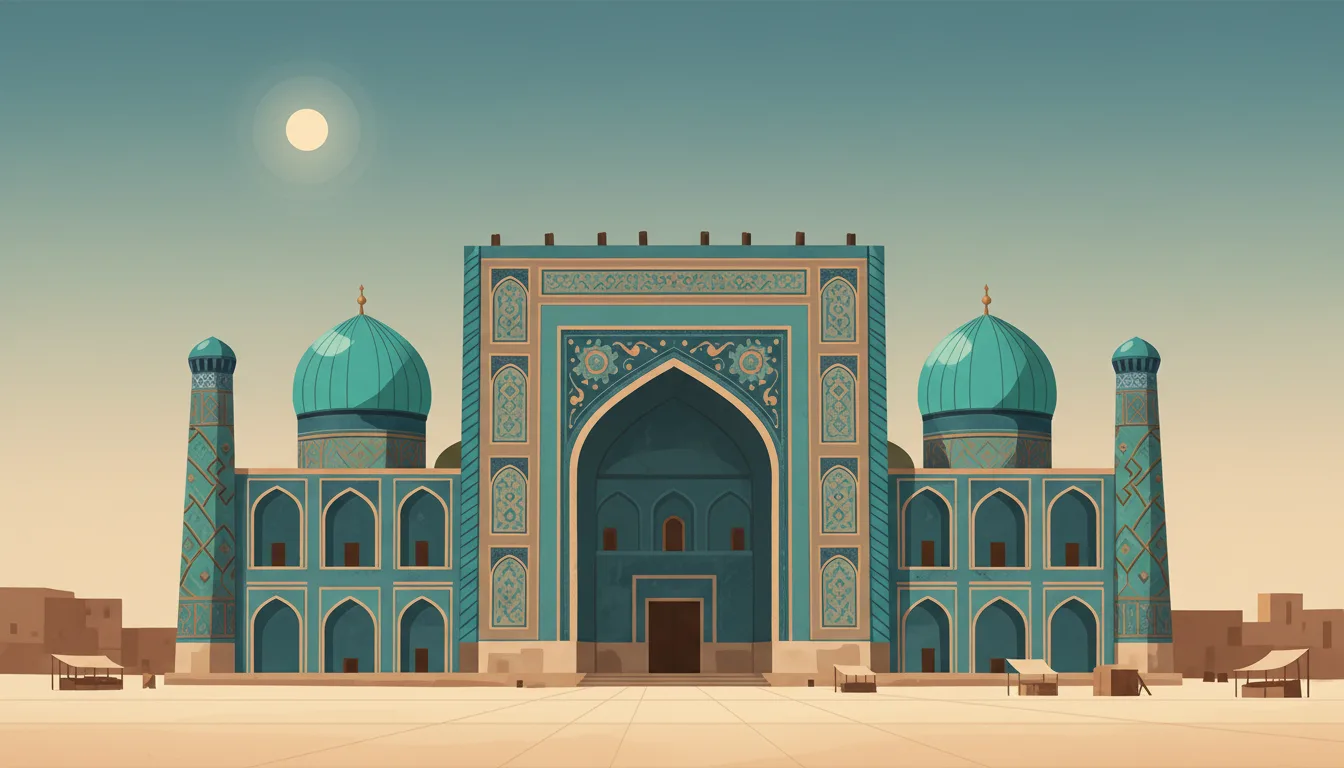
- You want Islamic architecture at its most concentrated and are happy to see three cities in depth rather than ten in passing.
- You like train travel and can build a route around a timetable.
- You enjoy bazaars, bread and plov as much as monuments.
- You are comfortable with a country in fast change, where rules and prices shift year to year.
Think twice if…
- You are travelling in July or August and expect to walk outdoors by day; the heat in Bukhara and Khiva is dangerous.
- You want nightlife or a drinking culture; evenings are quiet and vodka is a family-table affair.
- You expect wilderness; outside the Aral region and the Nuratau hills, the land between cities is cotton and steppe.
- You need seamless payments; cash still rules in markets and smaller towns.
Best time to visit
When is the best time to visit Uzbekistan?
April–May and September–October; summer exceeds 40 °C in the desert cities. Continental extremes rule: spring from April to mid-May brings mild days, blossom and green hills; summer from June to August sends the desert cities past 40 °C with almost no rain, making sightseeing a dawn and dusk exercise; autumn from September to October is dry, warm and the harvest season, with the best light and the busiest hotels; winter is cold, grey in Tashkent and bitter in Karakalpakstan, but the monuments are empty and prices low.
- Best
Spring
April–May
Warm days, blossom, Navruz aftermath and clear skies; the last two weeks of May already heat up in the desert.
- Avoid
Summer
June–August
Bukhara and Khiva reach 42 °C; sightseeing is confined to early morning and after 6 p.m. Fergana and Tashkent are only slightly better.
- Best
Autumn
September–October
Dry, warm and golden, with melon and grape season; hotels in Bukhara and Samarkand fill, so book ahead.
- Mixed
Winter
November–February
Cold and often grey, with snow in Tashkent and hard frost in Nukus; monuments are empty and guesthouse rates fall by half.
Climate · monthly normals
Continental capital: cold, damp winters with occasional snow, a wet spring and a long, dry summer of 35 °C afternoons.
For contrast
Desert republic near the former Aral Sea: winters below freezing with wind and dust, summers as hot as Bukhara, and almost no rain in any month.
Festivals and events
What is worth planning around?
Dates a plan should either aim for or steer clear of. Both are useful; the second saves more money.
21 March
Navruz
Nationwide, strongest in Tashkent and Samarkand
The Persian new year is the country's biggest holiday, with sumalak cooked overnight, street performances and family visits.
Trains and hotels are busy for a week either side; museums and offices close on the day.
Late May or early June
Silk and Spices Festival
Bukhara
Craft fairs, music and costume parades fill the old city's squares and trading domes for three days.
Coincides with the first real heat; book a courtyard guesthouse with air conditioning.
Late August in odd-numbered years
Sharq Taronalari
Registan, Samarkand
The biennial international music festival stages traditional ensembles from across Asia on the Registan square.
Confirm the year and dates; the square is closed for staging around the festival.
1 September
Independence Day
Tashkent
Concerts, fireworks and a public holiday mark independence in 1991; a good day for the capital, a closed day for many offices.
Where to go
Where should you go in Uzbekistan?
The places that earn their nights, most important first, with how long each deserves. Nobody needs all of them on one trip.
City and local guides
6 worked-out stopsMap numbers match the local guide cards.
- 01
Tashkent
Central Asia
city1–2 daysRebuilt after the 1966 earthquake, Tashkent is broad avenues, mosaic-lined metro stations, the Chorsu bazaar and the Khast Imam complex with its early Quran. Use it as the hub, with a day for markets and museums.
Best time: May–June and September
Explore Tashkent - 02
Samarkand
Central Asia
city2–3 daysThe Registan's three madrasas, Gur-e-Amir, Shah-i-Zinda's tiled necropolis and Bibi-Khanym anchor a city that is also a modern regional capital with a Tajik-speaking old quarter and the Siyob bazaar.
Best time: May–June and September
Explore Samarkand - 03
Bukhara
Central Asia
city2–3 daysThe most walkable of the three, with the Kalon minaret, the Ark, Lyab-i Hauz and covered bazaars a few minutes apart. Sleep in a courtyard guesthouse and walk the old town at dawn and dusk.
Best time: May–June and September
Explore Bukhara - 04
Khiva
Central Asia
town1–2 daysKhiva's inner city is a UNESCO-listed museum town of mud-brick walls, minarets and madrasas. It is small enough for a day, better with a night inside the walls, and the gateway to the desert fortresses of Khorezm.
Best time: May–June and September
Explore Khiva - 05
Fergana valley
Central Asia
travel base2–3 daysMargilan's silk factories, Rishtan's ceramic workshops, Kokand's palace and Chust's knife makers sit in a densely populated, conservative valley reached by train through the Kamchik tunnel. Few visitors go; those who do meet makers directly.
Best time: May–June and September
Explore Fergana valley - 06
Nukus & Karakalpakstan
Central Asia
travel base2–3 daysThe Savitsky Museum holds Russian avant-garde art hidden here from Stalin's censors; beyond it lie the Khorezm fortresses, the Sudochye wetlands and the ship graveyard at Moynaq on the dry Aral bed.
Best time: June–September
Explore Nukus & Karakalpakstan
Things to do
What should you do in Uzbekistan?
Not a bucket list — the handful of things that make this country this country, with the timing catch that stops people doing them well.
- 01
See the Registan at three times of day
Samarkand
Early morning for empty courtyards, afternoon for tile colour, evening for the lit façades; skip the paid light show unless it is on anyway.
- 02
Walk Shah-i-Zinda slowly
Samarkand
The avenue of mausoleums is the finest tilework in Central Asia; go at opening or in the last hour when pilgrims outnumber tour groups.
- 03
Sleep inside old Bukhara
Lyab-i Hauz district
Guesthouses in restored merchant houses put the domes and minaret within a five-minute walk for dawn and dusk when the light and temperature are right.
- 04
Climb the Khiva walls at sunset
Itchan Kala
The rampart walk and the Kunya-Ark viewing platform give the whole town in one look as the desert cools.
- 05
Visit the Savitsky collection
Nukus
Thousands of banned Soviet-era paintings survive in a desert museum; give it half a day and a guide who knows the artists' stories.
- 06
Buy ceramics from the maker
Rishtan, Fergana valley
Workshops sell glazed plates at a fraction of Samarkand prices and show the process; ask before photographing and expect tea.
How to get around
How do you get around Uzbekistan?
The Afrosiyob high-speed train and slower Sharq services link Tashkent, Samarkand, Bukhara and, since the line was extended, Khiva, in the right order for a route; tickets sell out weeks ahead in spring and autumn. Flights from Tashkent to Urgench, Nukus and Fergana save the longest days, and shared or private taxis cover the desert fortresses, the Fergana valley towns and the road to Moynaq. Tashkent has a cheap, photogenic metro; other cities are walkable or a short taxi.
Afrosiyob and Sharq trains
The Spanish-built Afrosiyob covers Tashkent–Samarkand in about two hours and Samarkand–Bukhara in around ninety minutes; Bukhara–Khiva runs on the extended line in six to seven hours. Book on the railway app or website as soon as dates are fixed.
Rule of thumb: Tashkent, Samarkand, Bukhara, Khiva → train.
Domestic flights for the far corners
Uzbekistan Airways and low-cost carriers fly Tashkent–Urgench, Tashkent–Nukus and Tashkent–Fergana in about an hour, which turns a long train or road day into a morning.
Drivers and shared taxis
Private drivers handle the Khorezm fortresses, Nuratau homestays and the Nukus–Moynaq run; shared taxis leave from bus stations when full and are cheap but fast and cramped. Self-driving is possible but rarely worth it.
Tashkent metro and Yandex Go
The metro is a few cents a ride with Soviet-era mosaic stations you may now photograph; Yandex Go taxis are cheap and priced in advance in every city, avoiding negotiation.
Passes and cards, honestly
- There is no rail pass; buy individual Afrosiyob tickets online as soon as dates are set, since spring and autumn trains sell out.
- City monument tickets are sold separately and priced higher for foreigners; a combined Itchan Kala ticket in Khiva is the one useful bundle.
Travel tips
What should you know before you go?
The things locals assume you know. Most travellers learn them by getting one wrong on day two.
- Bread is sacred
- Non is never placed upside down, thrown away or cut with a knife; tear it and put the pieces crust-up. Each city stamps its own pattern.
- Plov is a midday dish
- The national rice dish is cooked in the morning and eaten at lunch, most famously at Tashkent's Besh Qozon; a plov dinner is a tourist invention.
- Mosques and madrasas are both museum and living
- Many are active; cover shoulders and knees, remove shoes where others do and keep quiet during prayer times even in sites sold as monuments.
- Hospitality is real and structured
- An invitation to tea or a home means sitting on the raised tapchan, accepting food and giving the host the chance to offer more. Bring a small gift, not money.
- The country is changing fast
- Since 2017 visas, currency exchange, police checks and photography rules have loosened; older guidebook warnings often no longer apply, and prices rise each year.
Travel basics
Visa, money, SIM cards and more
The boring section, which is why it is the one people skip and then regret at the airport.
visa
Visa-free or e-visa, with hotel registration
Most European, British, Australian, Canadian, Japanese and Korean passports get 30 days visa-free; others apply online for an e-visa. Hotels register you automatically; keep the slips and register privately arranged stays through the e-mehmon system to avoid trouble at exit.
money
Cash som from ATMs and exchange counters
Change dollars or euros at banks or hotel counters at the official rate; ATMs dispensing som and sometimes dollars are common in cities. Visa and Mastercard work in hotels and better restaurants, but bazaars, taxis and small towns want cash.
connectivity
SIM with passport, fine in cities
Ucell, Beeline and Mobiuz sell tourist SIMs with cheap data on presentation of a passport; coverage is good in cities and along the train line, thin in the desert and around the Aral.
plugs
Type C and F sockets
Uzbekistan uses 220 V with European two-pin sockets, so most European plugs fit without an adapter.
safety
Low crime, some road risk
Violent crime against visitors is rare and the police presence is heavy but no longer intrusive. Roads are the danger: use marked taxis or Yandex Go, avoid overnight shared taxis and check that a desert driver carries water and a spare wheel.
health
Heat and water
Summer heat causes real illness; carry water, salt and shade. Tap water is not safe to drink, so use bottled or filtered, and bring your own medicines as pharmacies stock unfamiliar brands. Hospitals in Tashkent are adequate, elsewhere basic.
Trip costs
How much does a trip to Uzbekistan cost?
A mid-range trip usually needs about €45–€120 per person per day, before long-haul flights. Uzbekistan is inexpensive to eat and travel in and only moderately priced to sleep in. Guesthouses in the old cities run €25–60, fast-train tickets a few euros to €15, and a bazaar lunch under €5; the costs that add up are guides, entrance tickets for foreigners, which are far higher than local prices, and private drivers for the desert fortresses or the Aral run.
Shoestring
€€30–45
per person / day
- Stay
- Hostel or family guesthouse
- Food
- Bazaar food, somsa, plov and tea houses
- Transport
- Trains in economy and shared taxis
Realistic across the whole route; entrance tickets are the main fixed cost.
Mid-range
€€45–120
per person / day
- Stay
- Courtyard guesthouse or boutique hotel in the old cities
- Food
- Restaurants, one guided food walk and courtyard dinners
- Transport
- Afrosiyob business class, a driver for day trips
The comfortable level for a two-week rail route with a Karakalpakstan or Fergana extension.
Comfortable
€€150–300
per person / day
- Stay
- Restored madrasa hotels, Hyatt in Tashkent, the best courtyard houses in Bukhara
- Food
- Private guides, home-cooked meals arranged in advance
- Transport
- Private car and driver throughout, domestic flights
Buys air conditioning that works, timing that beats the heat and expert explanation of the tile and history.
Sample itineraries
Starting points, not scripts
Each of these is a real request you could hand to Menta as written. Change the people, the month and the pace; the structure will hold.
The Silk Road cities by train
10 days- Tashkent
- Samarkand
- Bukhara
- Khiva
The classic line west with two or three nights in each city, arriving in Khiva by the extended railway and flying back from Urgench.
Cities and the Fergana workshops
13 days- Tashkent
- Fergana valley
- Samarkand
- Bukhara
- Khiva
A train into the Fergana valley for silk, ceramics and knives before the Silk Road cities, meeting craftspeople in Margilan, Rishtan and Chust.
Desert republic and the Aral shore
14 days- Tashkent
- Samarkand
- Bukhara
- Khiva
- Nukus & Karakalpakstan
The rail route extended into Karakalpakstan for the Savitsky museum, the Khorezm fortresses and a long day to the ship graveyard at Moynaq.
Common questions
Quick answers about travel in Uzbekistan
Short answers to the questions people ask before they book. Use the full guide for the detail and trade-offs.
- When is the best time to visit Uzbekistan?
- April–May and September–October; summer exceeds 40 °C in the desert cities. Continental extremes rule: spring from April to mid-May brings mild days, blossom and green hills; summer from June to August sends the desert cities past 40 °C with almost no rain, making sightseeing a dawn and dusk exercise; autumn from September to October is dry, warm and the harvest season, with the best light and the busiest hotels; winter is cold, grey in Tashkent and bitter in Karakalpakstan, but the monuments are empty and prices low.
- How much does a trip to Uzbekistan cost?
- Plan about €45–€120 per person per day for a mid-range trip, before long-haul flights. Uzbekistan is inexpensive to eat and travel in and only moderately priced to sleep in. Guesthouses in the old cities run €25–60, fast-train tickets a few euros to €15, and a bazaar lunch under €5; the costs that add up are guides, entrance tickets for foreigners, which are far higher than local prices, and private drivers for the desert fortresses or the Aral run.
- How do you get around Uzbekistan?
- The Afrosiyob high-speed train and slower Sharq services link Tashkent, Samarkand, Bukhara and, since the line was extended, Khiva, in the right order for a route; tickets sell out weeks ahead in spring and autumn. Flights from Tashkent to Urgench, Nukus and Fergana save the longest days, and shared or private taxis cover the desert fortresses, the Fergana valley towns and the road to Moynaq. Tashkent has a cheap, photogenic metro; other cities are walkable or a short taxi.
More destinations
Where else?
- JapanA megacity, a thousand temples and trains that leave to the second.
- ChinaImperial capitals, fast trains, regional tables and landscapes at continental scale.
- ItalyThree civilisations' worth of cities, and lunch takes two hours.
- SpainEurope's longest high-speed rail, five cultures, and lunch at three.
- PortugalTwo hilly cities, a valley of port and a long Atlantic coast.
- GreeceAntiquity, two hundred inhabited islands and a ferry timetable to respect.
- IcelandOne road, no trains, and weather that rewrites the plan daily.
- ThailandStreet food, temples, two coasts and Asia's cheapest good hotel room.
- VietnamTwo capitals, one slow railway and the best street food in Asia.
- MoroccoMedinas, the High Atlas and the Sahara, a ferry ride from Europe.
- MexicoA 3,000-year-old civilisation, the best street food on earth, and two coastlines.
- Costa RicaCloud forest, two coasts, volcanoes and wildlife best seen slowly.
- The BahamasShallow banks, island towns and water-led journeys between cays.
- BarbadosCoral coasts, Bajan food and an island with several speeds.
- CubaLayered cities, karst valleys and a journey that needs patience.
- Dominican RepublicCaribbean cities, mountain interiors and coasts beyond the resort gate.
- JamaicaMusic, mountain rain, strong food and coasts with different rhythms.
- FranceGreat cities, long lunches, mountains and a coast for every mood.
- United KingdomHistoric cities, wild coastlines and weather worth planning around.
- GermanyBig culture, small cities, forests and trains with caveats.
- NetherlandsCanals, art, cycling and small cities that reward staying longer.
- CroatiaAdriatic islands, stone towns, clear water and a crowded August.
- TurkeyMosques, markets, ancient cities and coastlines on a huge scale.
- SwitzerlandAlps, lakes and trains that make the expensive route feel simple.
- AustriaImperial cities, Alpine lakes, music and excellent rail links.
- NorwayFjords, midnight light, coastal towns and beautiful long distances.
- SwedenArchipelagoes, forests, design and summer light that lasts.
- FinlandLakes, saunas, forests and a capital built for slow days.
- CzechiaBeautiful old towns, serious beer and an easy train route beyond Prague.
- PolandDeep history, lively cities, forests, lakes and mountain food.
- IrelandAtlantic cliffs, music-filled towns, green roads and weather in charge.
- AustraliaBig distances, old landscapes, city beaches and wildlife in the wild.
- New ZealandVolcanoes, fjords, coast roads and a country made for the outdoors.
- IndonesiaVolcanoes, rice fields, reefs and thousands of islands to choose from.
- South KoreaFast cities, quiet temples, mountain trails and food at every hour.
- United StatesHuge landscapes, distinct cities and a route that must respect the map.
- CanadaBig wilderness, thoughtful cities and distances that need their own plan.
- ArgentinaBig-city appetite, Andean wine country and Patagonia at full scale.
- BrazilAtlantic cities, living cultures and continental-scale nature.
- ChileDesert sky, Pacific cities, volcano lakes and Patagonian wind.
- ColombiaHighland cities, Caribbean history and coffee-country roads.
- PeruAndean cities, living food cultures and Amazon headwaters.
- IndiaMughal cities, desert forts, sacred rivers and a monsoon coast.
- Sri LankaTea hills, ancient cities and two coasts with opposite seasons.
- NepalHimalayan trails, Newar cities and lowland jungle in one country.
- MalaysiaHawker cities, tea hills, island coasts and Bornean rainforest.
- PhilippinesIsland archipelago where the flight map decides the trip.
- CambodiaAngkor's stone, the Mekong's rhythm and a country still healing.
- TaiwanNight markets, high-speed rail and a mountainous Pacific island.
- LaosSlow Mekong days, mountain roads and a new railway.
- United Arab EmiratesSeven emirates, two big cities and a mountain-and-desert hinterland.
- JordanPetra, Wadi Rum and the Dead Sea on one compact road.
- OmanForts, wadis, dunes and turtle beaches on the Arabian Sea.
- EgyptThe Nile corridor, Red Sea reefs and five thousand years in sequence.
- South AfricaTwo oceans, self-drive safari and cities with unfinished histories.
- KenyaSavannah, highlands and a Swahili coast, sequenced by rain.
- TanzaniaThe northern circuit, Kilimanjaro and Zanzibar, priced honestly.
- NamibiaSelf-drive desert, empty roads and Africa's darkest skies.
- BelgiumFlemish art cities, Brussels institutions and forested Ardennes valleys.
- DenmarkCopenhagen design, island villages and long Jutland beaches.
- HungaryThermal baths, Danube grandeur, wine hills and the Great Plain.
- SloveniaAlpine lakes, an emerald river, karst caves and a Venetian coast.
- GeorgiaCaucasus villages, eight-thousand-year wine and a serious table.
- MontenegroA fjord-like bay, limestone peaks and a short, crowded coast.
- AlbaniaOttoman towns, an Ionian riviera and a raw alpine north.
- RomaniaSaxon towns, Carpathian wilderness and Europe's largest wetland.
- BulgariaMonasteries, mountain villages and a working Black Sea coast.
- SlovakiaAlpine peaks, castle ruins and wooden churches on a rail spine.
- Bosnia and HerzegovinaOttoman bazaars, stone bridges and wild rivers between mountains.
- EstoniaMedieval Tallinn, bog boardwalks, island manors and long white nights.
- LatviaArt Nouveau Riga, castle valleys, a wooden spa coast and deep forest.
- LithuaniaBaroque Vilnius, a dune spit, lake castles and pine spa towns.
- MaltaLimestone capital, Neolithic temples, harbour ferries and Gozo's slow coast.
- CyprusDivided capital, mosaic coast, painted mountain churches and a wild peninsula.
- SingaporeA dense, humid city-state that rewards districts, not landmarks.
- MaldivesAtolls, reefs and two very different ways to stay.
- BhutanHimalayan valleys, dzongs and a daily fee that shapes everything.
- EthiopiaRock churches, highland monasteries and a distinct calendar.
- UgandaGorillas, chimpanzees, the Nile and crater-lake forests.
- RwandaGorilla volcanoes, tea hills and a compact, orderly country.
- BotswanaDelta floods, elephant rivers and empty Kalahari pans.
- ZambiaWalking safaris, wild rivers and the Zambian side of Victoria Falls.
- MadagascarLemurs, baobabs and an island that evolved apart.
- MauritiusLagoon coasts, a volcanic interior and a Creole, Indian and Chinese island.
- TunisiaCarthage, medinas, Roman arenas and the Saharan oases.
- GuatemalaMaya highlands, volcano lakes and a Petén forest of ruins.
- PanamaCanal city, Caribbean archipelagos and cloud-forest coffee.
- EcuadorVolcano avenue, cloud forest, Amazon edge and the Galápagos.
- BoliviaAltiplano salt, Aymara cities and a wide Amazon lowland.
- UruguayCalm capital, Atlantic beaches and slow wine country.
- FijiReef islands, village life and two big green mainlands.
- SerbiaDanube cities, monastery hills and long-table hospitality.
- North MacedoniaOhrid's lake, Ottoman bazaars and mountain villages in a small compass.
- KosovoEurope's youngest country: café capital, Ottoman Prizren and alpine valleys.
- MoldovaUnderground wine cities, cliff monasteries and Europe's least-visited country.
- ArmeniaStone monasteries, Ararat views and a capital that stays up late.
- AzerbaijanCaspian capital, mud volcanoes and Caucasus villages above the tea plains.
- LuxembourgFortress capital, Moselle wine and Ardennes castles by free bus.
- AndorraPyrenean principality of ski valleys, Romanesque chapels and thermal spas.
- Faroe IslandsEighteen basalt islands of sea cliffs, tunnels and turf-roofed villages.
- GreenlandIcebergs, ice sheet and Inuit towns reached only by air and sea.
- KazakhstanTian Shan foothills, steppe capital and canyon country by air.
- KyrgyzstanYurt stays, alpine lakes and horse treks in the Tian Shan.
- TajikistanPamir Highway, Wakhan villages and turquoise Fann lakes.
- PakistanMughal Lahore and the Karakoram, planned region by region.
- BangladeshRiver delta, mangrove tigers, tea gardens and Dhaka's old city.
- Hong KongVertical harbour city, outlying islands and surprising country parks.
- BruneiWater village, gilded mosques and untouched Borneo rainforest.
- Timor-LesteReef walls, mountain villages and a young nation's coastline.
- Saudi ArabiaNabataean tombs, Red Sea reefs and a fast-changing kingdom.
- QatarA compact Gulf peninsula built around one polished capital.
- GhanaAtlantic forts, Ashanti heritage and a warm, workable West Africa.
- SenegalDakar's music, Gorée's memory and delta and river landscapes.
- Cape VerdeTen Atlantic islands of morna, volcanoes and trade winds.
- SeychellesGranite islands, coral atolls and Creole ease in the Indian Ocean.
- MozambiqueIndian Ocean coast, dhow islands and a restored savanna.
- ZimbabweVictoria Falls, walking safaris and Africa's largest ancient stone city.
- MalawiA freshwater sea, restored parks and high plateaus in one small country.
- EswatiniA small kingdom of royal ceremony, rhino reserves and highveld hikes.
- LesothoThe mountain kingdom: pony treks, high passes and Basotho villages.
- BelizeBarrier reef, Maya cities and Garifuna coast in one small country.
- HondurasBay Islands diving, Copán's carved city and cloud-forest highlands.
- El SalvadorSurf coast, volcano towns and a small country in rapid change.
- NicaraguaColonial cities, twin-volcano island and two very different coasts.
- Trinidad and TobagoCarnival, ibis and doubles on Trinidad; reef and calm on Tobago.
- Saint LuciaThe Pitons, rainforest ridges and Kwéyòl villages on one green island.
- ParaguayRiver cities, Jesuit ruins and the enormous quiet of the Chaco.
- SamoaTwo volcanic islands, village fales and fa'a Samoa on its own terms.
- TongaA Polynesian kingdom of four island groups, whales and strict Sundays.
- VanuatuActive volcanoes, kastom villages and eighty islands of Melanesia.
- Cook IslandsRarotonga's ring road, Aitutaki's lagoon and atolls nobody reaches.
























































Uzbekistan is a good trip. Make it your trip.
Everything on this page is context Menta already has. Add the people going, the dates and what you actually care about, and the plan starts smarter than a blank chat.
Two journeys free. No payment details. 0 % markup on bookings.
Start planning UzbekistanGuide last reviewed 2026-09. Check visa rules against your own passport before you book.