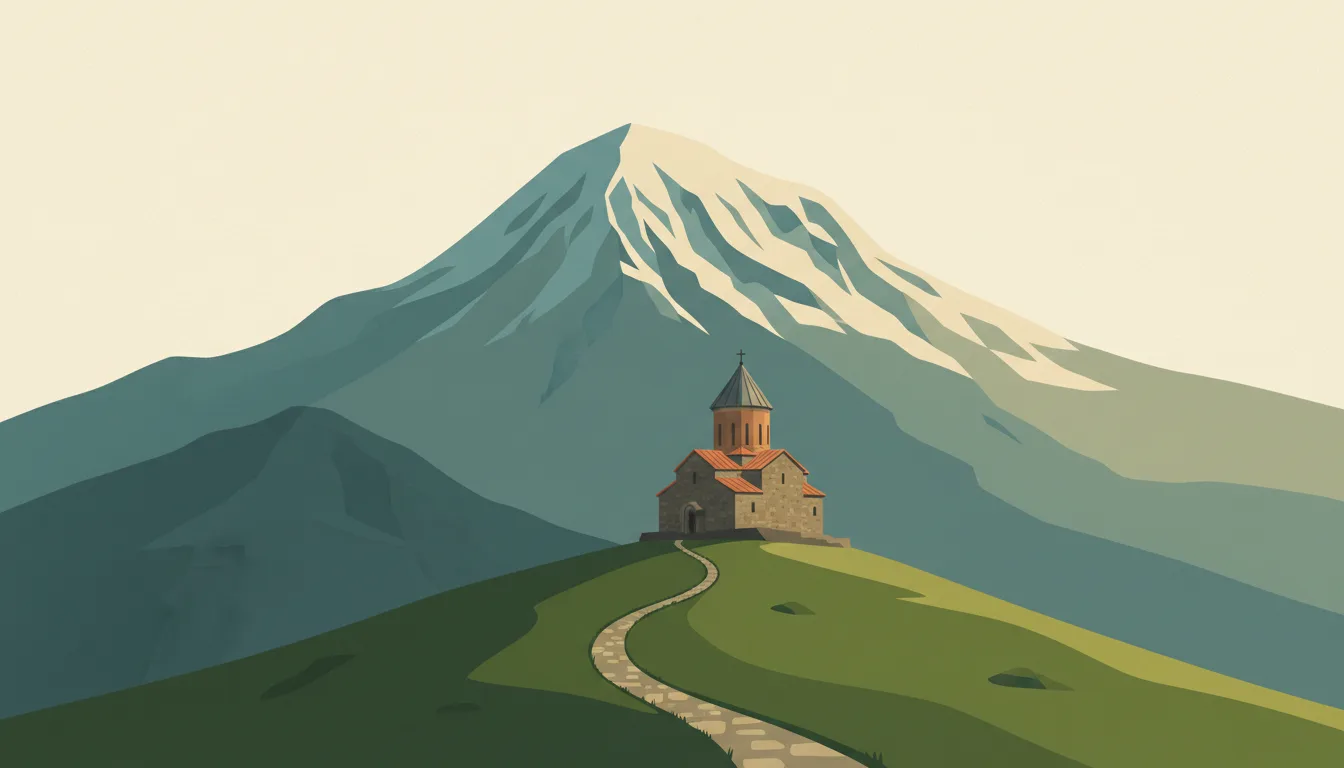


Who it's for
Is Georgia right for your trip?
Every country is somebody's favourite. The honest question is whether it is yours, and for this trip.
This is your trip if…
- You want wine, food and hospitality to structure days, not just fill them.
- You are happy on long mountain roads with a hired driver or a careful self-drive.
- Monasteries, tower villages and Soviet-era layers interest you as a living history, not a backdrop.
- You can accept that a mountain plan may change with weather and road conditions.
Think twice if…
- You want Tbilisi, Kazbegi, Svaneti and Batumi in a week without long transfers.
- You expect polished trail infrastructure, signage and rescue services on every hike.
- Rich, meat-heavy and bread-heavy meals are a problem for you over many days.
- You need every mountain road open regardless of season and weather.
Best time to visit
When is the best time to visit Georgia?
May–June and September–October; July–August for the high mountains only. Late spring and early autumn bring the best balance of open mountain roads, warm lowland days and manageable heat in Tbilisi. July and August are hot and hazy in the capital and Kakheti but are the only reliable months for high Svaneti and Kazbegi trails. The grape harvest in late September and October is the country's most rewarding moment, while winter closes the Tusheti road entirely and can close the Zagari and Kazbegi passes for days.
- Best
Late spring
May–June
Green valleys, snow still on the ridges and comfortable city temperatures; higher trails may keep snow into June.
- Mixed
High summer
July–August
Tbilisi and Kakheti run above 30°C; this is the window for Svaneti, Kazbegi and Tusheti trekking.
- Best
Harvest autumn
September–October
Rtveli grape harvest in Kakheti, clear mountain light and the most stable roads before the first snow.
- Mixed
Winter
November–March
Skiing at Gudauri and Mestia, wine cellars and baths in Tbilisi; Tusheti is closed and high passes close after storms.
Climate · monthly normals
Continental capital in a river valley: hot, hazy summers, cold but not severe winters and a rainy peak in May.
For contrast
Humid subtropical Black Sea coast with well over two metres of rain a year, wettest from late summer into winter.
Festivals and events
What is worth planning around?
Dates a plan should either aim for or steer clear of. Both are useful; the second saves more money.
Late September–October
Rtveli
Kakheti
The grape harvest turns villages and family wineries into working celebrations of picking, pressing and the first supra of the new vintage.
Book Kakheti guesthouses early and ask hosts whether guests can join the picking rather than assuming.
First or second weekend of October
Tbilisoba
Tbilisi
The city's own festival fills the old town and river embankments with regional food, music and wine from every province.
Mid to late September
Alaverdoba
Alaverdi, Kakheti
A religious and harvest gathering at the eleventh-century cathedral marks the start of the wine year with liturgy and markets.
February, before Lent
Lamproba
Svaneti
Svan villages carry burning birch torches to church and cemetery at night in a pre-Christian ritual folded into Orthodox practice.
Winter access to Mestia depends on the Zugdidi road being ploughed; travel with a local driver and warm gear.
Where to go
Where should you go in Georgia?
The places that earn their nights, most important first, with how long each deserves. Nobody needs all of them on one trip.
City and local guides
6 worked-out stopsMap numbers match the local guide cards.
- 01
Tbilisi
Caucasus
city3–4 daysTbilisi deserves more than an airport night. Old-town churches and baths, Soviet modernism, Sololaki courtyards and a wine-bar and restaurant scene that rewards evening after evening make it the anchor.
Best time: May–June and September
Explore Tbilisi - 02
Kakheti wine country
Caucasus
travel base2–3 daysAn hour east of Tbilisi, Kakheti is where eight thousand years of winemaking still happens in clay vessels underground. Stay with a family producer rather than day-tripping and the region opens up.
Best time: May–June and September
Explore Kakheti wine country - 03
Kazbegi & Georgian Military Highway
Caucasus
travel base2–3 daysThe road north through Ananuri, Gudauri and the Jvari Pass is the point, not just the transfer. Base in Stepantsminda for Gergeti Trinity, the Truso and Juta valleys and Kazbek views when the cloud lifts.
Best time: June–September or December–March
Explore Kazbegi & Georgian Military Highway - 04
Svaneti & Mestia
Caucasus
travel base4–6 daysSvaneti is a long journey and repays it. Mestia is the base for Ushguli, the Mestia–Ushguli trek and Chalaadi glacier walks; the medieval defensive towers and Svan hospitality are what you remember.
Best time: June–September or December–March
Explore Svaneti & Mestia - 05
Kutaisi & Imereti
Caucasus
travel base2–3 daysKutaisi is the arrival point for many European flights and a relaxed base for Gelati and Motsameta, Prometheus Cave, Okatse Canyon and Imeretian cooking that is lighter than Kakheti's.
Best time: March–May and October–November
Explore Kutaisi & Imereti - 06
Batumi & Black Sea
Caucasus
city2–3 daysBatumi is humid, brash and green, with a fine botanical garden, Gonio fortress and the Adjarian mountains behind. It is a summer chapter or a way out toward Turkey rather than a must for every route.
Best time: March–May and October–November
Explore Batumi & Black Sea
Things to do
What should you do in Georgia?
Not a bucket list — the handful of things that make this country this country, with the timing catch that stops people doing them well.
- 01
Learn the supra
Anywhere in Georgia
A hosted feast with a tamada leading toasts is the country's central social institution; accept the invitation, pace the wine and do not treat the toasts as background.
- 02
Drink from the qvevri
Kakheti and Imereti
Amber and red wines fermented in buried clay show how different Georgian wine is from European norms; visit small producers, not only the large estates.
- 03
Drive the Georgian Military Highway slowly
Tbilisi to Stepantsminda
Ananuri fortress, the Zhinvali reservoir, the Gudauri viewpoint and the Jvari Pass turn a three-hour transfer into a full day.
- 04
Walk Mestia to Ushguli
Upper Svaneti
The four-day village-to-village trek with guesthouse nights is the best-supported multi-day walk in the country and needs July to September.
- 05
Read Tbilisi's layers
Old town, Sololaki, Vake and Saburtalo
Persian-influenced baths, art nouveau stairwells, Stalinist avenues and brutalist blocks tell the story better than any single monument.
- 06
Eat regionally
Across the country
Adjarian khachapuri, Megrelian spice, Kakhetian roast meats and Imeretian vegetables are different kitchens; do not order the same three dishes everywhere.
How to get around
How do you get around Georgia?
Marshrutka minibuses and a growing network of comfortable coaches connect every town cheaply, but a hired driver is the practical answer for Kakheti wineries and the mountain roads. Trains link Tbilisi with Batumi, Kutaisi and Zugdidi; the Mestia flight is weather-dependent and often full. Self-driving is possible for confident drivers, with 4x4 needed for Ushguli and Tusheti.
Driver or self-drive
A driver by the day is affordable and turns the Military Highway, Kakheti and Svaneti into flexible chapters; self-drive works on the main roads, but Ushguli and Tusheti need a 4x4 and mountain experience.
Rule of thumb: Mountains and wineries → driver by the day.
Marshrutka and coach
Minibuses leave when full from Tbilisi's Didube and Ortachala stations to every region; new coach operators run Tbilisi–Kutaisi–Batumi with fixed timetables.
Georgian Railways
Day and overnight trains connect Tbilisi with Batumi via Kutaisi, and a Zugdidi service serves the Svaneti approach; book the Batumi fast train ahead in summer.
Domestic flights
Small aircraft link Natakhtari near Tbilisi and Kutaisi with Mestia in under an hour; they sell out and are grounded by cloud, so hold a road alternative.
Passes and cards, honestly
- No national transport pass exists; the Tbilisi metro card is the only useful multi-ride product.
- Monasteries and most churches are free; caves, canyons and protected areas charge modest individual entries.
Travel tips
What should you know before you go?
The things locals assume you know. Most travellers learn them by getting one wrong on day two.
- Orthodoxy is visible and lived
- Churches and monasteries are active places of worship; cover shoulders and knees, women often cover hair, and services take precedence over photographs.
- Georgia is not Russia
- The country has its own language, alphabet and long statehood; the 2008 war and current politics are raw, so listen more than you comment.
- Hospitality has weight
- A guest is treated as sent by God, which means generous hosting; reciprocate with thanks, small gifts and by not exploiting it for cheap travel.
- The mountains keep their own rules
- Svan, Khevsur and Tush communities have customs around towers, shrines and gender; some sanctuaries are closed to women and to outsiders, and that is not negotiable.
- Wine is agriculture, not lifestyle branding
- Families make wine for the table first; buying from the producer and sharing a meal supports villages far more than a branded tasting-room souvenir.
Travel basics
Visa, money, SIM cards and more
The boring section, which is why it is the one people skip and then regret at the airport.
visa
Generous visa-free entry, but check
Most European, North American and many other passports get up to a year visa-free; confirm current rules and any border-crossing restrictions with the breakaway regions.
money
Lari, cards in cities and cash in villages
Cards work in Tbilisi, Batumi and Kutaisi; carry lari for guesthouses, marshrutkas and mountain areas where ATMs are scarce.
connectivity
Cheap local SIMs and patchy mountain signal
A local SIM from the airport is inexpensive and fast; expect gaps in Svaneti, Tusheti and side valleys, so download maps and confirmations.
plugs
Type C and F sockets
Georgia uses 220 V with European two-pin sockets; a standard European plug works without an adapter.
safety
Low crime, real road risk
Petty crime is rare; the hazards are driving standards, unlit roads, livestock and mountain weather. Do not enter Abkhazia or South Ossetia from Georgian-controlled territory without understanding the legal position.
health
Altitude is modest, food is heavy
Most bases sit under two thousand metres, but treks go higher; pace the wine, drink bottled or filtered water in villages and carry your own basic medical kit into the mountains.
Trip costs
How much does a trip to Georgia cost?
A mid-range trip usually needs about €45–€100 per person per day, before long-haul flights. Georgia is one of Europe's better-value countries once you are on the ground: guesthouses with dinner, marshrutkas and restaurant meals are cheap, and the wine is priced for locals. The costs that add up are private drivers for mountain routes, Svaneti transfers and Tbilisi's newer boutique hotels.
Shoestring
€€30–50
per person / day
- Stay
- Hostel or family guesthouse with meals
- Food
- Bakeries, canteens and guesthouse dinners
- Transport
- Marshrutka and the Tbilisi metro
Guesthouses that include dinner make the mountains as cheap as the cities.
Mid-range
€€50–100
per person / day
- Stay
- Boutique guesthouse or good hotel
- Food
- Restaurants and winery lunches
- Transport
- Shared driver days and the odd domestic flight
The realistic level for a wine-and-mountain route with a driver for the hard roads.
Comfortable
€€130–260
per person / day
- Stay
- Design hotels and estate wine stays
- Food
- Chef-led Tbilisi dining and hosted suppers
- Transport
- Private driver throughout, Mestia flights
Pay for a driver-guide and a good Svaneti lodge; everything else is modest.
Sample itineraries
Starting points, not scripts
Each of these is a real request you could hand to Menta as written. Change the people, the month and the pace; the structure will hold.
Tbilisi, wine and the Military Highway
8 days- Tbilisi
- Kakheti
- Kazbegi
The classic short route: three capital days, a harvest-country stay and the high road north.
Caucasus villages
14 days- Tbilisi
- Kazbegi
- Kutaisi
- Mestia
- Ushguli
Two mountain regions linked by a driver, with Kutaisi as the lowland pause between them.
Wine country to the Black Sea
12 days- Tbilisi
- Kakheti
- Kutaisi
- Batumi
A lowland route for spring or autumn that trades trekking for cellars, monasteries and the coast.
Common questions
Quick answers about travel in Georgia
Short answers to the questions people ask before they book. Use the full guide for the detail and trade-offs.
- When is the best time to visit Georgia?
- May–June and September–October; July–August for the high mountains only. Late spring and early autumn bring the best balance of open mountain roads, warm lowland days and manageable heat in Tbilisi. July and August are hot and hazy in the capital and Kakheti but are the only reliable months for high Svaneti and Kazbegi trails. The grape harvest in late September and October is the country's most rewarding moment, while winter closes the Tusheti road entirely and can close the Zagari and Kazbegi passes for days.
- How much does a trip to Georgia cost?
- Plan about €45–€100 per person per day for a mid-range trip, before long-haul flights. Georgia is one of Europe's better-value countries once you are on the ground: guesthouses with dinner, marshrutkas and restaurant meals are cheap, and the wine is priced for locals. The costs that add up are private drivers for mountain routes, Svaneti transfers and Tbilisi's newer boutique hotels.
- How do you get around Georgia?
- Marshrutka minibuses and a growing network of comfortable coaches connect every town cheaply, but a hired driver is the practical answer for Kakheti wineries and the mountain roads. Trains link Tbilisi with Batumi, Kutaisi and Zugdidi; the Mestia flight is weather-dependent and often full. Self-driving is possible for confident drivers, with 4x4 needed for Ushguli and Tusheti.
More destinations
Where else?
- JapanA megacity, a thousand temples and trains that leave to the second.
- ChinaImperial capitals, fast trains, regional tables and landscapes at continental scale.
- ItalyThree civilisations' worth of cities, and lunch takes two hours.
- SpainEurope's longest high-speed rail, five cultures, and lunch at three.
- PortugalTwo hilly cities, a valley of port and a long Atlantic coast.
- GreeceAntiquity, two hundred inhabited islands and a ferry timetable to respect.
- IcelandOne road, no trains, and weather that rewrites the plan daily.
- ThailandStreet food, temples, two coasts and Asia's cheapest good hotel room.
- VietnamTwo capitals, one slow railway and the best street food in Asia.
- MoroccoMedinas, the High Atlas and the Sahara, a ferry ride from Europe.
- MexicoA 3,000-year-old civilisation, the best street food on earth, and two coastlines.
- Costa RicaCloud forest, two coasts, volcanoes and wildlife best seen slowly.
- The BahamasShallow banks, island towns and water-led journeys between cays.
- BarbadosCoral coasts, Bajan food and an island with several speeds.
- CubaLayered cities, karst valleys and a journey that needs patience.
- Dominican RepublicCaribbean cities, mountain interiors and coasts beyond the resort gate.
- JamaicaMusic, mountain rain, strong food and coasts with different rhythms.
- FranceGreat cities, long lunches, mountains and a coast for every mood.
- United KingdomHistoric cities, wild coastlines and weather worth planning around.
- GermanyBig culture, small cities, forests and trains with caveats.
- NetherlandsCanals, art, cycling and small cities that reward staying longer.
- CroatiaAdriatic islands, stone towns, clear water and a crowded August.
- TurkeyMosques, markets, ancient cities and coastlines on a huge scale.
- SwitzerlandAlps, lakes and trains that make the expensive route feel simple.
- AustriaImperial cities, Alpine lakes, music and excellent rail links.
- NorwayFjords, midnight light, coastal towns and beautiful long distances.
- SwedenArchipelagoes, forests, design and summer light that lasts.
- FinlandLakes, saunas, forests and a capital built for slow days.
- CzechiaBeautiful old towns, serious beer and an easy train route beyond Prague.
- PolandDeep history, lively cities, forests, lakes and mountain food.
- IrelandAtlantic cliffs, music-filled towns, green roads and weather in charge.
- AustraliaBig distances, old landscapes, city beaches and wildlife in the wild.
- New ZealandVolcanoes, fjords, coast roads and a country made for the outdoors.
- IndonesiaVolcanoes, rice fields, reefs and thousands of islands to choose from.
- South KoreaFast cities, quiet temples, mountain trails and food at every hour.
- United StatesHuge landscapes, distinct cities and a route that must respect the map.
- CanadaBig wilderness, thoughtful cities and distances that need their own plan.
- ArgentinaBig-city appetite, Andean wine country and Patagonia at full scale.
- BrazilAtlantic cities, living cultures and continental-scale nature.
- ChileDesert sky, Pacific cities, volcano lakes and Patagonian wind.
- ColombiaHighland cities, Caribbean history and coffee-country roads.
- PeruAndean cities, living food cultures and Amazon headwaters.
- IndiaMughal cities, desert forts, sacred rivers and a monsoon coast.
- Sri LankaTea hills, ancient cities and two coasts with opposite seasons.
- NepalHimalayan trails, Newar cities and lowland jungle in one country.
- MalaysiaHawker cities, tea hills, island coasts and Bornean rainforest.
- PhilippinesIsland archipelago where the flight map decides the trip.
- CambodiaAngkor's stone, the Mekong's rhythm and a country still healing.
- TaiwanNight markets, high-speed rail and a mountainous Pacific island.
- LaosSlow Mekong days, mountain roads and a new railway.
- United Arab EmiratesSeven emirates, two big cities and a mountain-and-desert hinterland.
- JordanPetra, Wadi Rum and the Dead Sea on one compact road.
- OmanForts, wadis, dunes and turtle beaches on the Arabian Sea.
- EgyptThe Nile corridor, Red Sea reefs and five thousand years in sequence.
- South AfricaTwo oceans, self-drive safari and cities with unfinished histories.
- KenyaSavannah, highlands and a Swahili coast, sequenced by rain.
- TanzaniaThe northern circuit, Kilimanjaro and Zanzibar, priced honestly.
- NamibiaSelf-drive desert, empty roads and Africa's darkest skies.
- BelgiumFlemish art cities, Brussels institutions and forested Ardennes valleys.
- DenmarkCopenhagen design, island villages and long Jutland beaches.
- HungaryThermal baths, Danube grandeur, wine hills and the Great Plain.
- SloveniaAlpine lakes, an emerald river, karst caves and a Venetian coast.
- MontenegroA fjord-like bay, limestone peaks and a short, crowded coast.
- AlbaniaOttoman towns, an Ionian riviera and a raw alpine north.
- RomaniaSaxon towns, Carpathian wilderness and Europe's largest wetland.
- BulgariaMonasteries, mountain villages and a working Black Sea coast.
- SlovakiaAlpine peaks, castle ruins and wooden churches on a rail spine.
- Bosnia and HerzegovinaOttoman bazaars, stone bridges and wild rivers between mountains.
- EstoniaMedieval Tallinn, bog boardwalks, island manors and long white nights.
- LatviaArt Nouveau Riga, castle valleys, a wooden spa coast and deep forest.
- LithuaniaBaroque Vilnius, a dune spit, lake castles and pine spa towns.
- MaltaLimestone capital, Neolithic temples, harbour ferries and Gozo's slow coast.
- CyprusDivided capital, mosaic coast, painted mountain churches and a wild peninsula.
- SingaporeA dense, humid city-state that rewards districts, not landmarks.
- MaldivesAtolls, reefs and two very different ways to stay.
- BhutanHimalayan valleys, dzongs and a daily fee that shapes everything.
- UzbekistanSilk Road cities linked by fast trains and desert roads.
- EthiopiaRock churches, highland monasteries and a distinct calendar.
- UgandaGorillas, chimpanzees, the Nile and crater-lake forests.
- RwandaGorilla volcanoes, tea hills and a compact, orderly country.
- BotswanaDelta floods, elephant rivers and empty Kalahari pans.
- ZambiaWalking safaris, wild rivers and the Zambian side of Victoria Falls.
- MadagascarLemurs, baobabs and an island that evolved apart.
- MauritiusLagoon coasts, a volcanic interior and a Creole, Indian and Chinese island.
- TunisiaCarthage, medinas, Roman arenas and the Saharan oases.
- GuatemalaMaya highlands, volcano lakes and a Petén forest of ruins.
- PanamaCanal city, Caribbean archipelagos and cloud-forest coffee.
- EcuadorVolcano avenue, cloud forest, Amazon edge and the Galápagos.
- BoliviaAltiplano salt, Aymara cities and a wide Amazon lowland.
- UruguayCalm capital, Atlantic beaches and slow wine country.
- FijiReef islands, village life and two big green mainlands.
- SerbiaDanube cities, monastery hills and long-table hospitality.
- North MacedoniaOhrid's lake, Ottoman bazaars and mountain villages in a small compass.
- KosovoEurope's youngest country: café capital, Ottoman Prizren and alpine valleys.
- MoldovaUnderground wine cities, cliff monasteries and Europe's least-visited country.
- ArmeniaStone monasteries, Ararat views and a capital that stays up late.
- AzerbaijanCaspian capital, mud volcanoes and Caucasus villages above the tea plains.
- LuxembourgFortress capital, Moselle wine and Ardennes castles by free bus.
- AndorraPyrenean principality of ski valleys, Romanesque chapels and thermal spas.
- Faroe IslandsEighteen basalt islands of sea cliffs, tunnels and turf-roofed villages.
- GreenlandIcebergs, ice sheet and Inuit towns reached only by air and sea.
- KazakhstanTian Shan foothills, steppe capital and canyon country by air.
- KyrgyzstanYurt stays, alpine lakes and horse treks in the Tian Shan.
- TajikistanPamir Highway, Wakhan villages and turquoise Fann lakes.
- PakistanMughal Lahore and the Karakoram, planned region by region.
- BangladeshRiver delta, mangrove tigers, tea gardens and Dhaka's old city.
- Hong KongVertical harbour city, outlying islands and surprising country parks.
- BruneiWater village, gilded mosques and untouched Borneo rainforest.
- Timor-LesteReef walls, mountain villages and a young nation's coastline.
- Saudi ArabiaNabataean tombs, Red Sea reefs and a fast-changing kingdom.
- QatarA compact Gulf peninsula built around one polished capital.
- GhanaAtlantic forts, Ashanti heritage and a warm, workable West Africa.
- SenegalDakar's music, Gorée's memory and delta and river landscapes.
- Cape VerdeTen Atlantic islands of morna, volcanoes and trade winds.
- SeychellesGranite islands, coral atolls and Creole ease in the Indian Ocean.
- MozambiqueIndian Ocean coast, dhow islands and a restored savanna.
- ZimbabweVictoria Falls, walking safaris and Africa's largest ancient stone city.
- MalawiA freshwater sea, restored parks and high plateaus in one small country.
- EswatiniA small kingdom of royal ceremony, rhino reserves and highveld hikes.
- LesothoThe mountain kingdom: pony treks, high passes and Basotho villages.
- BelizeBarrier reef, Maya cities and Garifuna coast in one small country.
- HondurasBay Islands diving, Copán's carved city and cloud-forest highlands.
- El SalvadorSurf coast, volcano towns and a small country in rapid change.
- NicaraguaColonial cities, twin-volcano island and two very different coasts.
- Trinidad and TobagoCarnival, ibis and doubles on Trinidad; reef and calm on Tobago.
- Saint LuciaThe Pitons, rainforest ridges and Kwéyòl villages on one green island.
- ParaguayRiver cities, Jesuit ruins and the enormous quiet of the Chaco.
- SamoaTwo volcanic islands, village fales and fa'a Samoa on its own terms.
- TongaA Polynesian kingdom of four island groups, whales and strict Sundays.
- VanuatuActive volcanoes, kastom villages and eighty islands of Melanesia.
- Cook IslandsRarotonga's ring road, Aitutaki's lagoon and atolls nobody reaches.

























Georgia is a good trip. Make it your trip.
Everything on this page is context Menta already has. Add the people going, the dates and what you actually care about, and the plan starts smarter than a blank chat.
Two journeys free. No payment details. 0 % markup on bookings.
Start planning GeorgiaGuide last reviewed 2026-09. Check visa rules against your own passport before you book.