
Who it's for
Is Brazil right for your trip?
Every country is somebody's favourite. The honest question is whether it is yours, and for this trip.
This is your trip if…
- You want major cities and major nature without treating one as a layover for the other.
- Music, food and Afro-Brazilian, Indigenous and migration histories belong in the itinerary.
- You are willing to fly between regions and slow down once you arrive.
- You prefer locally guided ecosystems to drive-through wildlife promises.
Think twice if…
- You want Rio, Iguaçu, Salvador and the Amazon in one breathless week.
- You expect Spanish to work everywhere or informal conversation to be effortless without Portuguese.
- You dislike heat, humidity or planning around heavy rain.
- You need every city movement to feel low-friction at night without local judgement.
Best time to visit
When is the best time to visit Brazil?
May–October for many regions; choose dates for the Amazon, coast or Carnival separately. Brazil has no national dry season. Rio and the southeast are often most comfortable from May to October, Salvador remains warm with a wetter autumn, the central Amazon has high- and low-water rhythms, and the south has four seasons with cooler winters. Carnival dates transform prices and movement wherever major celebrations occur.
- Mixed
Austral summer
December–February
Hot, humid and festive across much of the country; coast demand and Carnival-period prices rise sharply.
- Good
Autumn
March–May
Heat eases in the southeast, while rain patterns differ between Bahia, the Amazon and the south.
- Best
Drier middle
June–September
Comfortable southeast city weather, strong Pantanal access and generally lower Amazon water later in the window.
- Good
Spring build-up
October–November
Warmer days and returning storms arrive before peak domestic summer travel.
Climate · monthly normals
Warm humid Atlantic conditions; afternoon storms peak in summer and winter is mild.
For contrast
Equatorial heat throughout the year, with a very wet first half and a relatively drier late winter.
Festivals and events
What is worth planning around?
Dates a plan should either aim for or steer clear of. Both are useful; the second saves more money.
February or March
Carnival
Rio, Salvador, Recife, Olinda and nationwide
Samba schools, blocos, trio elétrico and frevo create radically different local versions.
Choose the city first; rooms, grandstand tickets and internal flights can sell months ahead.
June
Festas Juninas
Northeast and nationwide
Community celebrations centre on forró, regional food, bonfires and rural traditions.
Late June
Parintins Folklore Festival
Parintins, Amazonas
Two teams stage an elaborate three-night Amazonian performance around the boi-bumbá tradition.
Access is by air or long boat from Manaus; dates and seats require early planning.
October
Círio de Nazaré
Belém
One of the world's largest Catholic processions fills the Amazonian city with pilgrimage, food and public ritual.
Where to go
Where should you go in Brazil?
The places that earn their nights, most important first, with how long each deserves. Nobody needs all of them on one trip.
City and local guides
6 worked-out stopsMap numbers match the local guide cards.
- 01
Rio de Janeiro
Eastern South America
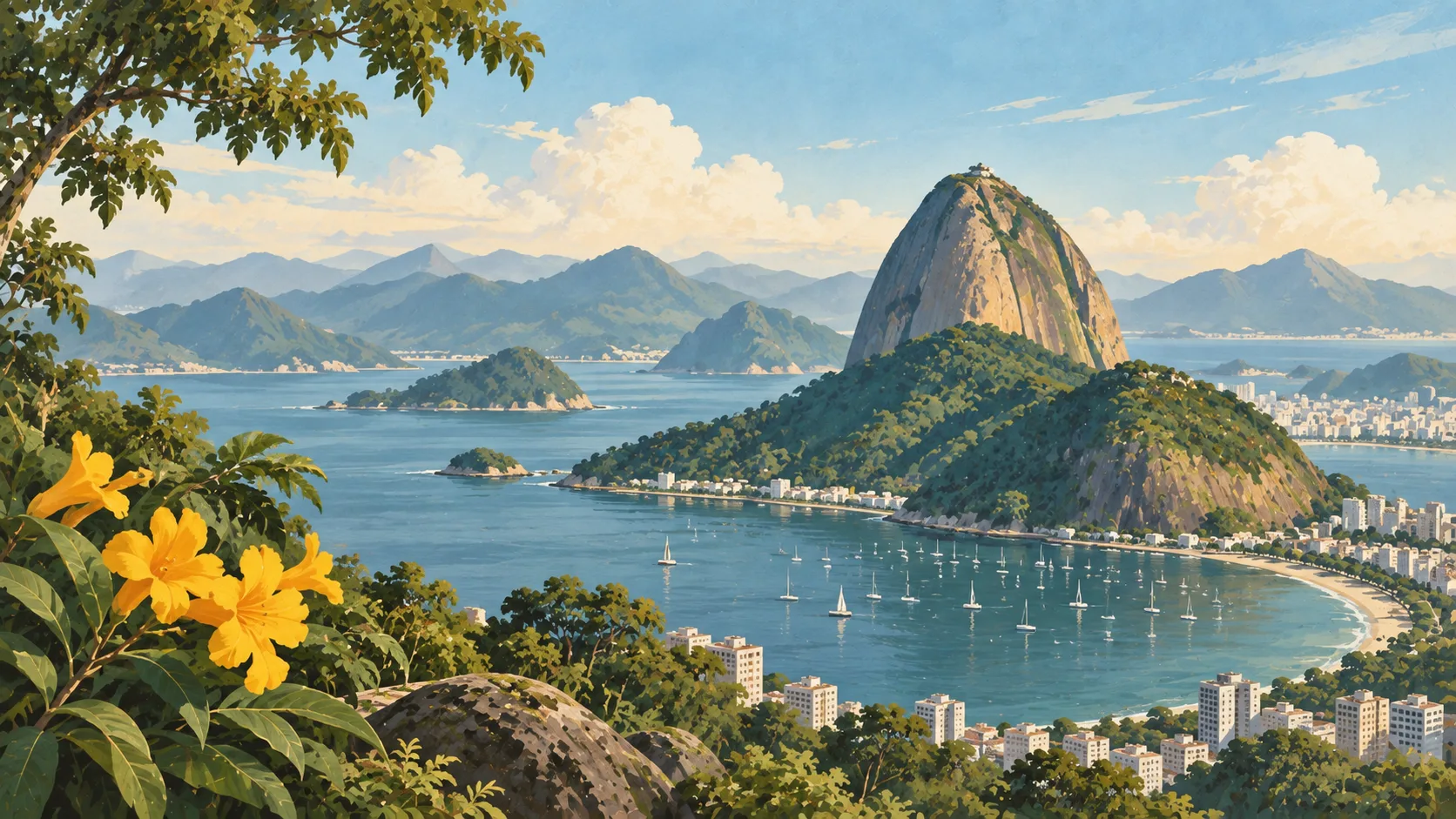
city4–6 daysRio's mountains and water are inseparable from its neighbourhoods. Plan icons early, beaches by condition and cultural days beyond the postcard south zone.
Best time: April–June and September–November
Explore Rio de Janeiro - 02
São Paulo
Eastern South America
city3–4 daysBrazil's largest city rewards travellers who choose districts and institutions deliberately; it is not a grey connection to hurry through.
Best time: April–June and September–November
Explore São Paulo - 03
Salvador & Bahia
Eastern South America
travel base4–6 daysSalvador carries colonial violence, Black intellectual life, Candomblé traditions and formidable food; the wider coast and Chapada need separate time.
Best time: December–April
Explore Salvador & Bahia - 04
Manaus & the central Amazon
Eastern South America
travel base4–7 daysManaus is the transport and cultural gateway. Lodge quality, boat time, water level and community relationships matter more than a generic jungle label.
Best time: The locally drier months; conditions vary by coast
Explore Manaus & the central Amazon - 05
Foz do Iguaçu
Eastern South America
city2–3 daysBrazil provides the broad panorama and Argentina the longer circuit; use the city as a practical base and give border movement margin.
Best time: April–June and September–November
Explore Foz do Iguaçu - 06
Florianópolis & Santa Catarina
Eastern South America
travel base4–6 daysThe island combines urban districts, fishing communities, dunes and surf beaches, but congestion makes changing coast every day a poor plan.
Best time: April–June and September–November
Explore Florianópolis & Santa Catarina
Things to do
What should you do in Brazil?
Not a bucket list — the handful of things that make this country this country, with the timing catch that stops people doing them well.
- 01
See Rio from ground and height
Central Rio, Sugarloaf and Tijuca
The city makes sense when historic streets, forest and bay are read together rather than as isolated viewpoints.
- 02
Eat through one São Paulo migration corridor
Liberdade, Bom Retiro, Bixiga or the markets
Choose one history and follow it through shops, institutions and kitchens rather than collecting viral restaurants.
- 03
Use a culture-led Salvador guide
Pelourinho, Comércio and Black cultural institutions
A guide can connect beauty to slavery, resistance and living religious practice without reducing the city to performance.
- 04
Sleep on an Amazon tributary
Outside Manaus
Several nights reveal water, forest and dawn rhythms; scrutinise guide ratios, waste practice and community benefit.
- 05
Cross Iguaçu only when documentation works
Brazil and Argentina
Both perspectives are valuable, but immigration, opening times and seasonal water decide the feasible day.
- 06
Choose one Santa Catarina coast
Florianópolis island
North, east and south beaches differ in surf, density and road access; a stable base beats daily traffic.
How to get around
How do you get around Brazil?
Flights are the national network for travellers; intercity buses are valuable within a region and rail is mostly not. City transit is useful in Rio and São Paulo, while app cars and licensed taxis fill gaps. Boat quality and timing define Amazon routes; road rental is best reserved for a coherent coast or interior loop.
Domestic air network
Use flights for multi-region routes and compare baggage, airport and separate-ticket risk, not only headline fare.
Rule of thumb: More than one region → usually fly.
Intercity coach
Strong for regional corridors and overnight journeys, with large terminals and meaningful class differences.
Metro, bus and app car
Rio and São Paulo reward public transport by corridor; app cars help after dark or where connections are awkward.
River and coastal boats
In the Amazon, the boat may be the route rather than an excursion. Verify safety equipment, cabin type, duration and seasonal operation.
Passes and cards, honestly
- There is no national pass that beats buying flights and regional ground links separately.
- Protected areas and major monuments use separate official reservations; never assume a reseller has secured the entry itself.
Travel tips
What should you know before you go?
The things locals assume you know. Most travellers learn them by getting one wrong on day two.
- Portuguese changes the journey
- Basic Brazilian Portuguese earns far more than improvised Spanish and reduces dependence on packaged tourism.
- Brazil is not one culture
- Afro-Brazilian Bahia, Amazonian cities, southern migration regions and Rio do not share one social script.
- Music belongs somewhere
- Samba, choro, forró, funk, axé and bossa nova have distinct communities and venues; hear them in context.
- Race and inequality are visible
- Do not turn favelas, Indigenous communities or religious spaces into spectacle. Choose locally accountable guides.
- Beach space has its own rhythm
- Rent a chair, buy from moving vendors and follow local flags and current advice; valuables require discipline.
Travel basics
Visa, money, SIM cards and more
The boring section, which is why it is the one people skip and then regret at the airport.
visa
Verify passport-specific entry
Brazil's visa and electronic-visa rules can change by nationality and date; use the official consular source.
money
Cards lead, backup cash helps
Contactless cards and instant payments are common, but travellers still need small cash and a second card for outages or smaller places.
connectivity
Buy data and save offline routes
City coverage is broad; river journeys, parks and remote roads lose signal.
plugs
Type N and mixed voltage
Brazil mainly uses type N sockets. Voltage can be 127 V or 220 V by city and building, so check equipment and the room.
safety
Route streets with local judgement
Risk varies block by block. Keep phones discreet where advised, use trusted night transport and ask the accommodation about current routes.
health
Mosquito and heat planning
Requirements and disease advice depend on region. Seek current clinical guidance for yellow fever, dengue and Amazon travel.
Trip costs
How much does a trip to Brazil cost?
A mid-range trip usually needs about €85–€170 per person per day, before long-haul flights. Brazil is not automatically cheap: domestic flights, protected-area logistics and Rio holiday pricing can dominate. Everyday food, metro travel and good mid-range stays remain reasonable when booked outside Carnival, New Year and school-holiday peaks.
Shoestring
€€50–85
per person / day
- Stay
- Hostel or simple pousada
- Food
- Kilo restaurants, markets and snacks
- Transport
- Metro, bus and sale fares
Strong in cities; remote nature access remains a separate cost.
Mid-range
€€85–170
per person / day
- Stay
- Good hotel or pousada
- Food
- Neighbourhood restaurants and seafood
- Transport
- Domestic flights plus app or shared transfers
A practical level for three regions in two weeks.
Comfortable
€€230–500
per person / day
- Stay
- Design hotel or responsible lodge
- Food
- Chef-led regional dining
- Transport
- Flexible flights, drivers and private guides
Spend on expert nature access and location rather than resort enclosure.
Sample itineraries
Starting points, not scripts
Each of these is a real request you could hand to Menta as written. Change the people, the month and the pace; the structure will hold.
Rio, São Paulo and Iguaçu
12 days- Rio de Janeiro
- São Paulo
- Foz do Iguaçu
A first urban-and-nature route with short flights and enough time to see both cities beyond headline sights.
Rio, Salvador and Bahia
15 days- Rio de Janeiro
- Salvador
- Recôncavo
- Bahia coast
Atlantic Brazil through two major cities and one slower cultural or coastal extension.
Cities and central Amazon
18 days- São Paulo
- Rio de Janeiro
- Manaus
- Amazon lodge
A city-led journey ending with a properly vetted multi-night forest and river stay.
Common questions
Quick answers about travel in Brazil
Short answers to the questions people ask before they book. Use the full guide for the detail and trade-offs.
- When is the best time to visit Brazil?
- May–October for many regions; choose dates for the Amazon, coast or Carnival separately. Brazil has no national dry season. Rio and the southeast are often most comfortable from May to October, Salvador remains warm with a wetter autumn, the central Amazon has high- and low-water rhythms, and the south has four seasons with cooler winters. Carnival dates transform prices and movement wherever major celebrations occur.
- How much does a trip to Brazil cost?
- Plan about €85–€170 per person per day for a mid-range trip, before long-haul flights. Brazil is not automatically cheap: domestic flights, protected-area logistics and Rio holiday pricing can dominate. Everyday food, metro travel and good mid-range stays remain reasonable when booked outside Carnival, New Year and school-holiday peaks.
- How do you get around Brazil?
- Flights are the national network for travellers; intercity buses are valuable within a region and rail is mostly not. City transit is useful in Rio and São Paulo, while app cars and licensed taxis fill gaps. Boat quality and timing define Amazon routes; road rental is best reserved for a coherent coast or interior loop.
More destinations
Where else?
- JapanA megacity, a thousand temples and trains that leave to the second.
- ChinaImperial capitals, fast trains, regional tables and landscapes at continental scale.
- ItalyThree civilisations' worth of cities, and lunch takes two hours.
- SpainEurope's longest high-speed rail, five cultures, and lunch at three.
- PortugalTwo hilly cities, a valley of port and a long Atlantic coast.
- GreeceAntiquity, two hundred inhabited islands and a ferry timetable to respect.
- IcelandOne road, no trains, and weather that rewrites the plan daily.
- ThailandStreet food, temples, two coasts and Asia's cheapest good hotel room.
- VietnamTwo capitals, one slow railway and the best street food in Asia.
- MoroccoMedinas, the High Atlas and the Sahara, a ferry ride from Europe.
- MexicoA 3,000-year-old civilisation, the best street food on earth, and two coastlines.
- Costa RicaCloud forest, two coasts, volcanoes and wildlife best seen slowly.
- The BahamasShallow banks, island towns and water-led journeys between cays.
- BarbadosCoral coasts, Bajan food and an island with several speeds.
- CubaLayered cities, karst valleys and a journey that needs patience.
- Dominican RepublicCaribbean cities, mountain interiors and coasts beyond the resort gate.
- JamaicaMusic, mountain rain, strong food and coasts with different rhythms.
- FranceGreat cities, long lunches, mountains and a coast for every mood.
- United KingdomHistoric cities, wild coastlines and weather worth planning around.
- GermanyBig culture, small cities, forests and trains with caveats.
- NetherlandsCanals, art, cycling and small cities that reward staying longer.
- CroatiaAdriatic islands, stone towns, clear water and a crowded August.
- TurkeyMosques, markets, ancient cities and coastlines on a huge scale.
- SwitzerlandAlps, lakes and trains that make the expensive route feel simple.
- AustriaImperial cities, Alpine lakes, music and excellent rail links.
- NorwayFjords, midnight light, coastal towns and beautiful long distances.
- SwedenArchipelagoes, forests, design and summer light that lasts.
- FinlandLakes, saunas, forests and a capital built for slow days.
- CzechiaBeautiful old towns, serious beer and an easy train route beyond Prague.
- PolandDeep history, lively cities, forests, lakes and mountain food.
- IrelandAtlantic cliffs, music-filled towns, green roads and weather in charge.
- AustraliaBig distances, old landscapes, city beaches and wildlife in the wild.
- New ZealandVolcanoes, fjords, coast roads and a country made for the outdoors.
- IndonesiaVolcanoes, rice fields, reefs and thousands of islands to choose from.
- South KoreaFast cities, quiet temples, mountain trails and food at every hour.
- United StatesHuge landscapes, distinct cities and a route that must respect the map.
- CanadaBig wilderness, thoughtful cities and distances that need their own plan.
- ArgentinaBig-city appetite, Andean wine country and Patagonia at full scale.
- ChileDesert sky, Pacific cities, volcano lakes and Patagonian wind.
- ColombiaHighland cities, Caribbean history and coffee-country roads.
- PeruAndean cities, living food cultures and Amazon headwaters.



























Brazil is a good trip. Make it your trip.
Everything on this page is context Menta already has. Add the people going, the dates and what you actually care about, and the plan starts smarter than a blank chat.
Two journeys free. No payment details. 0 % markup on bookings.
Start planning BrazilGuide last reviewed 2026-09. Check visa rules against your own passport before you book.