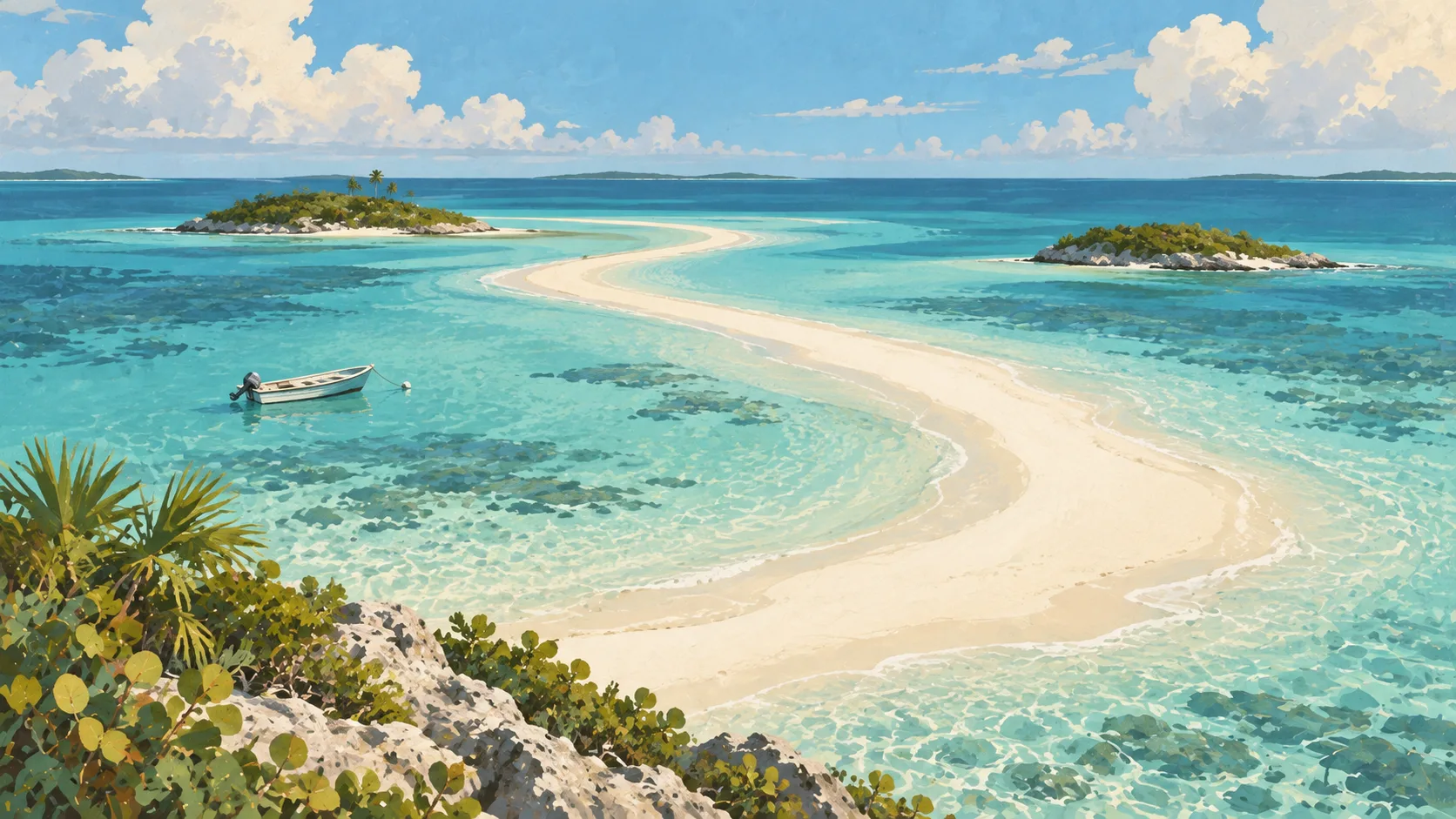

Who it's for
Is The Bahamas right for your trip?
Every country is somebody's favourite. The honest question is whether it is yours, and for this trip.
This is your trip if…
- Clear water, reefs, fishing or sailing is the actual reason for the trip.
- You prefer small island settlements and locally owned stays to a generic resort week.
- You can build weather flexibility into boat days.
- You accept that remote-island logistics carry high prices.
Think twice if…
- You want to visit four island groups in seven days.
- You expect Caribbean travel to be inexpensive once flights, food imports and boats are counted.
- You need frequent public transport or late-night variety outside Nassau.
- You dislike small aircraft, ferries or weather-led schedule changes.
Best time to visit
When is the best time to visit The Bahamas?
December–April for lower humidity; hurricane season runs June–November. Winter and early spring bring lower humidity, cooler evenings and peak prices. Late spring is warmer and often good value before tropical-storm risk rises. Hurricane season officially spans June through November, with the greatest historical activity later in the summer and early autumn; every island and year differs.
- Best
Dry high season
December–April
Warm clear days, cooler nights and busy marinas make this the easiest but most expensive window.
- Good
Late spring
May–June
Water warms, crowds ease and humidity or showers rise before peak storm months.
- Mixed
Storm season
July–October
Heat, humidity and hurricane risk require flexible, insured plans and current ferry checks.
- Good
Transition
November
Rain and storm risk ease unevenly as high-season services return.
Climate · monthly normals
Northern tropical maritime climate with a drier winter and wetter, hotter summer.
Festivals and events
What is worth planning around?
Dates a plan should either aim for or steer clear of. Both are useful; the second saves more money.
26 December and 1 January
Junkanoo
Nassau and several islands
Costumed groups, goatskin drums, brass and cowbells fill the street in overnight parades.
Reserve central rooms and seats early; routes and start times need current confirmation.
April
National Family Island Regatta
George Town, Exuma
Traditional Bahamian sloops race over several days alongside island food and music.
June
Pineapple Festival
Eleuthera
Gregory Town celebrates the island's pineapple-growing heritage through food, music and community events.
Summer dates vary
Goombay Summer
Across the islands
Local music, dance and food events bring public celebration beyond the winter visitor season.
Where to go
Where should you go in The Bahamas?
The places that earn their nights, most important first, with how long each deserves. Nobody needs all of them on one trip.
City and local guides
6 worked-out stopsMap numbers match the local guide cards.
- 01
Nassau & New Providence
Caribbean
travel base2–3 daysNassau holds the national museums, markets, neighbourhood food and most connections. Paradise Island is one resort district, not the capital's whole story.
Best time: December–April
Explore Nassau & New Providence - 02
The Exumas
Caribbean
travel base4–6 daysBase around Great Exuma for services or choose a smaller cay deliberately; boat access, wind and budget define what is reachable.
Best time: December–April
Explore The Exumas - 03
Eleuthera & Harbour Island
Caribbean
travel base4–6 daysA narrow main island rewards a car and one or two bases; Harbour Island adds polished hotels and water-taxi logistics.
Best time: December–April
Explore Eleuthera & Harbour Island - 04
The Abacos
Caribbean
travel base4–7 daysMarsh Harbour is the practical hub for ferries and charters among rebuilt island communities. Confirm current services rather than relying on pre-hurricane guides.
Best time: December–April
Explore The Abacos - 05
Grand Bahama
Caribbean
travel base3–4 daysLook beyond the resort core to Lucayan National Park, settlements and community businesses, with current reopening information checked locally.
Best time: December–April
Explore Grand Bahama - 06
Andros
Caribbean
travel base4–6 daysThe largest island has sparse roads and separated settlements. It suits divers, anglers and naturalists who arrange guides and transfers before arrival.
Best time: December–April
Explore Andros
Things to do
What should you do in The Bahamas?
Not a bucket list — the handful of things that make this country this country, with the timing catch that stops people doing them well.
- 01
Walk Nassau beyond the port
Downtown, Over-the-Hill and historic sites
Museums and a locally led food or history route provide context that a cruise-day loop omits.
- 02
Cross an Exuma sandbank
Exuma Cays
Tide and wind matter more than the photograph; use a licensed captain and avoid wildlife-baiting stops.
- 03
Choose reef operators carefully
Andros, Grand Bahama or the Out Islands
Small groups, mooring use and no-touch practice matter in systems already stressed by heat and storms.
- 04
Drive Eleuthera with two coasts in mind
Eleuthera
Atlantic surf and sheltered bank water can differ within minutes; road time and fuel access shape the day.
- 05
Sail a traditional sloop regatta
Family Island events
Community racing reveals a maritime culture deeper than yacht tourism.
- 06
Protect one spare boat day
Every island group
Wind can cancel the exact excursion the itinerary was built around; flexibility is part of island competence.
How to get around
How do you get around The Bahamas?
Nassau connects to the Family Islands by domestic air and selected ferries, but one timetable does not cover the archipelago. Rental cars or golf carts solve individual islands; water taxis connect some cay groups, and private charters are expensive. Confirm every onward leg with the operator close to travel.
Domestic flights
The main bridge between Nassau and distant island groups; baggage and weather policies matter on small aircraft.
Rule of thumb: Different island group → usually fly.
Ferries and water taxis
Useful on named routes within or between nearby islands, not a turn-up national network.
Island car or cart
A car is valuable on long Eleuthera or Andros roads; carts suit only compact cays where they are permitted.
Licensed boat charter
Often the only way to reach sandbanks, reefs and smaller cays. Compare captain credentials, fuel, weather cancellation and wildlife practice.
Passes and cards, honestly
- There is no archipelago-wide transport pass; book each air, ferry and boat leg separately.
- Marine-park fees and protected-area rules vary by destination and operator.
Travel tips
What should you know before you go?
The things locals assume you know. Most travellers learn them by getting one wrong on day two.
- Use the country's full name
- The conventional name is The Bahamas, and residents are Bahamian.
- Cruise Nassau is not the archipelago
- Port-day commerce, resort enclaves and Family Island life operate at very different scales.
- Junkanoo is not decorative
- It is competitive community culture with long preparation, named groups and deep musical practice.
- Water access carries responsibility
- Do not stand on coral, feed sharks or rays, handle turtles or collect shells from protected areas.
- Recovery is local and uneven
- Storm impacts and rebuilding differ by settlement. Spend with open community businesses and use current local information.
Travel basics
Visa, money, SIM cards and more
The boring section, which is why it is the one people skip and then regret at the airport.
visa
Check entry and onward proof
Requirements depend on nationality and routing. Confirm official Bahamian entry rules and any transit visas.
money
Bahamian and US dollars
The Bahamian dollar is pegged one-to-one with the US dollar and both circulate locally; change may be returned in either.
connectivity
Download island details
Nassau coverage is easy; smaller cays, open water and remote roads can be patchy.
plugs
Type A and B sockets
The Bahamas uses 120 V with North American-style type A and B sockets.
safety
Water and road risk dominate many days
Use life jackets and licensed operators, check currents and weather, and remember traffic drives on the left.
health
Sun, heat and mosquitoes
Shade, hydration and reef-safe habits matter daily; seek current health advice for mosquito-borne illness.
Trip costs
How much does a trip to The Bahamas cost?
A mid-range trip usually needs about €150–€300 per person per day, before long-haul flights. The Bahamas is expensive because food, fuel and many materials are imported and moving between islands often means a flight, ferry or charter. A simple locally owned room can reduce cost, but water access and remote logistics remain genuine fixed expenses.
Shoestring
€€95–150
per person / day
- Stay
- Guesthouse or shared apartment
- Food
- Groceries, conch stands and simple cafés
- Transport
- Local bus, shared ferry and sale flights
Possible in Nassau or one island, but not as a rapid hopping plan.
Mid-range
€€150–300
per person / day
- Stay
- Good small hotel or rental
- Food
- Local restaurants and some self-catering
- Transport
- Domestic flight, car and group boat day
The realistic range for two bases in ten days.
Comfortable
€€400–900
per person / day
- Stay
- Boutique resort or waterfront villa
- Food
- Resort dining and private meals
- Transport
- Flexible flights, charters and private captain
Spend on boat quality and island location, not isolation alone.
Sample itineraries
Starting points, not scripts
Each of these is a real request you could hand to Menta as written. Change the people, the month and the pace; the structure will hold.
Nassau and Exuma
9 days- Nassau
- Great Exuma
- Exuma Cays
A history-and-water first journey with one domestic flight and several weather-flexible island days.
Eleuthera slowly
10 days- South Eleuthera
- Governor's Harbour
- North Eleuthera
- Harbour Island
A two-base road route plus a short cay stay, avoiding daily island changes.
Abacos by water
12 days- Marsh Harbour
- Hope Town
- Great Guana Cay
- Green Turtle Cay
A boating-led route for travellers who will verify current ferry, lodging and community conditions.
Common questions
Quick answers about travel in The Bahamas
Short answers to the questions people ask before they book. Use the full guide for the detail and trade-offs.
- When is the best time to visit The Bahamas?
- December–April for lower humidity; hurricane season runs June–November. Winter and early spring bring lower humidity, cooler evenings and peak prices. Late spring is warmer and often good value before tropical-storm risk rises. Hurricane season officially spans June through November, with the greatest historical activity later in the summer and early autumn; every island and year differs.
- How much does a trip to The Bahamas cost?
- Plan about €150–€300 per person per day for a mid-range trip, before long-haul flights. The Bahamas is expensive because food, fuel and many materials are imported and moving between islands often means a flight, ferry or charter. A simple locally owned room can reduce cost, but water access and remote logistics remain genuine fixed expenses.
- How do you get around The Bahamas?
- Nassau connects to the Family Islands by domestic air and selected ferries, but one timetable does not cover the archipelago. Rental cars or golf carts solve individual islands; water taxis connect some cay groups, and private charters are expensive. Confirm every onward leg with the operator close to travel.
More destinations
Where else?
- JapanA megacity, a thousand temples and trains that leave to the second.
- ChinaImperial capitals, fast trains, regional tables and landscapes at continental scale.
- ItalyThree civilisations' worth of cities, and lunch takes two hours.
- SpainEurope's longest high-speed rail, five cultures, and lunch at three.
- PortugalTwo hilly cities, a valley of port and a long Atlantic coast.
- GreeceAntiquity, two hundred inhabited islands and a ferry timetable to respect.
- IcelandOne road, no trains, and weather that rewrites the plan daily.
- ThailandStreet food, temples, two coasts and Asia's cheapest good hotel room.
- VietnamTwo capitals, one slow railway and the best street food in Asia.
- MoroccoMedinas, the High Atlas and the Sahara, a ferry ride from Europe.
- MexicoA 3,000-year-old civilisation, the best street food on earth, and two coastlines.
- Costa RicaCloud forest, two coasts, volcanoes and wildlife best seen slowly.
- BarbadosCoral coasts, Bajan food and an island with several speeds.
- CubaLayered cities, karst valleys and a journey that needs patience.
- Dominican RepublicCaribbean cities, mountain interiors and coasts beyond the resort gate.
- JamaicaMusic, mountain rain, strong food and coasts with different rhythms.
- FranceGreat cities, long lunches, mountains and a coast for every mood.
- United KingdomHistoric cities, wild coastlines and weather worth planning around.
- GermanyBig culture, small cities, forests and trains with caveats.
- NetherlandsCanals, art, cycling and small cities that reward staying longer.
- CroatiaAdriatic islands, stone towns, clear water and a crowded August.
- TurkeyMosques, markets, ancient cities and coastlines on a huge scale.
- SwitzerlandAlps, lakes and trains that make the expensive route feel simple.
- AustriaImperial cities, Alpine lakes, music and excellent rail links.
- NorwayFjords, midnight light, coastal towns and beautiful long distances.
- SwedenArchipelagoes, forests, design and summer light that lasts.
- FinlandLakes, saunas, forests and a capital built for slow days.
- CzechiaBeautiful old towns, serious beer and an easy train route beyond Prague.
- PolandDeep history, lively cities, forests, lakes and mountain food.
- IrelandAtlantic cliffs, music-filled towns, green roads and weather in charge.
- AustraliaBig distances, old landscapes, city beaches and wildlife in the wild.
- New ZealandVolcanoes, fjords, coast roads and a country made for the outdoors.
- IndonesiaVolcanoes, rice fields, reefs and thousands of islands to choose from.
- South KoreaFast cities, quiet temples, mountain trails and food at every hour.
- United StatesHuge landscapes, distinct cities and a route that must respect the map.
- CanadaBig wilderness, thoughtful cities and distances that need their own plan.
- ArgentinaBig-city appetite, Andean wine country and Patagonia at full scale.
- BrazilAtlantic cities, living cultures and continental-scale nature.
- ChileDesert sky, Pacific cities, volcano lakes and Patagonian wind.
- ColombiaHighland cities, Caribbean history and coffee-country roads.
- PeruAndean cities, living food cultures and Amazon headwaters.












The Bahamas is a good trip. Make it your trip.
Everything on this page is context Menta already has. Add the people going, the dates and what you actually care about, and the plan starts smarter than a blank chat.
Two journeys free. No payment details. 0 % markup on bookings.
Start planning The BahamasGuide last reviewed 2026-09. Check visa rules against your own passport before you book.