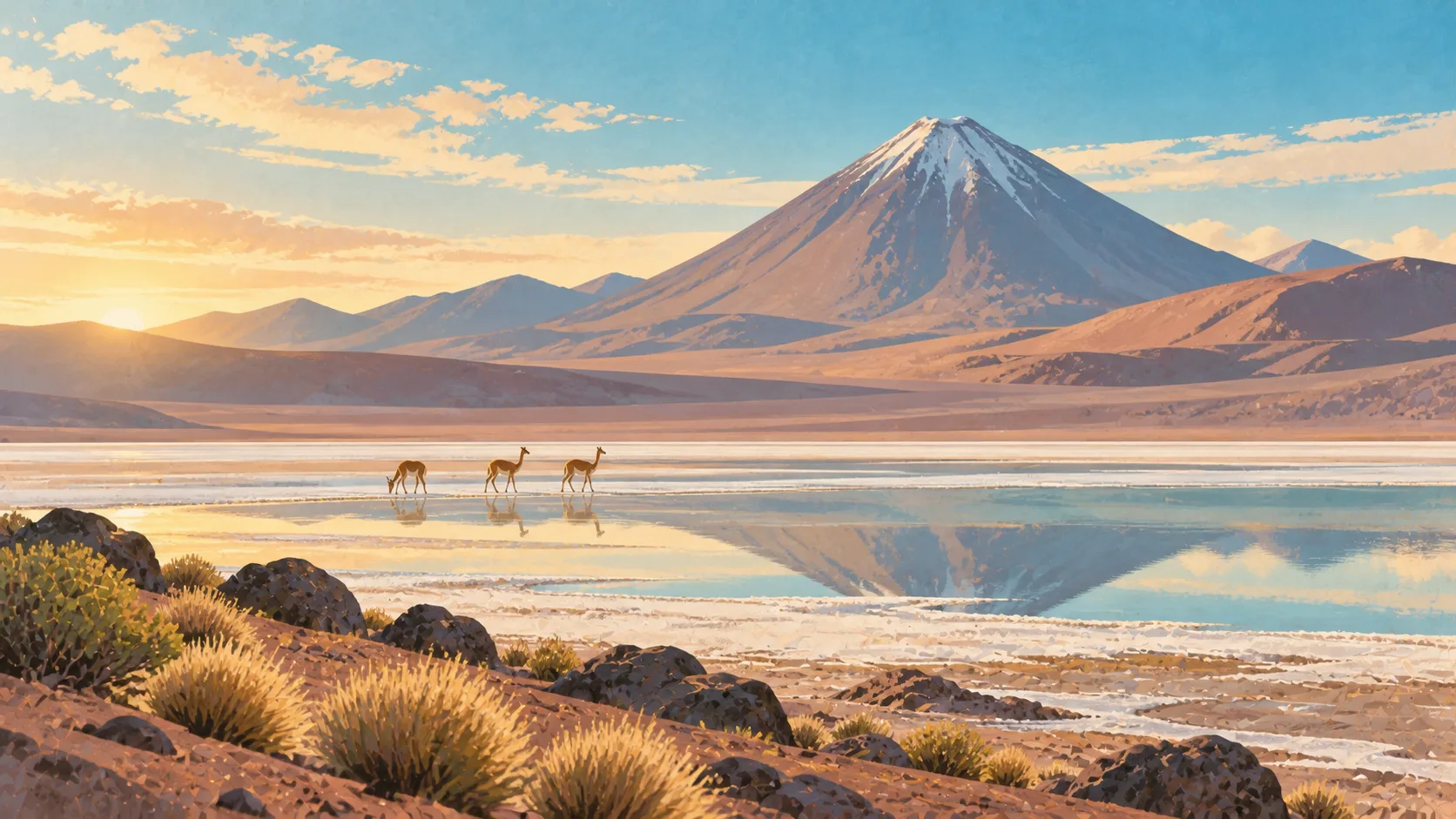

Who it's for
Is Chile right for your trip?
Every country is somebody's favourite. The honest question is whether it is yours, and for this trip.
This is your trip if…
- You like landscape-led journeys with clear regional bases.
- Hiking, astronomy, wine or road travel can anchor whole chapters of the plan.
- You accept flying between the desert, centre and Patagonia.
- You value reliable urban and intercity infrastructure without expecting nature to be frictionless.
Think twice if…
- You want Atacama, Santiago and Torres del Paine in one week.
- You expect South America to mean low daily costs; Chile can approach southern-European prices.
- You dislike dry altitude, exposed wind or rapid weather changes.
- You want nightlife and dense historic-city texture to dominate the trip.
Best time to visit
When is the best time to visit Chile?
October–April for Patagonia; March–May and September–November for central Chile. Central Chile has Mediterranean seasons, the Atacama is dry with cold high-altitude nights, the Lake District is wetter year-round, and Patagonia's usable window centres on the austral summer. Shoulder months reduce crowds but make remote transport and trails less predictable.
- Best
Austral summer
December–February
Patagonia and the lakes have maximum access and demand; central valleys are hot, dry and busy around the coast.
- Best
Autumn
March–May
Harvest in wine country and calmer central weather pair with early southern colour before services contract.
- Mixed
Winter
June–August
Ski areas operate and the desert remains viable, while southern roads, ferries and trails face rain, snow and short days.
- Good
Spring
September–November
Central valleys bloom and Patagonia reopens in stages, with wind and cold fronts still decisive.
Climate · monthly normals
Mediterranean central valley: hot dry summers, cool wetter winters and a large day-night range.
For contrast
Cool, windy far south with modest temperatures even in summer and short winter days.
Festivals and events
What is worth planning around?
Dates a plan should either aim for or steer clear of. Both are useful; the second saves more money.
18–19 September
Fiestas Patrias
Nationwide
Fondas, cueca, food and public gatherings make this the clearest national celebration.
Domestic travel and closures reshape the long holiday period.
March–April
Vendimias
Central wine valleys
Harvest festivals bring producers, food and regional music into valley towns.
February
Tapati Rapa Nui
Rapa Nui
Island teams compete through sport, dance and cultural events rooted in Rapa Nui identity.
Flights and rooms are scarce; book only after confirming the year's programme.
January or February
Carnaval Andino con la Fuerza del Sol
Arica
Andean dance and brass ensembles fill the northern city over several days.
Where to go
Where should you go in Chile?
The places that earn their nights, most important first, with how long each deserves. Nobody needs all of them on one trip.
City and local guides
6 worked-out stopsMap numbers match the local guide cards.
- 01
Santiago
Pacific South America
city3–4 daysSantiago is a set of neighbourhoods between mountains and heat haze. Use it for contemporary culture, food and a deliberate introduction to Chilean history.
Best time: March–May and September–November
Explore Santiago - 02
Valparaíso & wine valleys
Pacific South America
travel base3–4 daysValparaíso's working port and mural-covered hills contrast with Casablanca or Colchagua; combine them only with planned transport, not hopeful taxis.
Best time: March–May and September–November
Explore Valparaíso & wine valleys - 03
San Pedro de Atacama
Pacific South America
town4–5 daysA small high-desert base for excursions that range from 2,400 to more than 4,000 metres. Sequence altitude rather than stacking famous dawns.
Best time: March–May and September–November
Explore San Pedro de Atacama - 04
Lake District
Pacific South America
travel base4–6 daysPuerto Varas, Pucón and the surrounding parks form separate clusters; choose one or make a coherent road loop.
Best time: December–March
Explore Lake District - 05
Chiloé
Pacific South America
travel base3–5 daysFerries, rain and long local roads slow the archipelago. Castro and Ancud are gateways, not substitutes for rural coasts and smaller islands.
Best time: December–March
Explore Chiloé - 06
Torres del Paine & far south
Pacific South America
travel base5–8 daysThe park needs reservations, weather margin and a transport plan; Punta Arenas and Puerto Natales add history and logistics rather than mere transit.
Best time: December–March or June–September
Explore Torres del Paine & far south
Things to do
What should you do in Chile?
Not a bucket list — the handful of things that make this country this country, with the timing catch that stops people doing them well.
- 01
Read Santiago from its hills
Cerro San Cristóbal and central neighbourhoods
A high viewpoint and a street-level museum day explain the valley city better than a shopping-and-wine layover.
- 02
Walk Valparaíso with context
Historic port hills
Street art sits alongside fire risk, inequality and living neighbourhoods; a local route avoids treating homes as scenery.
- 03
Build altitude gradually
Atacama altiplano
Start with valley and salt-flat days before geysers or high lagoons, and do not confuse tour availability with acclimatisation.
- 04
Use a real observatory night
Atacama
Moon phase, cloud and provider quality matter. Scientific or small-group interpretation beats a generic photo stop.
- 05
Choose one southern road chapter
Lakes or Chiloé
Rain and ferry timing reward depth; the map encourages too many daily moves.
- 06
Reserve Patagonia before flights
Torres del Paine
Accommodation, campsites and popular routes can define the feasible itinerary months ahead.
How to get around
How do you get around Chile?
Frequent flights bridge Santiago with the far north and south. Long-distance buses are strong on settled corridors; ferries and gravel roads structure island and Patagonia routes. A rental car is valuable for wine valleys and southern loops, but unnecessary in central Santiago and not a substitute for reserved park transport.
North-south flights
Fly between distant regions and keep enough connection margin when Patagonia weather matters.
Rule of thumb: Santiago–Atacama or Patagonia → fly.
Intercity coach
Comfortable and frequent between central and major regional cities, with long distances often served overnight.
Regional road trips
Best for wine valleys, the Lake District and selected Carretera Austral sections after road and ferry research.
Island and Patagonian ferries
Some are simple crossings and others are itinerary-defining sailings; vehicle space and weather require advance checks.
Passes and cards, honestly
- No national rail or transport pass solves Chile's flight-bus-car pattern.
- Park entries, campsites and mountain transport are separate reservations; secure the scarce element first.
Travel tips
What should you know before you go?
The things locals assume you know. Most travellers learn them by getting one wrong on day two.
- The dictatorship remains present
- Museums, memorials and family histories make 1973–1990 part of contemporary conversation, not closed history.
- Indigenous nations are contemporary
- Mapuche and Rapa Nui communities are political and living; prefer experiences they own or explicitly shape.
- Once is not one o'clock
- The evening meal and social night often run later than northern-European habits, though daily lunch can be practical and early.
- Wine does not require a luxury tour
- Small and large vineyards have different value. Secure a driver and choose producers by region and farming approach.
- Nature access is managed
- Park systems, permits, fire closures and weather controls change. Check the official source close to each hike.
Travel basics
Visa, money, SIM cards and more
The boring section, which is why it is the one people skip and then regret at the airport.
visa
Confirm entry and reciprocity rules
Requirements vary by passport and can include advance travel authorisation or fees. Use the current official consular source.
money
Cards are normal
Cards work widely, including contactless in cities; carry modest peso cash for rural services, markets and outages.
connectivity
Coverage fades with the road
Urban and settled-valley data is strong. Altiplano, islands and Patagonia require offline maps and saved bookings.
plugs
Type C and L sockets
Chile uses 220 V. Slim two-pin type C plugs often fit, while grounded equipment may need a type L adapter.
safety
Prepare for cities and exposed terrain
Use current neighbourhood advice in Santiago and Valparaíso, and treat altitude, wind, fire and cold as the dominant risks outdoors.
health
Altitude before ambition
High-Atacama excursions can exceed 4,000 metres. Ascend gradually and seek medical advice for personal risk.
Trip costs
How much does a trip to Chile cost?
A mid-range trip usually needs about €95–€185 per person per day, before long-haul flights. Chile's accommodation, wine tourism and Patagonia logistics can be expensive; city meals and buses are more manageable. A route with three internal flights and remote lodges needs a different budget from a central-valley journey, even at the same comfort level.
Shoestring
€€55–95
per person / day
- Stay
- Hostel or simple hospedaje
- Food
- Markets, menus del día and self-catering
- Transport
- Intercity bus and public transit
Works in central and northern towns; park logistics remain costly.
Mid-range
€€95–185
per person / day
- Stay
- Good hotel, cabin or guesthouse
- Food
- Neighbourhood restaurants and wine
- Transport
- Flights, buses and a regional car
The realistic range for central Chile plus one remote region.
Comfortable
€€250–520
per person / day
- Stay
- Design hotel or remote lodge
- Food
- Destination dining and private tastings
- Transport
- Flexible flights, drivers and small guides
Spend on Patagonia location, expert guiding and weather flexibility.
Sample itineraries
Starting points, not scripts
Each of these is a real request you could hand to Menta as written. Change the people, the month and the pace; the structure will hold.
Central Chile
9 days- Santiago
- Valparaíso
- Casablanca Valley
A compact city, port and wine route with no domestic flight and time to choose neighbourhoods well.
Santiago and Atacama
13 days- Santiago
- San Pedro de Atacama
- Altiplano
A city opening followed by a gradually sequenced desert stay with night-sky and high-altitude days.
Lakes, Chiloé and Patagonia
21 days- Puerto Varas
- Chiloé
- Puerto Natales
- Torres del Paine
- Punta Arenas
A southern journey linked by one flight, with separate island and hiking chapters instead of a continuous heroic drive.
Common questions
Quick answers about travel in Chile
Short answers to the questions people ask before they book. Use the full guide for the detail and trade-offs.
- When is the best time to visit Chile?
- October–April for Patagonia; March–May and September–November for central Chile. Central Chile has Mediterranean seasons, the Atacama is dry with cold high-altitude nights, the Lake District is wetter year-round, and Patagonia's usable window centres on the austral summer. Shoulder months reduce crowds but make remote transport and trails less predictable.
- How much does a trip to Chile cost?
- Plan about €95–€185 per person per day for a mid-range trip, before long-haul flights. Chile's accommodation, wine tourism and Patagonia logistics can be expensive; city meals and buses are more manageable. A route with three internal flights and remote lodges needs a different budget from a central-valley journey, even at the same comfort level.
- How do you get around Chile?
- Frequent flights bridge Santiago with the far north and south. Long-distance buses are strong on settled corridors; ferries and gravel roads structure island and Patagonia routes. A rental car is valuable for wine valleys and southern loops, but unnecessary in central Santiago and not a substitute for reserved park transport.
More destinations
Where else?
- JapanA megacity, a thousand temples and trains that leave to the second.
- ChinaImperial capitals, fast trains, regional tables and landscapes at continental scale.
- ItalyThree civilisations' worth of cities, and lunch takes two hours.
- SpainEurope's longest high-speed rail, five cultures, and lunch at three.
- PortugalTwo hilly cities, a valley of port and a long Atlantic coast.
- GreeceAntiquity, two hundred inhabited islands and a ferry timetable to respect.
- IcelandOne road, no trains, and weather that rewrites the plan daily.
- ThailandStreet food, temples, two coasts and Asia's cheapest good hotel room.
- VietnamTwo capitals, one slow railway and the best street food in Asia.
- MoroccoMedinas, the High Atlas and the Sahara, a ferry ride from Europe.
- MexicoA 3,000-year-old civilisation, the best street food on earth, and two coastlines.
- Costa RicaCloud forest, two coasts, volcanoes and wildlife best seen slowly.
- The BahamasShallow banks, island towns and water-led journeys between cays.
- BarbadosCoral coasts, Bajan food and an island with several speeds.
- CubaLayered cities, karst valleys and a journey that needs patience.
- Dominican RepublicCaribbean cities, mountain interiors and coasts beyond the resort gate.
- JamaicaMusic, mountain rain, strong food and coasts with different rhythms.
- FranceGreat cities, long lunches, mountains and a coast for every mood.
- United KingdomHistoric cities, wild coastlines and weather worth planning around.
- GermanyBig culture, small cities, forests and trains with caveats.
- NetherlandsCanals, art, cycling and small cities that reward staying longer.
- CroatiaAdriatic islands, stone towns, clear water and a crowded August.
- TurkeyMosques, markets, ancient cities and coastlines on a huge scale.
- SwitzerlandAlps, lakes and trains that make the expensive route feel simple.
- AustriaImperial cities, Alpine lakes, music and excellent rail links.
- NorwayFjords, midnight light, coastal towns and beautiful long distances.
- SwedenArchipelagoes, forests, design and summer light that lasts.
- FinlandLakes, saunas, forests and a capital built for slow days.
- CzechiaBeautiful old towns, serious beer and an easy train route beyond Prague.
- PolandDeep history, lively cities, forests, lakes and mountain food.
- IrelandAtlantic cliffs, music-filled towns, green roads and weather in charge.
- AustraliaBig distances, old landscapes, city beaches and wildlife in the wild.
- New ZealandVolcanoes, fjords, coast roads and a country made for the outdoors.
- IndonesiaVolcanoes, rice fields, reefs and thousands of islands to choose from.
- South KoreaFast cities, quiet temples, mountain trails and food at every hour.
- United StatesHuge landscapes, distinct cities and a route that must respect the map.
- CanadaBig wilderness, thoughtful cities and distances that need their own plan.
- ArgentinaBig-city appetite, Andean wine country and Patagonia at full scale.
- BrazilAtlantic cities, living cultures and continental-scale nature.
- ColombiaHighland cities, Caribbean history and coffee-country roads.
- PeruAndean cities, living food cultures and Amazon headwaters.









Chile is a good trip. Make it your trip.
Everything on this page is context Menta already has. Add the people going, the dates and what you actually care about, and the plan starts smarter than a blank chat.
Two journeys free. No payment details. 0 % markup on bookings.
Start planning ChileGuide last reviewed 2026-09. Check visa rules against your own passport before you book.