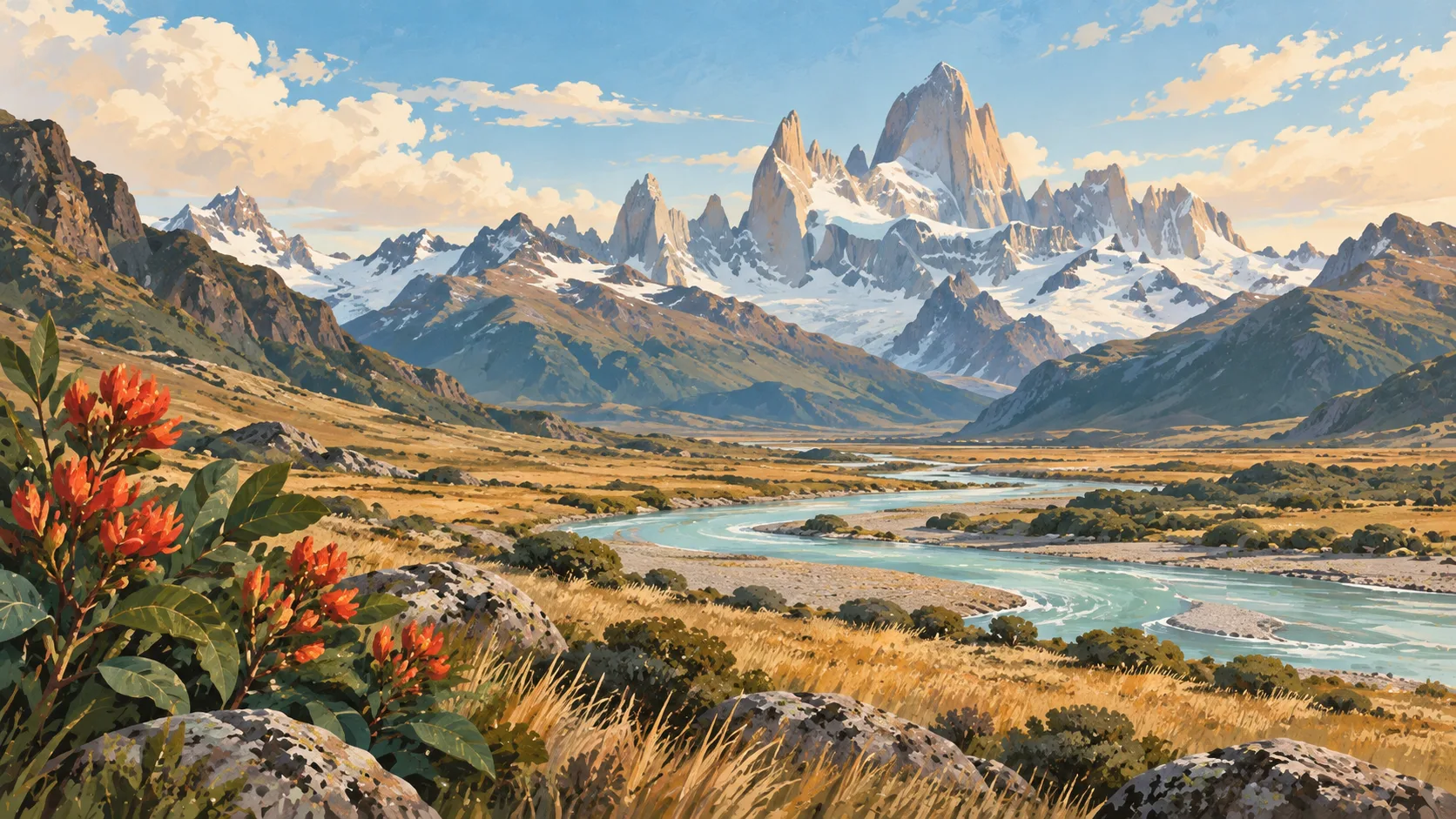


Who it's for
Is Argentina right for your trip?
Every country is somebody's favourite. The honest question is whether it is yours, and for this trip.
This is your trip if…
- You like trips that alternate serious cities with serious landscapes.
- Food, wine, football, design and late-night culture matter as much as monuments.
- You will take domestic flights rather than turn the holiday into a coach timetable.
- You can plan mountain days around wind, weather and seasonal access.
Think twice if…
- You want to combine every famous region in ten days.
- You need stable prices far in advance; exchange and inflation can move quickly.
- You expect Patagonia to be a cheap wilderness once flights, transfers and park bases are added.
- You prefer early dinners and compact, uniformly walkable cities.
Best time to visit
When is the best time to visit Argentina?
October–April for Patagonia; March–May and September–November for Buenos Aires. Argentina spans more than 4,000 kilometres north to south, so there is no single best month. Patagonia is easiest in the austral summer, Buenos Aires is strongest in spring and autumn, the dry Andean northwest works well in winter, and Iguazú remains hot and humid year-round.
- Best
Austral summer
December–February
Patagonia has its longest days and widest access, while Buenos Aires is hot and many residents leave the city.
- Best
Autumn
March–May
Mendoza harvest, mild capital weather and autumn colour make this the most balanced multi-region window.
- Good
Winter
June–August
The northwest is dry and mountain resorts operate, but Patagonia has short days, snow and reduced services.
- Best
Spring
September–November
Buenos Aires turns green, Patagonia reopens unevenly and wind rises toward summer.
Climate · monthly normals
Humid temperate capital conditions; Patagonia, the high Andes and the subtropical northeast differ sharply.
For contrast
Dry, windy Patagonian steppe with cool summers and cold, quieter winters.
Festivals and events
What is worth planning around?
Dates a plan should either aim for or steer clear of. Both are useful; the second saves more money.
Late February–early March
Vendimia
Mendoza
Harvest celebrations connect wine, regional performance and vineyard work.
Mendoza fills early; confirm the main-show date before booking flights.
August
Buenos Aires Tango Festival
Buenos Aires
Free concerts, dance and competition show tango as a living city form rather than a dinner show.
February or March
Carnival of the Quebrada
Jujuy
Andean carnival traditions animate villages across the Quebrada de Humahuaca.
Dates follow the movable pre-Lenten calendar and accommodation is limited.
January
National Folklore Festival
Cosquín, Córdoba
Nine nights of regional music and dance draw performers from across the country.
Where to go
Where should you go in Argentina?
The places that earn their nights, most important first, with how long each deserves. Nobody needs all of them on one trip.
City and local guides
6 worked-out stopsMap numbers match the local guide cards.
- 01
Buenos Aires
Southern Cone
city4–6 daysTreat the capital as a destination, not an airport night: its museums, bookshops, football cultures and late dinners work district by district.
Best time: October–April
Explore Buenos Aires - 02
Mendoza & Uco Valley
Southern Cone
travel base3–4 daysMendoza is the logistical base; the useful journey is through distinct wine valleys, mountain roads and long lunches with a sober driver.
Best time: March–May and September–November
Explore Mendoza & Uco Valley - 03
Bariloche & Lake District
Southern Cone
travel base4–6 daysBariloche anchors a broad northern-Patagonia circuit where trailheads, scenic roads and weather matter more than the chocolate-shop centre.
Best time: December–March or June–September
Explore Bariloche & Lake District - 04
El Calafate & El Chaltén
Southern Cone
travel base5–7 daysUse El Calafate for Perito Moreno and El Chaltén for walking; they are separate bases joined by a three-hour road, not one day trip.
Best time: December–March or June–September
Explore El Calafate & El Chaltén - 05
Salta & Jujuy
Southern Cone
travel base5–7 daysColonial Salta opens into the Calchaquí Valleys and Quebrada de Humahuaca, with altitude and road quality setting the pace.
Best time: May–September
Explore Salta & Jujuy - 06
Puerto Iguazú
Southern Cone
town2–3 daysThe Argentine and Brazilian park circuits reveal different sides of the falls; heat, spray and border queues make two full days sensible.
Best time: April–June and September–November
Explore Puerto Iguazú
Things to do
What should you do in Argentina?
Not a bucket list — the handful of things that make this country this country, with the timing catch that stops people doing them well.
- 01
Walk Buenos Aires by neighbourhood
San Telmo, Palermo, Recoleta and beyond
Each district carries a different urban history; crossing all of them in one day produces taxi windows, not understanding.
- 02
See Perito Moreno from land and water
Los Glaciares National Park
The boardwalks provide scale without requiring an ice trek; reserve transport and keep the day weather-flexible.
- 03
Hike from El Chaltén
Fitz Roy and Cerro Torre valleys
Trail access starts from town, but wind and cloud decide whether a headline viewpoint is worthwhile.
- 04
Taste one wine valley properly
Mendoza, Uco or Luján de Cuyo
Choose two or three producers with contrasting scale and arrange transport rather than collecting tastings.
- 05
Drive the Andean northwest slowly
Salta and Jujuy
Altitude, gravel and extraordinary short detours make a compact map deceptive.
- 06
Give Iguazú both sides
Argentina–Brazil border
The Argentine side is immersive and the Brazilian side panoramic; border documentation and opening hours need checking.
How to get around
How do you get around Argentina?
Domestic flights connect the country's useful hubs; long-distance coaches fill regional gaps and are comfortable where time permits. Rail is not a national intercity solution. Rent a car for wine valleys, the Lake District or northwest loops, but compare one-way fees, fuel distance and road surface before committing.
Domestic flights
The sensible bridge between Buenos Aires, Patagonia, Mendoza, Salta and Iguazú. Build margin around separate tickets and weather-sensitive southern airports.
Rule of thumb: Cross-region journey → fly.
Long-distance coach
Useful on medium corridors and overnight routes, with service levels varying by operator and economy.
Regional rental car
Best for Uco Valley, the Seven Lakes and northwest circuits; it is rarely useful inside Buenos Aires.
Urban transport
Buenos Aires has extensive metro, bus and suburban rail; obtain the current payment card or contactless rules on arrival.
Passes and cards, honestly
- There is no national transport pass that improves a mixed flight-and-road itinerary.
- Park reservations, border excursions and popular trail transfers are separate purchases; confirm each official channel.
Travel tips
What should you know before you go?
The things locals assume you know. Most travellers learn them by getting one wrong on day two.
- Dinner starts late
- Restaurants become lively after 21:00 and social evenings run later still; plan the next morning accordingly.
- Mate is shared, not ordered
- The gourd-and-straw ritual is social. Accept if invited, but do not move the straw or treat it as a café novelty.
- Argentina is regionally plural
- Porteño habits are not a national template; Andean, Guaraní, Patagonian and immigrant histories deserve their own context.
- Football needs planning
- Match access, club membership rules and neighbourhood movement change. Use a reputable local route rather than an anonymous resale ticket.
- Prices need a fresh check
- Currency practice and card rates can change faster than guidebooks. Compare official and card settlement terms close to travel.
Travel basics
Visa, money, SIM cards and more
The boring section, which is why it is the one people skip and then regret at the airport.
visa
Check entry by passport
Use the Argentine government's current entry guidance; rules and reciprocity charges can depend on nationality.
money
Carry more than one payment option
Cards are widespread, but settlement rates and cash access change. Confirm the current legal exchange picture rather than following old forum advice.
connectivity
Download long-route details
Urban coverage is strong; steppe roads and trail areas can lose signal for hours.
plugs
Type I sockets
Argentina uses 220 V and mainly type I sockets; some older properties also accept type C.
safety
City awareness and mountain discipline
Use normal big-city precautions, book trusted late-night transport and follow local park advice for wind, fire and trail closures.
health
Heat, altitude and sun vary by region
The northwest can exceed 3,000 metres, Patagonia is exposed, and Iguazú is hot and humid; pack for the actual route.
Trip costs
How much does a trip to Argentina cost?
A mid-range trip usually needs about €90–€175 per person per day, before long-haul flights. Argentina can feel good value and expensive in the same week. Buenos Aires food may be favourable, while Patagonia flights, park transfers and high-season rooms behave like international products. Recheck peso prices and payment methods immediately before travel.
Shoestring
€€55–90
per person / day
- Stay
- Hostel or simple guesthouse
- Food
- Bakeries, set lunches and grills
- Transport
- Long-distance bus and city transit
Works best in cities and the northwest, less well across remote Patagonia.
Mid-range
€€90–175
per person / day
- Stay
- Good hotel or apartment
- Food
- Strong local restaurants and wine
- Transport
- Domestic flights plus shared excursions
The realistic level for Buenos Aires plus one landscape region.
Comfortable
€€240–480
per person / day
- Stay
- Design hotel, estancia or mountain lodge
- Food
- Destination dining and private tastings
- Transport
- Flexible flights and private transfers
Spend on location and logistics; generic luxury adds little.
Sample itineraries
Starting points, not scripts
Each of these is a real request you could hand to Menta as written. Change the people, the month and the pace; the structure will hold.
Capital and wine country
10 days- Buenos Aires
- Mendoza
- Uco Valley
A food-and-culture first journey with only one domestic flight and space for two distinct wine days.
First Patagonia
16 days- Buenos Aires
- El Calafate
- El Chaltén
- Bariloche
Glaciers and hiking linked by flights, accepting that two Patagonian regions still require real transfer days.
Northwest and Iguazú
18 days- Buenos Aires
- Salta
- Quebrada de Humahuaca
- Cafayate
- Puerto Iguazú
A warmer route through Andean and subtropical Argentina, with altitude built gradually and long diagonals flown.
Common questions
Quick answers about travel in Argentina
Short answers to the questions people ask before they book. Use the full guide for the detail and trade-offs.
- When is the best time to visit Argentina?
- October–April for Patagonia; March–May and September–November for Buenos Aires. Argentina spans more than 4,000 kilometres north to south, so there is no single best month. Patagonia is easiest in the austral summer, Buenos Aires is strongest in spring and autumn, the dry Andean northwest works well in winter, and Iguazú remains hot and humid year-round.
- How much does a trip to Argentina cost?
- Plan about €90–€175 per person per day for a mid-range trip, before long-haul flights. Argentina can feel good value and expensive in the same week. Buenos Aires food may be favourable, while Patagonia flights, park transfers and high-season rooms behave like international products. Recheck peso prices and payment methods immediately before travel.
- How do you get around Argentina?
- Domestic flights connect the country's useful hubs; long-distance coaches fill regional gaps and are comfortable where time permits. Rail is not a national intercity solution. Rent a car for wine valleys, the Lake District or northwest loops, but compare one-way fees, fuel distance and road surface before committing.
More destinations
Where else?
- JapanA megacity, a thousand temples and trains that leave to the second.
- ChinaImperial capitals, fast trains, regional tables and landscapes at continental scale.
- ItalyThree civilisations' worth of cities, and lunch takes two hours.
- SpainEurope's longest high-speed rail, five cultures, and lunch at three.
- PortugalTwo hilly cities, a valley of port and a long Atlantic coast.
- GreeceAntiquity, two hundred inhabited islands and a ferry timetable to respect.
- IcelandOne road, no trains, and weather that rewrites the plan daily.
- ThailandStreet food, temples, two coasts and Asia's cheapest good hotel room.
- VietnamTwo capitals, one slow railway and the best street food in Asia.
- MoroccoMedinas, the High Atlas and the Sahara, a ferry ride from Europe.
- MexicoA 3,000-year-old civilisation, the best street food on earth, and two coastlines.
- Costa RicaCloud forest, two coasts, volcanoes and wildlife best seen slowly.
- The BahamasShallow banks, island towns and water-led journeys between cays.
- BarbadosCoral coasts, Bajan food and an island with several speeds.
- CubaLayered cities, karst valleys and a journey that needs patience.
- Dominican RepublicCaribbean cities, mountain interiors and coasts beyond the resort gate.
- JamaicaMusic, mountain rain, strong food and coasts with different rhythms.
- FranceGreat cities, long lunches, mountains and a coast for every mood.
- United KingdomHistoric cities, wild coastlines and weather worth planning around.
- GermanyBig culture, small cities, forests and trains with caveats.
- NetherlandsCanals, art, cycling and small cities that reward staying longer.
- CroatiaAdriatic islands, stone towns, clear water and a crowded August.
- TurkeyMosques, markets, ancient cities and coastlines on a huge scale.
- SwitzerlandAlps, lakes and trains that make the expensive route feel simple.
- AustriaImperial cities, Alpine lakes, music and excellent rail links.
- NorwayFjords, midnight light, coastal towns and beautiful long distances.
- SwedenArchipelagoes, forests, design and summer light that lasts.
- FinlandLakes, saunas, forests and a capital built for slow days.
- CzechiaBeautiful old towns, serious beer and an easy train route beyond Prague.
- PolandDeep history, lively cities, forests, lakes and mountain food.
- IrelandAtlantic cliffs, music-filled towns, green roads and weather in charge.
- AustraliaBig distances, old landscapes, city beaches and wildlife in the wild.
- New ZealandVolcanoes, fjords, coast roads and a country made for the outdoors.
- IndonesiaVolcanoes, rice fields, reefs and thousands of islands to choose from.
- South KoreaFast cities, quiet temples, mountain trails and food at every hour.
- United StatesHuge landscapes, distinct cities and a route that must respect the map.
- CanadaBig wilderness, thoughtful cities and distances that need their own plan.
- BrazilAtlantic cities, living cultures and continental-scale nature.
- ChileDesert sky, Pacific cities, volcano lakes and Patagonian wind.
- ColombiaHighland cities, Caribbean history and coffee-country roads.
- PeruAndean cities, living food cultures and Amazon headwaters.














Argentina is a good trip. Make it your trip.
Everything on this page is context Menta already has. Add the people going, the dates and what you actually care about, and the plan starts smarter than a blank chat.
Two journeys free. No payment details. 0 % markup on bookings.
Start planning ArgentinaGuide last reviewed 2026-09. Check visa rules against your own passport before you book.