

Douro Valley: what to expect
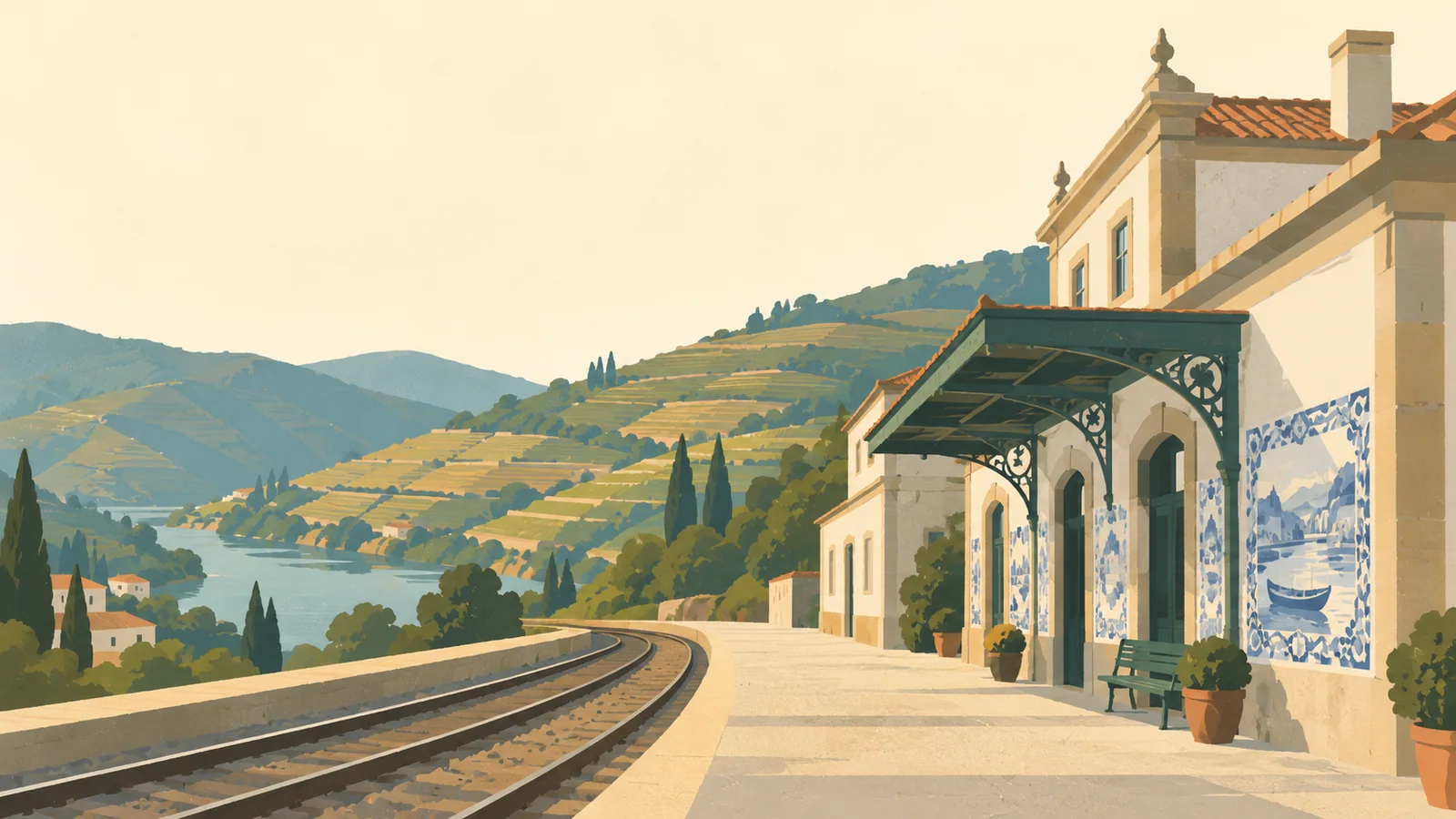
Demarcated in 1756 — one of the oldest wine regions with a legal boundary anywhere — and the reason to leave Porto. The railway from Porto meets the river an hour out and follows it to Pocinho; the quintas around Pinhão do tastings and rooms. Day cruises from Porto are a long day on a boat for one hour of scenery — take the train up and stay two nights instead. Silent in winter, 40 °C in August, perfect in September. This travel base guide groups the destination into six useful areas so the stay works on the ground, not only on a country map.
Is this your trip?
Who Douro Valley is for
Wine travellers
Demarcated in 1756 — one of the oldest wine regions with a legal boundary anywhere — and the reason to leave Porto. The railway from Porto meets the river an hour out and follows it to Pocinho; the quintas around Pinhão do tastings and rooms. Day cruises from Porto are a long day on a boat for one hour of scenery — take the train up and stay two nights instead. Silent in winter, 40 °C in August, perfect in September.
Travellers with 2–3 days
That window gives Douro Valley enough room for one anchor area and one contrasting cluster per day.
First wine base
Pinhão and Cima Corgo make that interest practical rather than a country-level promise.
Area-led planners
Six fixed clusters make it easier to choose a base and avoid repeated cross-destination transfers.
Maybe not for you: A compressed checklist is the weak version of Douro Valley. One day from Porto shows scenery but not valley rhythm; harvest and river levels change availability
Season by season
When to visit Douro Valley
April–June and September–October. Rounded Mediterranean planning normals: hot dry summers and mild, wetter winters. Conditions can still change sharply by elevation, coast and exposure, so use the chart for route timing and the current forecast for the day itself.
- Best
Spring
March–May
Mild days, green landscapes and rising demand around holidays.
- Mixed
Summer
June–August
Hot, bright and busy; shade and early starts materially improve city days.
- Best
Autumn
September–November
Warm early weeks, softer light and rain returning later in the season.
- Good
Winter
December–February
Cooler and wetter, with shorter hours but much lighter visitor pressure.
Weather · monthly normals
Rounded Mediterranean planning normals: hot dry summers and mild, wetter winters. Values are rounded planning normals rather than a live forecast.
Do fewer things better
Things to do in Douro Valley
A short, ordered set of experiences with the timing or planning catch that makes each one work.
- 1
Start with Peso da Régua
Peso da Régua
The regional hub, museum and bridge connections
- 2
Walk Pinhão without stacking it
Pinhão
Station tiles, river access and several nearby estates
- 3
Use Cima Corgo for terraces and classic estates
Cima Corgo
The steep central wine landscape around Pinhão
- 4
Give Douro Superior a deliberate half-day
Douro Superior
Hotter, drier country towards the Spanish border
- 5
See Lamego outside peak hours
Lamego
Baroque pilgrimage steps and a lived-in town south of the river
- 6
Keep Provesende & hill villages weather-flexible
Provesende & hill villages
Stone villages above vineyard valleys with limited transit
One day from Porto shows scenery but not valley rhythm; harvest and river levels change availability
Area by area
The areas of Douro Valley
A real map at local-city scale: enough geography to choose a base, compare areas and group a day. Numbered places match the notes below.
| Area | What it is like | Why go |
|---|---|---|
1 Peso da Régua transport and wine context | The regional hub, museum and bridge connections | Use Peso da Régua when transport and wine context matters more than crossing the whole destination. |
2 Pinhão first wine base | Station tiles, river access and several nearby estates | Use Pinhão when first wine base matters more than crossing the whole destination. |
3 Cima Corgo terraces and classic estates | The steep central wine landscape around Pinhão | Use Cima Corgo when terraces and classic estates matters more than crossing the whole destination. |
4 Douro Superior quiet vineyards | Hotter, drier country towards the Spanish border | Use Douro Superior when quiet vineyards matters more than crossing the whole destination. |
5 Lamego history and food | Baroque pilgrimage steps and a lived-in town south of the river | Use Lamego when history and food matters more than crossing the whole destination. |
6 Provesende & hill villages walking and slow stays | Stone villages above vineyard valleys with limited transit | Use Provesende & hill villages when walking and slow stays matters more than crossing the whole destination. |
Choose the base, then the hotel
Where to stay in Douro Valley
For most first visits: Peso da Régua for transport and wine context.
Peso da Régua
The regional hub, museum and bridge connections Choose it when that trade-off should shape mornings and evenings.
Pinhão
Station tiles, river access and several nearby estates Choose it when that trade-off should shape mornings and evenings.
Cima Corgo
The steep central wine landscape around Pinhão Choose it when that trade-off should shape mornings and evenings.
Douro Superior
Hotter, drier country towards the Spanish border Choose it when that trade-off should shape mornings and evenings.
Order with a point of view
What to eat in Douro Valley
Local food is more useful as an area decision than as a checklist of famous dishes.
- 01
Posta mirandesa
Peso da Régua
A thick beef cut makes sense after a walking day
- 02
Cabrito assado
Pinhão
Roast kid is a regional celebration dish
- 03
Bola de Lamego
Cima Corgo
Filled bread from Lamego travels well
- 04
Douro olive oil
Douro Superior
Taste it beside wine to understand the wider agricultural landscape
- 05
Port and DOC Douro wine
Lamego
Separate fortified styles from dry table wines in a structured tasting
Useful on the ground
Local tips for Douro Valley
Plan the transfer, not only the distance
One day from Porto shows scenery but not valley rhythm; harvest and river levels change availability
Visa and borders
Schengen. EU, EEA and Swiss citizens need only an ID card. UK, US, Canadian, Australian and most Latin American passports get 90 days in any 180 without a visa. The EU's biometric Entry/Exit System has been registering non-EU arrivals since late 2025 — expect a longer queue on first entry — and the ETIAS pre-authorisation (about €20, valid three years) is slated to follow; check its status before you fly.
Money
Euro. Use bank-branded Multibanco ATMs (Millennium, CGD, Santander, Novobanco), which charge nothing beyond your own bank's fee, and avoid the Euronet machines in tourist streets, which charge €3–5 and push a bad exchange rate. Always choose to be charged in euros. Budget for the tourist tax paid at check-out: €4 a night in Lisbon and €3 in Porto (up to seven nights), €1–2 in the Algarve in summer.
SIM and data
EU SIMs roam free. UK contracts vary since Brexit — check yours. Otherwise an eSIM from Airalo, Holafly or similar before you fly, or a MEO or Vodafone prepaid SIM at the airport or any shop for €10–15 with 10–15 GB. 5G is good in cities and coverage is fine everywhere except the deep Alentejo and the Gerês. Bolt and Uber are the ride apps; CP's app sells train tickets; Moovit or Google Maps handles the Lisbon and Porto networks.
Plugs and power
Type F (Schuko) and Type C, 230 V, 50 Hz — the standard continental European socket. UK and US visitors need an adapter; US visitors should check hair dryers and the like are dual-voltage.
Common questions
Quick answers about Douro Valley
- When is the best time to visit Douro Valley?
- April–June and September–October. Rounded Mediterranean planning normals: hot dry summers and mild, wetter winters. Conditions can still change sharply by elevation, coast and exposure, so use the chart for route timing and the current forecast for the day itself.
- How many days do you need in Douro Valley?
- 2–3 days. Demarcated in 1756 — one of the oldest wine regions with a legal boundary anywhere — and the reason to leave Porto. The railway from Porto meets the river an hour out and follows it to Pocinho; the quintas around Pinhão do tastings and rooms. Day cruises from Porto are a long day on a boat for one hour of scenery — take the train up and stay two nights instead. Silent in winter, 40 °C in August, perfect in September. This travel base guide groups the destination into six useful areas so the stay works on the ground, not only on a country map.
- Where should you stay in Douro Valley?
- Peso da Régua for transport and wine context. The regional hub, museum and bridge connections Choose it when that trade-off should shape mornings and evenings.
Keep building the route
Douro Valley is part of Portugal
Use the country guide for visa, money, long-distance transport and the route between cities. Then compare the other worked-out stops below.