

Porto: what to expect
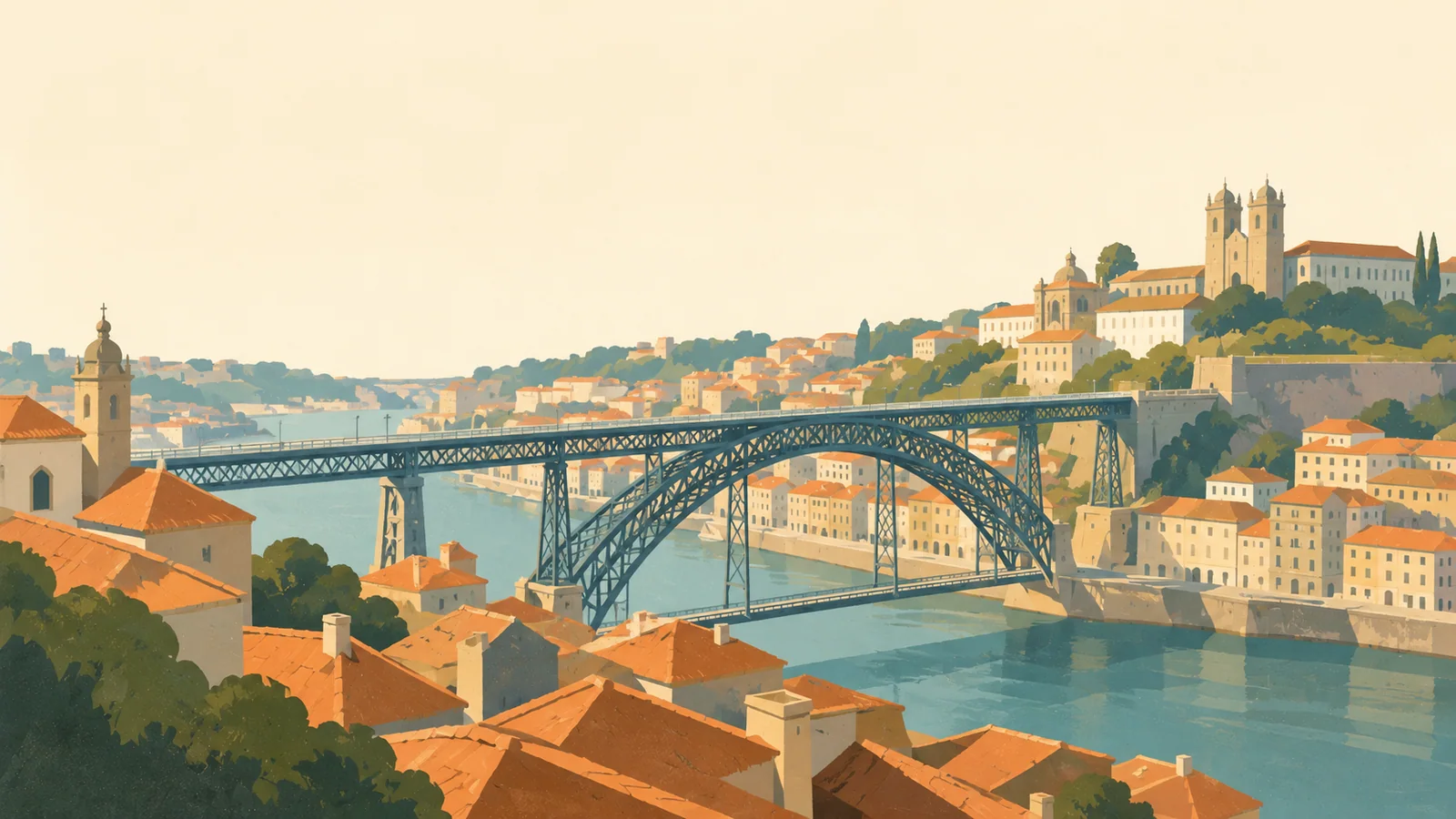
Smaller, grittier and cheaper than Lisbon, and many people's favourite. The Ribeira and Gaia's port lodges are the postcard; Foz, Bonfim, Serralves and the rebuilt Bolhão market are the city. The Dom Luís I bridge's upper deck at sunset is free and better than any paid viewpoint. Livraria Lello is a €10 queue for a bookshop. This city guide groups the destination into six useful areas so the stay works on the ground, not only on a country map.
Is this your trip?
Who Porto is for
Food travellers
Smaller, grittier and cheaper than Lisbon, and many people's favourite. The Ribeira and Gaia's port lodges are the postcard; Foz, Bonfim, Serralves and the rebuilt Bolhão market are the city. The Dom Luís I bridge's upper deck at sunset is free and better than any paid viewpoint. Livraria Lello is a €10 queue for a bookshop.
Travellers with 2–3 days
That window gives Porto enough room for one anchor area and one contrasting cluster per day.
Architecture and evenings
Baixa & Cedofeita and Vila Nova de Gaia make that interest practical rather than a country-level promise.
Area-led planners
Six fixed clusters make it easier to choose a base and avoid repeated cross-destination transfers.
Maybe not for you: A compressed checklist is the weak version of Porto. The river banks are steep and wet stone is unforgiving; lodge visits need reservations in busy months
Season by season
When to visit Porto
May–September. Rounded oceanic planning normals: modest temperature swings and rain possible in every month. Conditions can still change sharply by elevation, coast and exposure, so use the chart for route timing and the current forecast for the day itself.
- Good
Spring
March–May
Longer days and fresh landscapes, with changeable rain and cool evenings.
- Best
Summer
June–August
The warmest and longest days; book popular weekends and outdoor bases early.
- Good
Autumn
September–November
Good early colour and fewer visitors before wetter, shorter days settle in.
- Mixed
Winter
December–February
Cool, damp and dark, although cities retain strong indoor culture.
Weather · monthly normals
Rounded oceanic planning normals: modest temperature swings and rain possible in every month. Values are rounded planning normals rather than a live forecast.
Do fewer things better
Things to do in Porto
A short, ordered set of experiences with the timing or planning catch that makes each one work.
- 1
Start with Ribeira
Ribeira
Tight historic streets and the Douro waterfront below the cathedral
- 2
Walk Baixa & Cedofeita without stacking it
Baixa & Cedofeita
São Bento, civic streets, galleries and broad dining choice
- 3
Use Vila Nova de Gaia for port lodges and viewpoints
Vila Nova de Gaia
Cellars and elevated views on the south bank
- 4
Give Foz do Douro a deliberate half-day
Foz do Douro
Atlantic promenade and calmer residential streets west of centre
- 5
See Bonfim outside peak hours
Bonfim
A creative eastern district with markets and less visitor pressure
- 6
Keep Matosinhos weather-flexible
Matosinhos
Working harbour restaurants and a broad Atlantic beach on the metro
The river banks are steep and wet stone is unforgiving; lodge visits need reservations in busy months
Area by area
The neighbourhoods of Porto
A real map at local-city scale: enough geography to choose a base, compare areas and group a day. Numbered places match the notes below.
| Area | What it is like | Why go |
|---|---|---|
1 Ribeira first river views | Tight historic streets and the Douro waterfront below the cathedral | Use Ribeira when first river views matters more than crossing the whole destination. |
2 Baixa & Cedofeita architecture and evenings | São Bento, civic streets, galleries and broad dining choice | Use Baixa & Cedofeita when architecture and evenings matters more than crossing the whole destination. |
3 Vila Nova de Gaia port lodges and viewpoints | Cellars and elevated views on the south bank | Use Vila Nova de Gaia when port lodges and viewpoints matters more than crossing the whole destination. |
4 Foz do Douro coast and long walks | Atlantic promenade and calmer residential streets west of centre | Use Foz do Douro when coast and long walks matters more than crossing the whole destination. |
5 Bonfim local cafés and longer stays | A creative eastern district with markets and less visitor pressure | Use Bonfim when local cafés and longer stays matters more than crossing the whole destination. |
6 Matosinhos seafood and beach | Working harbour restaurants and a broad Atlantic beach on the metro | Use Matosinhos when seafood and beach matters more than crossing the whole destination. |
Choose the base, then the hotel
Where to stay in Porto
For most first visits: Ribeira for first river views.
Ribeira
Tight historic streets and the Douro waterfront below the cathedral Choose it when that trade-off should shape mornings and evenings.
Baixa & Cedofeita
São Bento, civic streets, galleries and broad dining choice Choose it when that trade-off should shape mornings and evenings.
Vila Nova de Gaia
Cellars and elevated views on the south bank Choose it when that trade-off should shape mornings and evenings.
Foz do Douro
Atlantic promenade and calmer residential streets west of centre Choose it when that trade-off should shape mornings and evenings.
Order with a point of view
What to eat in Porto
Local food is more useful as an area decision than as a checklist of famous dishes.
- 01
Francesinha
Ribeira
The meat sandwich, melted cheese and beer sauce demand appetite and a trusted kitchen
- 02
Tripas à moda do Porto
Baixa & Cedofeita
Bean and tripe stew carries the city old nickname
- 03
Bacalhau
Vila Nova de Gaia
Compare a house preparation rather than ordering generic grilled cod everywhere
- 04
Grilled fish
Foz do Douro
Matosinhos restaurants work best when the day catch is clear
- 05
Port wine
Bonfim
Taste by style and age in a guided flight rather than chasing the oldest bottle
Useful on the ground
Local tips for Porto
Plan the transfer, not only the distance
The river banks are steep and wet stone is unforgiving; lodge visits need reservations in busy months
Visa and borders
Schengen. EU, EEA and Swiss citizens need only an ID card. UK, US, Canadian, Australian and most Latin American passports get 90 days in any 180 without a visa. The EU's biometric Entry/Exit System has been registering non-EU arrivals since late 2025 — expect a longer queue on first entry — and the ETIAS pre-authorisation (about €20, valid three years) is slated to follow; check its status before you fly.
Money
Euro. Use bank-branded Multibanco ATMs (Millennium, CGD, Santander, Novobanco), which charge nothing beyond your own bank's fee, and avoid the Euronet machines in tourist streets, which charge €3–5 and push a bad exchange rate. Always choose to be charged in euros. Budget for the tourist tax paid at check-out: €4 a night in Lisbon and €3 in Porto (up to seven nights), €1–2 in the Algarve in summer.
SIM and data
EU SIMs roam free. UK contracts vary since Brexit — check yours. Otherwise an eSIM from Airalo, Holafly or similar before you fly, or a MEO or Vodafone prepaid SIM at the airport or any shop for €10–15 with 10–15 GB. 5G is good in cities and coverage is fine everywhere except the deep Alentejo and the Gerês. Bolt and Uber are the ride apps; CP's app sells train tickets; Moovit or Google Maps handles the Lisbon and Porto networks.
Plugs and power
Type F (Schuko) and Type C, 230 V, 50 Hz — the standard continental European socket. UK and US visitors need an adapter; US visitors should check hair dryers and the like are dual-voltage.
Common questions
Quick answers about Porto
- When is the best time to visit Porto?
- May–September. Rounded oceanic planning normals: modest temperature swings and rain possible in every month. Conditions can still change sharply by elevation, coast and exposure, so use the chart for route timing and the current forecast for the day itself.
- How many days do you need in Porto?
- 2–3 days. Smaller, grittier and cheaper than Lisbon, and many people's favourite. The Ribeira and Gaia's port lodges are the postcard; Foz, Bonfim, Serralves and the rebuilt Bolhão market are the city. The Dom Luís I bridge's upper deck at sunset is free and better than any paid viewpoint. Livraria Lello is a €10 queue for a bookshop. This city guide groups the destination into six useful areas so the stay works on the ground, not only on a country map.
- Where should you stay in Porto?
- Ribeira for first river views. Tight historic streets and the Douro waterfront below the cathedral Choose it when that trade-off should shape mornings and evenings.
Keep building the route
Porto is part of Portugal
Use the country guide for visa, money, long-distance transport and the route between cities. Then compare the other worked-out stops below.