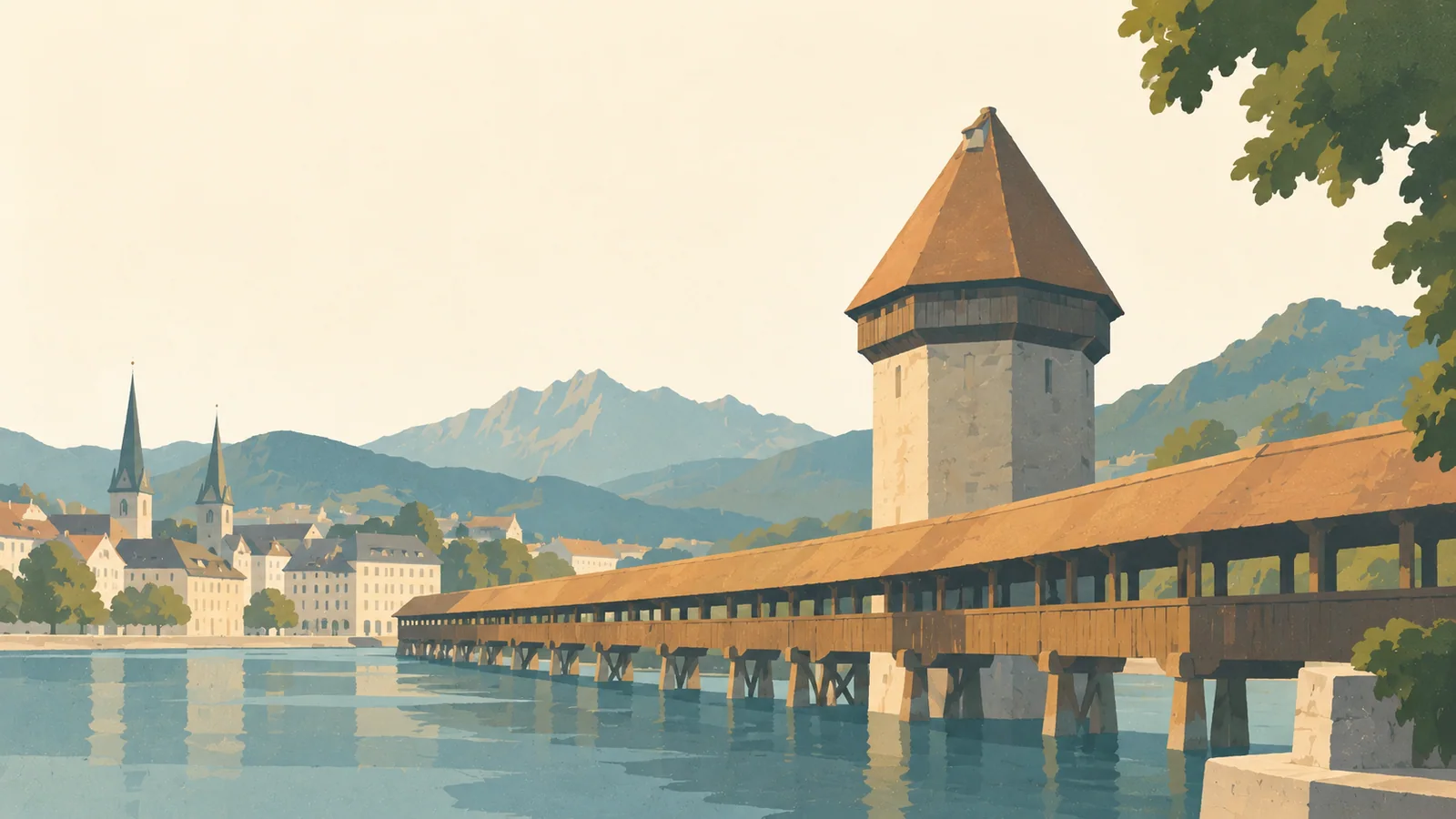


Lucerne: what to expect
A scenic gateway to Rigi, Pilatus and the lake. Stay a little longer than a photo stop and use the boats. This city guide groups the destination into six useful areas so the stay works on the ground, not only on a country map.
Is this your trip?
Who Lucerne is for
Families travellers
A scenic gateway to Rigi, Pilatus and the lake. Stay a little longer than a photo stop and use the boats.
Travellers with 2–3 days
That window gives Lucerne enough room for one anchor area and one contrasting cluster per day.
Water and museums
Lake promenade and Bruchquartier make that interest practical rather than a country-level promise.
Area-led planners
Six fixed clusters make it easier to choose a base and avoid repeated cross-destination transfers.
Maybe not for you: A compressed checklist is the weak version of Lucerne. Treat the suggested stay as time on the ground: weather, timed entry, ferries or mountain roads can remove half a day.
Season by season
When to visit Lucerne
May–June and September. Rounded continental planning normals: cold winters, warm summers and a fast-changing shoulder season. Conditions can still change sharply by elevation, coast and exposure, so use the chart for route timing and the current forecast for the day itself.
- Good
Spring
March–May
Rapid warming, blossom and occasional cold reversals; layer for long days.
- Best
Summer
June–August
Warm to hot with long daylight and thunderstorms rather than constant rain.
- Best
Autumn
September–November
September is excellent; temperatures and daylight fall quickly after it.
- Mixed
Winter
December–February
Cold, sometimes snowy and atmospheric, with museums carrying shorter days.
Weather · monthly normals
Rounded continental planning normals: cold winters, warm summers and a fast-changing shoulder season. Values are rounded planning normals rather than a live forecast.
Do fewer things better
Things to do in Lucerne
A short, ordered set of experiences with the timing or planning catch that makes each one work.
- 1
Start with Old Town
Old Town
Painted squares and the Reuss crossings
- 2
Walk Lake promenade without stacking it
Lake promenade
Boat piers, grand hotels and cultural centre
- 3
Use Bruchquartier for food and local life
Bruchquartier
Independent streets west of the centre
- 4
Give Pilatus a deliberate half-day
Pilatus
Boat, cogwheel and cable-car circuit when weather clears
- 5
See Rigi outside peak hours
Rigi
Rail-and-boat mountain with several route choices
- 6
Keep Weggis & Vitznau weather-flexible
Weggis & Vitznau
South-facing villages beneath Rigi
Treat the suggested stay as time on the ground: weather, timed entry, ferries or mountain roads can remove half a day.
Area by area
The neighbourhoods of Lucerne
A real map at local-city scale: enough geography to choose a base, compare areas and group a day. Numbered places match the notes below.
| Area | What it is like | Why go |
|---|---|---|
1 Old Town first history | Painted squares and the Reuss crossings | Use Old Town when first history matters more than crossing the whole destination. |
2 Lake promenade water and museums | Boat piers, grand hotels and cultural centre | Use Lake promenade when water and museums matters more than crossing the whole destination. |
3 Bruchquartier food and local life | Independent streets west of the centre | Use Bruchquartier when food and local life matters more than crossing the whole destination. |
4 Pilatus mountain day | Boat, cogwheel and cable-car circuit when weather clears | Use Pilatus when mountain day matters more than crossing the whole destination. |
5 Rigi walking and lake views | Rail-and-boat mountain with several route choices | Use Rigi when walking and lake views matters more than crossing the whole destination. |
6 Weggis & Vitznau quiet lake stays | South-facing villages beneath Rigi | Use Weggis & Vitznau when quiet lake stays matters more than crossing the whole destination. |
Choose the base, then the hotel
Where to stay in Lucerne
For most first visits: Old Town for first history.
Old Town
Painted squares and the Reuss crossings Choose it when that trade-off should shape mornings and evenings.
Lake promenade
Boat piers, grand hotels and cultural centre Choose it when that trade-off should shape mornings and evenings.
Bruchquartier
Independent streets west of the centre Choose it when that trade-off should shape mornings and evenings.
Pilatus
Boat, cogwheel and cable-car circuit when weather clears Choose it when that trade-off should shape mornings and evenings.
Order with a point of view
What to eat in Lucerne
Local food is more useful as an area decision than as a checklist of famous dishes.
- 01
Regional cheese dish
Old Town
Fondue and raclette make sense in the right region and weather, not as compulsory summer theatre
- 02
Rösti
Lake promenade
The crisp potato cake shifts from breakfast to full plate across cantons
- 03
Bakery lunch
Bruchquartier
Good bread, tart and seasonal fruit keep an expensive travel day sensible
- 04
Lake or river fish
Pilatus
Ask which water and catch; generic imported fish defeats the point
- 05
Chocolate from a working maker
Rigi
Taste origin and texture rather than collecting logo-branded souvenirs
Useful on the ground
Local tips for Lucerne
Plan the transfer, not only the distance
Treat the suggested stay as time on the ground: weather, timed entry, ferries or mountain roads can remove half a day.
Visa and entry
Switzerland follows Schengen entry rules. Many visa-exempt visitors can stay 90 days in 180 days; check your passport requirements before travel.
Money and cards
Cards work widely, but prices may be shown in Swiss francs even near the eurozone. Keep a small amount of cash for huts, lockers and rural buses.
SIM and data
EU roaming is not automatically the same as EU countries; check your plan. An eSIM can be simpler for maps and mountain transport apps.
Plugs and power
Switzerland commonly uses type J sockets and 230 V. Europlugs often fit, while larger Schuko and UK plugs may need an adapter.
Common questions
Quick answers about Lucerne
- When is the best time to visit Lucerne?
- May–June and September. Rounded continental planning normals: cold winters, warm summers and a fast-changing shoulder season. Conditions can still change sharply by elevation, coast and exposure, so use the chart for route timing and the current forecast for the day itself.
- How many days do you need in Lucerne?
- 2–3 days. A scenic gateway to Rigi, Pilatus and the lake. Stay a little longer than a photo stop and use the boats. This city guide groups the destination into six useful areas so the stay works on the ground, not only on a country map.
- Where should you stay in Lucerne?
- Old Town for first history. Painted squares and the Reuss crossings Choose it when that trade-off should shape mornings and evenings.
Keep building the route
Lucerne is part of Switzerland
Use the country guide for visa, money, long-distance transport and the route between cities. Then compare the other worked-out stops below.