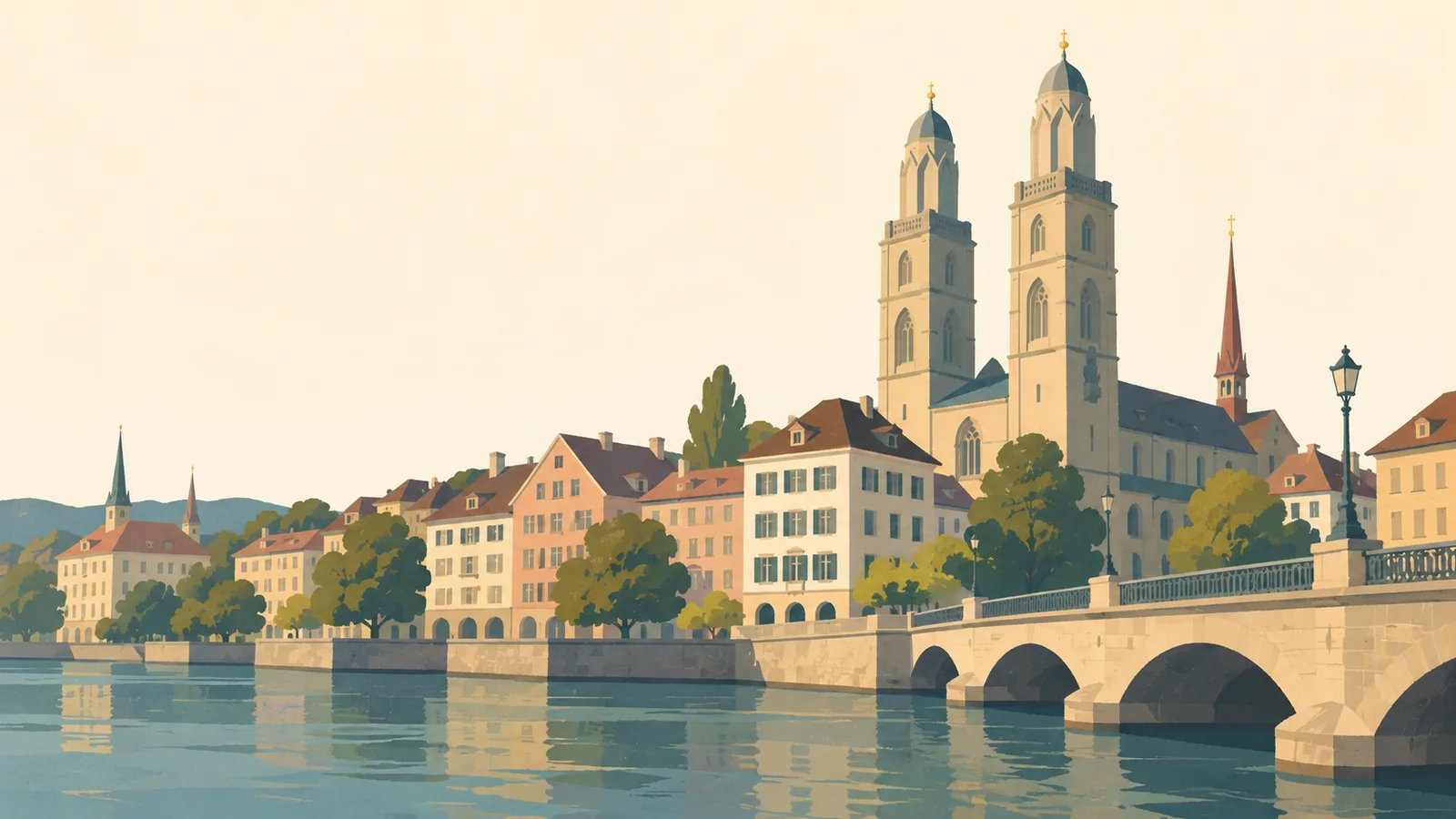


Zurich: what to expect
A compact old town, excellent food and direct trains to much of the country. It is useful rather than a substitute for the Alps. This city guide groups the destination into six useful areas so the stay works on the ground, not only on a country map.
Is this your trip?
Who Zurich is for
First-timers travellers
A compact old town, excellent food and direct trains to much of the country. It is useful rather than a substitute for the Alps.
Travellers with 2 days
That window gives Zurich enough room for one anchor area and one contrasting cluster per day.
Water and longer stays
Enge & lakefront and Zürich West make that interest practical rather than a country-level promise.
Area-led planners
Six fixed clusters make it easier to choose a base and avoid repeated cross-destination transfers.
Maybe not for you: A compressed checklist is the weak version of Zurich. Treat the suggested stay as time on the ground: weather, timed entry, ferries or mountain roads can remove half a day.
Season by season
When to visit Zurich
May–June and September. Rounded continental planning normals: cold winters, warm summers and a fast-changing shoulder season. Conditions can still change sharply by elevation, coast and exposure, so use the chart for route timing and the current forecast for the day itself.
- Good
Spring
March–May
Rapid warming, blossom and occasional cold reversals; layer for long days.
- Best
Summer
June–August
Warm to hot with long daylight and thunderstorms rather than constant rain.
- Best
Autumn
September–November
September is excellent; temperatures and daylight fall quickly after it.
- Mixed
Winter
December–February
Cold, sometimes snowy and atmospheric, with museums carrying shorter days.
Weather · monthly normals
Rounded continental planning normals: cold winters, warm summers and a fast-changing shoulder season. Values are rounded planning normals rather than a live forecast.
Do fewer things better
Things to do in Zurich
A short, ordered set of experiences with the timing or planning catch that makes each one work.
- 1
Start with Altstadt
Altstadt
Limmat lanes, churches and guild houses
- 2
Walk Enge & lakefront without stacking it
Enge & lakefront
Promenades, swimming and direct rail
- 3
Use Zürich West for design and nightlife
Zürich West
Viaduct arches and converted industry
- 4
Give Wiedikon a deliberate half-day
Wiedikon
Residential streets beneath Uetliberg
- 5
See Seefeld outside peak hours
Seefeld
Eastern-shore swimming and museums
- 6
Keep Uetliberg weather-flexible
Uetliberg
Local train to the city mountain ridge
Treat the suggested stay as time on the ground: weather, timed entry, ferries or mountain roads can remove half a day.
Area by area
The neighbourhoods of Zurich
A real map at local-city scale: enough geography to choose a base, compare areas and group a day. Numbered places match the notes below.
| Area | What it is like | Why go |
|---|---|---|
1 Altstadt first history | Limmat lanes, churches and guild houses | Use Altstadt when first history matters more than crossing the whole destination. |
2 Enge & lakefront water and longer stays | Promenades, swimming and direct rail | Use Enge & lakefront when water and longer stays matters more than crossing the whole destination. |
3 Zürich West design and nightlife | Viaduct arches and converted industry | Use Zürich West when design and nightlife matters more than crossing the whole destination. |
4 Wiedikon local food | Residential streets beneath Uetliberg | Use Wiedikon when local food matters more than crossing the whole destination. |
5 Seefeld lake access and calm | Eastern-shore swimming and museums | Use Seefeld when lake access and calm matters more than crossing the whole destination. |
6 Uetliberg views and walking | Local train to the city mountain ridge | Use Uetliberg when views and walking matters more than crossing the whole destination. |
Choose the base, then the hotel
Where to stay in Zurich
For most first visits: Altstadt for first history.
Altstadt
Limmat lanes, churches and guild houses Choose it when that trade-off should shape mornings and evenings.
Enge & lakefront
Promenades, swimming and direct rail Choose it when that trade-off should shape mornings and evenings.
Zürich West
Viaduct arches and converted industry Choose it when that trade-off should shape mornings and evenings.
Wiedikon
Residential streets beneath Uetliberg Choose it when that trade-off should shape mornings and evenings.
Order with a point of view
What to eat in Zurich
Local food is more useful as an area decision than as a checklist of famous dishes.
- 01
Regional cheese dish
Altstadt
Fondue and raclette make sense in the right region and weather, not as compulsory summer theatre
- 02
Rösti
Enge & lakefront
The crisp potato cake shifts from breakfast to full plate across cantons
- 03
Bakery lunch
Zürich West
Good bread, tart and seasonal fruit keep an expensive travel day sensible
- 04
Lake or river fish
Wiedikon
Ask which water and catch; generic imported fish defeats the point
- 05
Chocolate from a working maker
Seefeld
Taste origin and texture rather than collecting logo-branded souvenirs
Useful on the ground
Local tips for Zurich
Plan the transfer, not only the distance
Treat the suggested stay as time on the ground: weather, timed entry, ferries or mountain roads can remove half a day.
Visa and entry
Switzerland follows Schengen entry rules. Many visa-exempt visitors can stay 90 days in 180 days; check your passport requirements before travel.
Money and cards
Cards work widely, but prices may be shown in Swiss francs even near the eurozone. Keep a small amount of cash for huts, lockers and rural buses.
SIM and data
EU roaming is not automatically the same as EU countries; check your plan. An eSIM can be simpler for maps and mountain transport apps.
Plugs and power
Switzerland commonly uses type J sockets and 230 V. Europlugs often fit, while larger Schuko and UK plugs may need an adapter.
Common questions
Quick answers about Zurich
- When is the best time to visit Zurich?
- May–June and September. Rounded continental planning normals: cold winters, warm summers and a fast-changing shoulder season. Conditions can still change sharply by elevation, coast and exposure, so use the chart for route timing and the current forecast for the day itself.
- How many days do you need in Zurich?
- 2 days. A compact old town, excellent food and direct trains to much of the country. It is useful rather than a substitute for the Alps. This city guide groups the destination into six useful areas so the stay works on the ground, not only on a country map.
- Where should you stay in Zurich?
- Altstadt for first history. Limmat lanes, churches and guild houses Choose it when that trade-off should shape mornings and evenings.
Keep building the route
Zurich is part of Switzerland
Use the country guide for visa, money, long-distance transport and the route between cities. Then compare the other worked-out stops below.