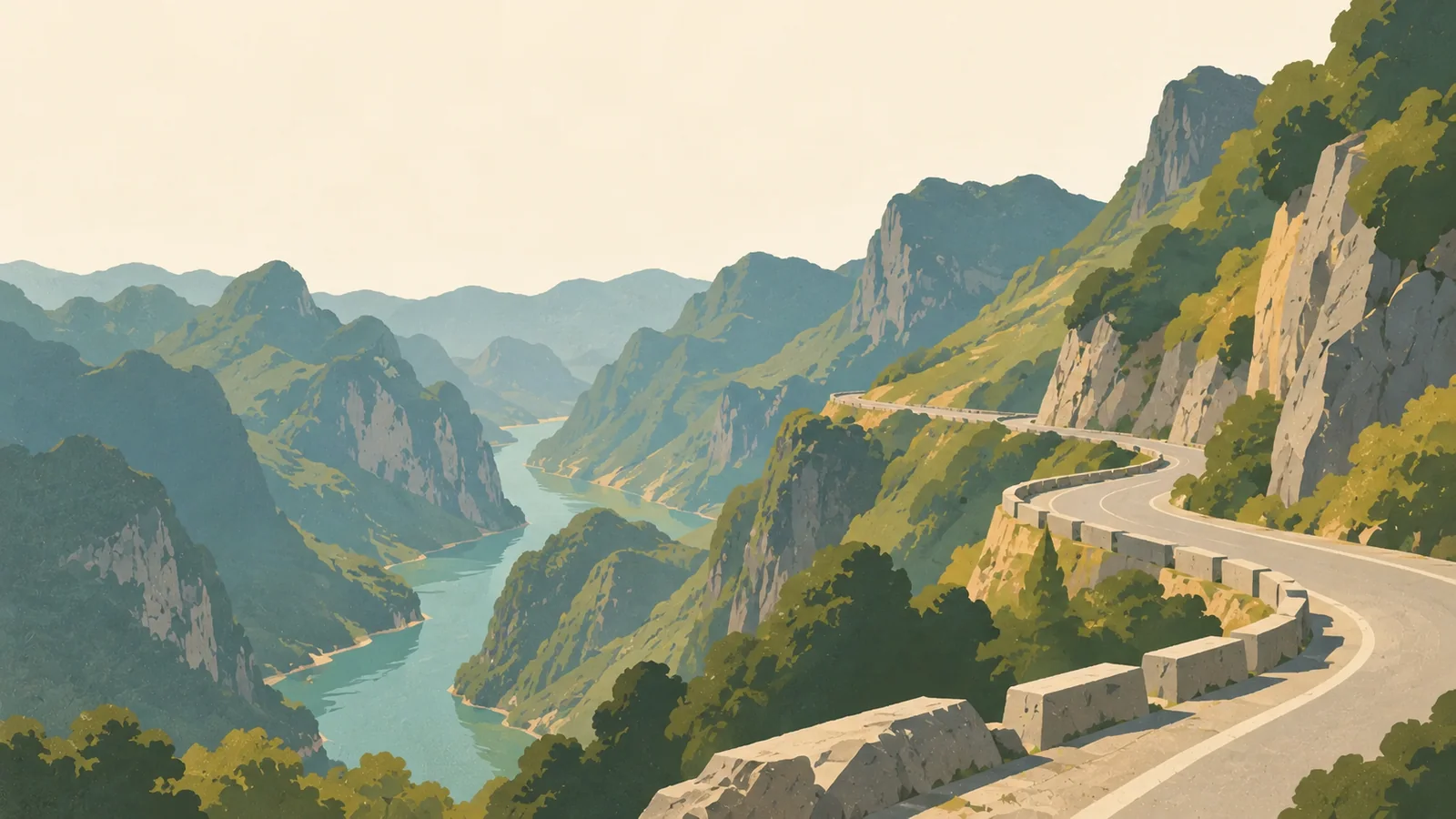


Ha Giang & the far north: what to expect
The Ha Giang loop — Quan Ba, Yen Minh, Dong Van, the Ma Pi Leng pass, Meo Vac — is the best road trip in Southeast Asia and Vietnam's least compromised landscape. Sapa, its more famous neighbour, has the Fansipan cable car, the terraces and a town that has been overbuilt into irrelevance; stay in the villages (Ta Van) if you go. October and November are the months. This travel base guide groups the destination into six useful areas so the stay works on the ground, not only on a country map.
Is this your trip?
Who Ha Giang & the far north is for
Road trips travellers
The Ha Giang loop — Quan Ba, Yen Minh, Dong Van, the Ma Pi Leng pass, Meo Vac — is the best road trip in Southeast Asia and Vietnam's least compromised landscape. Sapa, its more famous neighbour, has the Fansipan cable car, the terraces and a town that has been overbuilt into irrelevance; stay in the villages (Ta Van) if you go. October and November are the months.
Travellers with 4–5 days (3–4 on the road)
That window gives Ha Giang & the far north enough room for one anchor area and one contrasting cluster per day.
First pass and villages
Quản Bạ and Yên Minh make that interest practical rather than a country-level promise.
Area-led planners
Six fixed clusters make it easier to choose a base and avoid repeated cross-destination transfers.
Maybe not for you: A compressed checklist is the weak version of Ha Giang & the far north. Treat the suggested stay as time on the ground: weather, timed entry, ferries or mountain roads can remove half a day.
Season by season
When to visit Ha Giang & the far north
The locally drier season. Rounded tropical-highland planning normals: mild days, cool nights and rainfall shaped more by season than temperature. Conditions can still change sharply by elevation, coast and exposure, so use the chart for route timing and the current forecast for the day itself.
- Best
Drier season
November–April
Clearer mornings and firmer roads suit city walks and highland transfers.
- Good
Early rains
May–June
Green landscapes and afternoon showers still leave useful mornings.
- Mixed
Wet peak
July–October
Cloud, heavy rain and road delays require a less compressed route.
- Good
Transition
October–November
Conditions shift quickly by slope and elevation.
Weather · monthly normals
Rounded tropical-highland planning normals: mild days, cool nights and rainfall shaped more by season than temperature. Values are rounded planning normals rather than a live forecast.
Do fewer things better
Things to do in Ha Giang & the far north
A short, ordered set of experiences with the timing or planning catch that makes each one work.
- 1
Start with Hà Giang City
Hà Giang City
Transport, guides and route preparation
- 2
Walk Quản Bạ without stacking it
Quản Bạ
Gateway into the Dong Van karst plateau
- 3
Use Yên Minh for forest and overnight
Yên Minh
Useful intermediate town between major passes
- 4
Give Đồng Văn a deliberate half-day
Đồng Văn
Main northern base amid stone peaks
- 5
See Mã Pí Lèng & Nho Quế outside peak hours
Mã Pí Lèng & Nho Quế
Exposed pass requiring skilled riding or driver
- 6
Keep Mèo Vạc & Du Già weather-flexible
Mèo Vạc & Du Già
Markets, valleys and a quieter eastern loop
Treat the suggested stay as time on the ground: weather, timed entry, ferries or mountain roads can remove half a day.
Area by area
The areas of Ha Giang & the far north
A real map at local-city scale: enough geography to choose a base, compare areas and group a day. Numbered places match the notes below.
| Area | What it is like | Why go |
|---|---|---|
1 Hà Giang City permits and first base | Transport, guides and route preparation | Use Hà Giang City when permits and first base matters more than crossing the whole destination. |
2 Quản Bạ first pass and villages | Gateway into the Dong Van karst plateau | Use Quản Bạ when first pass and villages matters more than crossing the whole destination. |
3 Yên Minh forest and overnight | Useful intermediate town between major passes | Use Yên Minh when forest and overnight matters more than crossing the whole destination. |
4 Đồng Văn market and highland history | Main northern base amid stone peaks | Use Đồng Văn when market and highland history matters more than crossing the whole destination. |
5 Mã Pí Lèng & Nho Quế iconic road and river | Exposed pass requiring skilled riding or driver | Use Mã Pí Lèng & Nho Quế when iconic road and river matters more than crossing the whole destination. |
6 Mèo Vạc & Du Già local stays and slower return | Markets, valleys and a quieter eastern loop | Use Mèo Vạc & Du Già when local stays and slower return matters more than crossing the whole destination. |
Choose the base, then the hotel
Where to stay in Ha Giang & the far north
For most first visits: Hà Giang City for permits and first base.
Hà Giang City
Transport, guides and route preparation Choose it when that trade-off should shape mornings and evenings.
Quản Bạ
Gateway into the Dong Van karst plateau Choose it when that trade-off should shape mornings and evenings.
Yên Minh
Useful intermediate town between major passes Choose it when that trade-off should shape mornings and evenings.
Đồng Văn
Main northern base amid stone peaks Choose it when that trade-off should shape mornings and evenings.
Order with a point of view
What to eat in Ha Giang & the far north
Local food is more useful as an area decision than as a checklist of famous dishes.
- 01
Regional noodle soup
Hà Giang City
Phở is only one form; broth, herbs and noodles change materially north to south
- 02
Rice-paper meal
Quản Bạ
Roll herbs, vegetables and grilled fillings at a busy specialist rather than ordering a generic sampler
- 03
Market breakfast
Yên Minh
Vietnamese markets are strongest early, before heat and tour groups flatten the rhythm
- 04
Coffee in local form
Đồng Văn
Egg, salt, coconut and condensed-milk coffee belong to different city traditions
- 05
Fresh beer or tea stop
Mã Pí Lèng & Nho Quế
Bia hơi and trà đá are social pauses; hygiene and traffic awareness still matter
Useful on the ground
Local tips for Ha Giang & the far north
Plan the transfer, not only the distance
Treat the suggested stay as time on the ground: weather, timed entry, ferries or mountain roads can remove half a day.
Visa
UK, German, French, Italian, Spanish, Danish, Swedish, Norwegian and Finnish passports get 45 days visa-free (since 2023), and from August 2025 to August 2028 so do Dutch, Belgian, Luxembourg, Swiss, Polish, Czech, Slovak, Hungarian, Slovenian, Croatian, Romanian and Bulgarian ones. US, Canadian, Australian, Irish, Austrian, Portuguese and Greek citizens (and anyone wanting longer) apply for the 90-day e-visa at evisa.gov.vn — about €25 single entry, €45 multiple, three working days, and use only the official site. Phu Quoc alone is visa-free for 30 days for everyone arriving direct.
Money
Dong, about 30,000 ₫ to the euro. ATMs everywhere but most cap withdrawals at 2–5 million ₫ (€65–165) with a €1–2 fee; TPBank and VPBank machines allow more. Cards work in hotels, chains and better restaurants; the street is cash and QR codes tied to Vietnamese bank accounts you will not have. Bring some clean euro or dollar notes as a reserve — the gold shops on Hanoi's Ha Trung street change at better rates than banks.
SIM and data
Viettel has the best rural coverage; a tourist SIM with 4–5 GB a day for 30 days is €6–10 at the airport or any phone shop (passport now required for registration). An eSIM from Airalo or Ubigi is easier and slightly dearer. Hotel and café Wi-Fi is fast and universal. Apps: Grab and Xanh SM for rides, Vexere or 12Go for buses, Baolau or dsvn.vn for trains, Google Maps works fine.
Plugs and power
220 V, 50 Hz. Sockets are mostly the universal kind that accept flat two-pin (type A) and round two-pin (type C) plugs; European chargers go straight in, British ones need an adapter. Newer hotels also fit Schuko (type F).
Common questions
Quick answers about Ha Giang & the far north
- When is the best time to visit Ha Giang & the far north?
- The locally drier season. Rounded tropical-highland planning normals: mild days, cool nights and rainfall shaped more by season than temperature. Conditions can still change sharply by elevation, coast and exposure, so use the chart for route timing and the current forecast for the day itself.
- How many days do you need in Ha Giang & the far north?
- 4–5 days (3–4 on the road). The Ha Giang loop — Quan Ba, Yen Minh, Dong Van, the Ma Pi Leng pass, Meo Vac — is the best road trip in Southeast Asia and Vietnam's least compromised landscape. Sapa, its more famous neighbour, has the Fansipan cable car, the terraces and a town that has been overbuilt into irrelevance; stay in the villages (Ta Van) if you go. October and November are the months. This travel base guide groups the destination into six useful areas so the stay works on the ground, not only on a country map.
- Where should you stay in Ha Giang & the far north?
- Hà Giang City for permits and first base. Transport, guides and route preparation Choose it when that trade-off should shape mornings and evenings.
Keep building the route
Ha Giang & the far north is part of Vietnam
Use the country guide for visa, money, long-distance transport and the route between cities. Then compare the other worked-out stops below.