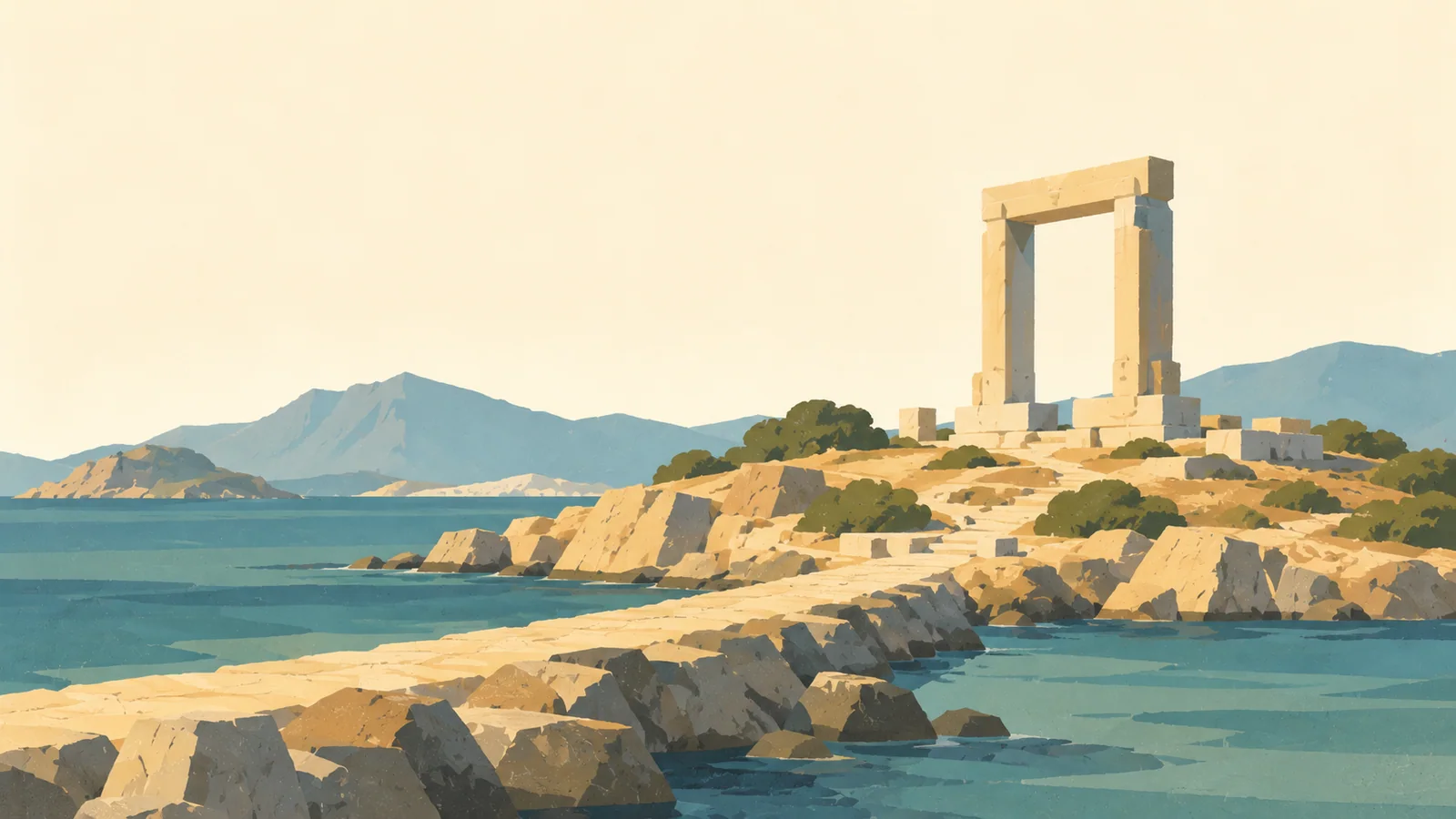


The Cyclades: what to expect
The white-cube islands, arranged so that a ferry between neighbours takes 30–90 minutes. Naxos for families and food, Paros and Antiparos for the balance of beach and village, Milos for volcanic coastline and boat days, Mykonos for a price list with a nightclub attached. Sifnos, Folegandros and Amorgos for the version without coaches. Three islands in a week is right; five is a ferry holiday. This travel base guide groups the destination into six useful areas so the stay works on the ground, not only on a country map.
Is this your trip?
Who The Cyclades is for
Island-hopping travellers
The white-cube islands, arranged so that a ferry between neighbours takes 30–90 minutes. Naxos for families and food, Paros and Antiparos for the balance of beach and village, Milos for volcanic coastline and boat days, Mykonos for a price list with a nightclub attached. Sifnos, Folegandros and Amorgos for the version without coaches. Three islands in a week is right; five is a ferry holiday.
Travellers with 5–8 days
That window gives The Cyclades enough room for one anchor area and one contrasting cluster per day.
Easy links and polished towns
Paros and Milos make that interest practical rather than a country-level promise.
Area-led planners
Six fixed clusters make it easier to choose a base and avoid repeated cross-destination transfers.
Maybe not for you: A compressed checklist is the weak version of The Cyclades. Pick two or three islands with direct links; a ferry map is not a promise that the route runs on your dates
Season by season
When to visit The Cyclades
April–June and September–October. Rounded Mediterranean planning normals: hot dry summers and mild, wetter winters. Conditions can still change sharply by elevation, coast and exposure, so use the chart for route timing and the current forecast for the day itself.
- Best
Spring
March–May
Mild days, green landscapes and rising demand around holidays.
- Mixed
Summer
June–August
Hot, bright and busy; shade and early starts materially improve city days.
- Best
Autumn
September–November
Warm early weeks, softer light and rain returning later in the season.
- Good
Winter
December–February
Cooler and wetter, with shorter hours but much lighter visitor pressure.
Weather · monthly normals
Rounded Mediterranean planning normals: hot dry summers and mild, wetter winters. Values are rounded planning normals rather than a live forecast.
Do fewer things better
Things to do in The Cyclades
A short, ordered set of experiences with the timing or planning catch that makes each one work.
- 1
Start with Naxos
Naxos
A substantial island balancing old town, farms and long sand
- 2
Walk Paros without stacking it
Paros
Naousa, Parikia and central ferry convenience
- 3
Use Milos for geology and boat days
Milos
Volcanic coves, mining history and dispersed sights
- 4
Give Syros a deliberate half-day
Syros
Neoclassical Ermoupoli and a year-round administrative centre
- 5
See Tinos outside peak hours
Tinos
Marble traditions, pilgrimage and old footpaths
- 6
Keep Mykonos weather-flexible
Mykonos
Expensive, crowded and visually exceptional outside peak hours
Pick two or three islands with direct links; a ferry map is not a promise that the route runs on your dates
Area by area
The areas of The Cyclades
A real map at local-city scale: enough geography to choose a base, compare areas and group a day. Numbered places match the notes below.
| Area | What it is like | Why go |
|---|---|---|
1 Naxos beaches and inland villages | A substantial island balancing old town, farms and long sand | Use Naxos when beaches and inland villages matters more than crossing the whole destination. |
2 Paros easy links and polished towns | Naousa, Parikia and central ferry convenience | Use Paros when easy links and polished towns matters more than crossing the whole destination. |
3 Milos geology and boat days | Volcanic coves, mining history and dispersed sights | Use Milos when geology and boat days matters more than crossing the whole destination. |
4 Syros architecture and local life | Neoclassical Ermoupoli and a year-round administrative centre | Use Syros when architecture and local life matters more than crossing the whole destination. |
5 Tinos walking and craft villages | Marble traditions, pilgrimage and old footpaths | Use Tinos when walking and craft villages matters more than crossing the whole destination. |
6 Mykonos nightlife and design | Expensive, crowded and visually exceptional outside peak hours | Use Mykonos when nightlife and design matters more than crossing the whole destination. |
Choose the base, then the hotel
Where to stay in The Cyclades
For most first visits: Naxos for beaches and inland villages.
Naxos
A substantial island balancing old town, farms and long sand Choose it when that trade-off should shape mornings and evenings.
Paros
Naousa, Parikia and central ferry convenience Choose it when that trade-off should shape mornings and evenings.
Milos
Volcanic coves, mining history and dispersed sights Choose it when that trade-off should shape mornings and evenings.
Syros
Neoclassical Ermoupoli and a year-round administrative centre Choose it when that trade-off should shape mornings and evenings.
Order with a point of view
What to eat in The Cyclades
Local food is more useful as an area decision than as a checklist of famous dishes.
- 01
Naxos graviera
Naxos
Hard local cheese reflects the island agricultural interior
- 02
Louza
Paros
Cured pork appears across several Cycladic islands
- 03
Matsata
Milos
Handmade Folegandros pasta is served with braised meat
- 04
Kopanisti
Syros
Peppery soft cheese gives Mykonos and Tinos a distinct bite
- 05
Fresh octopus
Tinos
Choose simple grilling at a working harbour rather than a generic beach club
Useful on the ground
Local tips for The Cyclades
Plan the transfer, not only the distance
Pick two or three islands with direct links; a ferry map is not a promise that the route runs on your dates
Visa and borders
Schengen. EU/EEA citizens need only an ID card. UK, US, Canadian, Australian and most Latin American passports get 90 days in any 180 without a visa; biometric registration at the border under the EU Entry/Exit System is now routine at Athens, and ETIAS (about €20, valid three years) is expected to be required from late 2026 — check before flying. Ferries from Italy are Schengen-internal but passports are still inspected.
Money
Euro. Card terminals have been mandatory for almost every business since 2024, but small tavernas, kiosks, island buses and the church candle box still want cash, and the 'climate resilience fee' on rooms (€2–15 per room per night April–October by star rating, €0.50–4 in winter) is often collected in cash at check-in. Carry €100 or so. Bank ATMs (Alpha, Piraeus, NBG, Eurobank) charge €2–3 to foreign cards; the yellow-and-blue Euronet machines in tourist streets charge more and push a bad exchange rate — decline 'conversion' every time. Museums and state sites are half price 1 November – 31 March and free on the first Sunday of those months.
SIM and data
EU SIMs roam free. Everyone else: an eSIM (Airalo, Holafly, or Cosmote's own) bought before landing; Cosmote has the widest island and mountain coverage, Vodafone and Nova are fine in cities. 5G in Athens, Thessaloniki and the big islands. Ferry Wi-Fi is theoretical; download the maps.
Plugs and power
Type C and F (the standard European two-round-pin) at 230 V, 50 Hz. UK and US visitors need an adapter; most chargers handle the voltage. Island power cuts in August heatwaves last an hour or two.
Common questions
Quick answers about The Cyclades
- When is the best time to visit The Cyclades?
- April–June and September–October. Rounded Mediterranean planning normals: hot dry summers and mild, wetter winters. Conditions can still change sharply by elevation, coast and exposure, so use the chart for route timing and the current forecast for the day itself.
- How many days do you need in The Cyclades?
- 5–8 days. The white-cube islands, arranged so that a ferry between neighbours takes 30–90 minutes. Naxos for families and food, Paros and Antiparos for the balance of beach and village, Milos for volcanic coastline and boat days, Mykonos for a price list with a nightclub attached. Sifnos, Folegandros and Amorgos for the version without coaches. Three islands in a week is right; five is a ferry holiday. This travel base guide groups the destination into six useful areas so the stay works on the ground, not only on a country map.
- Where should you stay in The Cyclades?
- Naxos for beaches and inland villages. A substantial island balancing old town, farms and long sand Choose it when that trade-off should shape mornings and evenings.
Keep building the route
The Cyclades is part of Greece
Use the country guide for visa, money, long-distance transport and the route between cities. Then compare the other worked-out stops below.