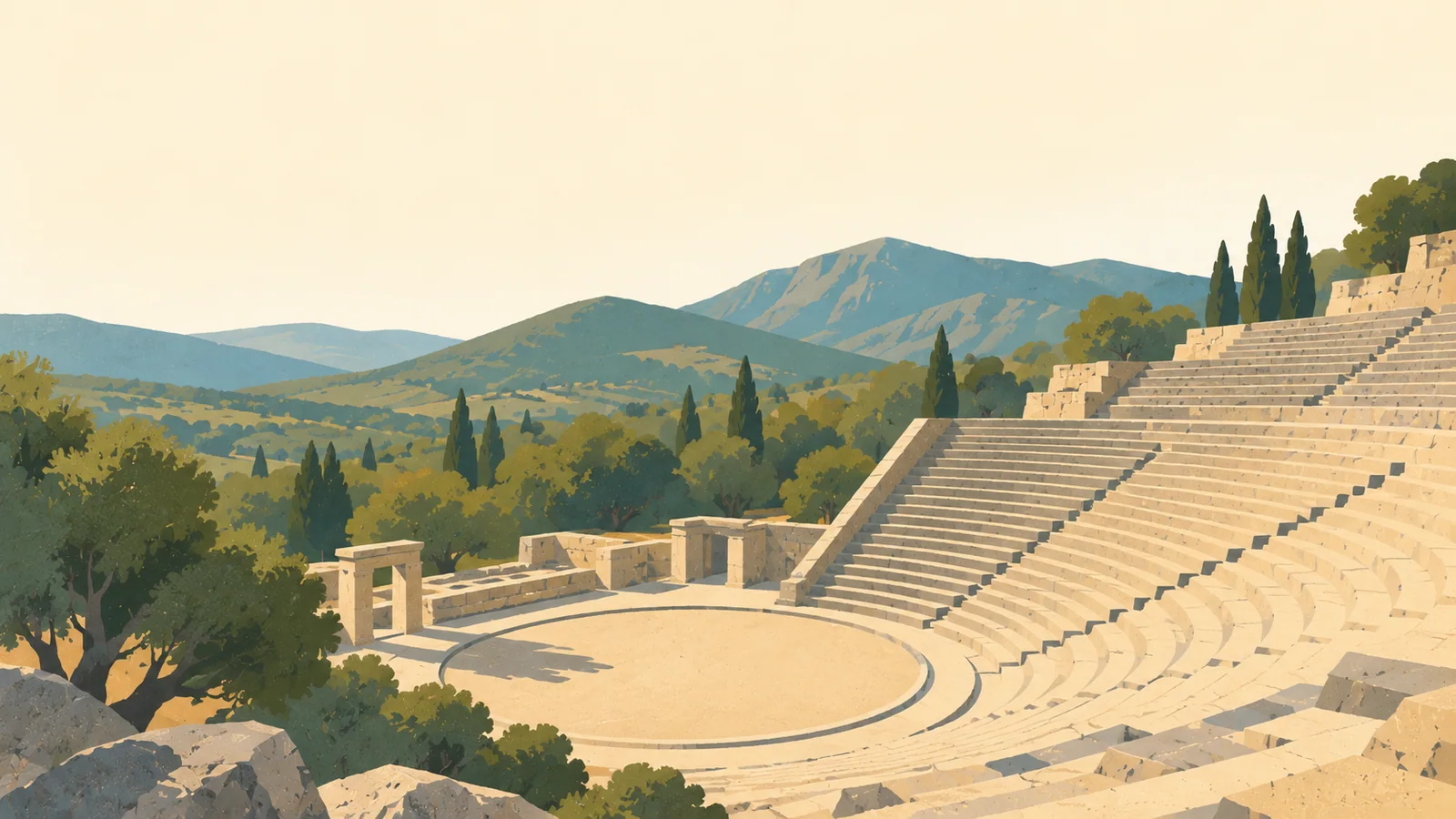


The Peloponnese: what to expect
The densest concentration of classical sites in the country, Byzantine Mystras, the Venetian town of Nafplio (the best base in Greece), the tower houses of the Mani and the rock of Monemvasia. Empty roads, €10 lunches and a beach at the end of most days. Only makes sense with a car; the sites are 60–90 minutes apart and KTEL buses run to them twice a day. This travel base guide groups the destination into six useful areas so the stay works on the ground, not only on a country map.
Is this your trip?
Who The Peloponnese is for
Road trips travellers
The densest concentration of classical sites in the country, Byzantine Mystras, the Venetian town of Nafplio (the best base in Greece), the tower houses of the Mani and the rock of Monemvasia. Empty roads, €10 lunches and a beach at the end of most days. Only makes sense with a car; the sites are 60–90 minutes apart and KTEL buses run to them twice a day.
Travellers with 4–6 days
That window gives The Peloponnese enough room for one anchor area and one contrasting cluster per day.
Bronze Age and theatre
Mycenae & Epidaurus and Monemvasia make that interest practical rather than a country-level promise.
Area-led planners
Six fixed clusters make it easier to choose a base and avoid repeated cross-destination transfers.
Maybe not for you: A compressed checklist is the weak version of The Peloponnese. Ancient sites, Mani roads and beaches cannot share one hurried loop; use at least two bases
Season by season
When to visit The Peloponnese
April–June and September–October. Rounded Mediterranean planning normals: hot dry summers and mild, wetter winters. Conditions can still change sharply by elevation, coast and exposure, so use the chart for route timing and the current forecast for the day itself.
- Best
Spring
March–May
Mild days, green landscapes and rising demand around holidays.
- Mixed
Summer
June–August
Hot, bright and busy; shade and early starts materially improve city days.
- Best
Autumn
September–November
Warm early weeks, softer light and rain returning later in the season.
- Good
Winter
December–February
Cooler and wetter, with shorter hours but much lighter visitor pressure.
Weather · monthly normals
Rounded Mediterranean planning normals: hot dry summers and mild, wetter winters. Values are rounded planning normals rather than a live forecast.
Do fewer things better
Things to do in The Peloponnese
A short, ordered set of experiences with the timing or planning catch that makes each one work.
- 1
Start with Nafplio
Nafplio
Venetian lanes, harbour and easy access to Argolid sites
- 2
Walk Mycenae & Epidaurus without stacking it
Mycenae & Epidaurus
Two foundational sites linked by road rather than transit
- 3
Use Monemvasia for fortified coast
Monemvasia
A stone settlement on a sea rock with strong overnight atmosphere
- 4
Give Mani a deliberate half-day
Mani
Sparse villages, caves and demanding southern roads
- 5
See Olympia outside peak hours
Olympia
The original games landscape west of the main eastern circuit
- 6
Keep Messinia weather-flexible
Messinia
Pylos, Methoni and olive country in the south-west
Ancient sites, Mani roads and beaches cannot share one hurried loop; use at least two bases
Area by area
The areas of The Peloponnese
A real map at local-city scale: enough geography to choose a base, compare areas and group a day. Numbered places match the notes below.
| Area | What it is like | Why go |
|---|---|---|
1 Nafplio first base and evenings | Venetian lanes, harbour and easy access to Argolid sites | Use Nafplio when first base and evenings matters more than crossing the whole destination. |
2 Mycenae & Epidaurus Bronze Age and theatre | Two foundational sites linked by road rather than transit | Use Mycenae & Epidaurus when Bronze Age and theatre matters more than crossing the whole destination. |
3 Monemvasia fortified coast | A stone settlement on a sea rock with strong overnight atmosphere | Use Monemvasia when fortified coast matters more than crossing the whole destination. |
4 Mani towers and wild coast | Sparse villages, caves and demanding southern roads | Use Mani when towers and wild coast matters more than crossing the whole destination. |
5 Olympia sanctuary and museum | The original games landscape west of the main eastern circuit | Use Olympia when sanctuary and museum matters more than crossing the whole destination. |
6 Messinia beaches and food | Pylos, Methoni and olive country in the south-west | Use Messinia when beaches and food matters more than crossing the whole destination. |
Choose the base, then the hotel
Where to stay in The Peloponnese
For most first visits: Nafplio for first base and evenings.
Nafplio
Venetian lanes, harbour and easy access to Argolid sites Choose it when that trade-off should shape mornings and evenings.
Mycenae & Epidaurus
Two foundational sites linked by road rather than transit Choose it when that trade-off should shape mornings and evenings.
Monemvasia
A stone settlement on a sea rock with strong overnight atmosphere Choose it when that trade-off should shape mornings and evenings.
Mani
Sparse villages, caves and demanding southern roads Choose it when that trade-off should shape mornings and evenings.
Order with a point of view
What to eat in The Peloponnese
Local food is more useful as an area decision than as a checklist of famous dishes.
- 01
Lalangia
Nafplio
Mani fried dough works with cheese or honey
- 02
Gournopoula
Mycenae & Epidaurus
Slow-roasted pork is a Messinian gathering dish
- 03
Sfela cheese
Monemvasia
Brined sheep-and-goat cheese belongs to the south-west
- 04
Kalamata olives
Mani
Taste oil and cured fruit close to producers
- 05
Pasteli
Olympia
Sesame-and-honey bars have deep regional roots
Useful on the ground
Local tips for The Peloponnese
Plan the transfer, not only the distance
Ancient sites, Mani roads and beaches cannot share one hurried loop; use at least two bases
Visa and borders
Schengen. EU/EEA citizens need only an ID card. UK, US, Canadian, Australian and most Latin American passports get 90 days in any 180 without a visa; biometric registration at the border under the EU Entry/Exit System is now routine at Athens, and ETIAS (about €20, valid three years) is expected to be required from late 2026 — check before flying. Ferries from Italy are Schengen-internal but passports are still inspected.
Money
Euro. Card terminals have been mandatory for almost every business since 2024, but small tavernas, kiosks, island buses and the church candle box still want cash, and the 'climate resilience fee' on rooms (€2–15 per room per night April–October by star rating, €0.50–4 in winter) is often collected in cash at check-in. Carry €100 or so. Bank ATMs (Alpha, Piraeus, NBG, Eurobank) charge €2–3 to foreign cards; the yellow-and-blue Euronet machines in tourist streets charge more and push a bad exchange rate — decline 'conversion' every time. Museums and state sites are half price 1 November – 31 March and free on the first Sunday of those months.
SIM and data
EU SIMs roam free. Everyone else: an eSIM (Airalo, Holafly, or Cosmote's own) bought before landing; Cosmote has the widest island and mountain coverage, Vodafone and Nova are fine in cities. 5G in Athens, Thessaloniki and the big islands. Ferry Wi-Fi is theoretical; download the maps.
Plugs and power
Type C and F (the standard European two-round-pin) at 230 V, 50 Hz. UK and US visitors need an adapter; most chargers handle the voltage. Island power cuts in August heatwaves last an hour or two.
Common questions
Quick answers about The Peloponnese
- When is the best time to visit The Peloponnese?
- April–June and September–October. Rounded Mediterranean planning normals: hot dry summers and mild, wetter winters. Conditions can still change sharply by elevation, coast and exposure, so use the chart for route timing and the current forecast for the day itself.
- How many days do you need in The Peloponnese?
- 4–6 days. The densest concentration of classical sites in the country, Byzantine Mystras, the Venetian town of Nafplio (the best base in Greece), the tower houses of the Mani and the rock of Monemvasia. Empty roads, €10 lunches and a beach at the end of most days. Only makes sense with a car; the sites are 60–90 minutes apart and KTEL buses run to them twice a day. This travel base guide groups the destination into six useful areas so the stay works on the ground, not only on a country map.
- Where should you stay in The Peloponnese?
- Nafplio for first base and evenings. Venetian lanes, harbour and easy access to Argolid sites Choose it when that trade-off should shape mornings and evenings.
Keep building the route
The Peloponnese is part of Greece
Use the country guide for visa, money, long-distance transport and the route between cities. Then compare the other worked-out stops below.