

Thessaloniki: what to expect
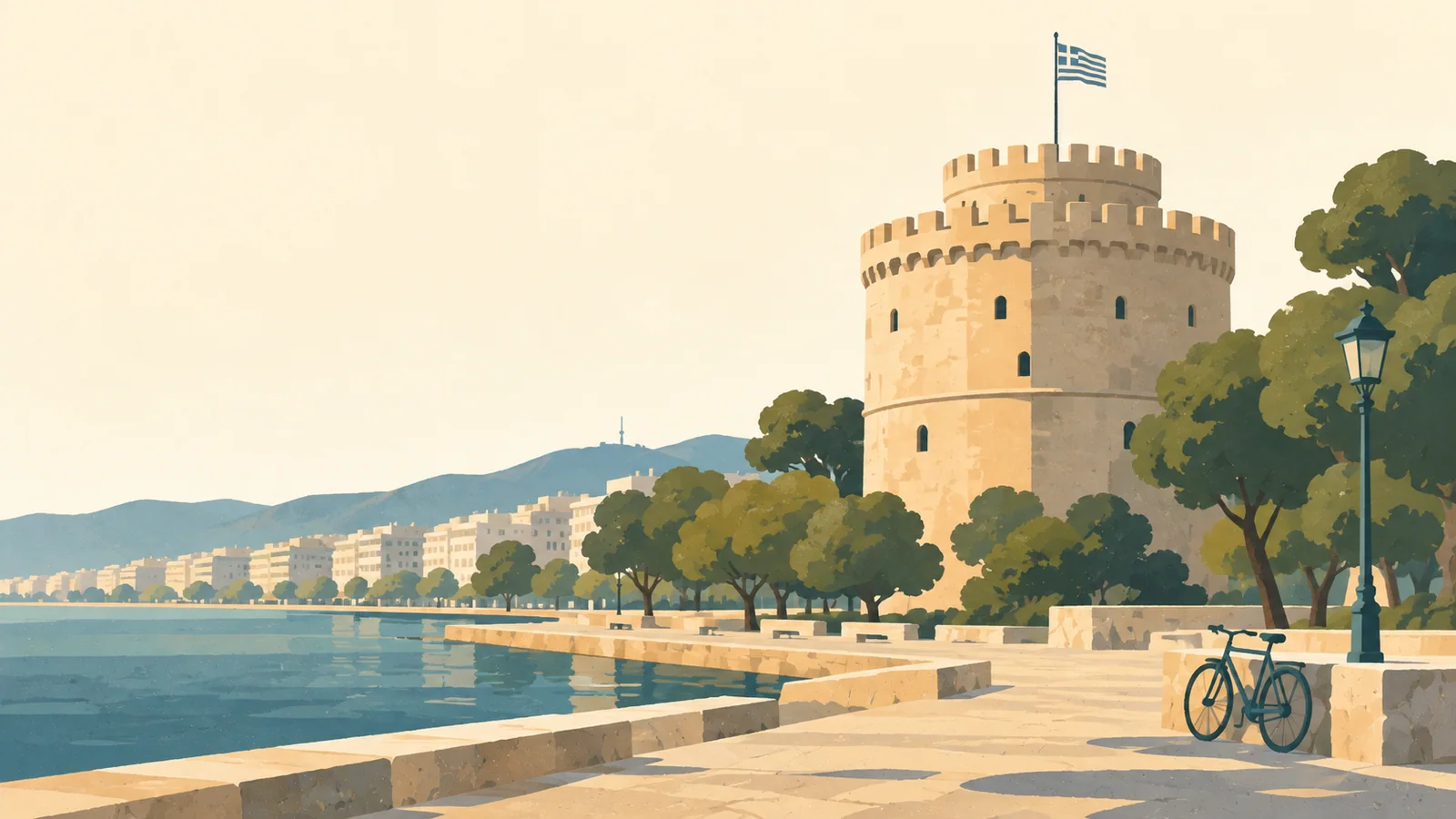
Greece's second city and its self-declared food capital: koulouri and bougatsa for breakfast, the Modiano and Kapani markets, and a mezedopoleio culture Athens copies. Fifteen UNESCO Byzantine monuments, the White Tower waterfront and a metro that finally opened in November 2024. The gateway to Halkidiki's beaches, Mount Olympus and Meteora by car. This city guide groups the destination into six useful areas so the stay works on the ground, not only on a country map.
Is this your trip?
Who Thessaloniki is for
Food travellers
Greece's second city and its self-declared food capital: koulouri and bougatsa for breakfast, the Modiano and Kapani markets, and a mezedopoleio culture Athens copies. Fifteen UNESCO Byzantine monuments, the White Tower waterfront and a metro that finally opened in November 2024. The gateway to Halkidiki's beaches, Mount Olympus and Meteora by car.
Travellers with 2 days
That window gives Thessaloniki enough room for one anchor area and one contrasting cluster per day.
Food and nightlife
Ladadika and Ano Poli make that interest practical rather than a country-level promise.
Area-led planners
Six fixed clusters make it easier to choose a base and avoid repeated cross-destination transfers.
Maybe not for you: A compressed checklist is the weak version of Thessaloniki. The city is easy to eat through and easy to overfill; Byzantine sites close earlier than the waterfront
Season by season
When to visit Thessaloniki
May–June and September. Rounded continental planning normals: cold winters, warm summers and a fast-changing shoulder season. Conditions can still change sharply by elevation, coast and exposure, so use the chart for route timing and the current forecast for the day itself.
- Good
Spring
March–May
Rapid warming, blossom and occasional cold reversals; layer for long days.
- Best
Summer
June–August
Warm to hot with long daylight and thunderstorms rather than constant rain.
- Best
Autumn
September–November
September is excellent; temperatures and daylight fall quickly after it.
- Mixed
Winter
December–February
Cold, sometimes snowy and atmospheric, with museums carrying shorter days.
Weather · monthly normals
Rounded continental planning normals: cold winters, warm summers and a fast-changing shoulder season. Values are rounded planning normals rather than a live forecast.
Do fewer things better
Things to do in Thessaloniki
A short, ordered set of experiences with the timing or planning catch that makes each one work.
- 1
Start with Waterfront & White Tower
Waterfront & White Tower
A long public promenade linking the landmark tower to new waterfront parks
- 2
Walk Ladadika without stacking it
Ladadika
Former warehouse lanes now dense with tavernas and bars
- 3
Use Ano Poli for views and old walls
Ano Poli
Ottoman houses, Byzantine walls and steep upper-city streets
- 4
Give Rotunda & university a deliberate half-day
Rotunda & university
Major late-antique monuments within a lively central corridor
- 5
See Modiano & Kapani markets outside peak hours
Modiano & Kapani markets
Central covered and street markets for northern Greek ingredients
- 6
Keep Kalamaria weather-flexible
Kalamaria
Residential eastern waterfront with marinas and local dining
The city is easy to eat through and easy to overfill; Byzantine sites close earlier than the waterfront
Area by area
The neighbourhoods of Thessaloniki
A real map at local-city scale: enough geography to choose a base, compare areas and group a day. Numbered places match the notes below.
| Area | What it is like | Why go |
|---|---|---|
1 Waterfront & White Tower orientation and evening walks | A long public promenade linking the landmark tower to new waterfront parks | Use Waterfront & White Tower when orientation and evening walks matters more than crossing the whole destination. |
2 Ladadika food and nightlife | Former warehouse lanes now dense with tavernas and bars | Use Ladadika when food and nightlife matters more than crossing the whole destination. |
3 Ano Poli views and old walls | Ottoman houses, Byzantine walls and steep upper-city streets | Use Ano Poli when views and old walls matters more than crossing the whole destination. |
4 Rotunda & university Roman and student city | Major late-antique monuments within a lively central corridor | Use Rotunda & university when Roman and student city matters more than crossing the whole destination. |
5 Modiano & Kapani markets food history | Central covered and street markets for northern Greek ingredients | Use Modiano & Kapani markets when food history matters more than crossing the whole destination. |
6 Kalamaria seafood and longer stays | Residential eastern waterfront with marinas and local dining | Use Kalamaria when seafood and longer stays matters more than crossing the whole destination. |
Choose the base, then the hotel
Where to stay in Thessaloniki
For most first visits: Waterfront & White Tower for orientation and evening walks.
Waterfront & White Tower
A long public promenade linking the landmark tower to new waterfront parks Choose it when that trade-off should shape mornings and evenings.
Ladadika
Former warehouse lanes now dense with tavernas and bars Choose it when that trade-off should shape mornings and evenings.
Ano Poli
Ottoman houses, Byzantine walls and steep upper-city streets Choose it when that trade-off should shape mornings and evenings.
Rotunda & university
Major late-antique monuments within a lively central corridor Choose it when that trade-off should shape mornings and evenings.
Order with a point of view
What to eat in Thessaloniki
Local food is more useful as an area decision than as a checklist of famous dishes.
- 01
Bougatsa
Waterfront & White Tower
Flaky pastry with custard or cheese is a serious breakfast
- 02
Koulouri
Ladadika
The sesame bread ring is best fresh from a street bakery
- 03
Soutzoukakia
Ano Poli
Spiced meat in tomato sauce reflects the city refugee histories
- 04
Trigona panoramatos
Rotunda & university
Crisp triangular pastry filled with cream
- 05
Meze seafood
Modiano & Kapani markets
Order slowly with tsipouro and let the table build
Useful on the ground
Local tips for Thessaloniki
Plan the transfer, not only the distance
The city is easy to eat through and easy to overfill; Byzantine sites close earlier than the waterfront
Visa and borders
Schengen. EU/EEA citizens need only an ID card. UK, US, Canadian, Australian and most Latin American passports get 90 days in any 180 without a visa; biometric registration at the border under the EU Entry/Exit System is now routine at Athens, and ETIAS (about €20, valid three years) is expected to be required from late 2026 — check before flying. Ferries from Italy are Schengen-internal but passports are still inspected.
Money
Euro. Card terminals have been mandatory for almost every business since 2024, but small tavernas, kiosks, island buses and the church candle box still want cash, and the 'climate resilience fee' on rooms (€2–15 per room per night April–October by star rating, €0.50–4 in winter) is often collected in cash at check-in. Carry €100 or so. Bank ATMs (Alpha, Piraeus, NBG, Eurobank) charge €2–3 to foreign cards; the yellow-and-blue Euronet machines in tourist streets charge more and push a bad exchange rate — decline 'conversion' every time. Museums and state sites are half price 1 November – 31 March and free on the first Sunday of those months.
SIM and data
EU SIMs roam free. Everyone else: an eSIM (Airalo, Holafly, or Cosmote's own) bought before landing; Cosmote has the widest island and mountain coverage, Vodafone and Nova are fine in cities. 5G in Athens, Thessaloniki and the big islands. Ferry Wi-Fi is theoretical; download the maps.
Plugs and power
Type C and F (the standard European two-round-pin) at 230 V, 50 Hz. UK and US visitors need an adapter; most chargers handle the voltage. Island power cuts in August heatwaves last an hour or two.
Common questions
Quick answers about Thessaloniki
- When is the best time to visit Thessaloniki?
- May–June and September. Rounded continental planning normals: cold winters, warm summers and a fast-changing shoulder season. Conditions can still change sharply by elevation, coast and exposure, so use the chart for route timing and the current forecast for the day itself.
- How many days do you need in Thessaloniki?
- 2 days. Greece's second city and its self-declared food capital: koulouri and bougatsa for breakfast, the Modiano and Kapani markets, and a mezedopoleio culture Athens copies. Fifteen UNESCO Byzantine monuments, the White Tower waterfront and a metro that finally opened in November 2024. The gateway to Halkidiki's beaches, Mount Olympus and Meteora by car. This city guide groups the destination into six useful areas so the stay works on the ground, not only on a country map.
- Where should you stay in Thessaloniki?
- Waterfront & White Tower for orientation and evening walks. A long public promenade linking the landmark tower to new waterfront parks Choose it when that trade-off should shape mornings and evenings.
Keep building the route
Thessaloniki is part of Greece
Use the country guide for visa, money, long-distance transport and the route between cities. Then compare the other worked-out stops below.