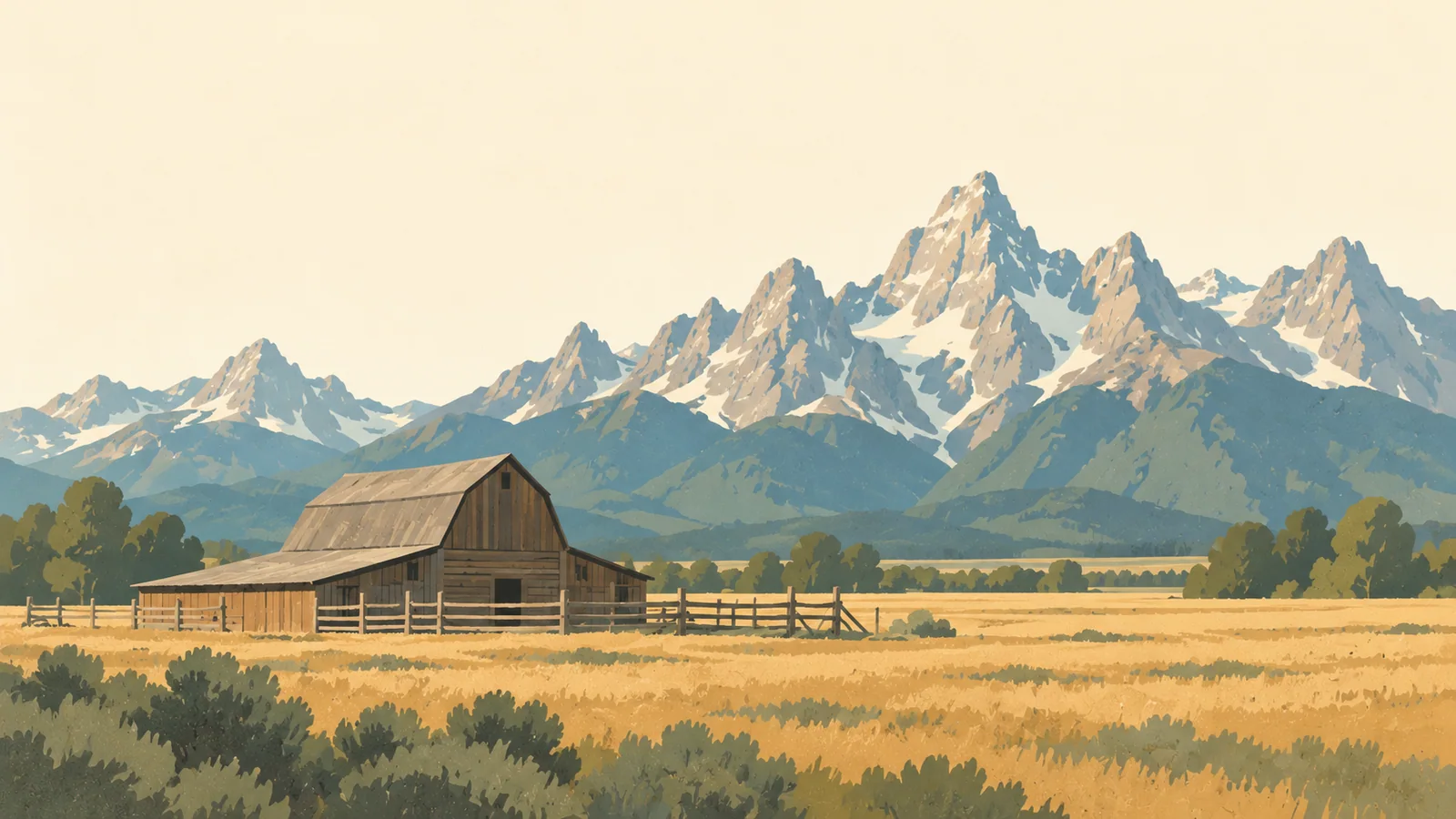

Rocky Mountains: what to expect
Colorado, Wyoming and Montana have enormous scenery and limited public transport. Reserve park stays and start early. This travel base guide groups the destination into six useful areas so the stay works on the ground, not only on a country map.
Is this your trip?
Who Rocky Mountains is for
Hiking travellers
Colorado, Wyoming and Montana have enormous scenery and limited public transport. Reserve park stays and start early.
Travellers with 7–12 days
That window gives Rocky Mountains enough room for one anchor area and one contrasting cluster per day.
Passes and mining towns
Colorado high country and Grand Teton make that interest practical rather than a country-level promise.
Area-led planners
Six fixed clusters make it easier to choose a base and avoid repeated cross-destination transfers.
Maybe not for you: A compressed checklist is the weak version of Rocky Mountains. Treat the suggested stay as time on the ground: weather, timed entry, ferries or mountain roads can remove half a day.
Season by season
When to visit Rocky Mountains
June–September or December–March. Rounded Alpine valley normals; height changes temperature, snow cover and access much faster than distance does. Conditions can still change sharply by elevation, coast and exposure, so use the chart for route timing and the current forecast for the day itself.
- Best
Winter
December–March
Snow sports and winter transport define the trip; valley rain can still replace snow.
- Mixed
Spring
April–May
A beautiful but awkward in-between season with closures and muddy high paths.
- Best
Summer
June–August
The widest trail and lift access, with afternoon storms and peak demand.
- Good
Autumn
September–November
Clear early weeks and colour, followed by lift closures and early snow.
Weather · monthly normals
Rounded Alpine valley normals; height changes temperature, snow cover and access much faster than distance does. Values are rounded planning normals rather than a live forecast.
Do fewer things better
Things to do in Rocky Mountains
A short, ordered set of experiences with the timing or planning catch that makes each one work.
- 1
Start with Rocky Mountain National Park
Rocky Mountain National Park
Timed roads and trails above Front Range towns
- 2
Walk Colorado high country without stacking it
Colorado high country
Seasonal roads joining distinct valleys
- 3
Use Grand Teton for lakes and wildlife
Grand Teton
Compact range beside heavily used park roads
- 4
Give Yellowstone a deliberate half-day
Yellowstone
Vast road system requiring several nights
- 5
See Glacier National Park outside peak hours
Glacier National Park
Short season with controlled corridor access
- 6
Keep Bozeman & mountain towns weather-flexible
Bozeman & mountain towns
Practical bases beyond resort-only itineraries
Treat the suggested stay as time on the ground: weather, timed entry, ferries or mountain roads can remove half a day.
Area by area
The areas of Rocky Mountains
A real map at local-city scale: enough geography to choose a base, compare areas and group a day. Numbered places match the notes below.
| Area | What it is like | Why go |
|---|---|---|
1 Rocky Mountain National Park first high-country base | Timed roads and trails above Front Range towns | Use Rocky Mountain National Park when first high-country base matters more than crossing the whole destination. |
2 Colorado high country passes and mining towns | Seasonal roads joining distinct valleys | Use Colorado high country when passes and mining towns matters more than crossing the whole destination. |
3 Grand Teton lakes and wildlife | Compact range beside heavily used park roads | Use Grand Teton when lakes and wildlife matters more than crossing the whole destination. |
4 Yellowstone geothermal landscape | Vast road system requiring several nights | Use Yellowstone when geothermal landscape matters more than crossing the whole destination. |
5 Glacier National Park northern trails and reservations | Short season with controlled corridor access | Use Glacier National Park when northern trails and reservations matters more than crossing the whole destination. |
6 Bozeman & mountain towns services and local context | Practical bases beyond resort-only itineraries | Use Bozeman & mountain towns when services and local context matters more than crossing the whole destination. |
Choose the base, then the hotel
Where to stay in Rocky Mountains
For most first visits: Rocky Mountain National Park for first high-country base.
Rocky Mountain National Park
Timed roads and trails above Front Range towns Choose it when that trade-off should shape mornings and evenings.
Colorado high country
Seasonal roads joining distinct valleys Choose it when that trade-off should shape mornings and evenings.
Grand Teton
Compact range beside heavily used park roads Choose it when that trade-off should shape mornings and evenings.
Yellowstone
Vast road system requiring several nights Choose it when that trade-off should shape mornings and evenings.
Order with a point of view
What to eat in Rocky Mountains
Local food is more useful as an area decision than as a checklist of famous dishes.
- 01
Neighbourhood diner or counter
Rocky Mountain National Park
The useful American meal is often a specialist breakfast, sandwich or plate served without ceremony
- 02
Migration-shaped local food
Colorado high country
Ask which community built the dish and seek kitchens still connected to it
- 03
Regional barbecue or seafood
Grand Teton
Style, wood, coast and season matter; there is no single national version
- 04
Farmers-market stop
Yellowstone
Seasonal produce helps explain the region and makes a road day less dependent on chains
- 05
Local beer, soda or coffee
Glacier National Park
Independent drinks can map a place without making alcohol the itinerary
Useful on the ground
Local tips for Rocky Mountains
Plan the transfer, not only the distance
Treat the suggested stay as time on the ground: weather, timed entry, ferries or mountain roads can remove half a day.
Visa and entry
Many visitors need ESTA or a visa before travel. Rules depend on nationality and trip history; use official US government guidance before booking.
Money and cards
Cards are widely accepted, but tips, taxes and deposits matter. Keep a backup card and some cash for parks, small towns and laundry.
SIM and data
Coverage is strong in cities and along main roads, with large dead zones in parks and the west. Download offline maps and park information.
Plugs and power
The US uses 120 V and type A or B sockets. European, UK and Australian travellers need an adapter and some devices need voltage support.
Common questions
Quick answers about Rocky Mountains
- When is the best time to visit Rocky Mountains?
- June–September or December–March. Rounded Alpine valley normals; height changes temperature, snow cover and access much faster than distance does. Conditions can still change sharply by elevation, coast and exposure, so use the chart for route timing and the current forecast for the day itself.
- How many days do you need in Rocky Mountains?
- 7–12 days. Colorado, Wyoming and Montana have enormous scenery and limited public transport. Reserve park stays and start early. This travel base guide groups the destination into six useful areas so the stay works on the ground, not only on a country map.
- Where should you stay in Rocky Mountains?
- Rocky Mountain National Park for first high-country base. Timed roads and trails above Front Range towns Choose it when that trade-off should shape mornings and evenings.
Keep building the route
Rocky Mountains is part of United States
Use the country guide for visa, money, long-distance transport and the route between cities. Then compare the other worked-out stops below.
- New York CityMuseums, food and neighbourhoods
- CaliforniaCities, coast and national parks
- Southwest national parksDesert, canyons and open roads
- New OrleansMusic, food and layered history
- Pacific NorthwestVolcanoes, forests and coffee cities
- ChicagoArchitecture, lakefront paths and neighbourhood food
- BostonRevolutionary history and compact waterfront neighbourhoods
- SavannahShaded squares and a layered Atlantic port
- Santa FeAdobe streets, regional art and high-desert light
- PittsburghRiver crossings, industrial history and independent districts
- PhiladelphiaFounding history and neighbourhood markets
- DetroitAmerican design, music and industrial change
- MinneapolisLakes, river industry and a strong arts scene
- CharlestonHarbour streets and difficult coastal histories
- San AntonioSpanish missions and a city built around water