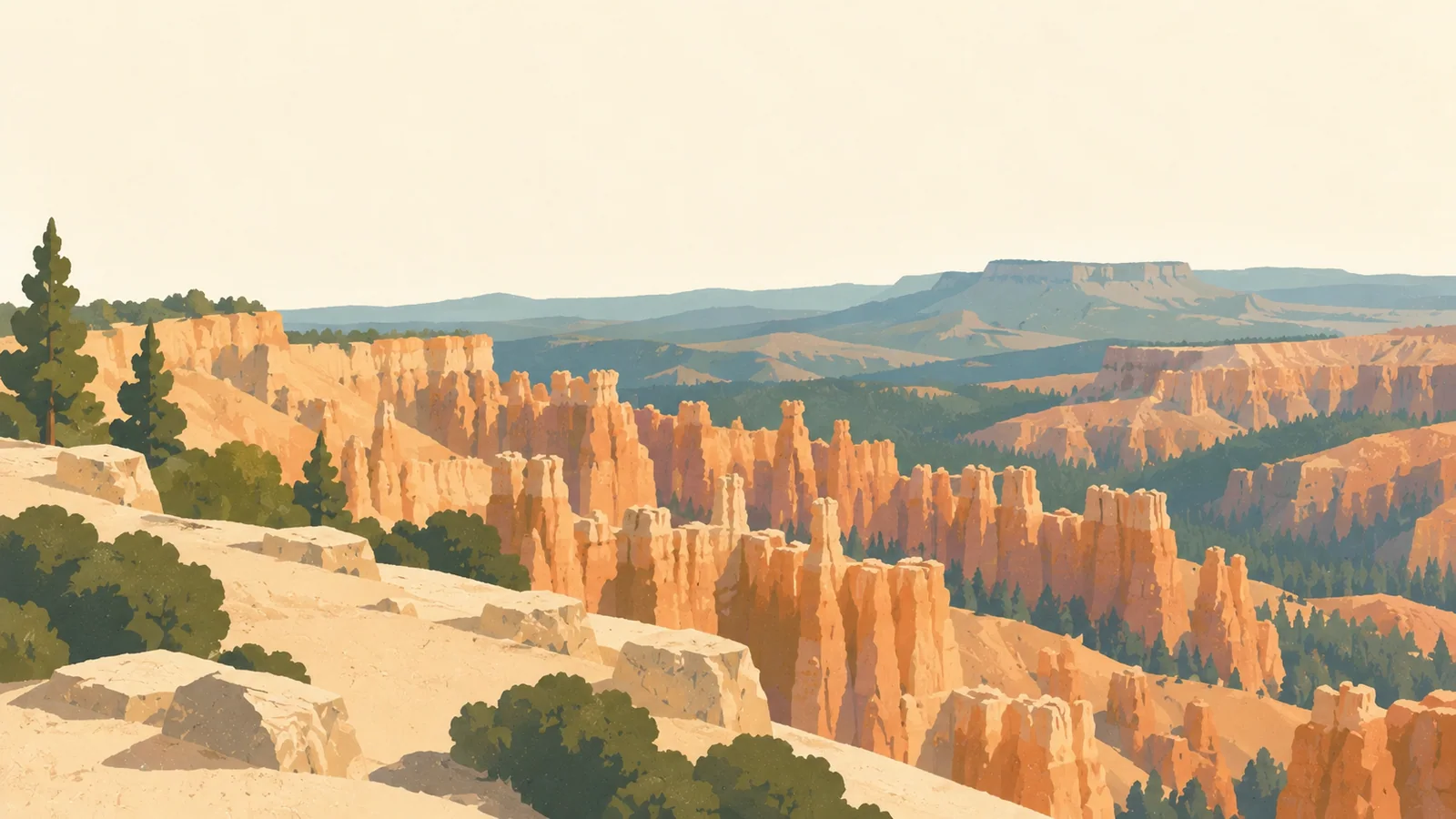


Southwest national parks: what to expect
Utah and Arizona reward a loop with early starts and water. Summer heat is serious; spring and autumn are easier. This travel base guide groups the destination into six useful areas so the stay works on the ground, not only on a country map.
Is this your trip?
Who Southwest national parks is for
Hiking travellers
Utah and Arizona reward a loop with early starts and water. Summer heat is serious; spring and autumn are easier.
Travellers with 7–12 days
That window gives Southwest national parks enough room for one anchor area and one contrasting cluster per day.
High desert and cold nights
Bryce Canyon and Capitol Reef make that interest practical rather than a country-level promise.
Area-led planners
Six fixed clusters make it easier to choose a base and avoid repeated cross-destination transfers.
Maybe not for you: A compressed checklist is the weak version of Southwest national parks. Treat the suggested stay as time on the ground: weather, timed entry, ferries or mountain roads can remove half a day.
Season by season
When to visit Southwest national parks
October–April. Rounded hot-desert planning normals: intense summer heat, cool winter nights and little reliable rain. Conditions can still change sharply by elevation, coast and exposure, so use the chart for route timing and the current forecast for the day itself.
- Best
Winter
December–February
Comfortable walking days and cool nights make this the easiest period.
- Best
Spring
March–April
Warm, mostly dry and increasingly hot by afternoon.
- Avoid
Summer
May–September
Extreme heat makes exposed days unsafe and shifts useful time to dawn and evening.
- Good
Autumn
October–November
Heat eases progressively and outdoor routes reopen into the main season.
Weather · monthly normals
Rounded hot-desert planning normals: intense summer heat, cool winter nights and little reliable rain. Values are rounded planning normals rather than a live forecast.
Do fewer things better
Things to do in Southwest national parks
A short, ordered set of experiences with the timing or planning catch that makes each one work.
- 1
Start with Zion
Zion
Narrow valley with strict seasonal transport
- 2
Walk Bryce Canyon without stacking it
Bryce Canyon
Hoodoo amphitheatres above 2,400 metres
- 3
Use Capitol Reef for quiet geology and orchards
Capitol Reef
Long park with a historic watered valley
- 4
Give Arches & Canyonlands a deliberate half-day
Arches & Canyonlands
Timed entries and exposed slickrock landscapes
- 5
See Grand Canyon South Rim outside peak hours
Grand Canyon South Rim
High rim requiring cold and heat planning
- 6
Keep Page & Navajo Nation weather-flexible
Page & Navajo Nation
Permit-led sites where community rules are decisive
Treat the suggested stay as time on the ground: weather, timed entry, ferries or mountain roads can remove half a day.
Area by area
The areas of Southwest national parks
A real map at local-city scale: enough geography to choose a base, compare areas and group a day. Numbered places match the notes below.
| Area | What it is like | Why go |
|---|---|---|
1 Zion canyon and shuttle hiking | Narrow valley with strict seasonal transport | Use Zion when canyon and shuttle hiking matters more than crossing the whole destination. |
2 Bryce Canyon high desert and cold nights | Hoodoo amphitheatres above 2,400 metres | Use Bryce Canyon when high desert and cold nights matters more than crossing the whole destination. |
3 Capitol Reef quiet geology and orchards | Long park with a historic watered valley | Use Capitol Reef when quiet geology and orchards matters more than crossing the whole destination. |
4 Arches & Canyonlands Moab base | Timed entries and exposed slickrock landscapes | Use Arches & Canyonlands when Moab base matters more than crossing the whole destination. |
5 Grand Canyon South Rim scale and walking | High rim requiring cold and heat planning | Use Grand Canyon South Rim when scale and walking matters more than crossing the whole destination. |
6 Page & Navajo Nation water and Indigenous land | Permit-led sites where community rules are decisive | Use Page & Navajo Nation when water and Indigenous land matters more than crossing the whole destination. |
Choose the base, then the hotel
Where to stay in Southwest national parks
For most first visits: Zion for canyon and shuttle hiking.
Zion
Narrow valley with strict seasonal transport Choose it when that trade-off should shape mornings and evenings.
Bryce Canyon
Hoodoo amphitheatres above 2,400 metres Choose it when that trade-off should shape mornings and evenings.
Capitol Reef
Long park with a historic watered valley Choose it when that trade-off should shape mornings and evenings.
Arches & Canyonlands
Timed entries and exposed slickrock landscapes Choose it when that trade-off should shape mornings and evenings.
Order with a point of view
What to eat in Southwest national parks
Local food is more useful as an area decision than as a checklist of famous dishes.
- 01
Neighbourhood diner or counter
Zion
The useful American meal is often a specialist breakfast, sandwich or plate served without ceremony
- 02
Migration-shaped local food
Bryce Canyon
Ask which community built the dish and seek kitchens still connected to it
- 03
Regional barbecue or seafood
Capitol Reef
Style, wood, coast and season matter; there is no single national version
- 04
Farmers-market stop
Arches & Canyonlands
Seasonal produce helps explain the region and makes a road day less dependent on chains
- 05
Local beer, soda or coffee
Grand Canyon South Rim
Independent drinks can map a place without making alcohol the itinerary
Useful on the ground
Local tips for Southwest national parks
Plan the transfer, not only the distance
Treat the suggested stay as time on the ground: weather, timed entry, ferries or mountain roads can remove half a day.
Visa and entry
Many visitors need ESTA or a visa before travel. Rules depend on nationality and trip history; use official US government guidance before booking.
Money and cards
Cards are widely accepted, but tips, taxes and deposits matter. Keep a backup card and some cash for parks, small towns and laundry.
SIM and data
Coverage is strong in cities and along main roads, with large dead zones in parks and the west. Download offline maps and park information.
Plugs and power
The US uses 120 V and type A or B sockets. European, UK and Australian travellers need an adapter and some devices need voltage support.
Common questions
Quick answers about Southwest national parks
- When is the best time to visit Southwest national parks?
- October–April. Rounded hot-desert planning normals: intense summer heat, cool winter nights and little reliable rain. Conditions can still change sharply by elevation, coast and exposure, so use the chart for route timing and the current forecast for the day itself.
- How many days do you need in Southwest national parks?
- 7–12 days. Utah and Arizona reward a loop with early starts and water. Summer heat is serious; spring and autumn are easier. This travel base guide groups the destination into six useful areas so the stay works on the ground, not only on a country map.
- Where should you stay in Southwest national parks?
- Zion for canyon and shuttle hiking. Narrow valley with strict seasonal transport Choose it when that trade-off should shape mornings and evenings.
Keep building the route
Southwest national parks is part of United States
Use the country guide for visa, money, long-distance transport and the route between cities. Then compare the other worked-out stops below.
- New York CityMuseums, food and neighbourhoods
- CaliforniaCities, coast and national parks
- New OrleansMusic, food and layered history
- Pacific NorthwestVolcanoes, forests and coffee cities
- Rocky MountainsHigh parks and mountain towns
- ChicagoArchitecture, lakefront paths and neighbourhood food
- BostonRevolutionary history and compact waterfront neighbourhoods
- SavannahShaded squares and a layered Atlantic port
- Santa FeAdobe streets, regional art and high-desert light
- PittsburghRiver crossings, industrial history and independent districts
- PhiladelphiaFounding history and neighbourhood markets
- DetroitAmerican design, music and industrial change
- MinneapolisLakes, river industry and a strong arts scene
- CharlestonHarbour streets and difficult coastal histories
- San AntonioSpanish missions and a city built around water