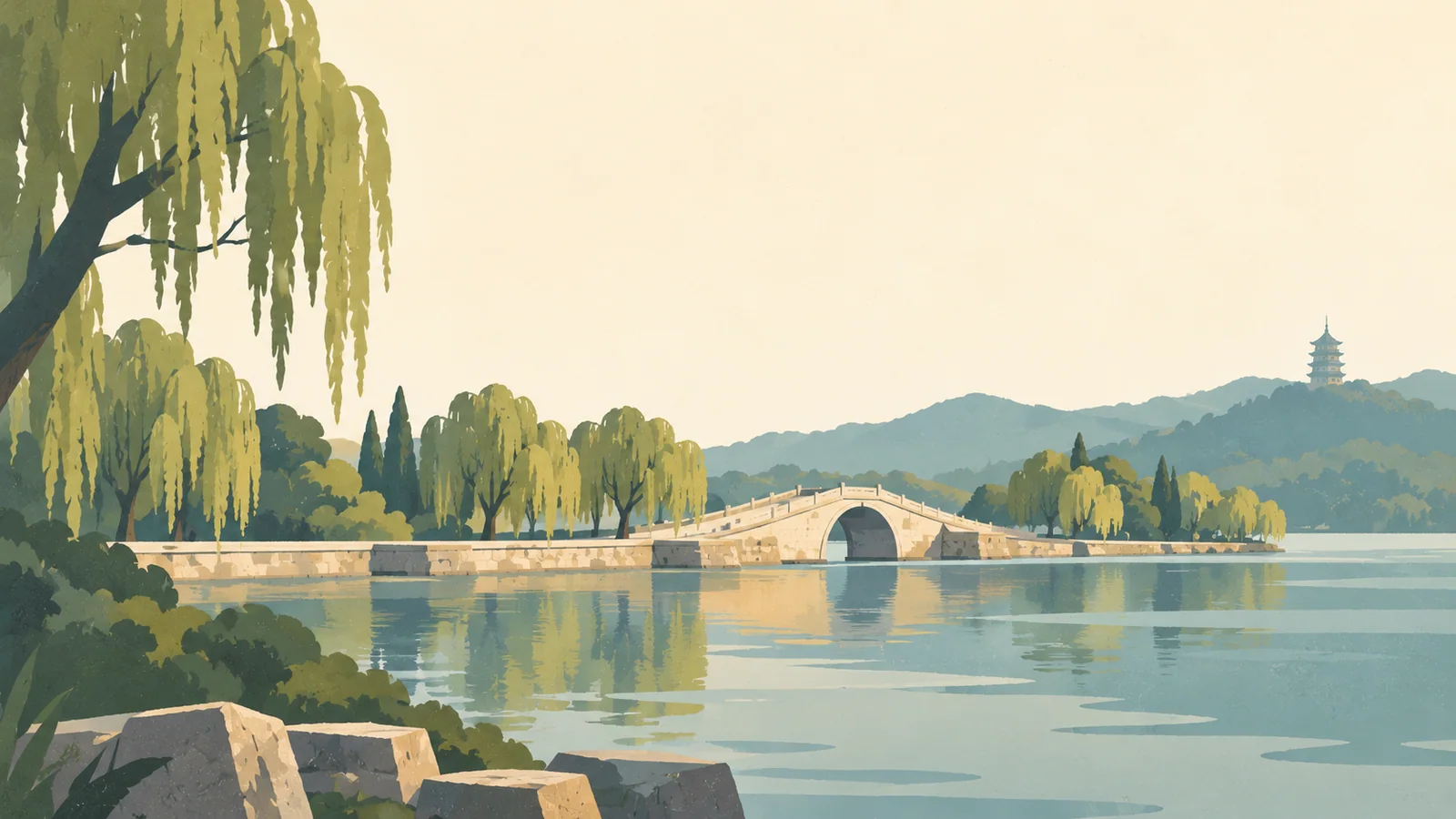


Hangzhou: what to expect
Hangzhou is close enough to Shanghai to be over-compressed into a day trip. The lake changes by shore and hour, tea villages sit in the hills behind it, and the old canal gives the city a second geography beyond the famous water.
Is this your trip?
Who Hangzhou is for
Landscape and garden travellers
West Lake is a composed cultural landscape, not merely a waterfront.
Tea people
Longjing villages and plantations connect product, craft and place.
Slow Shanghai extensions
An overnight reveals mornings and evenings that day trips miss.
Walkers
Causeways, foothills and temple routes create full low-intensity days.
Maybe not for you: If you have only six hours, do not attempt the full lake plus tea fields plus old city. Choose one shore and leave a reason to return.
Season by season
When to visit Hangzhou
March–May and October–November. Spring is misty, floral and wet; autumn is clearer and comfortable. June brings plum rain, summer is hot and humid, and winter is damp with occasional cold snaps.
- Best
Spring
March–May
Fresh green, blossom and atmospheric mist, with frequent rain.
- Mixed
Plum rain
June–early July
Humid and persistently wet around the lake.
- Avoid
Summer
July–September
Hot and crowded; typhoons can affect the wider region.
- Good
Autumn and winter
October–February
Autumn is excellent; winter is quiet, damp and suited to tea and temples.
Weather · monthly normals
Hangzhou is humid subtropical, with hot wet summers and cool damp winters.
Do fewer things better
Things to do in Hangzhou
A short, ordered set of experiences with the timing or planning catch that makes each one work.
- 1
Walk West Lake before tour traffic
Beishan or Su Causeway
Mist, tai chi and low light restore the landscape's intended scale.
- 2
Choose one boat crossing
West Lake
Use the boat to connect shores, not as an isolated lap around the busiest islands.
- 3
Drink Longjing near the fields
Meijiawu or Longjing village
Ask about season and grade; the setting matters, but aggressive sales do not.
- 4
Climb to a quieter viewpoint
Baoshi Hill or tea hills
A modest climb explains lake, city and mountains in one frame.
- 5
See the Grand Canal after dark
Gongchen Bridge
Warehouses, craft museums and neighbourhood life give Hangzhou a second identity.
- 6
Pair Lingyin with nearby paths
West Lake hills
The temple is busy; surrounding woods and smaller sites make the journey worthwhile.
Area by area
The neighbourhoods of Hangzhou
A real map at local-city scale: enough geography to choose a base, compare areas and group a day. Numbered places match the notes below.
| Area | What it is like | Why go |
|---|---|---|
1 West Lake east shore first visit | Main waterfront, shopping and dense transport. | The easiest short-stay base, busiest at all hours. |
2 Beishan & Lingyin gardens and quiet mornings | Historic villas, northern lake views and wooded temple routes. | Best for walkers willing to trade metro convenience for landscape. |
3 Longjing & tea hills tea and hiking | Plantations, villages and green ridges southwest of the lake. | A half-day of walking and tasting, not a quick souvenir stop. |
4 Hefang Street & old city food and history | Restored commercial street beside medicine, crafts and local lanes. | Visit early and continue beyond the most theatrical blocks. |
5 Grand Canal craft and local evenings | Gongchen Bridge, museums and converted warehouses. | A strong second-day contrast to West Lake. |
6 Binjiang modern riverfront | New skyline, broad paths and Qiantang River views. | Useful for contemporary Hangzhou, less so for a first heritage stay. |
Choose the base, then the hotel
Where to stay in Hangzhou
For most first visits: East or north West Lake for a first visit; canal district for a quieter repeat stay.
East or northeast West Lake
Walk to sunrise and keep metro access.
Beishan or west-lake foothills
Check road access; atmosphere improves as transport convenience falls.
Hefang area
Central and lively, with some overtly tourist-facing blocks.
Grand Canal district
A more local evening base connected by metro.
Order with a point of view
What to eat in Hangzhou
Local food is more useful as an area decision than as a checklist of famous dishes.
- 01
West Lake vinegar fish
Established Hangzhou restaurants
The sweet-sour balance is distinctive and not to every taste; share one.
- 02
Dongpo pork
Traditional kitchens
Slow-braised pork rewards a group and rice.
- 03
Longjing shrimp
Seasonal restaurants
Tea fragrance should be restrained, not perfume.
- 04
Pian'er chuan
Local noodle shops
Pork, preserved vegetable and bamboo-shoot noodles make a grounded lunch.
- 05
Tea-house snacks
Lake and village tea houses
Clarify minimum spend and tea grade before settling in.
Useful on the ground
Local tips for Hangzhou
The lake perimeter is large
Choose a shore, causeway and boat link rather than forcing a complete circuit.
Weekends change everything
Shanghai proximity produces heavy domestic demand; stay overnight on weekdays when possible.
Tea sales need boundaries
Taste, ask the price per unit and decline clearly if you do not want to buy.
Station names are not interchangeable
Hangzhou East handles many high-speed trains, but not every useful service.
Rain improves atmosphere, not footwear
Carry grip and a waterproof layer on stone paths.
Common questions
Quick answers about Hangzhou
- When is the best time to visit Hangzhou?
- March–May and October–November. Spring is misty, floral and wet; autumn is clearer and comfortable. June brings plum rain, summer is hot and humid, and winter is damp with occasional cold snaps.
- How many days do you need in Hangzhou?
- 2–3 days. Hangzhou is close enough to Shanghai to be over-compressed into a day trip. The lake changes by shore and hour, tea villages sit in the hills behind it, and the old canal gives the city a second geography beyond the famous water.
- Where should you stay in Hangzhou?
- East or north West Lake for a first visit; canal district for a quieter repeat stay. Walk to sunrise and keep metro access.
Keep building the route
Hangzhou is part of China
Use the country guide for visa, money, long-distance transport and the route between cities. Then compare the other worked-out stops below.
- BeijingImperial scale, hutong intimacy and a capital that starts early.
- ShanghaiA port city read best at street level, not from one tower.
- Xi'anA walled city where imperial China meets the Silk Roads.
- ChengduTea-house tempo, serious spice and a city larger than its mood.
- GuilinKarst country where the best city guide points beyond the city.
- NanjingImperial history and a modern Yangtze city
- SuzhouClassical gardens beyond the Shanghai day trip
- ChongqingRiver confluences and a genuinely vertical city
- KunmingYunnan's highland capital and a useful slower base
- XiamenMaritime history and a coastal Fujian base
- QingdaoCoastal hills and a layered port history
- LuoyangAncient-capital history and Buddhist stone art
- HarbinNortheastern architecture and a deliberate winter city
- DalianA northern port city of squares and coastal walks
- GuangzhouCantonese food and a long trading history